

Photo and video credits to Tash and Iona. There are a few (very short – one minute or less) video links you can click on here to help get more of the feeling of the country. The tale of stopovers on this trip can be found in a separate blog.
Phnom Penh
On the highway into town from the airport, the taxi driver points out two swanky new highrise blocks facing each other off across the road.
“This one China, this one Korea,” he tells us. There’s a great deal of investment pouring into this country, mostly from China. They can never own the land, by law, but can take a lease for long enough to turn a profit. Although the dollar is the preferred currency (as long as the notes are pristine – any small tears will see them rejected by shops and businesses), it seems that the yuan is driving the economy here. One dollar buys 4125 Cambodian riels, which are handy for rickshaw rides, but not much else. The amount of conversion you have to do in your head gets fuzzy with very large amounts (e.g. if you were to spend $25 and pay local it would be 102,178 riels) and people prefer to be paid in dollars anyway.
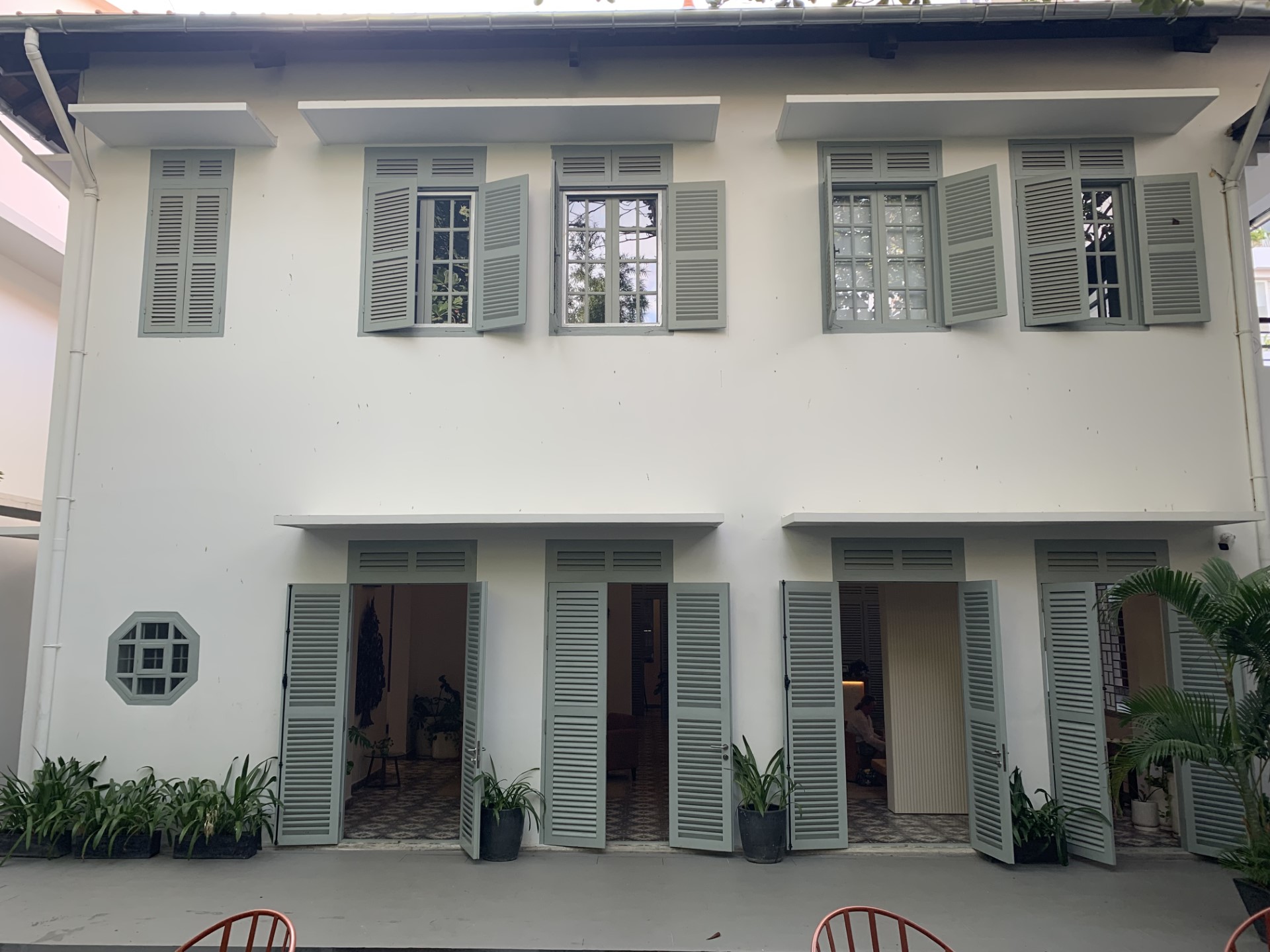
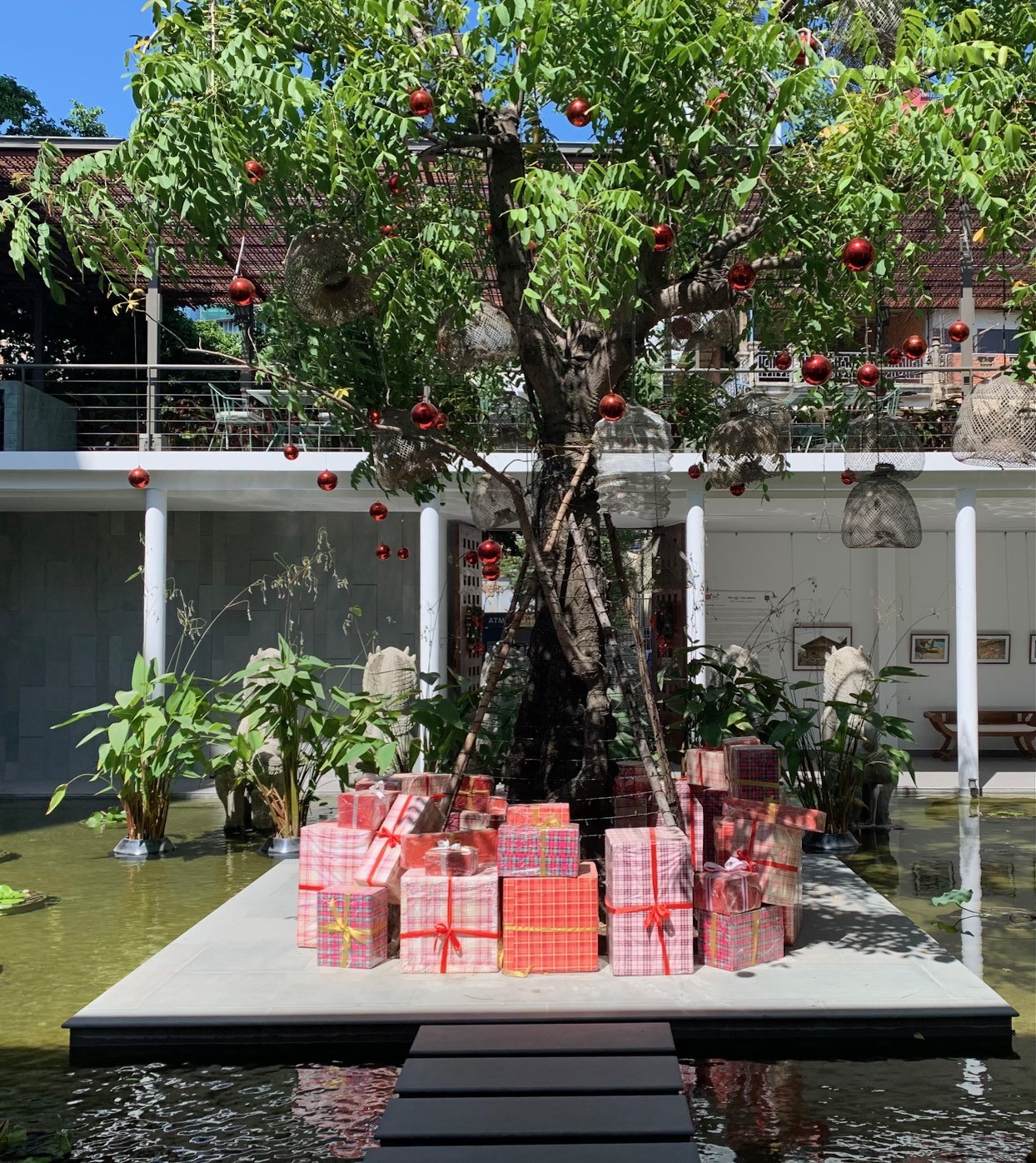
The Plantation Urban Resort is a former French colonial administrative office that has been extended behind the original building. The room looks out to the treetops in the lush garden around the pool. Rather surprisingly to me, the carp pond in the entrance has its central tree decked out in Christmas decorations. There is a whiff of tropical paradise about the place. And just opposite, is a fabulous, very local, vegetarian/vegan restaurant, which set the tone for the fabulous local food we ate on this trip. At breakfast in the hotel, a rather tough-looking, heavily-tattooed Chinese man is talking intently on his phone while his partner, who is looking rather bored, picks away at her breakfast. A few tables away sits their very large, even tougher-looking minder, who could be Indian or Arabic. He looks fierce and does not crack a smile. In fact, he is even too tough to talk to the waitress who is hovering around with a pot of fresh coffee. He sort of nods at her and she scuttles over and makes to pour him his coffee. He scowls and nods towards the boss. It’s him who needs the coffee. She sorts the boss out, who immediately gets up and strides away from the tables with his partner trotting after, followed by the minder, who picks up the electric fan she has left on the table. He may only scowl and head gesture to waiting staff, but he sure does a good job of picking up things that the boss’s partner has dropped or forgotten.
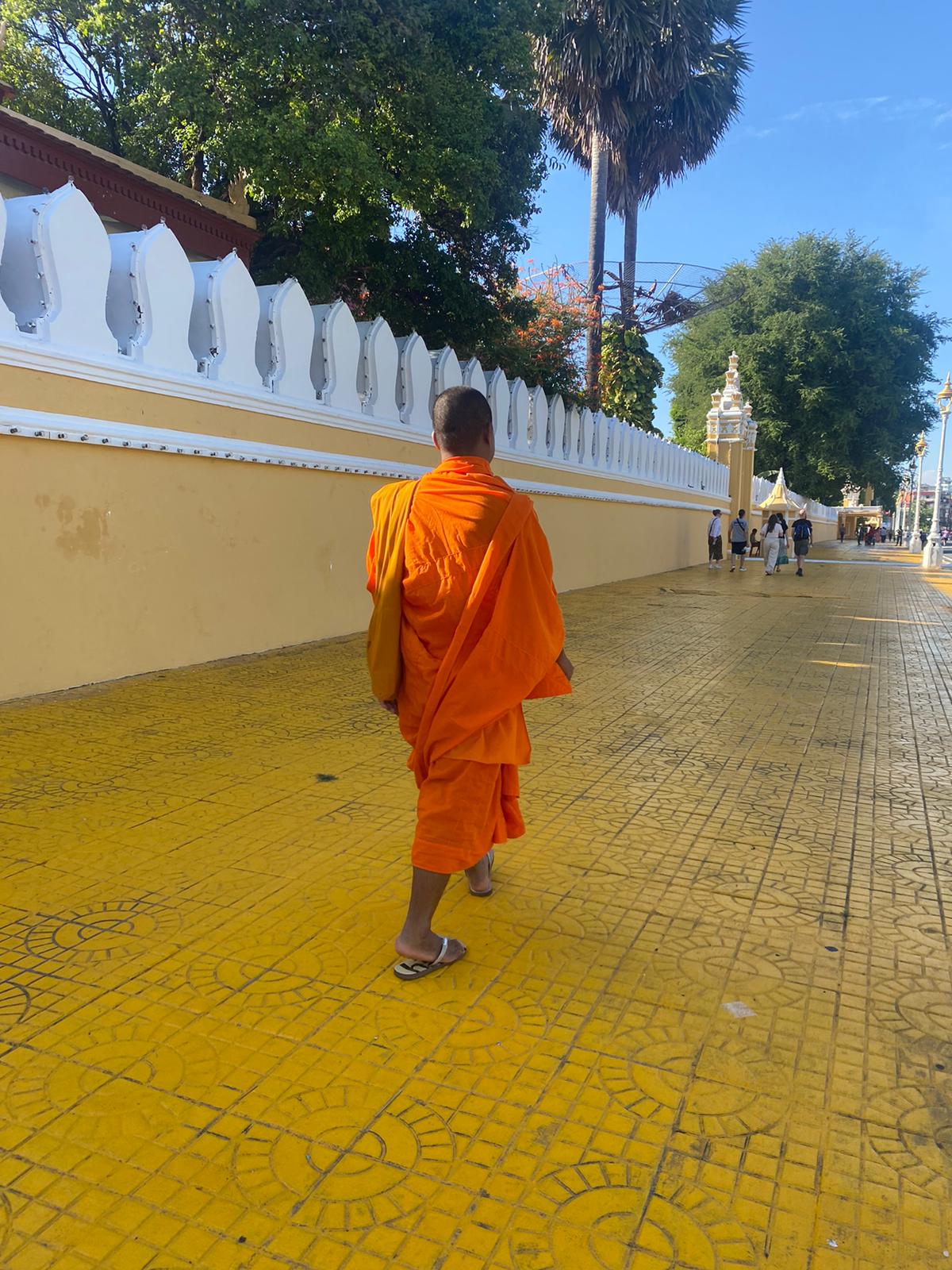
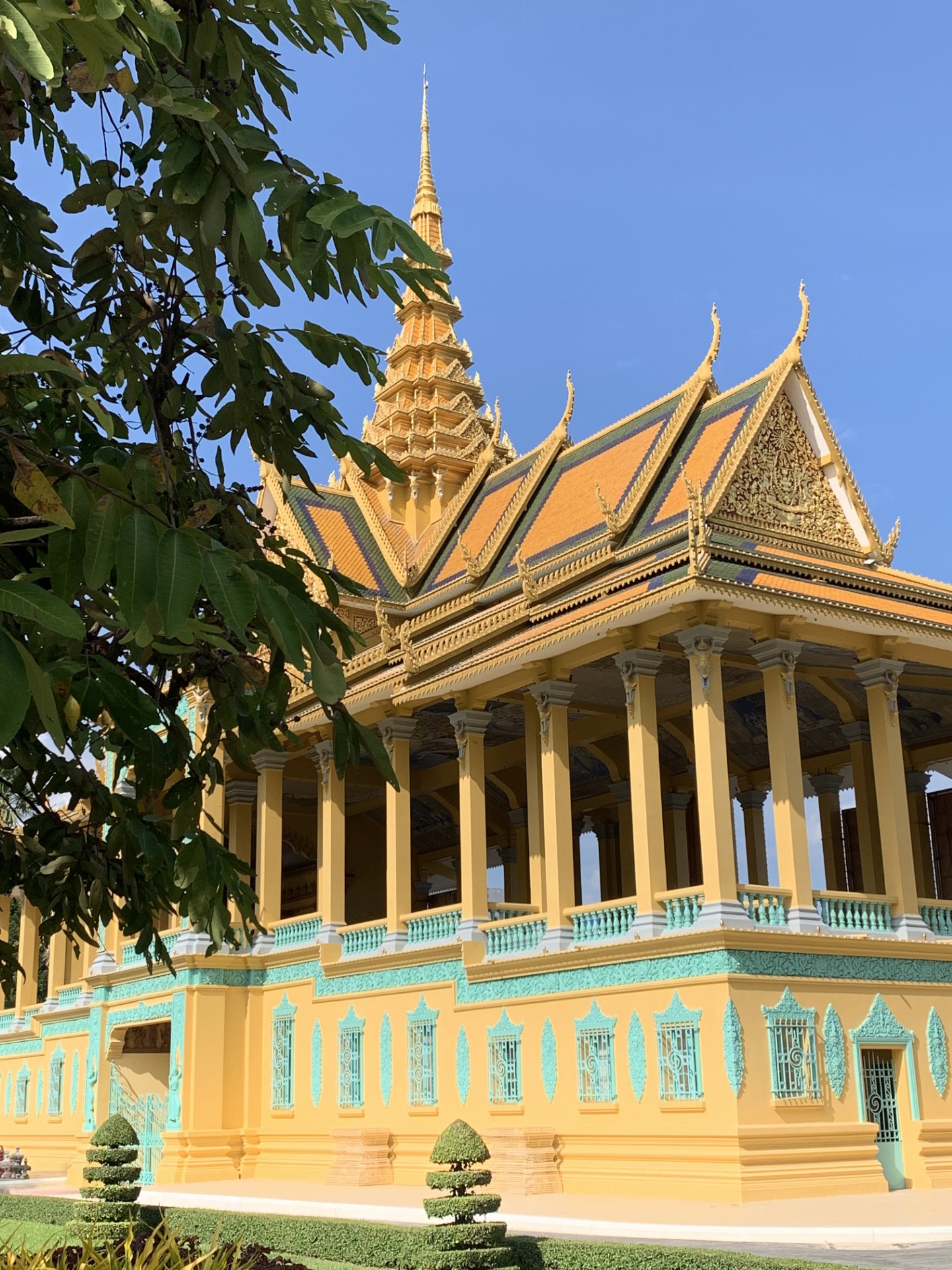
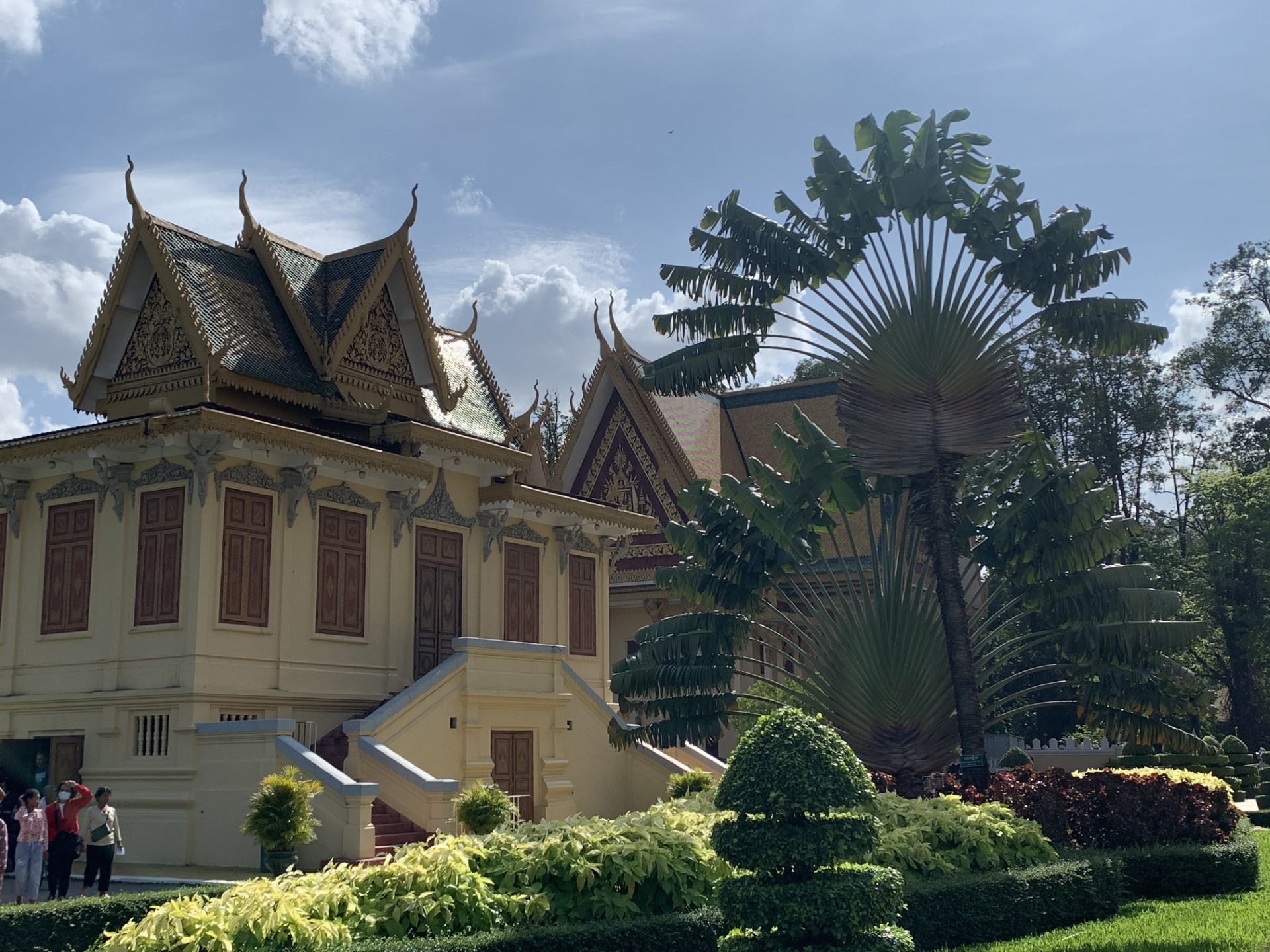
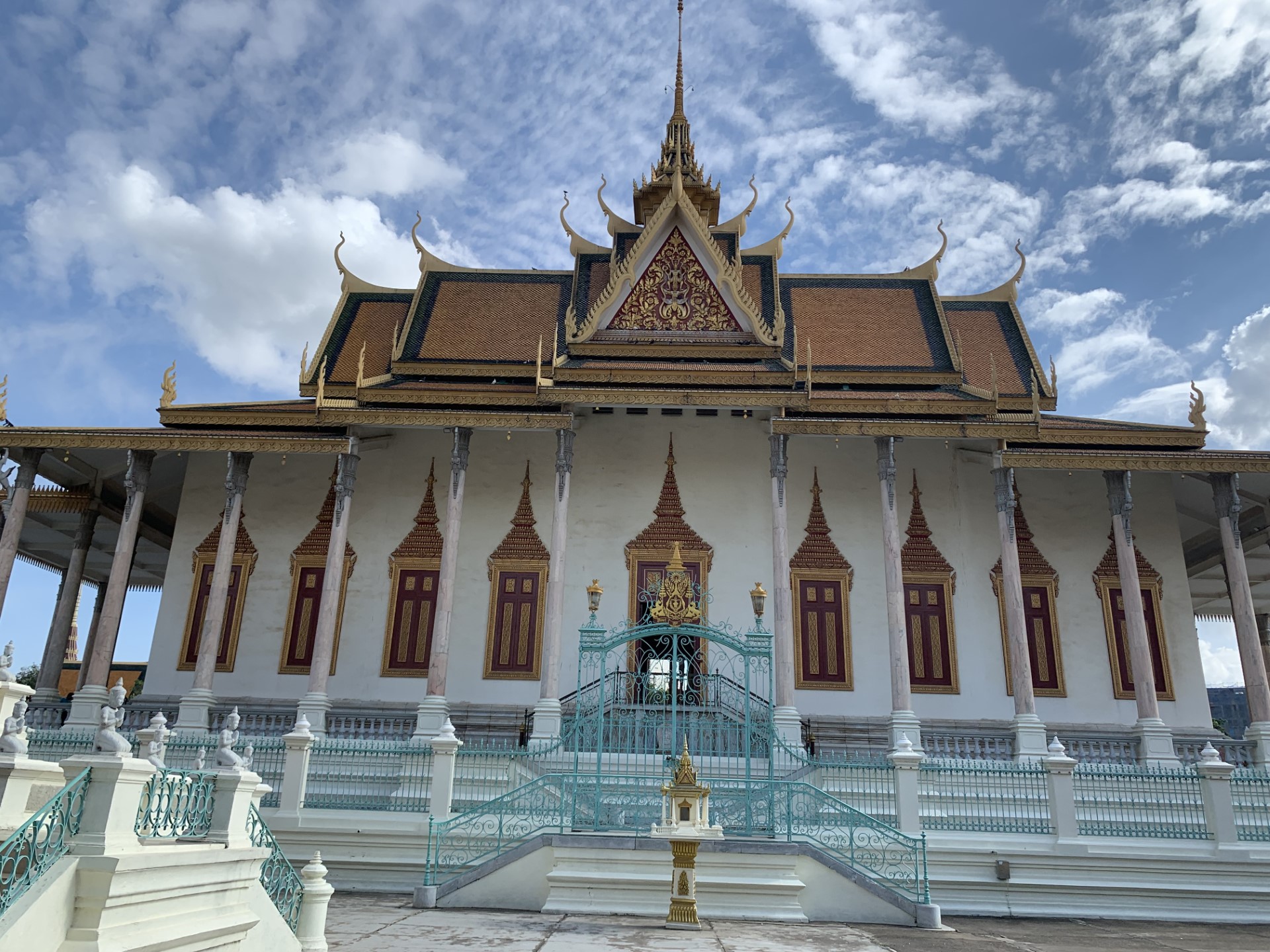
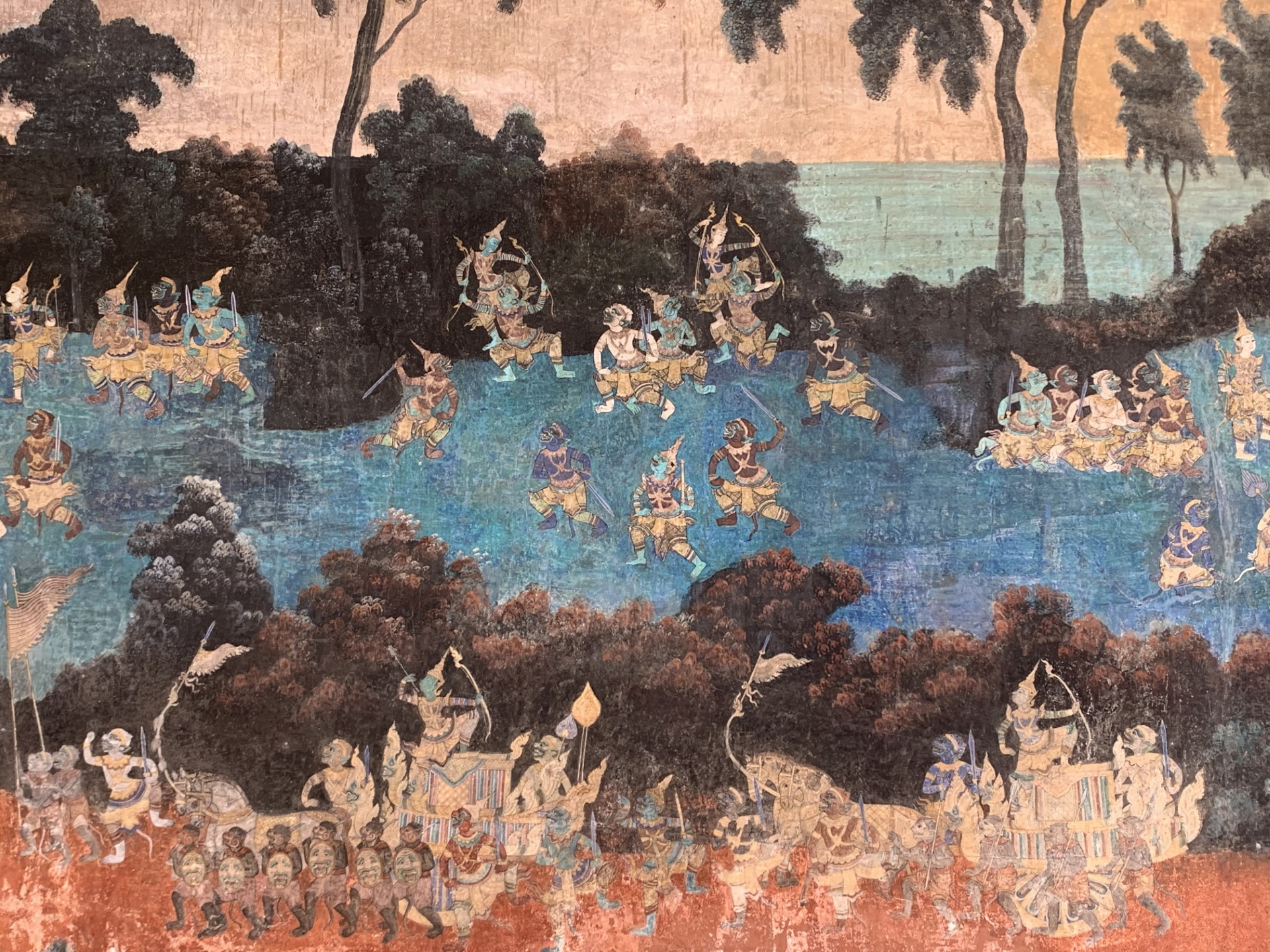
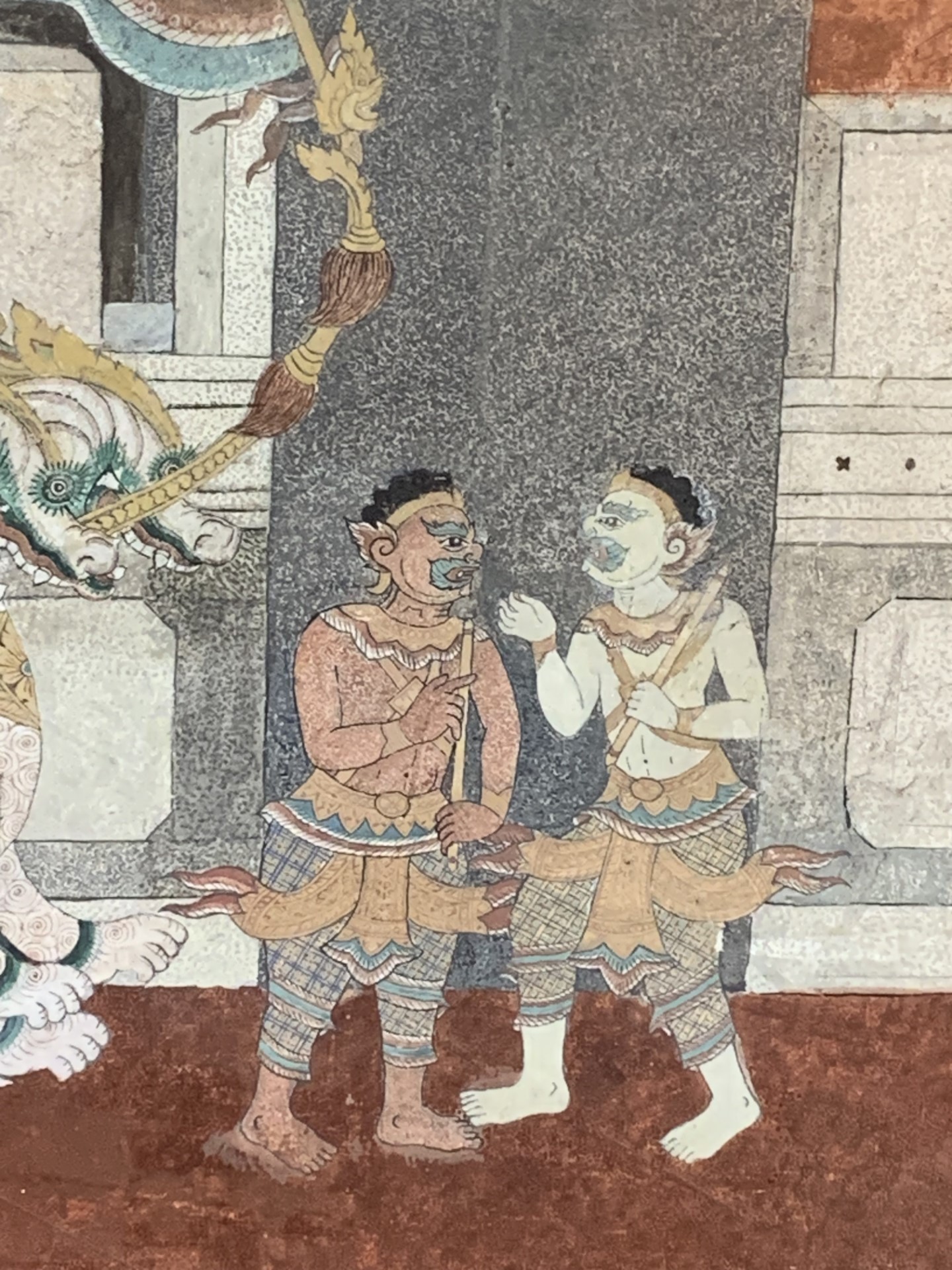
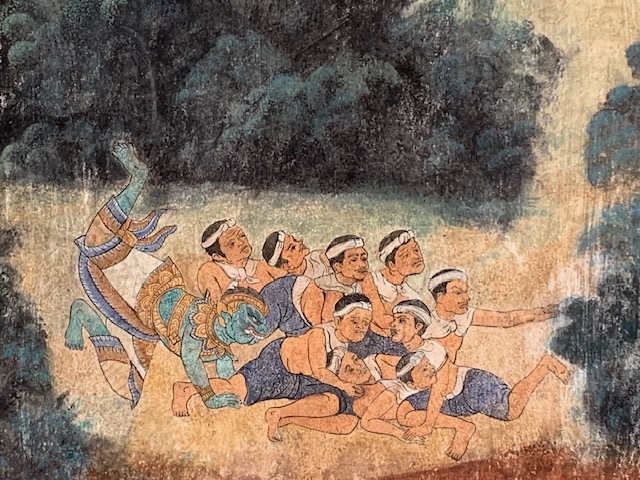
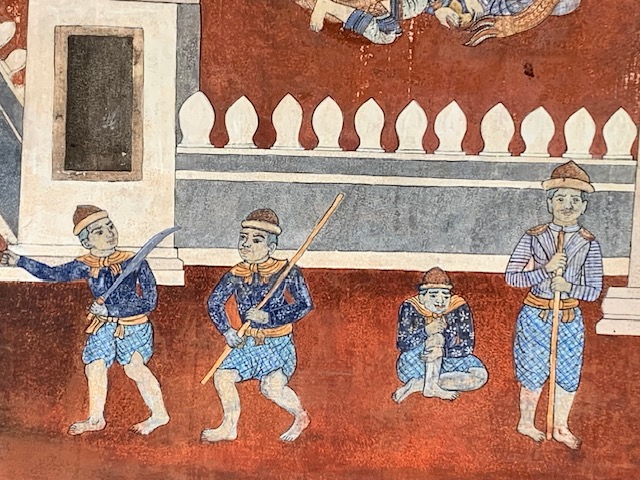
Phnom Penh is an interesting, sprawling city that we only had a couple of days to explore. Colonial architecture, wide, elegant boulevards and modern buildings merge with the typical traffic chaos of South East Asian cities. There is the Russian market and near the hotel, by the Mekong River, is the Royal Palace. You can only visit a small part of it (it’s still an official residence) but the pagodas, pavilions and temples are impressively beautiful and there is a striking mural telling the whole story of the Ramayana. Over 90% of the population are Buddhist. But Hindu Dharma is important in Cambodia and even though fewer than 15,000 people follow it, the religion punches well above its weight in terms of historical and cultural significance, the Ramayana mural in the Royal Palace being a case in point.










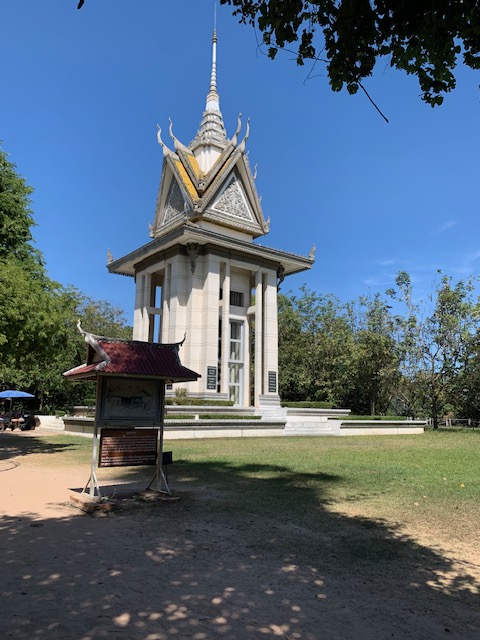
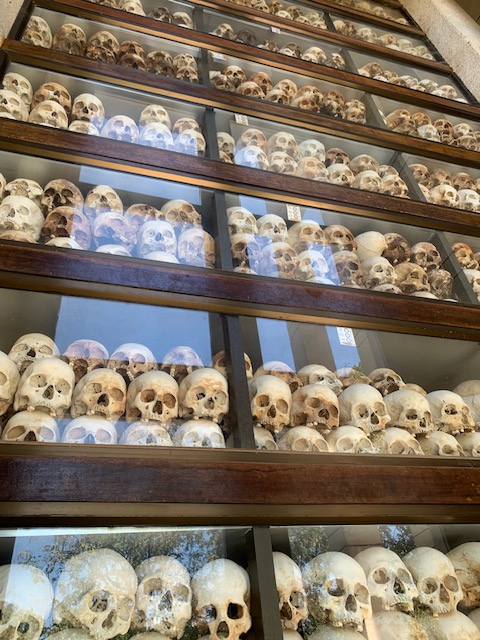
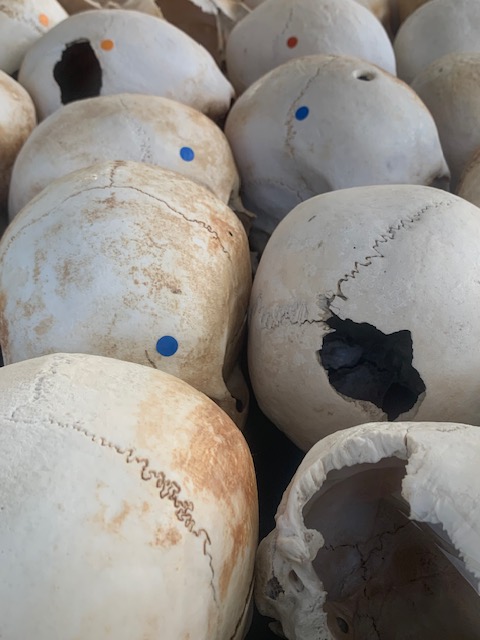
Genocide memorials, like the Killing Field at Choeung, near Phnom Penh, serve to remind us never again to go to such dark places. And it really was a dark, sinister, shadowy place, looming somewhere in Cambodia’s relatively recent history. I can’t write about it in this blog out of respect towards anyone sensitive to such details, because they are just too horrific. So take this as a disclaimer: if you want to know what happened during this terrible episode in Cambodia’s past, then by all means click here. But you have been warned.
Phnom Penh to Siem Reap
You can actually feel what the five-and-a-half-hour journey from Phnom Penh to Siem Reap is like by watching this short video. It’s only about a minute long, but all you need to do is put it on repeat and watch it 330 times. And voila. That was what it was like. You’ll feel it.
The buildings on stilts were interesting… to start with. And then those billboards advertising beer, the rival brands touting their respective virtues, one next to another. The only other signs were for the Cambodian People’s Party. But there were no rival brands next to them. The opposition doesn’t advertise. The fact that they’ve been banned by the government may have something to do with this.
It’s quite an event to hit a village where workshops and specialist retailers line the road. The diversity of these outlets is quite amazing: whether you’re looking for a Buddhist shrine for the home, or home appliances for Buddhists, you’re bound to find a shop selling exactly what you need and nothing else. No village post office, grocery store or corner shop here: I didn’t see any general retailers of any nature.
“I won’t be long, I’m just popping down to the watertank store…”
“OK, you couldn’t stop by the wheelbarrow shop on your way for me could you?”
“Yeh, sure. What do you need?”
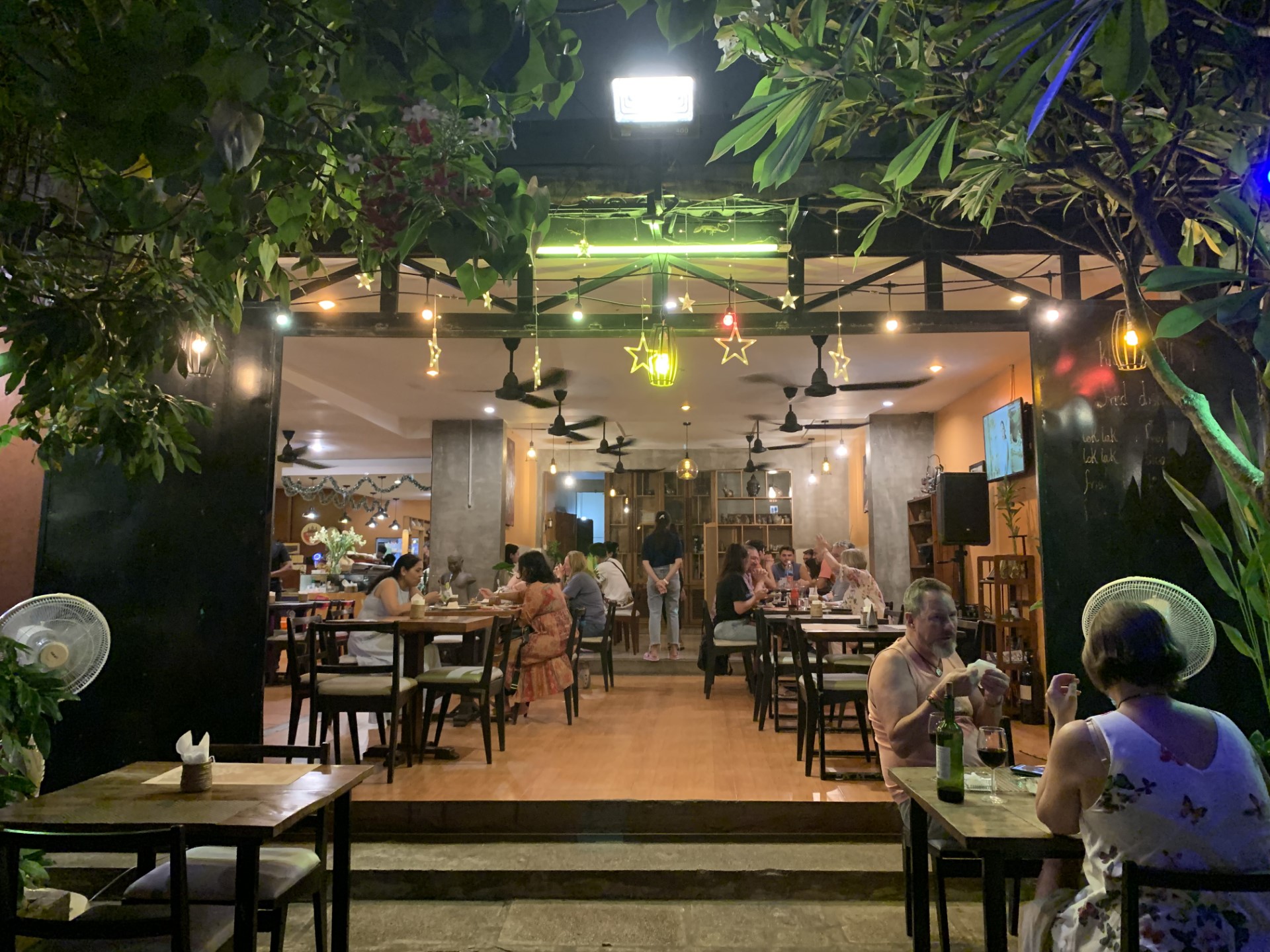
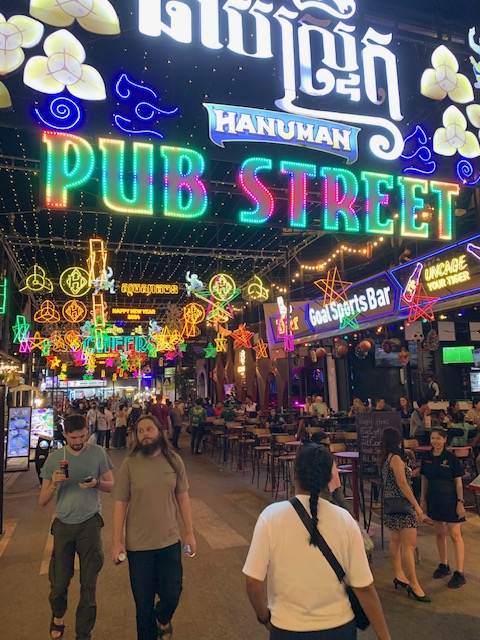
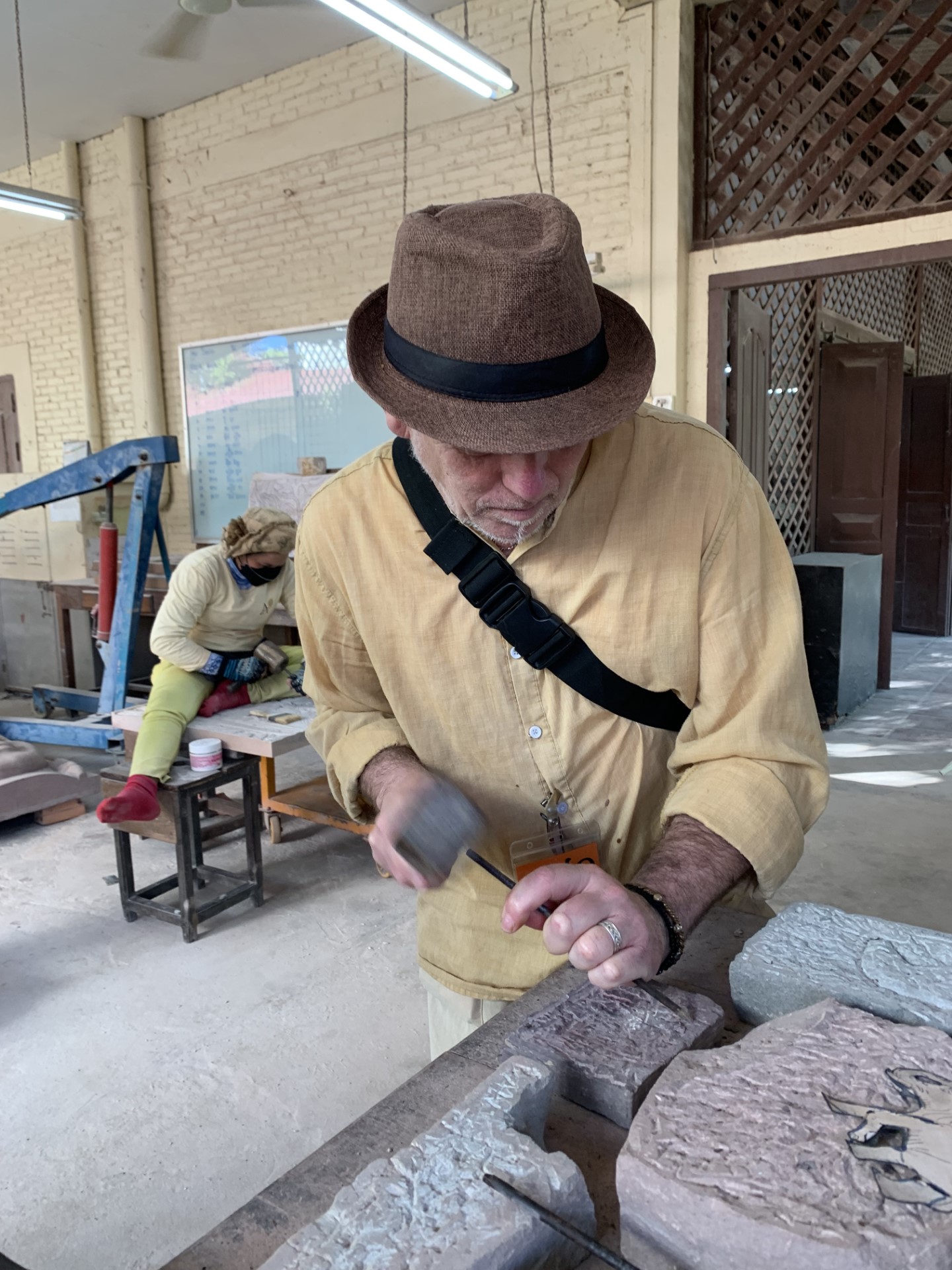
Siem Reap is a pleasant, laid-back town, apart from ‘Pub Street’ where over-priced food is to be had, you can have your feet nibbled by fish and a garish, tasteless array of neon signs make you think: “You have no right to be in a place like this.” At least it’s confined to one street. The adequate, friendly hotel we stayed at over the river was right amongst a taste-treat of local restaurants and there’s a night market on the waterfront. We visited a craft workshop, which supports the disabled and disenfranchised and saw at firsthand the considerable skills required to produce the lacquer-work and the wooden or stone carvings sold around here.



Angkor Wat
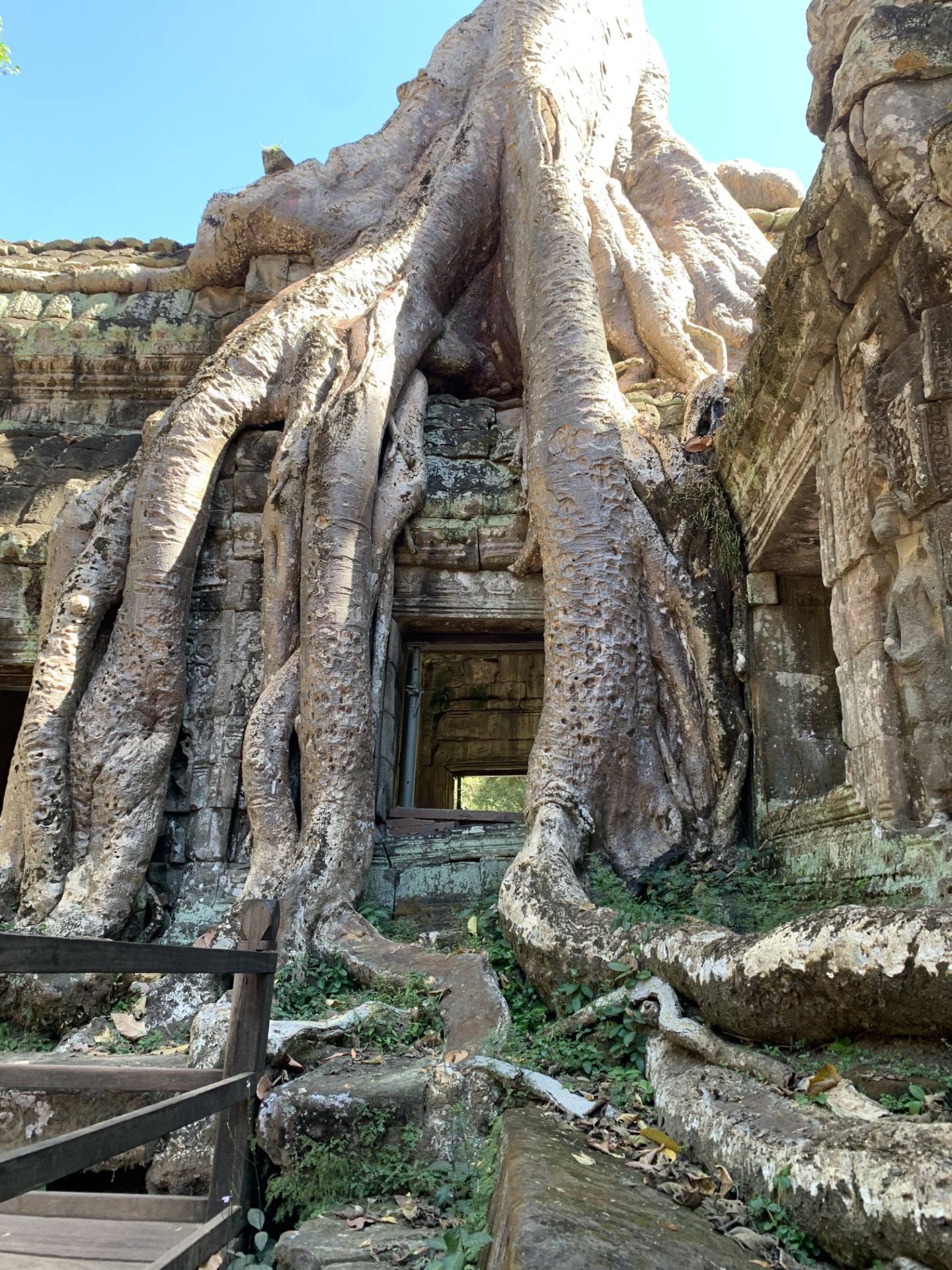
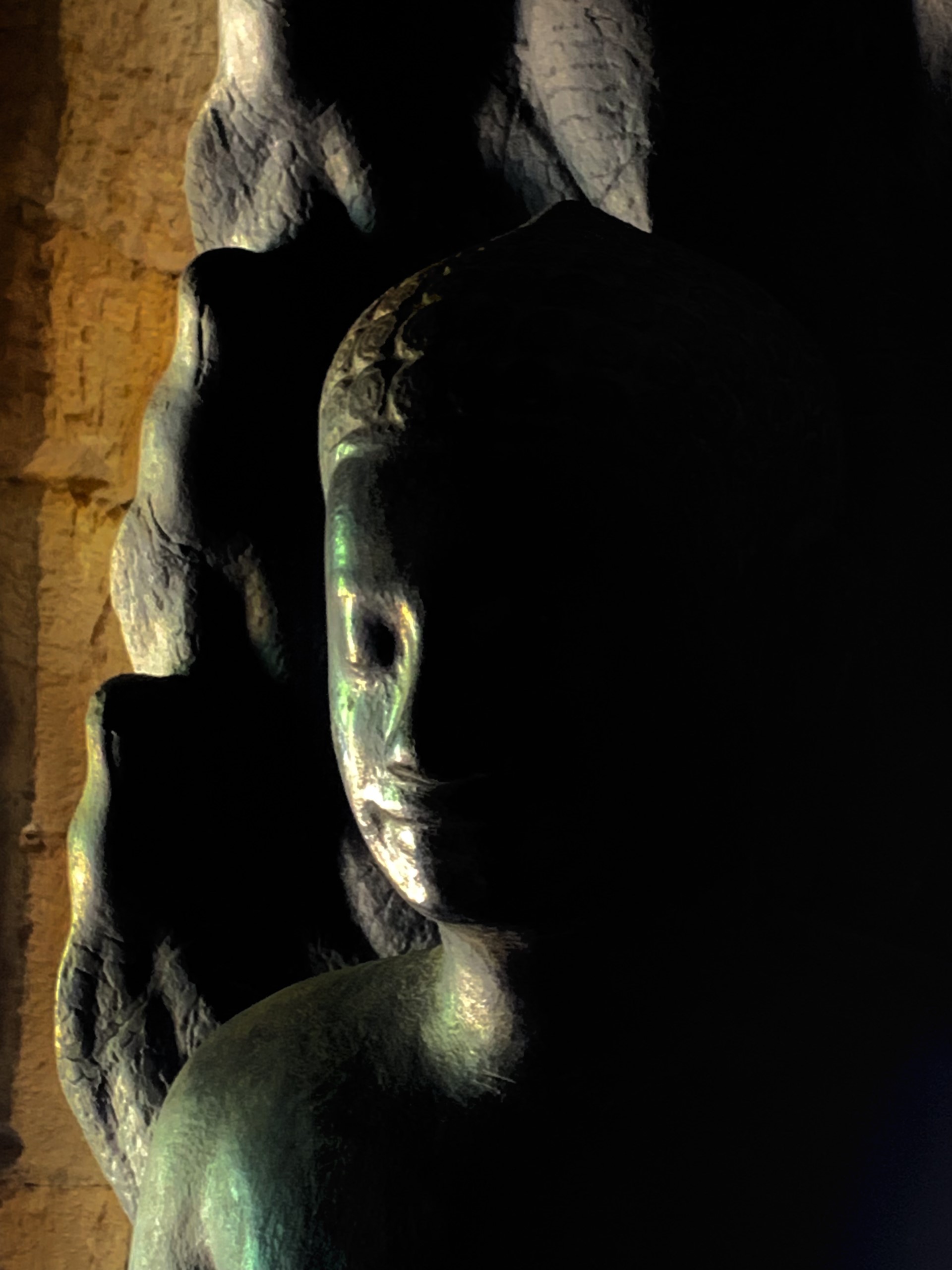
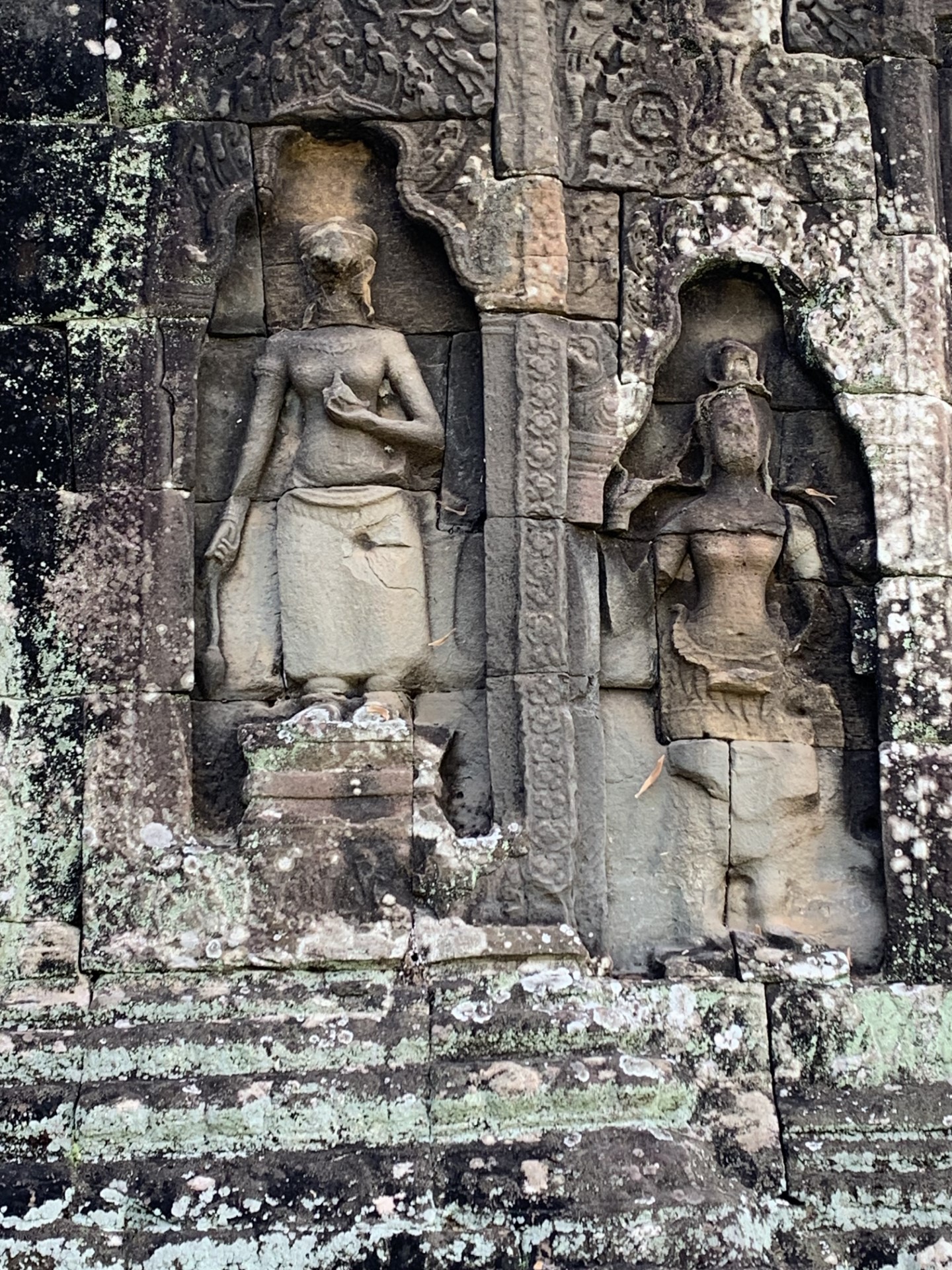
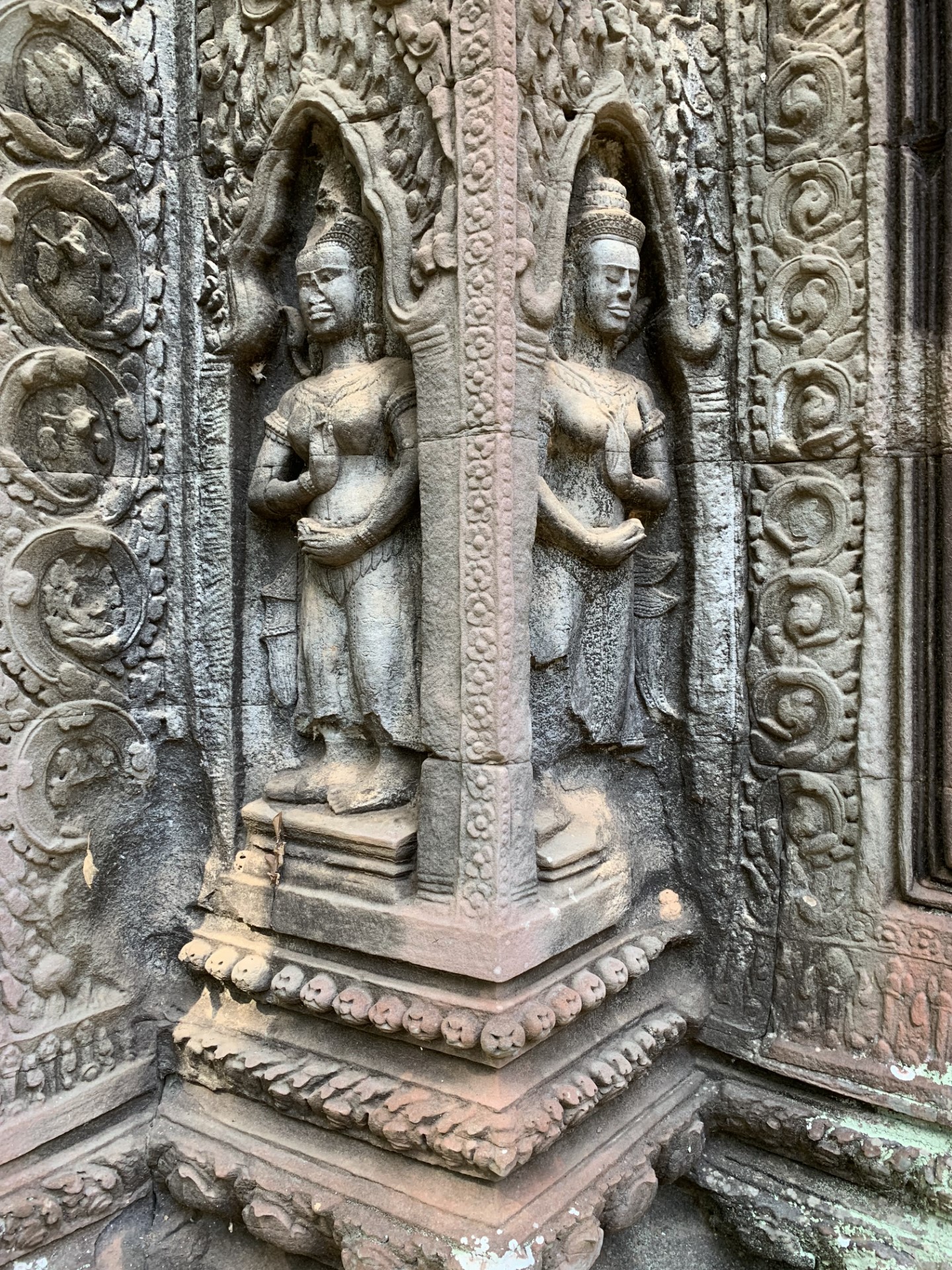
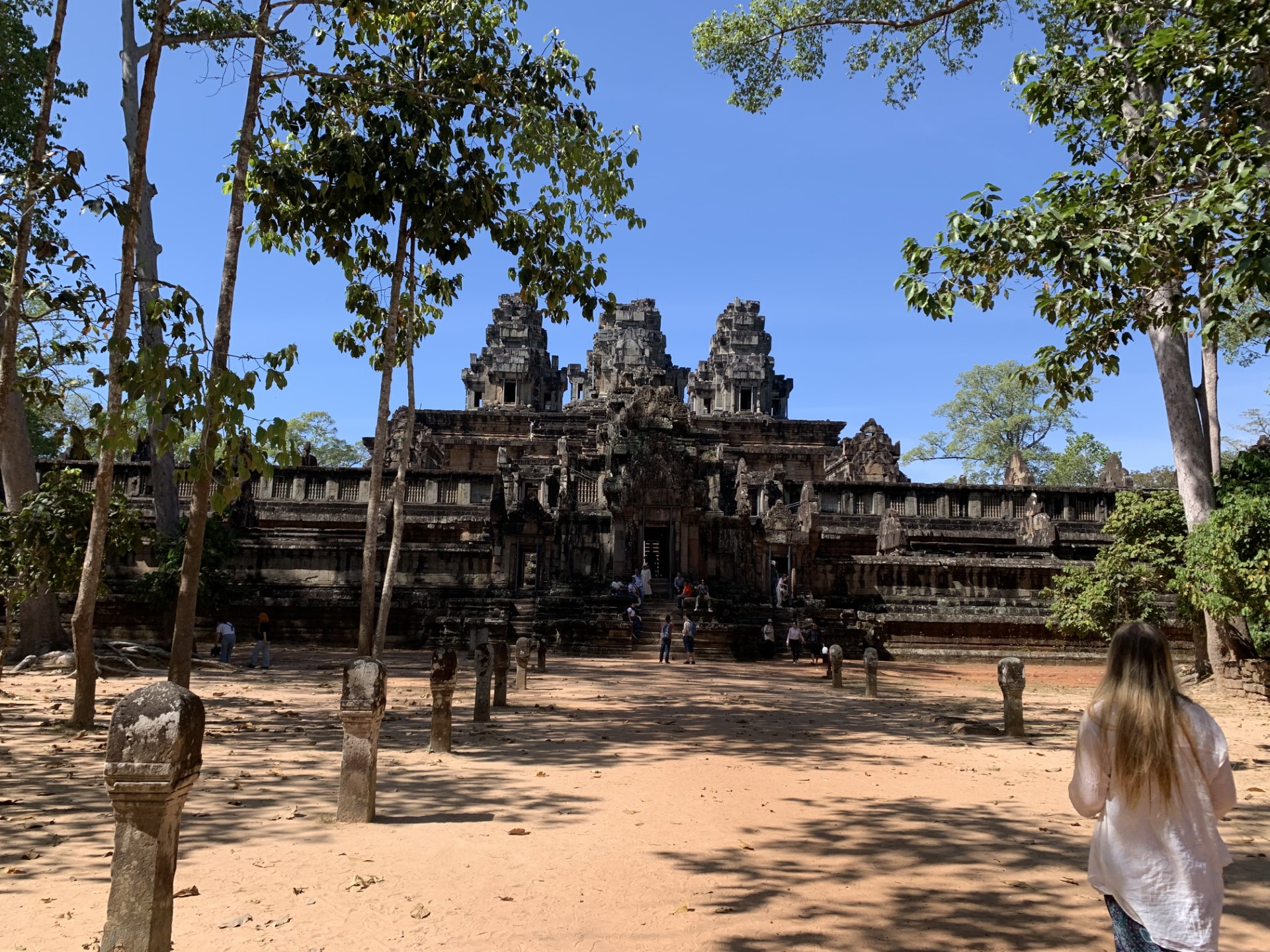
The first palaces and temples around Angkor Wat date back to the beginning of the ninth century, some seventy years before Alfred the Great became a king in England, just for context. They continued to be built for the next 600 years and hundreds of them survive today. At its peak, some one million people lived here at a time when London was just a small town of 50,000 inhabitants. Weathered to a shade that blends in well with the surrounding jungle, the buildings are at various stages of restoration and strangulation by the vegetation. They are mostly Buddhist, judging by the carvings, but there are some Hindu icons and even some ‘fusion’ temples. The construction of the famous Lotus Flower Temple of Angkor Wat, the mausoleum of King Suryavarman II, began in about 1140 CE: about the time of the Crusades when Philip Augustus, King of France, and his lover, Richard the Lionheart, were falling in and out with each other. So, in terms of timescale, the austere Crusader castles in the Middle East are pretty much contemporaneous with what would have been the magnificently guilded, graceful, golden almond-shaped domes of Angkor Wat. All of the statuary and bas reliefs we see today would have been painted too.
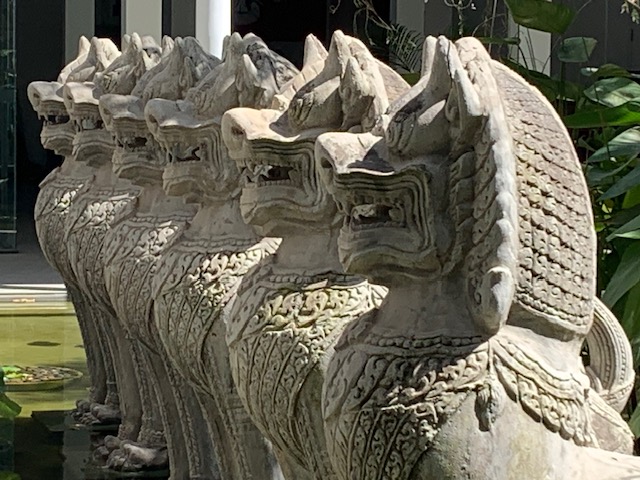
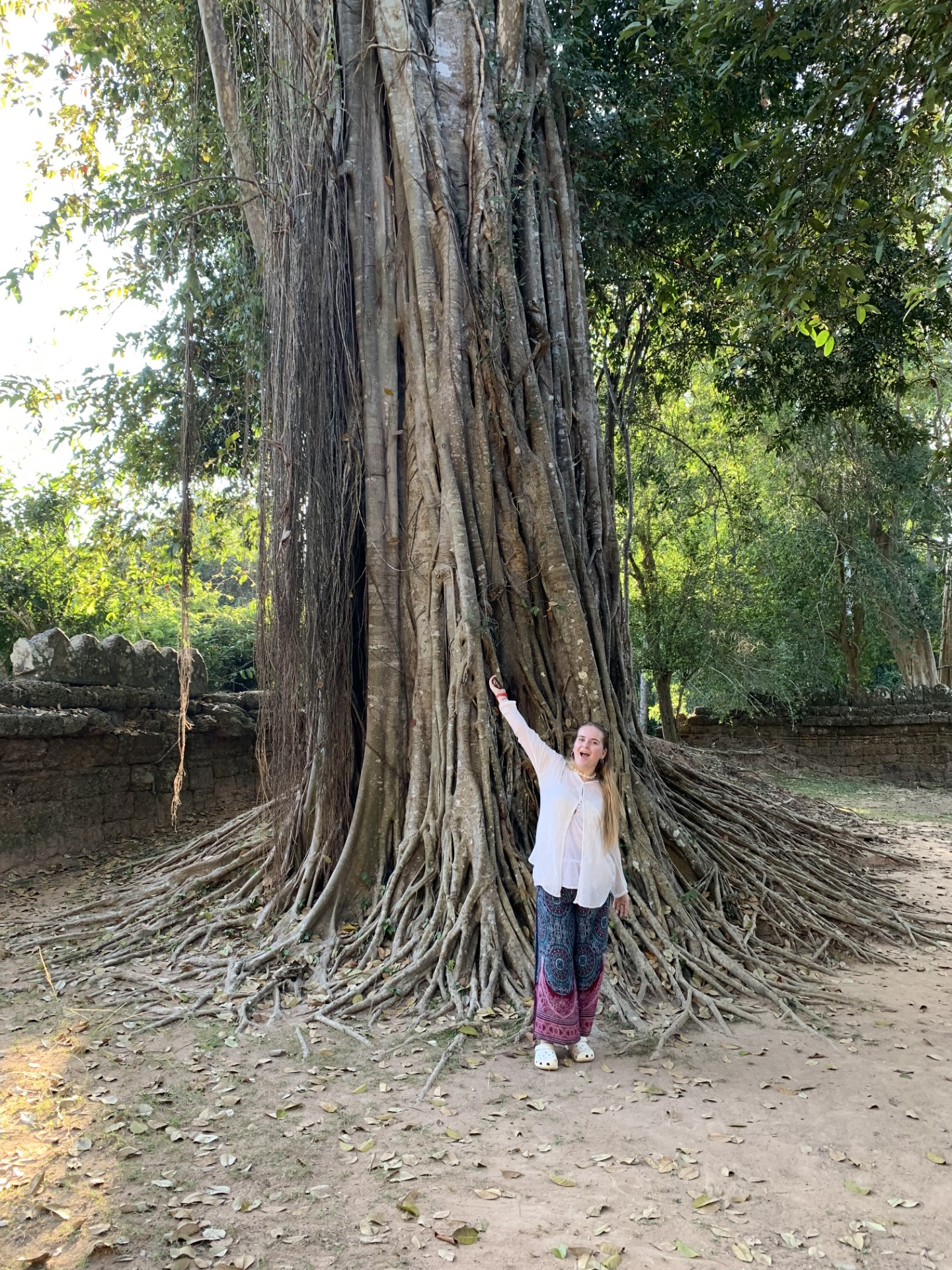
The site is so immense that it’s best to hire a friendly tuk-tuk driver for a couple of days, which is what we did, spending a couple of hours here and there at various temples in their glorious jungle setting (the high-pitched whine you hear in this video is the sound of the afternoon cicadas), enjoying the contrast of the bright orange robes of monks against the pastel hues of the backdrop and crossing bridges where lines of demons guard the entrances to structures or devas (deities) pull the tail of the Naga serpent (a symbol for the ‘churning of the ocean of milk’, or the precession of the equinoxes according to some). The temples are in various stages of their valiant attempt to withstand the invasion of the jungle and sometimes huge, ancient trees have merged with the walls and seem, for all the life of them, to have birthed the stonework from the base of their trunks. Iona, for her part, is delighted to initiate a series of photos of her standing next to some of the stupidly large tree roots.
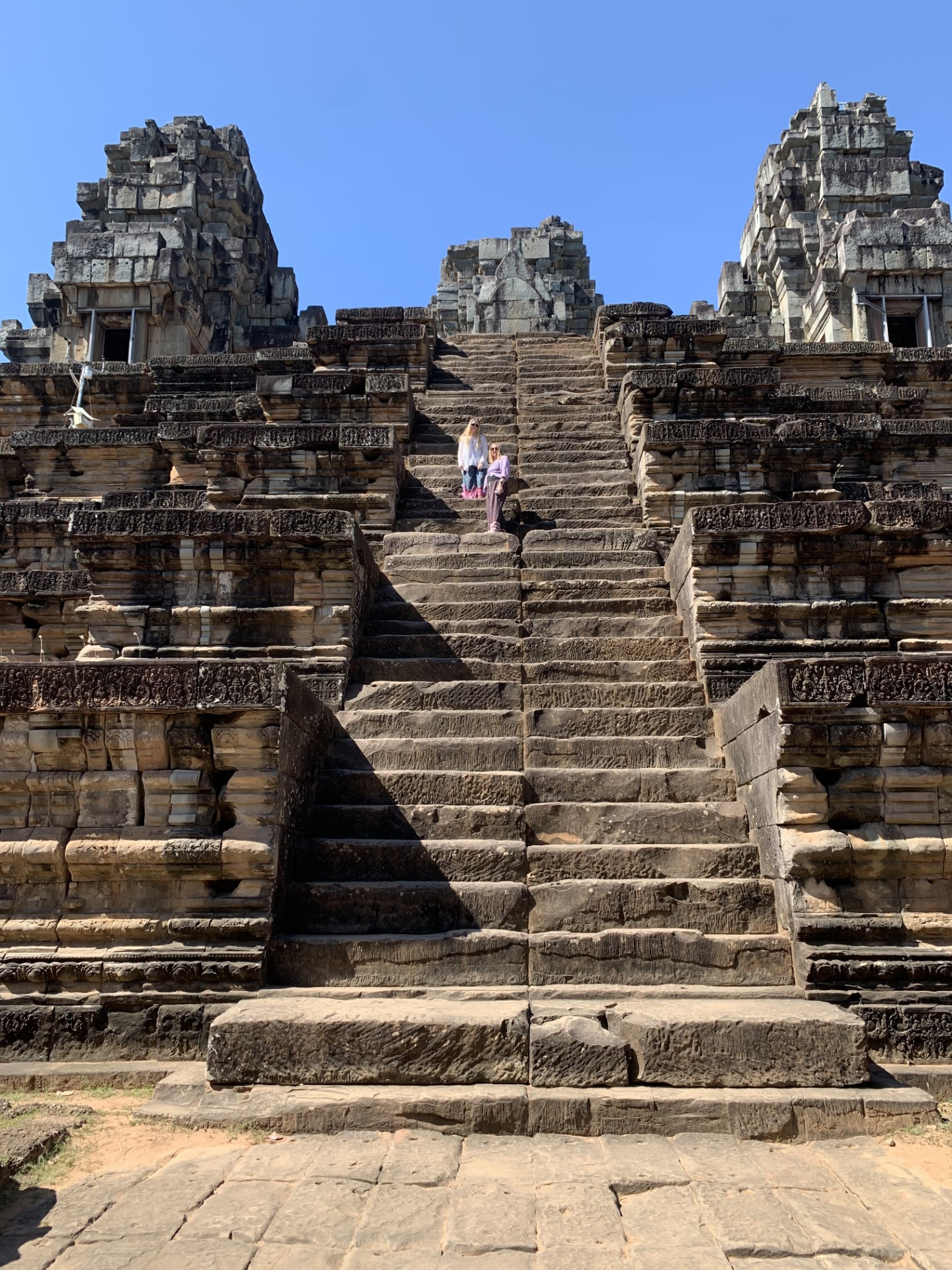
The steps up to the temples are all uncomfortably steep. They are the height of about half your shin and the depth is less than that of the length of your foot. Getting up there is not too bad, but coming down a 50-70-degree stairway with no handrails requires some concentration. Inevitably, it is worth the terror: you get a fabulous view or may get blessed by a Buddhist monk.







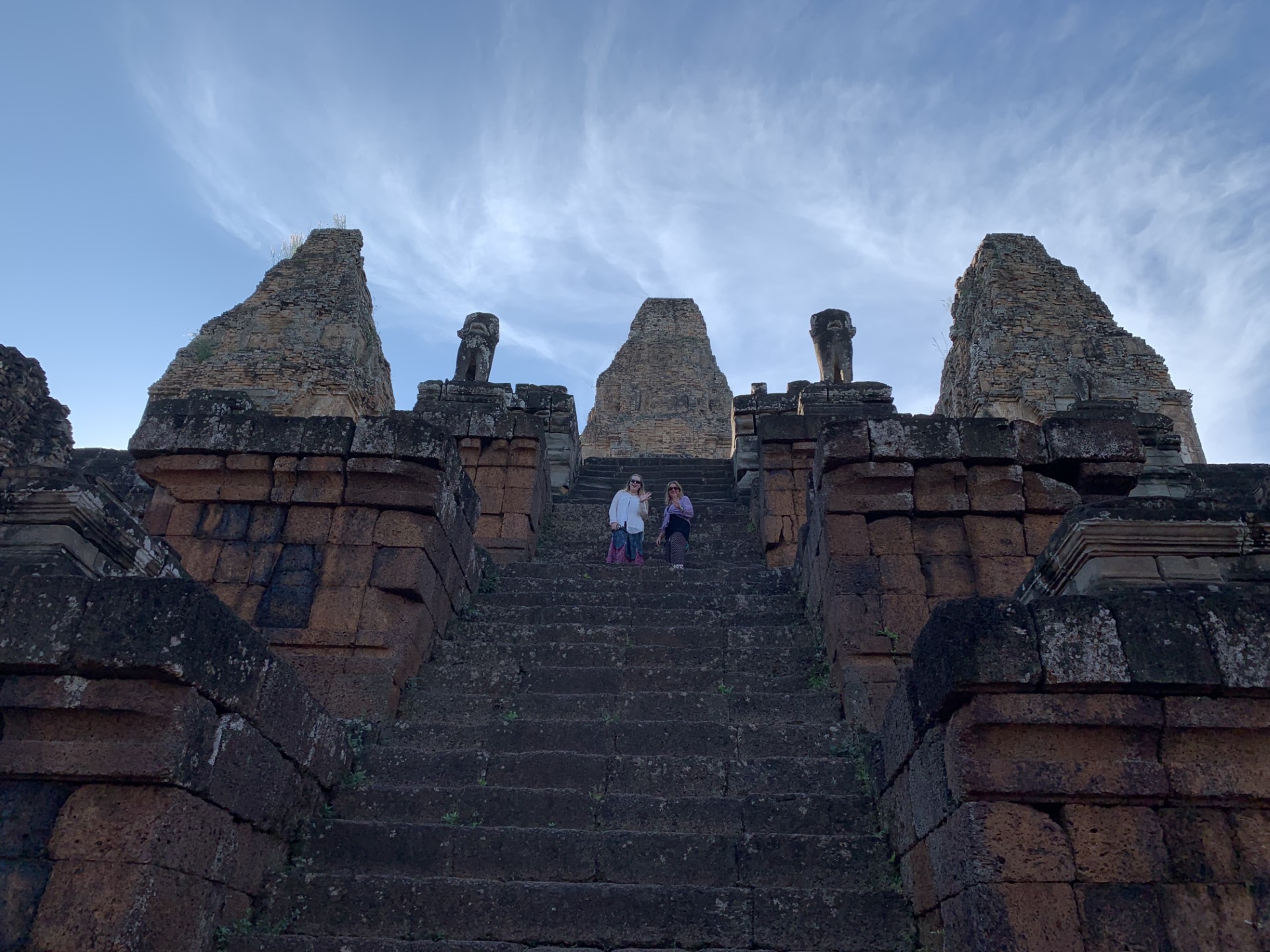

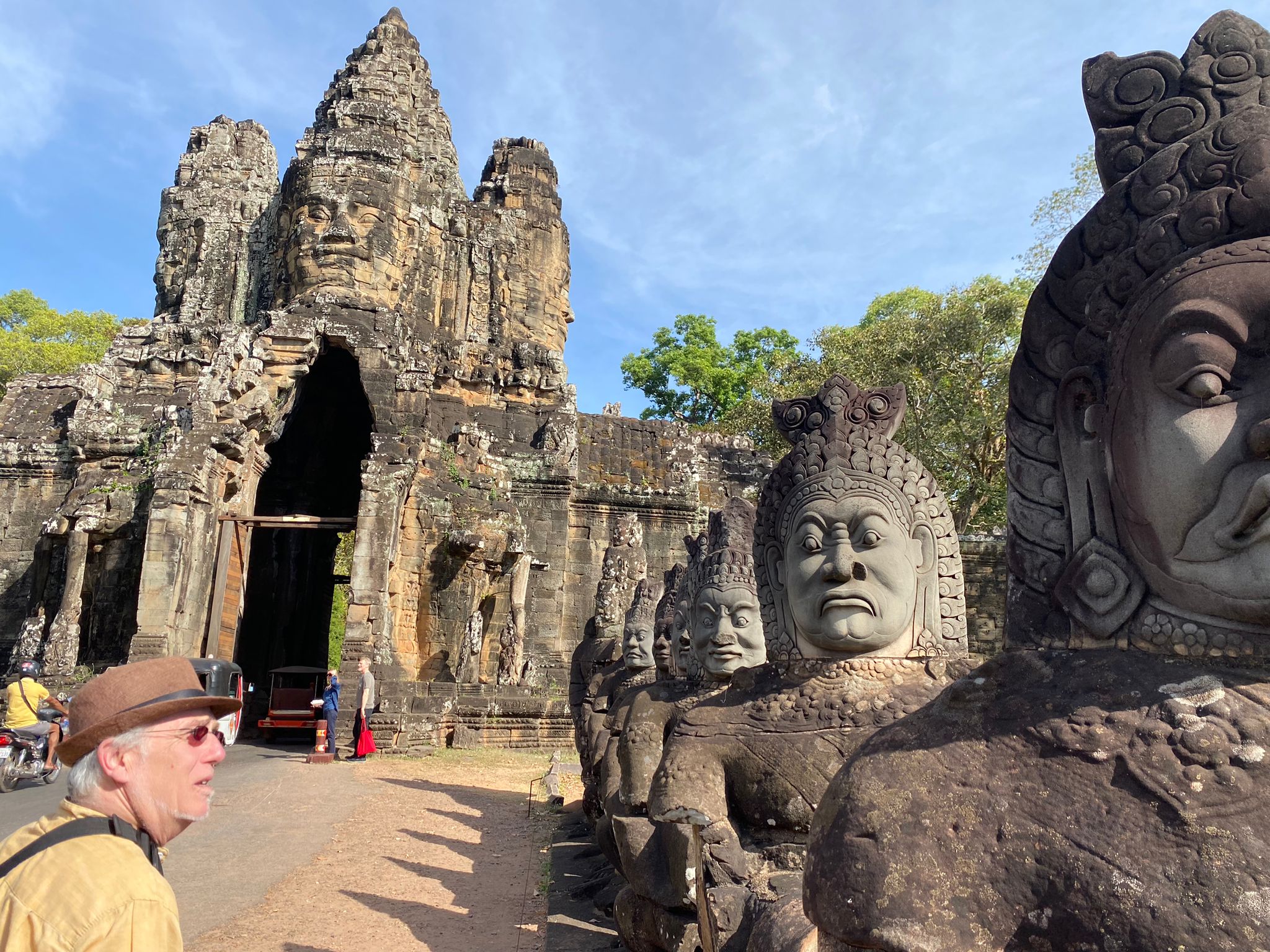

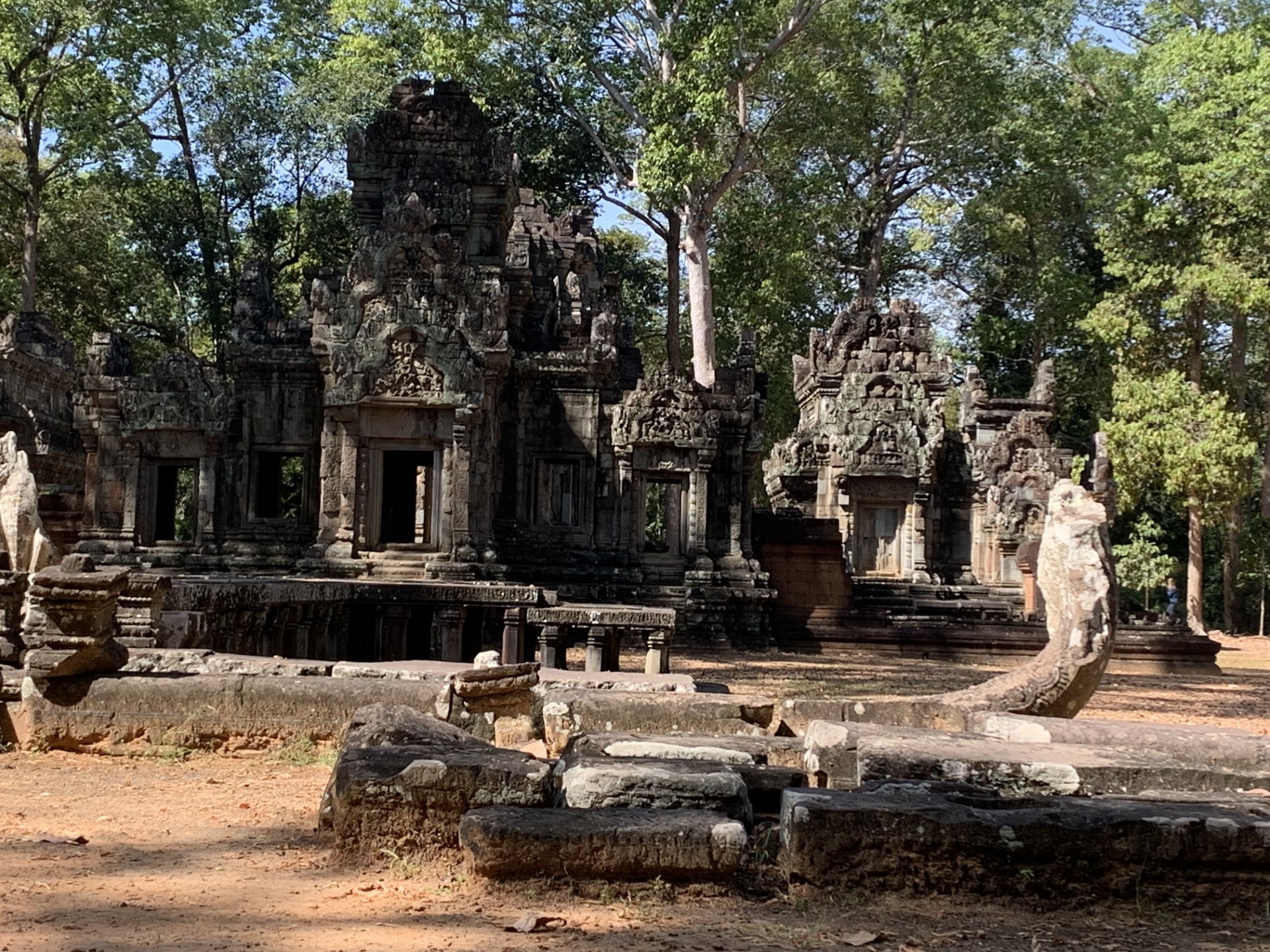


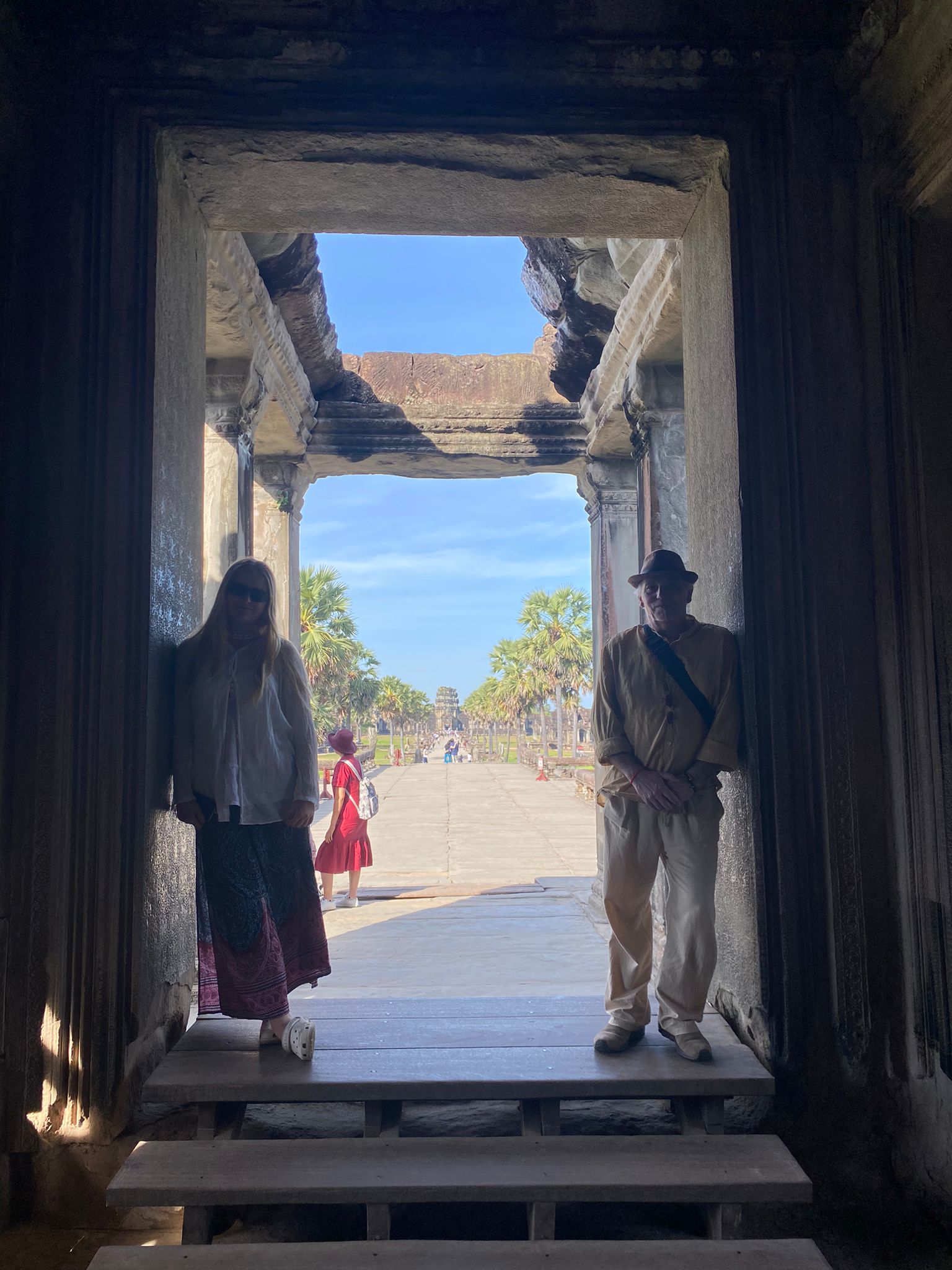


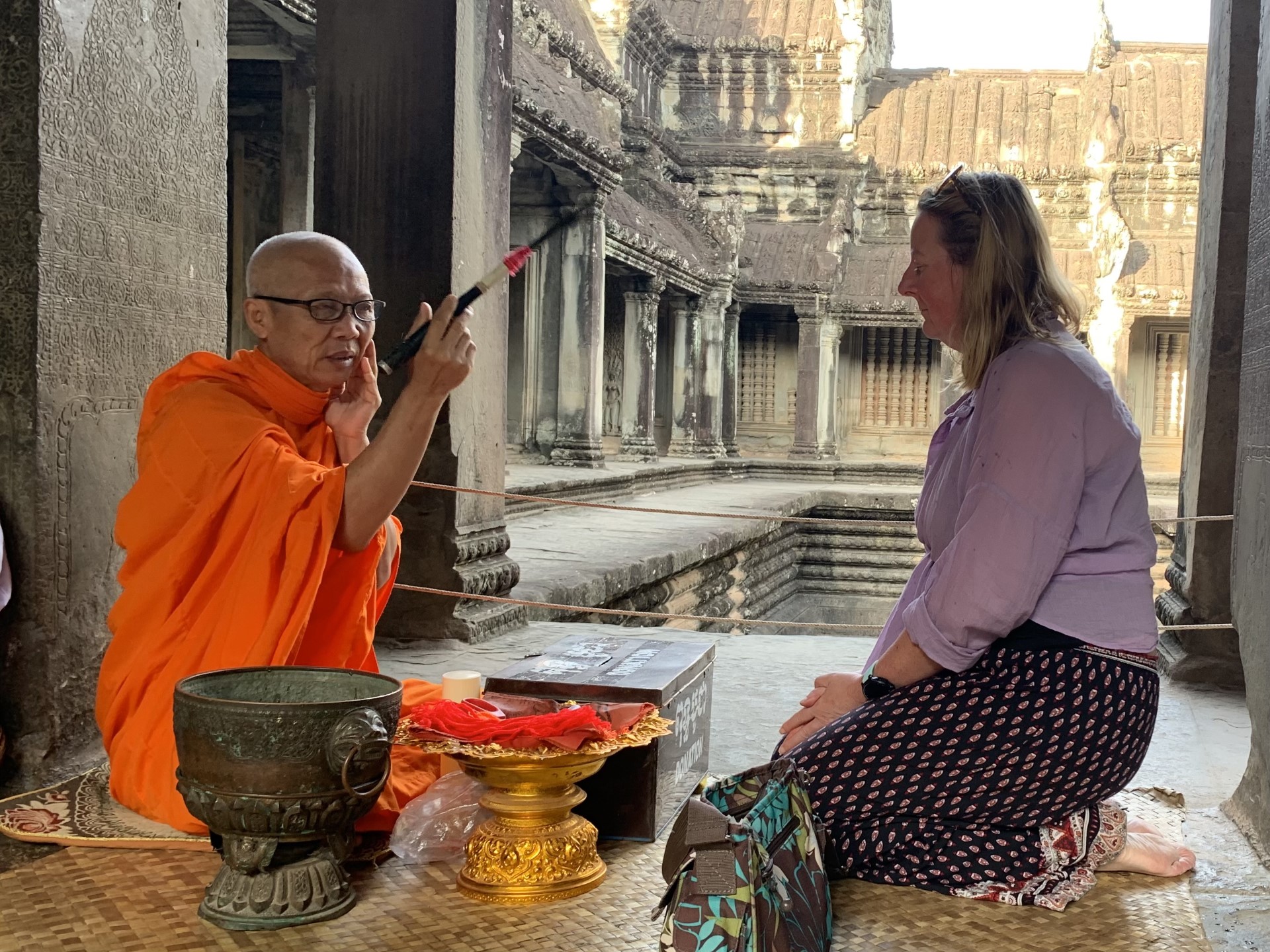
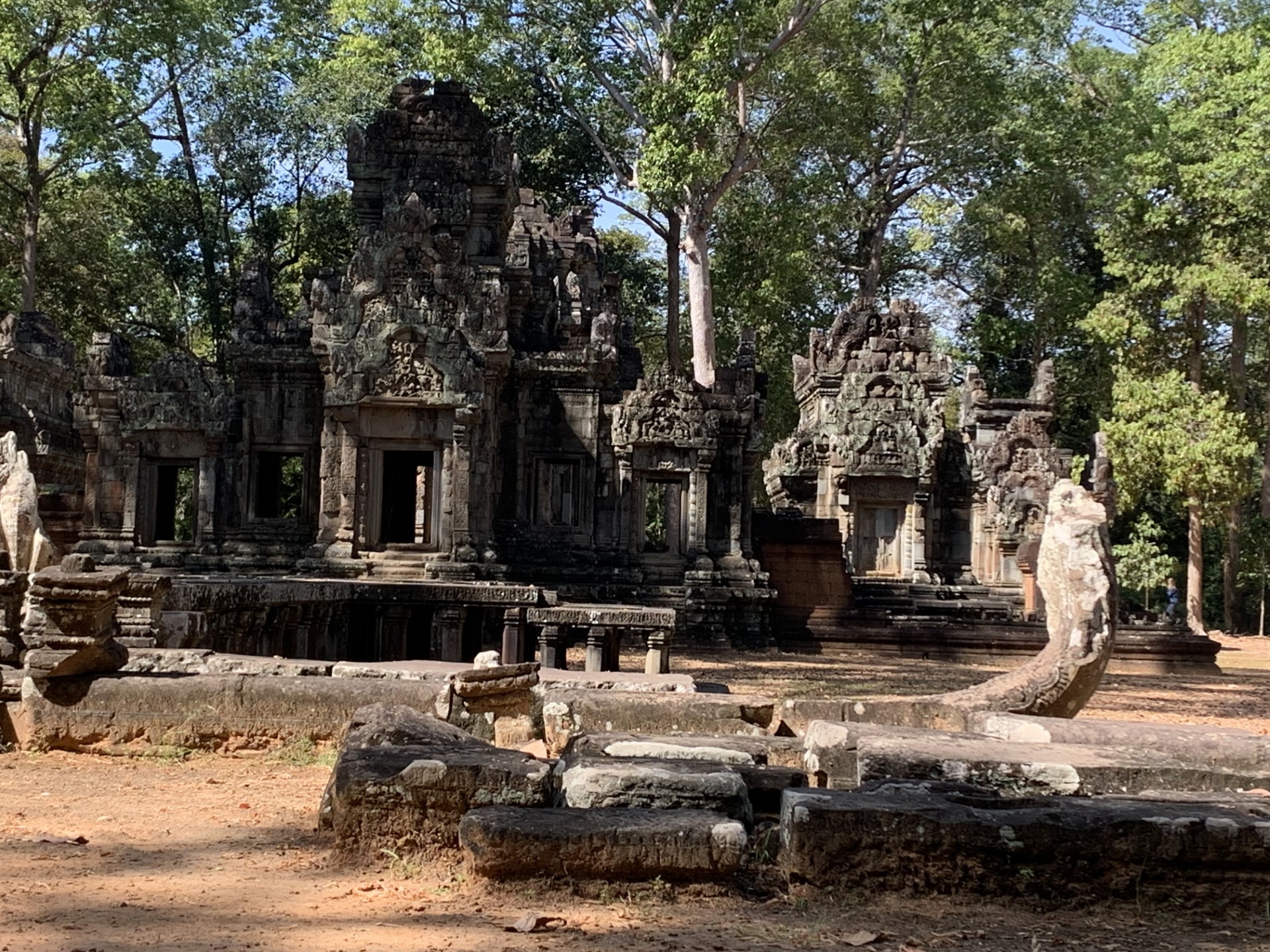


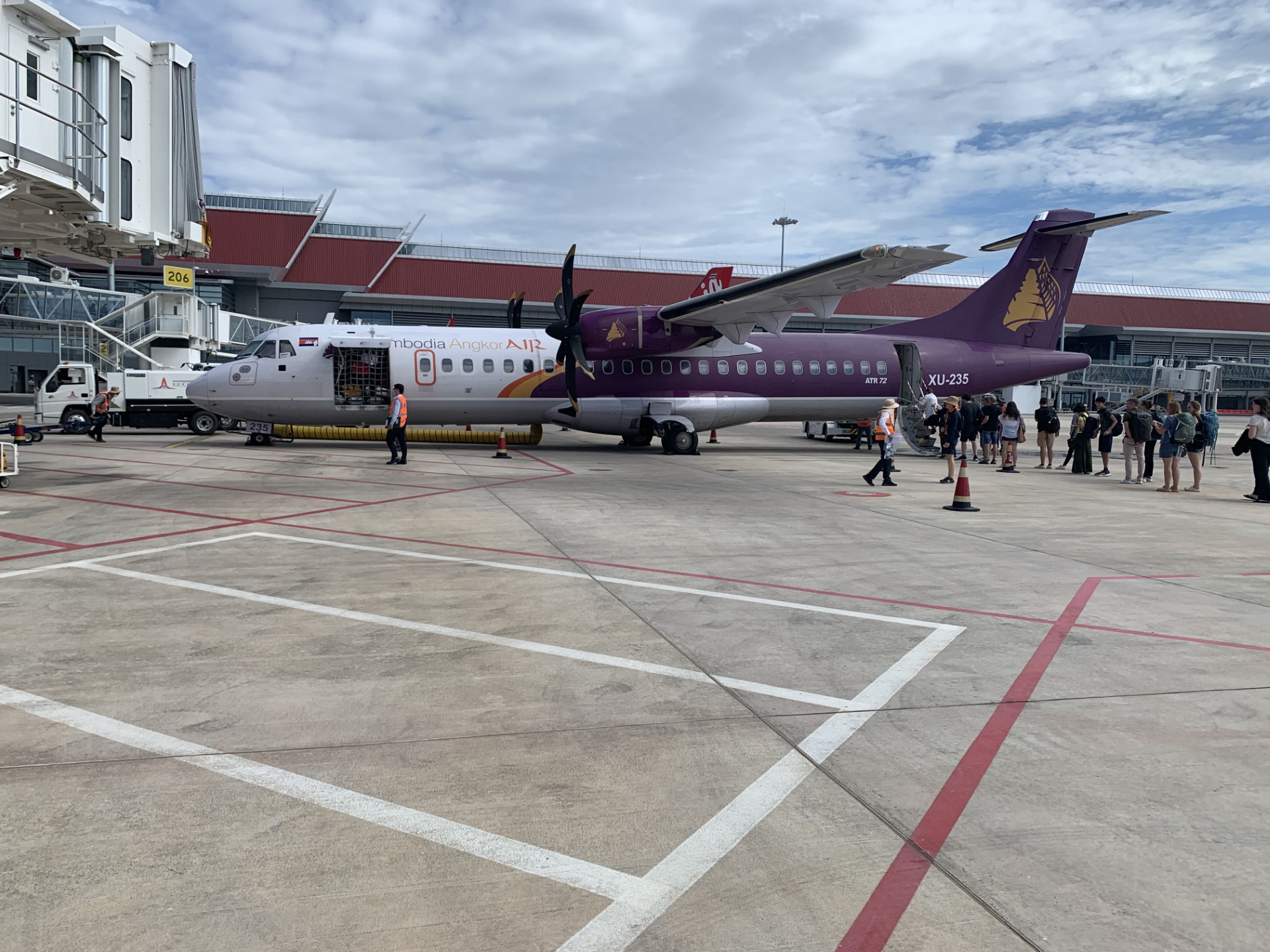
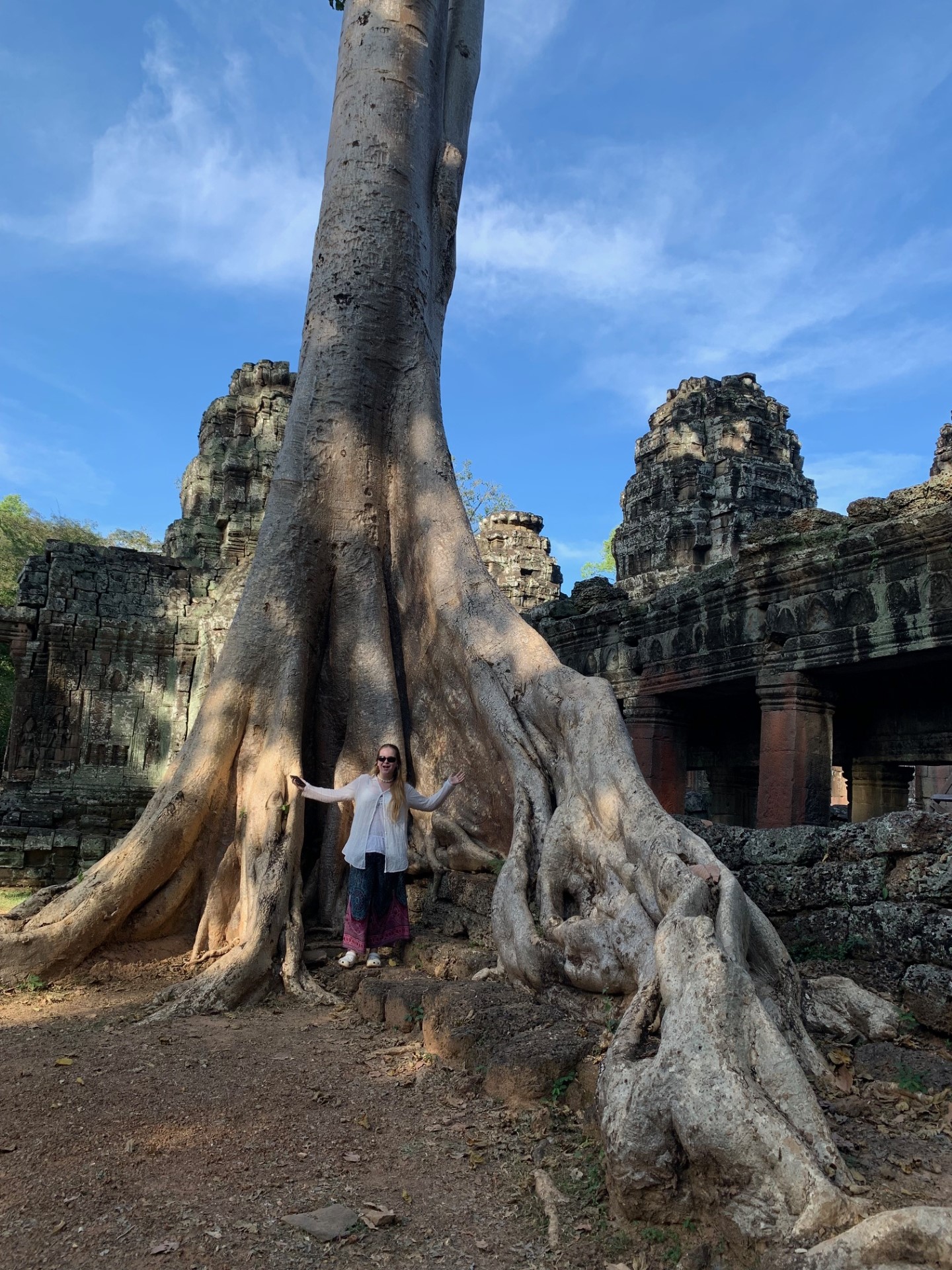


The brand new international airport was built about 55km out of Siem Reap by the (Chinese) Yannan Investment Group and replaced the one in town. They are going to build a whole new city out here. It certainly looks the part, having the appearance of an elegant, symmetrical pagoda, complete with a central spire, in silhouette from the straight new road, which is lined on both sides by cashew nut tree plantations. The flight down south is on a propellered plane – a first for me.
Koh Rong Sanloem
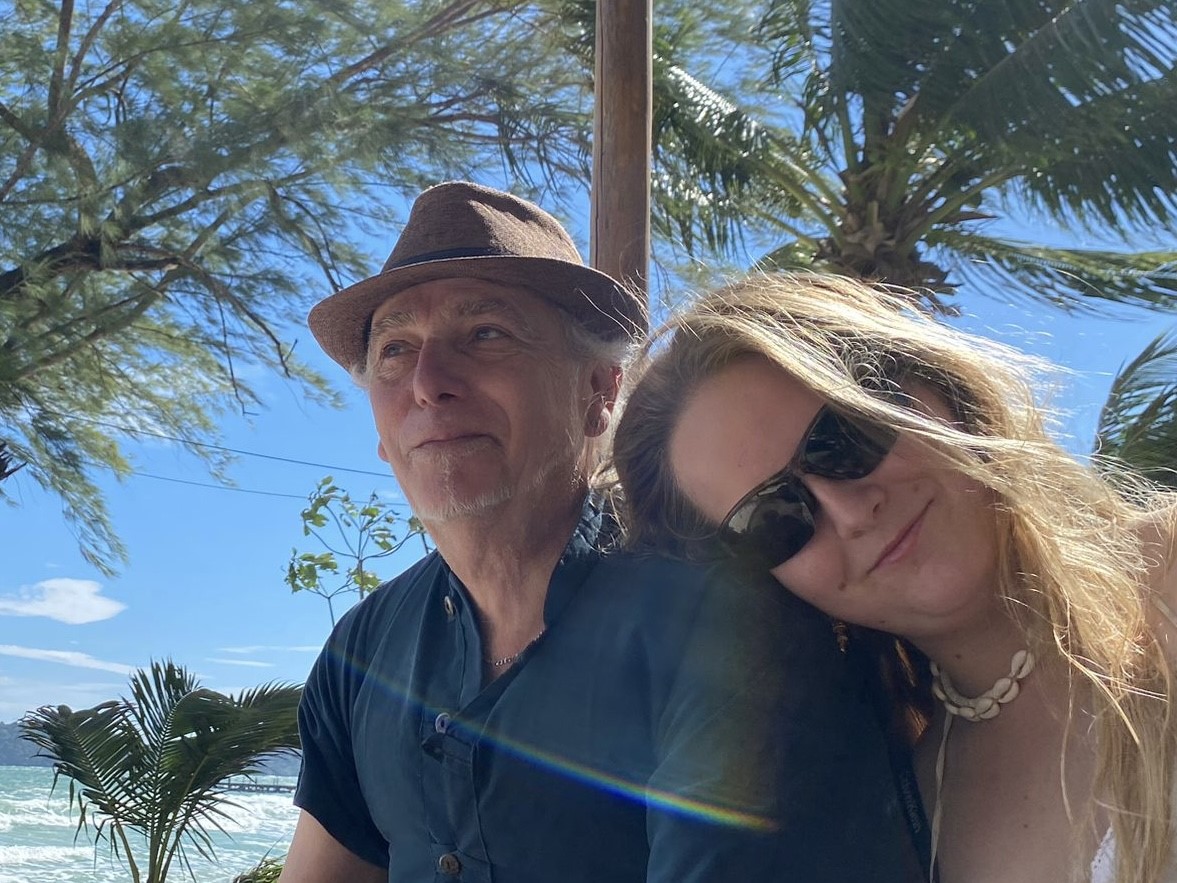
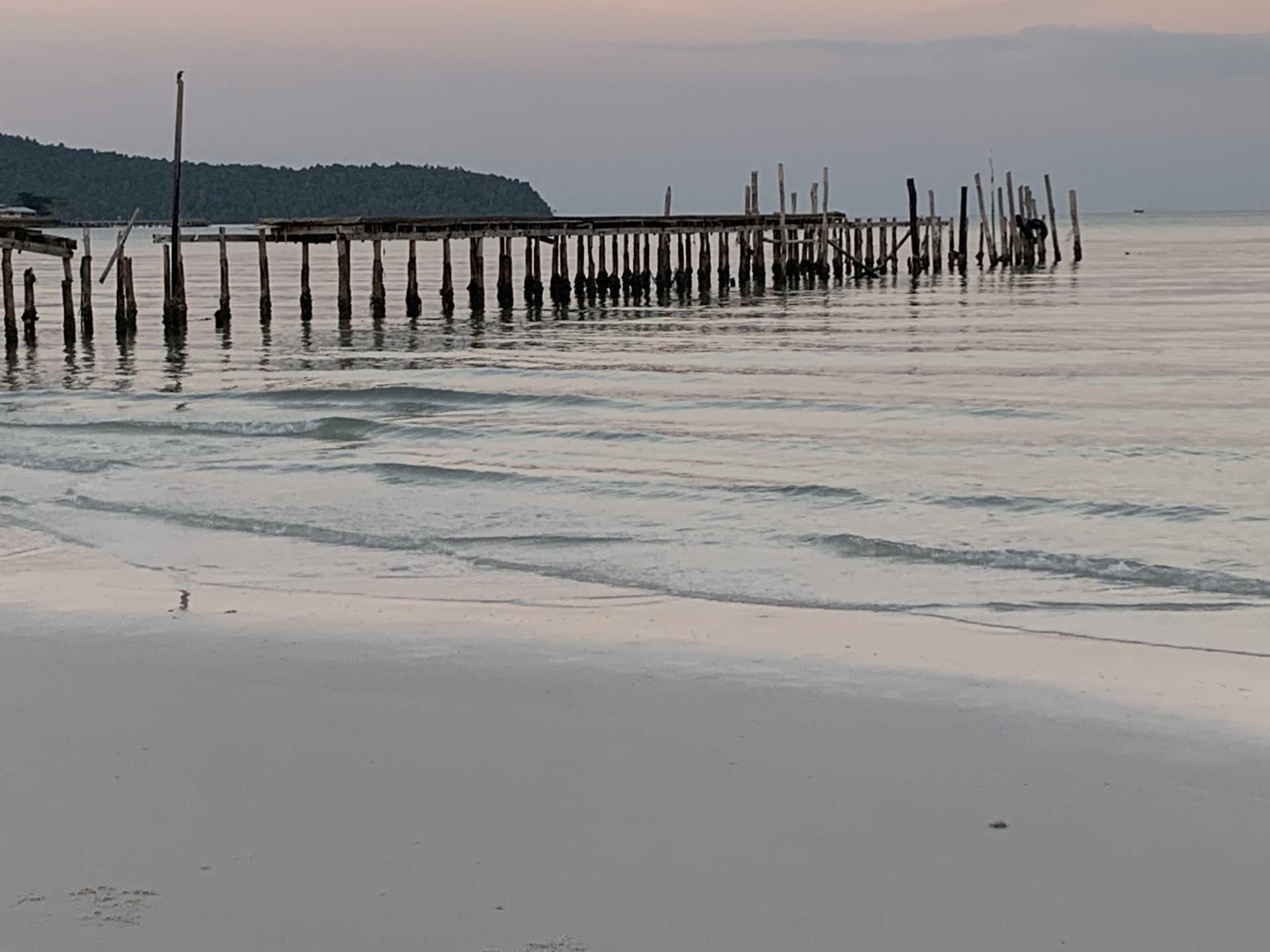
Taking a speedboat from Sihanoukville, we arrived on the island of Koh Rong Sanloem on Christmas Eve where we quickly made best friends with Onederz Beach Bar. With a daily 5-hour Happy Hour that saw you through two mojitos and a beer for $8, what’s not to like about the place? Oh, and of course the stunning beach-front setting helped too.


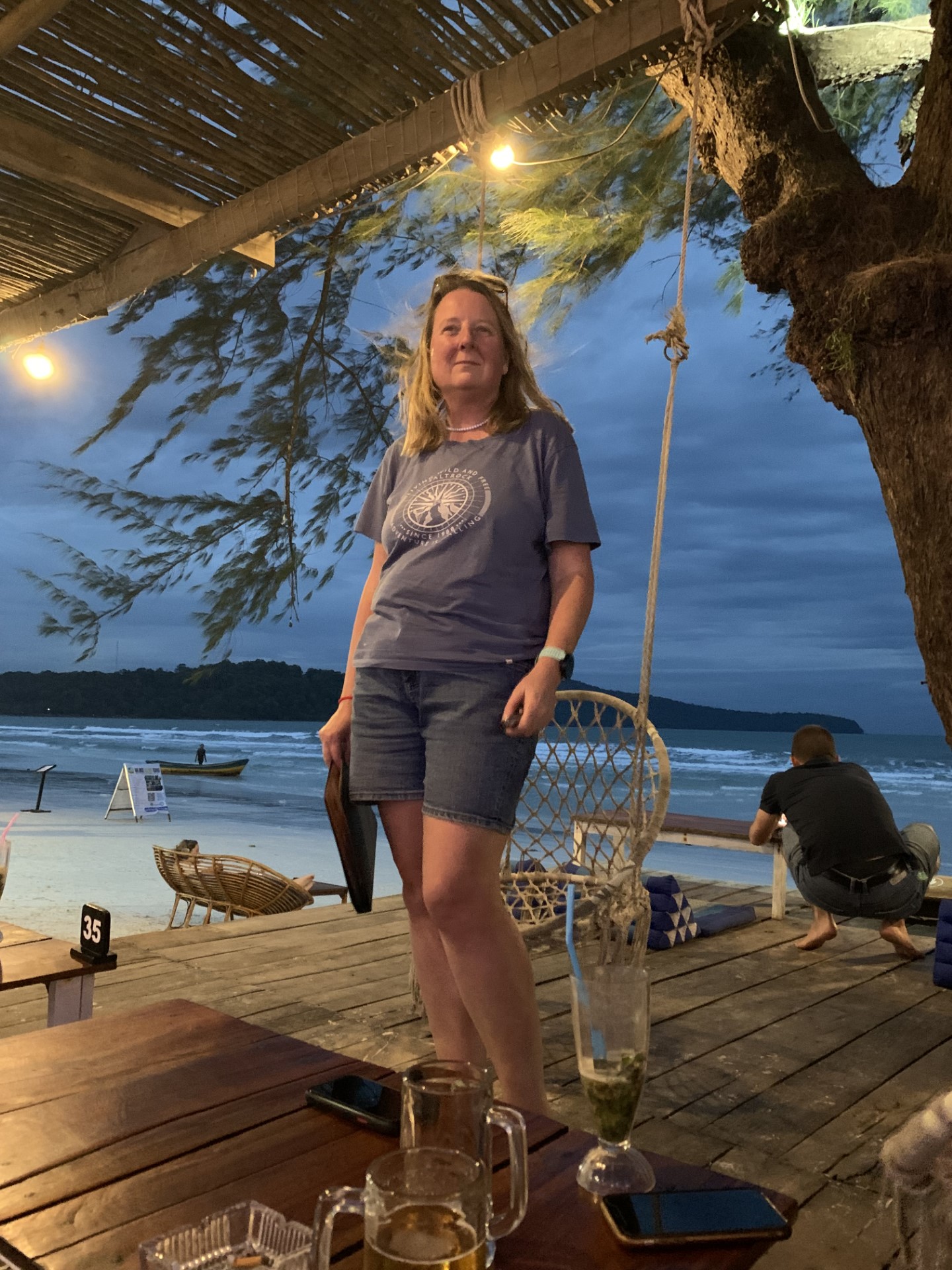




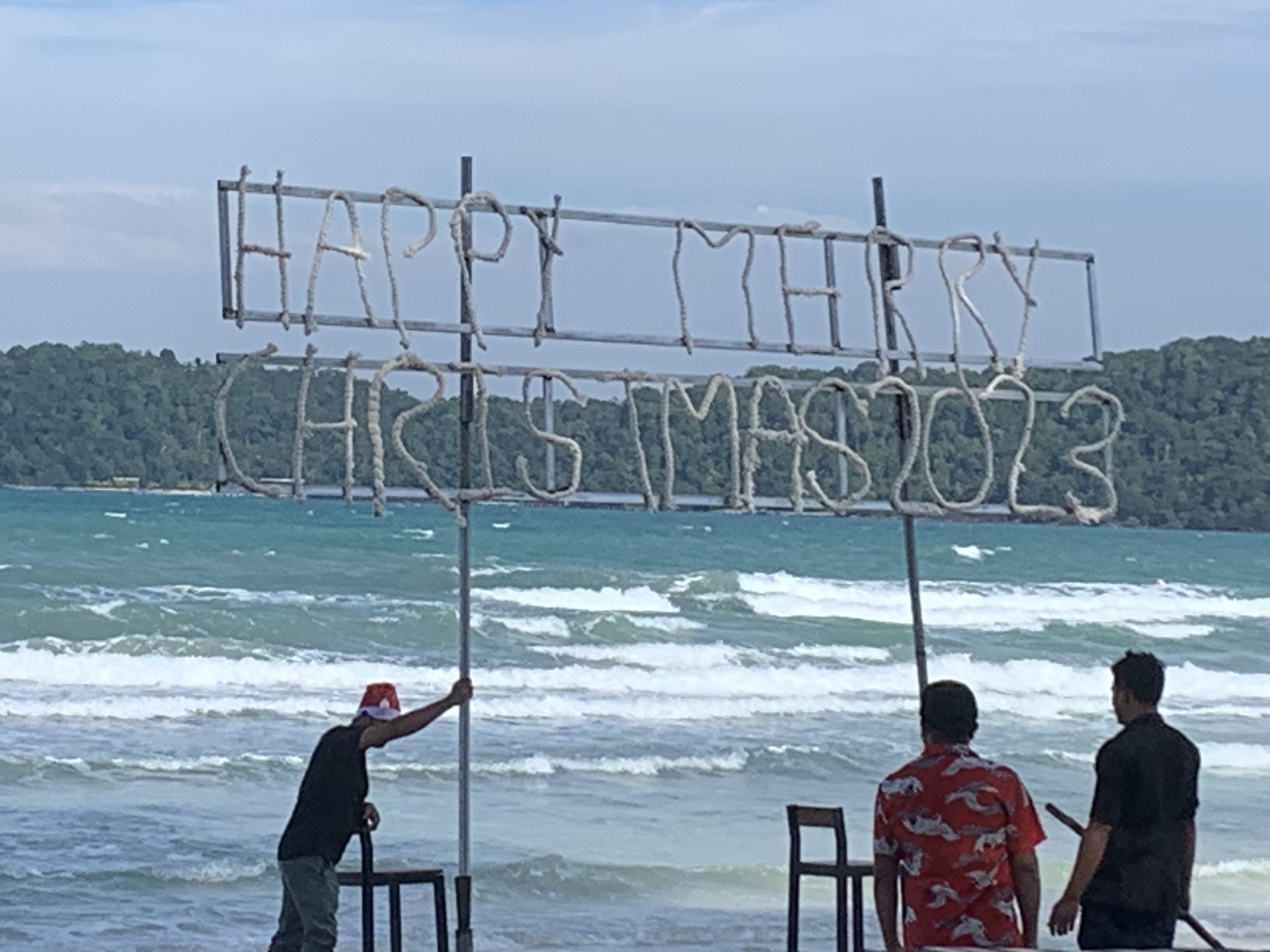

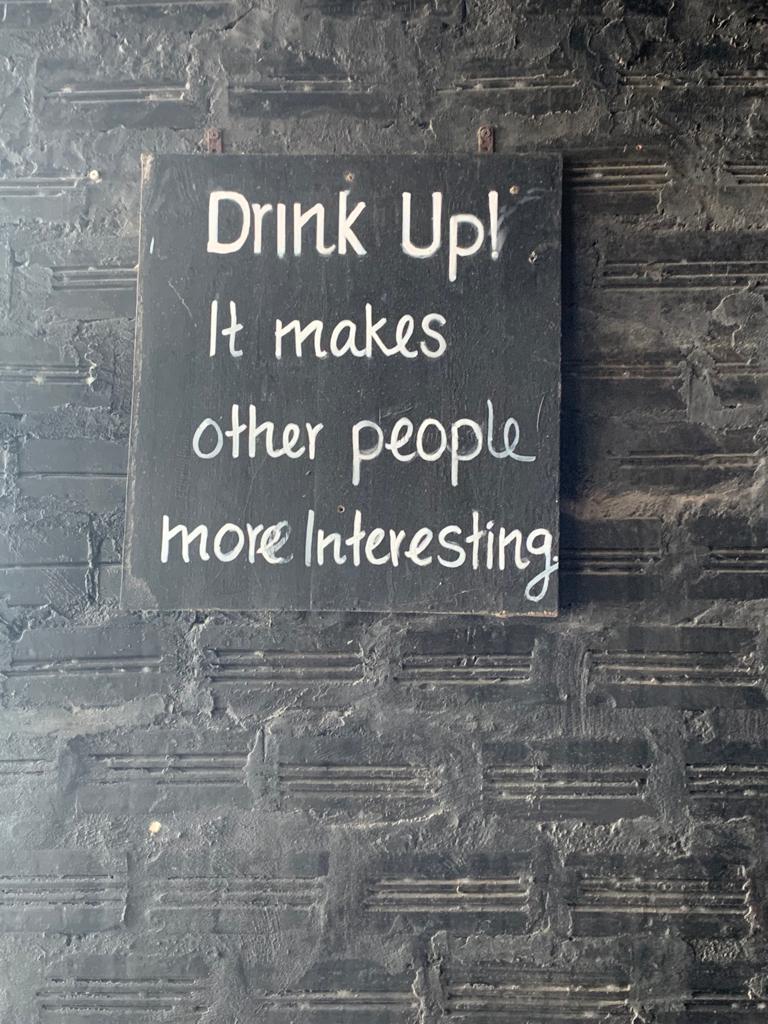

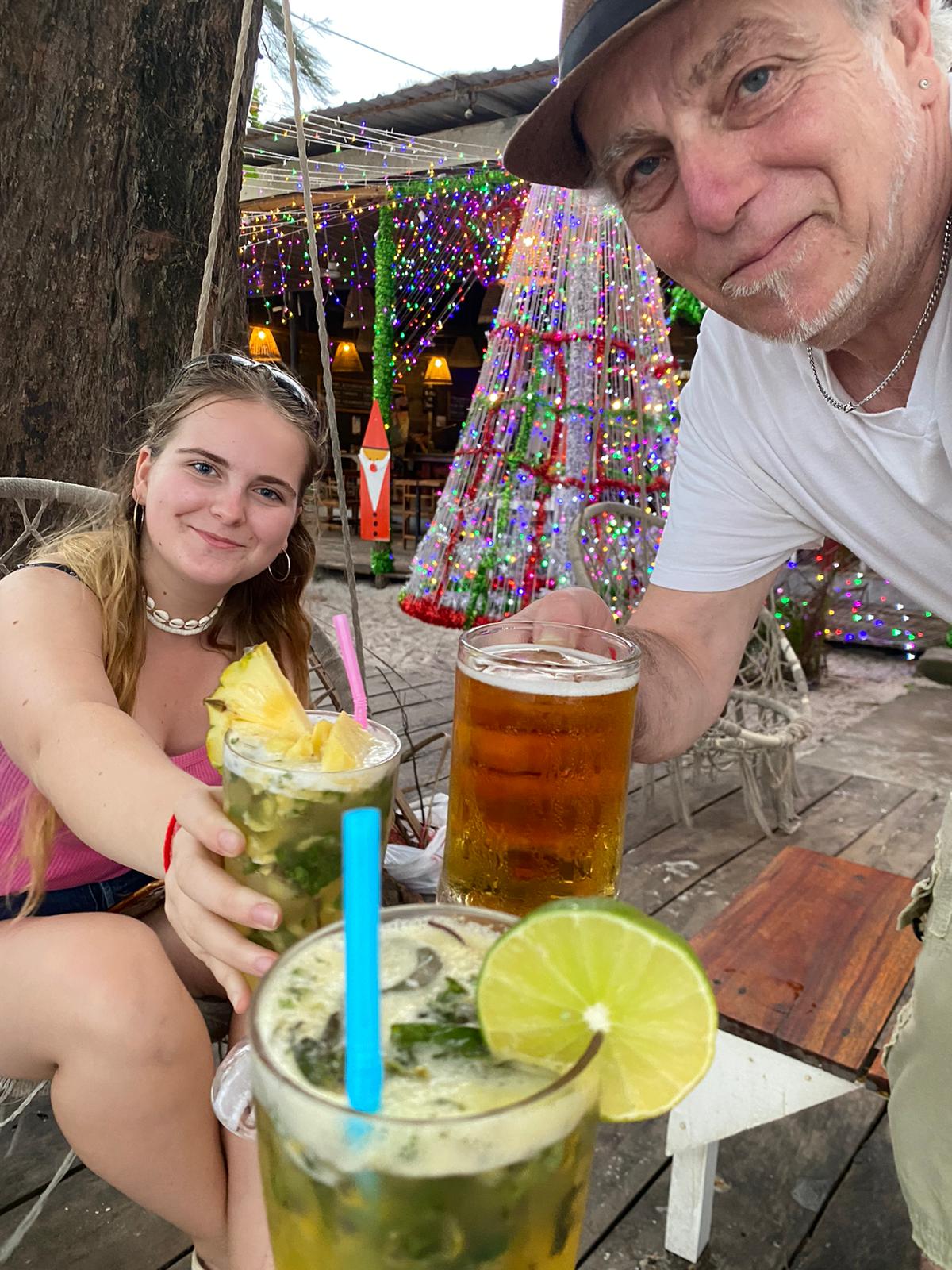
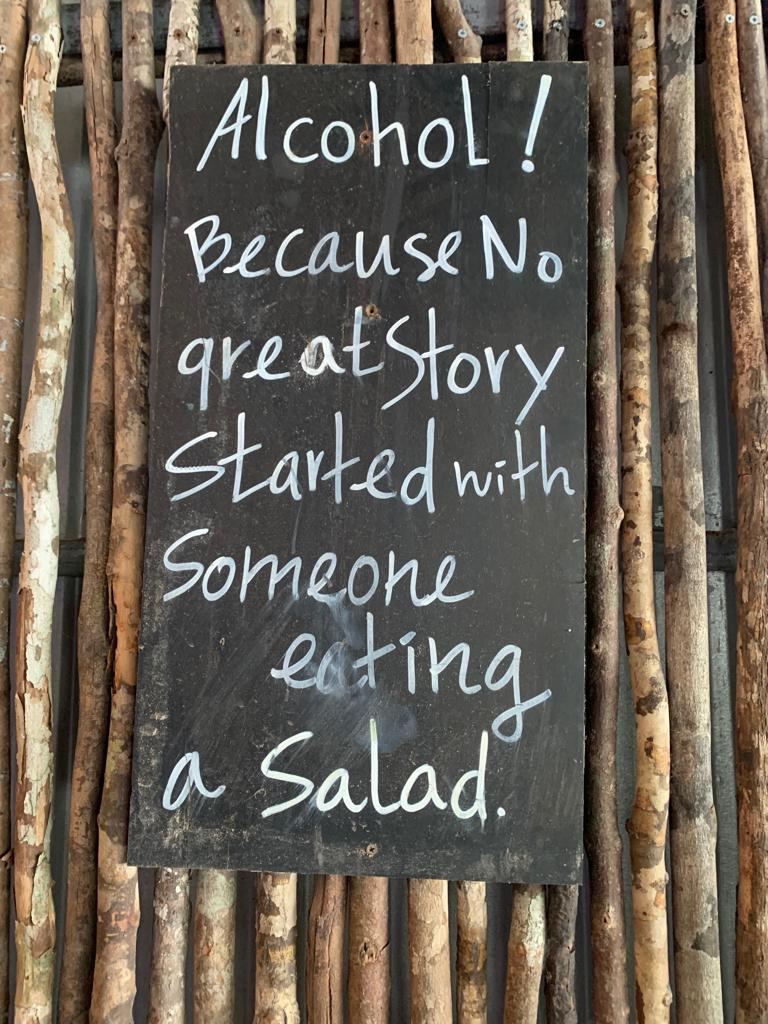
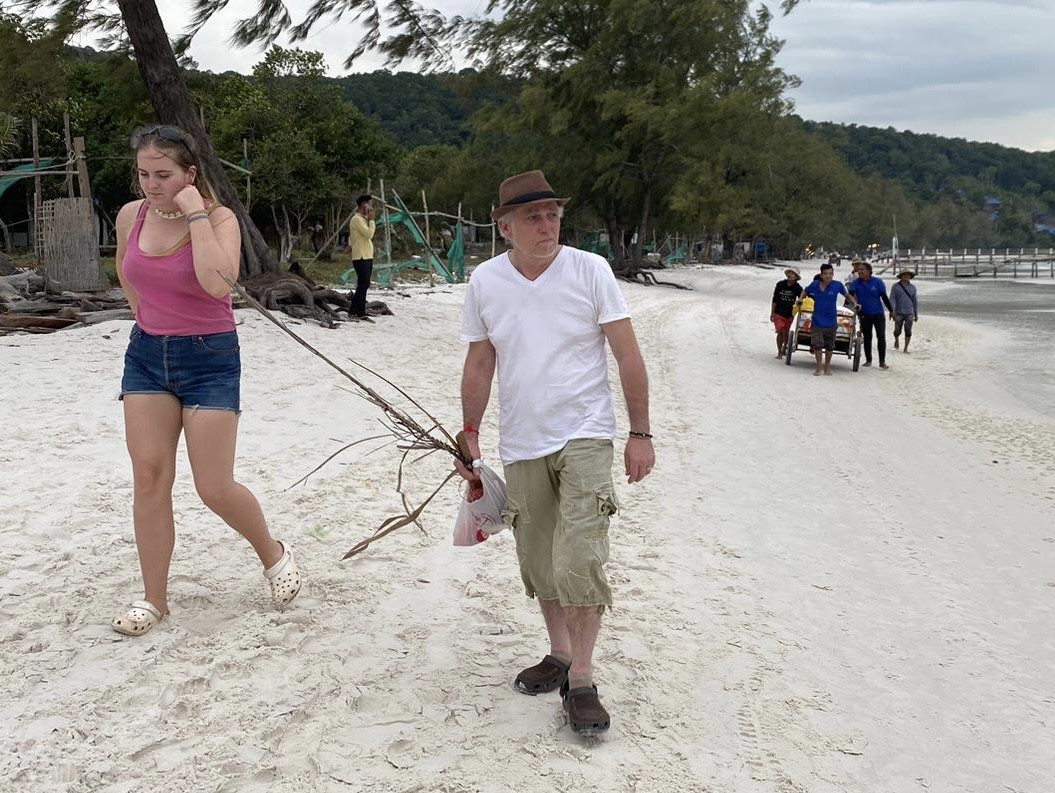
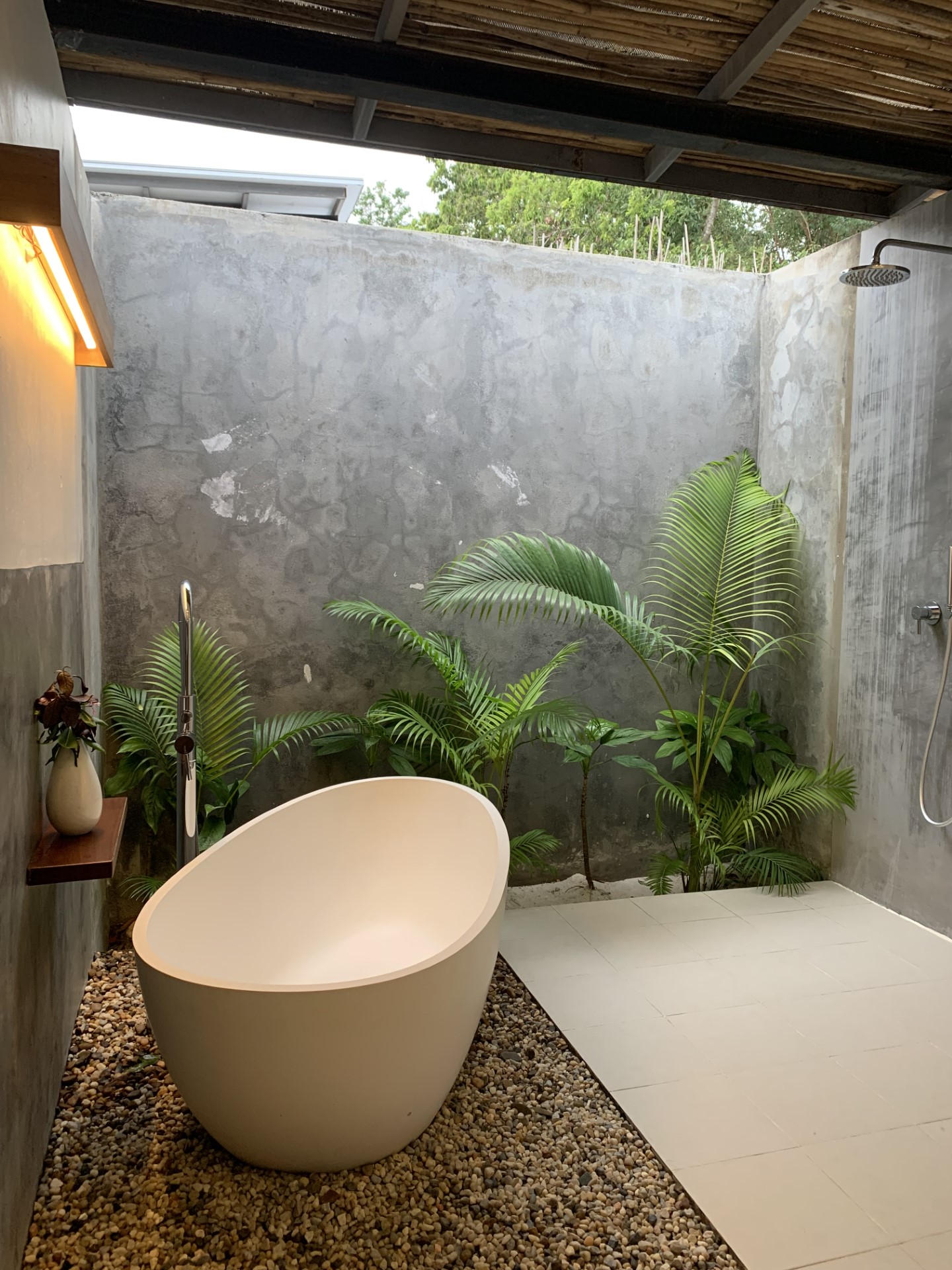
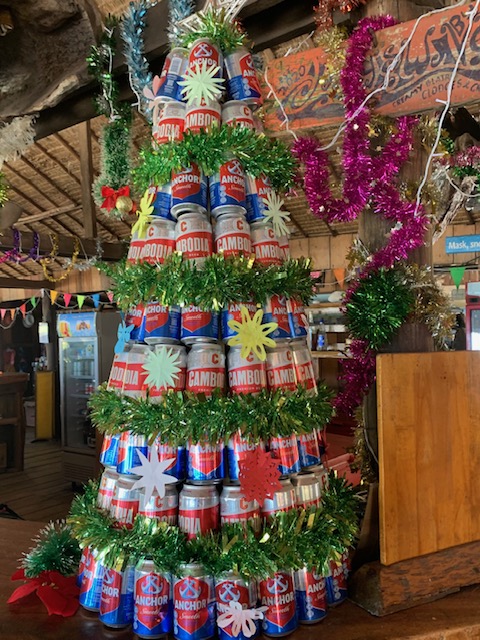
After bonding with Onederz, we went beachcombing to forage materials to make a Christmas tree for the terrace of our room. That was some room! You looked straight out to the palm-fringed beach and the classy bathroom was open at the back to the sky above and a strip of sand below, with young trees growing against the back wall. When you showered, the water drained away to the sand, much to the delight of the frog that seemed to live under the bathroom.
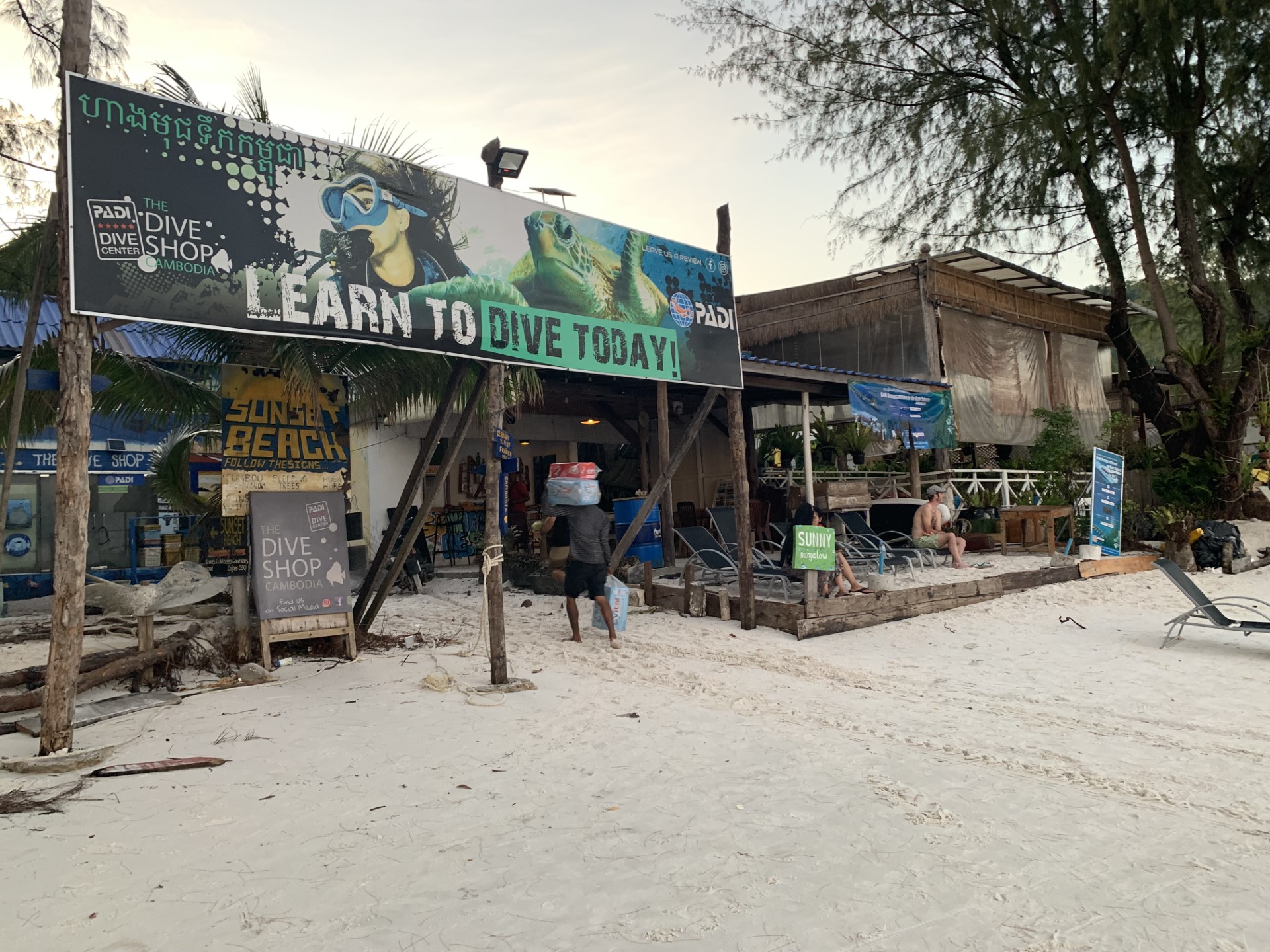
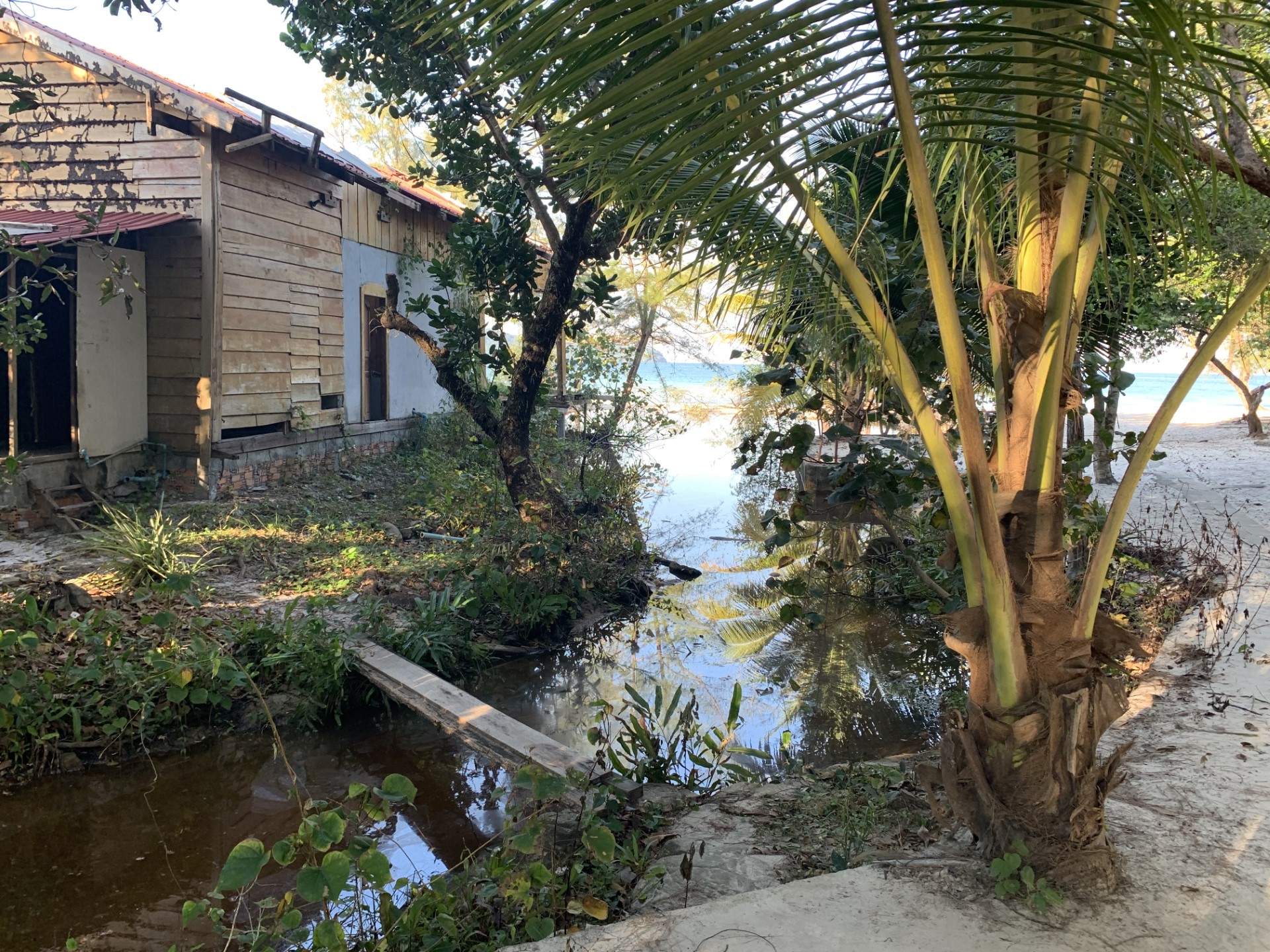
The hotel was on the northern end of a crescent-shaped bay. I saw no cars on the island. Just tractors to get you to and from the jetties when the tide was in and up against the ramshackle restaurants, a couple of small shops, and a few other guesthouses. There were also these curious vehicles which were like girders with a seat on them and a long steering stem. There was a small, scruffy-looking police station on the beach too, which was just a wooden building with a crude, hand-painted sign and a corrugated iron roof. It always seemed to be deserted.
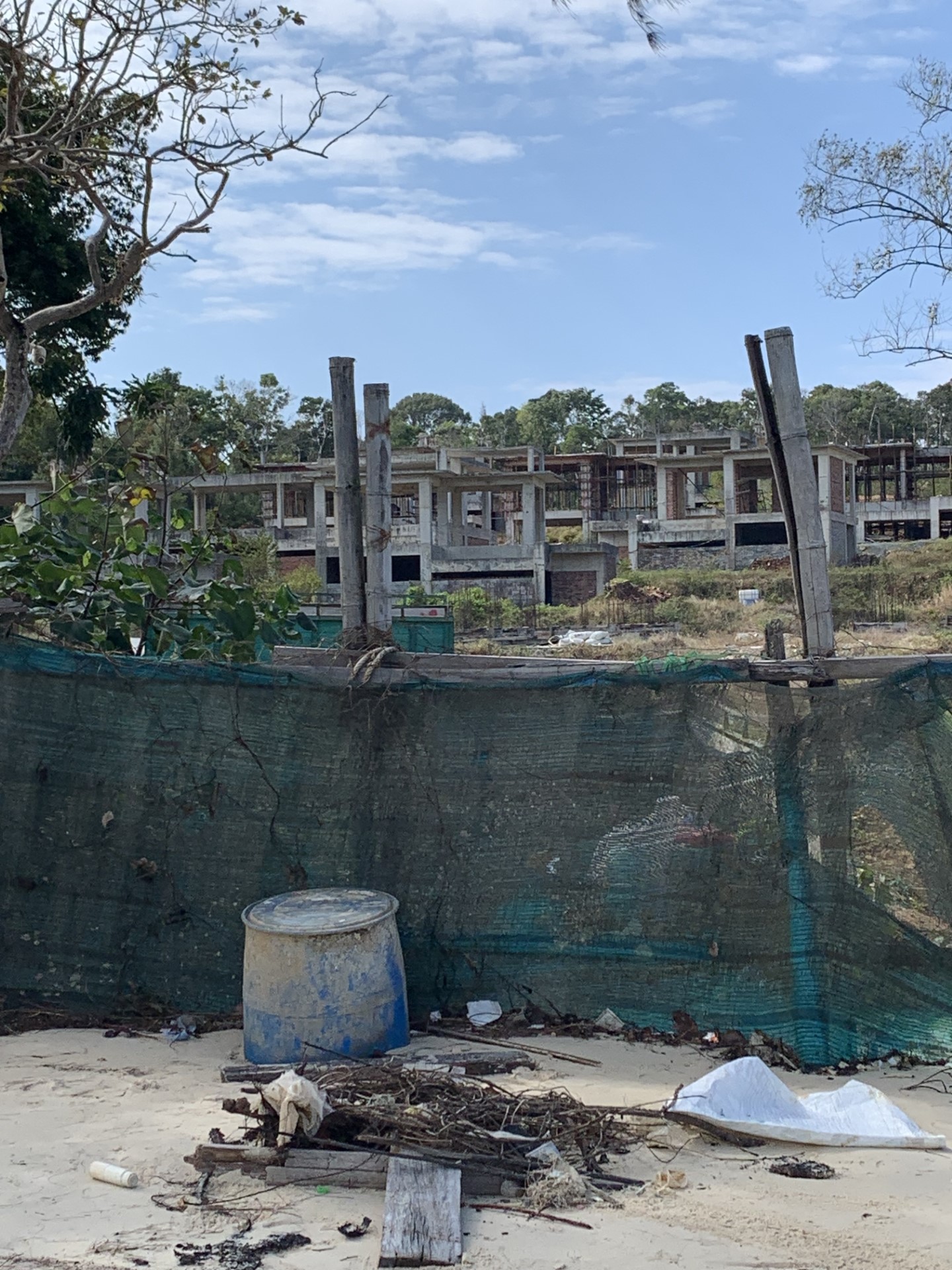
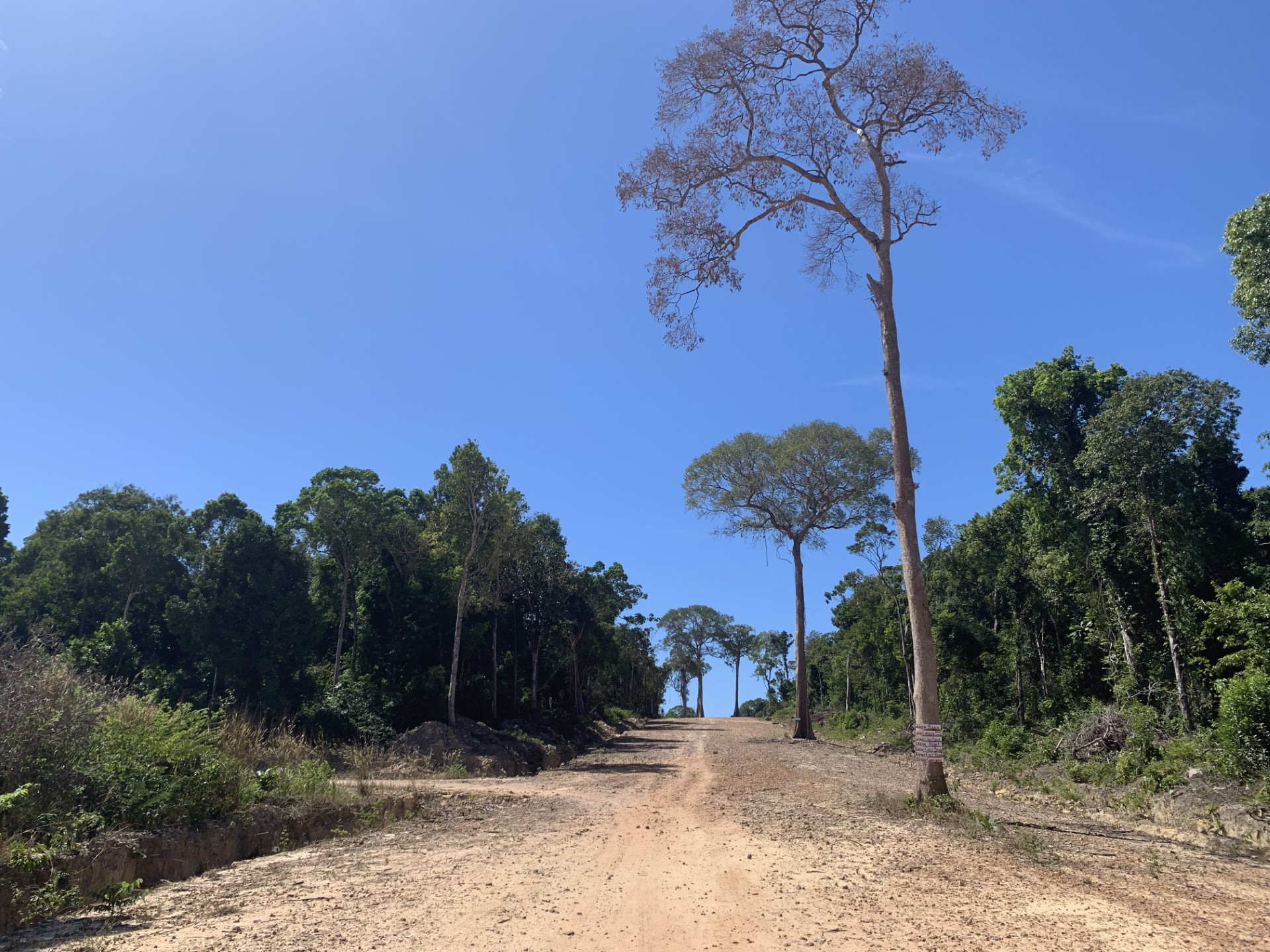
To the south end of the bay, the guest houses were abandoned and some of the beach pods had red graffiti on them. There was the beginnings of a building and a large fenced-off area. The government had leased it to a Chinese investment firm who wanted to build a resort and so evicted anyone who had a business there. The company had bulldozed wide tracts through the jungle for what would become roads to serve the new resort. In fact, the whole northern end of the island was due to become a mega-resort, complete with international airport. Koh Rong Sanloem won’t be like we found it for much longer.
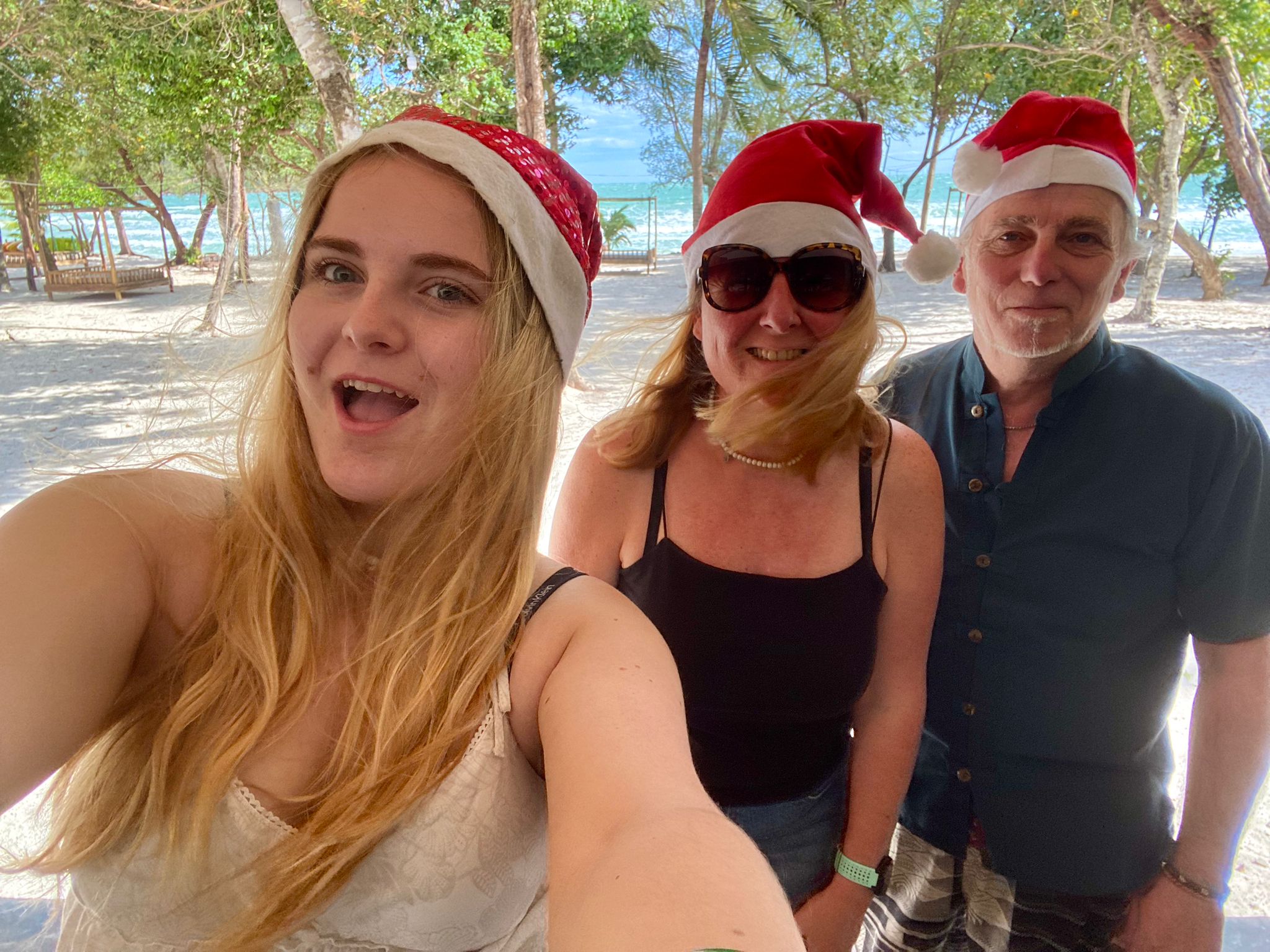
On Christmas day we strolled down to Onederz for a drink after lunch. As I was standing at the bar, watching the barman lick the cocktail spoon after mixing the cocktails and pop it into a glass ready for the next one, suddenly there was a bang and a scream from the kitchen behind him and it immediately burst into flames. Fearing that the gas canisters, jerry cans of diesel, or contents of the bar could catch at any moment Tash called me out. I managed to save the beers I’d just been given and we stood a way away with the other customers on the beach, while people ran backward and forward to the sea to collect water and put the fire out. They seemed to have it under control and we went off for a walk along the beach. I went back later to pay for the beers and asked if everyone was OK after the fire. The barman looked at me blankly and shrugged as if he had no idea what I was talking about. Either that or as if I had no idea what I was talking about.












Sihanoukville is Cambodia’s main port and the Lonely Planet guide tells you:
Travellers are advised to spend as little time as possible in this quagmire of construction… Around 2017, everything changed. Cambodian and Chinese politicians made deals then suddenly the entire city was turned over to Chinese business interests, who proceeded to embark on a casino-building frenzy. Today, the city is a construction zone. Cranes dominate the skyline. A gargantuan new ‘city’ is rising behind Otres Beach. Cement mixers and heavy machinery clog roads pockmarked by bathtub-sized potholes. And sidewalks are nonexistent. It all adds up to one giant mess – indeed just getting from point A to point B in Sihanoukville has become almost unbearable.
None of this stops cruise ships from docking at the port though.
The journey from Sihanoukville back to Phnom Penh is two and a half hours quicker than it used to be thanks to the new highway. It costs $12 in tolls. The road was built and is run by a Chinese investment company, who have a fifty-year lease on the land.
Cambodia is a fabulous country to visit. The way people inevitably thank, or greet you with a wide smile, inclining their head and bowing slightly, while placing their hands together in a prayer position really makes you feel welcomed or thanked. We found them to be consistently polite, cheerful and willing to help. Of course, you pay the ‘tourist tax’ on most things you spend your dollars on, but when it’s done with such charm, it doesn’t seem so painful. It’s a country being swept up in the changes brought about by a tidal wave of profit-seeking investment from China, so now is probably a great time to visit.

 WheatyPete's World
Oh man, you’ve made my day with that post. I’m in awe of your adventurous spirit but quite jealous as well. The photos complement the words perfectly. You’ve made me smile, Mr B.
LikeLiked by 1 person
If it makes you smile, then I’m very happy with that. Thank you , Martin.
LikeLike