All posts by wheatypetesworld

Jordan

I don’t really know where to start with Jordan. I lived there for four years as a teacher at an international school and the country holds so many happy memories, so much respect, revealed so many hidden gems: the people I met there, the culture of pride in their acceptance of refugees from the Arab world and the lesser-known attractions of the tourist trail. And then the paradox: Philipino domestic workers (routinely verbally abused out in public) told me that they could be stopped on the street and deported if their employers did not pay the “fines”, or ransom demanded by the police, a symptom of a police force that were paid intermittently and minimally. I heard stories of maids whose employers would take the passports from and lodge in a small cupboard under the stairs. Houses were kept immaculate, but rubbish was thrown carelessly on the streets outside. Speeding or traffic violations could always be amicably agreed for a cash payment. I taught in a school in Amman, married my wife there and my daughter was born in the country. Charles Glass wrote a book called “Tribes With Flags” and that is not a bad summary of the country. The Trans Jordan was created as a buffer zone between the Arab and Israeli worlds, but the land has always, and still belongs to the tribes who have carved out their territories over centuries, forget borders, flags or countries. Make no mistake; “wasta” (who you know in a position of power and influence, often to do with the influential Bedu tribes they belong to) is what this country runs on.

As an expat you meet many people whose wasta you may rely on, and who help you out with a grace and gentility that typifies this wonderful country. It is a country I love and respect. One well-connected and very refined man I met there, ex-special forces from the Jordanian military and from a well-connected tribe, told me to call his number if I was ever stopped by the police (before they took me to the station) and that his family name alone would secure an instant release. He also told me that if any man were to touch his wife, on the thigh for example, he would kill them on the spot, and then search out the rest of his family for similar revenge. She was an air hostess for Royal Jordanian, and he meant it. That was his culture, his honour, his tribe. The director of the school assured me that when he had been joking about the appalling driving in Jordan and how people drive on whichever side of the road suits them at the time, he had been told, “We are a desert people, used to travelling great distances through the wide open spaces. Then you come here with your thin band of tarmac and expect us to drive along that slender ribbon of nothingness. What do you expect? We are just not used to it.” And then there were the two English ladies, support staff at work, who were formerly air hostesses for RJ and ended up marrying hard-drinking party animal pilots – until they got home. Then the mother-in-law took over and they ended up divorced, passports of their children held by the husband (and his family) and now stuck in Jordan, victims of the change in their spouses that took place when hubbie got back to his mother. I do not stand in judgement: sometimes cultures clash. Honour killings by fathers, brothers, or uncles of overly promiscuous daughters are not unknown. And by promiscuous, it could amount to little more than being out alone with a male companion un-chaperoned. And the advice if you knocked down a pedestrian was to go straight to the airport to avoid a ruinous amount of blood-money or a revenge-killing. Unfortunate motorists were sometimes arrested and put in gaol for their own safety. An eye for an eye…

Nowadays a Saudi family sit on the throne, but what a family! Queen Rania is a strident and active campaigner for education, humanitarian projects and development as well as peace in the region. The King’s father was famed for disguising himself as a taxi driver and asking the opinions of his lowly subjects on the government and the way the country was run while he drove them around Amman and was sometimes known to financially augment to high degree random strangers at the roadside. So many things seem to run on wasta. There was the time that the lady-in-waiting tried to get her under-age daughter into the reception class at school. One day a couple of big black cars turned up with gorilla-security-men after school. Queen Rania herself emerged from the black-windowed 4WD and asked to see the head of primary. After a few minutes of polite chit-chat, she politely asked, “How are the plans for the move to the new site going?” The Ministry responsible were putting up barriers, lots of bureaucratic barriers. “I will speak to my minister and see what can be done,” she declared, “now about my friends daughter…”. The lady-in-waiting was a childhood friend of the Queen. Nothing was explicitly struck as a deal. It was all so refined. The head received an extravagant gift shortly thereafter. The child was admitted.

I arrived in Amman the victim of a love affair, waiting to see if the girl I loved would follow. She was married. I thought it was the decent thing to do. And so began a year of bachelorhood and intermittent visits before we both got to know Jordan very well together. When we did finally get married, my soon-to-be wife was eight months pregnant. I found out that if she were to give birth there out of wedlock then the Jordanians would not issue a birth certificate – in which case the British Embassy could not do likewise. This would have been a stateless child. That is how easy it is to lose millennia of British citizenship. Friends told me that they would call in all their wasta to help, but it was not a risk I wanted to take. So I delicately put it to my wife that perhaps her mother would be happier if we were married before she gave birth and that we should fly her and my parents out for a quick wedding, which is what happened. I am amazed at my persuasiveness, which has rarely worked since. So off to the Embassy it was, the second entry into the marriage records. The consul was an incredibly young, but affable chap; the qualities required by the Foreign Office for such a position were in abundant evidence. He was actually a relief-consul on his first posting who we later learnt at the “Brit Club” was so excited by his first posting involving marrying a couple (“Bride – heavily pregnant…” it said on his notes that he carelessly left on a table) that he immediately phoned his dad, all excited. He was young enough to have been my son and could well be an ambassador somewhere in the world by now. So we were wed and all went down to the Dead Sea for the weekend. Someone had provided a wedding cake (wasta) and even some plastic love-birds on the foliage on the terrace of our room overlooking the Dead Sea out towards Israel. It is a short drive down to the Jordan River from there to the Baptism Site, but nowadays the mighty Jordan is little more than a muddy trickle, a few yards wide across to Israel, the sworn enemy of the Arab world, having been dammed further up by the Israelis. Around here, water is power. The Dead Sea is evaporating at an alarming rate because of this. We were astounded when the plastic love birds suddenly came to life. They were actually real doves. It was amazing how they had maintained their statuesque presence for so long.

When I arrived in Amman it was hot: very hot. I never imagined that the lemon trees outside my apartment would be covered in snow come Easter time. The city is high up in elevation and gets a good snowfall most years. Then everything grinds to a halt because the roads are not gritted for this short period. It gets very cold and the school closes because the roads are, quite simply, too dangerous. We all used to love those snow-days and getting sent home from work. It was walkable for me. The downside was having to keep the diesel oil tank topped up, and ensuring that this and the water tank were not pilfered. One night, in my bachelor days, it ran out and I had not the funds to replace it. Only a lucky win at a poker evening kept me warm. It was an amazing night – see my WordPress post “The Sounds of Silence” to get the feeling of walking home in the small hours through the streets of Amman after this jackpot win. For those in the know, it involved a Royal Flush. The staff at school were often off for weekends (Friday and Saturday) and my first experience of lesser-known sites took me to one of the gems of Jordan: Wadi Mujib, above the Dead Sea some 30 k’s south of the Dead Sea Spa resort.

Work in Jordan was easy after teaching in England. There were specialist teachers for PE, swimming, music and library so lots of planning time. We were in school by 7:30, fifteen minutes before the students, whose day finished at one o’clock. I was home by two thirty. On Thursdays (the Friday of the Muslim weekend), I would meet up with my friend and colleague, Steve, for what we assured his wife, Jennifer, was a “wise man’s time” of talking and putting the world to rights over a few beers on one of our balconies. We knew these as “wisings”. In fact, once when some new staff arrived in school a rumour started that the school was really run by a secret society called the “Old Wise Man’s Club”, and you would get nowhere if you weren’t in with them: a good subject of conversation and chuckles for one of our wisings. Other evenings I would jam with my now lifelong friend, Billy, from Kentucky – one of the kindest men I have ever met and also one of the best storytellers. Billy did things with tanks that he couldn’t talk about for the military in places he couldn’t talk about either. Steve and I used to run a competition to see who could arrive at school with the most clashing shirt tie combination, which was soon looked forward to by other staff. When we got bored with that it was a slow change into “cowboy Thursdays” and we became more and more wild western as the weeks progressed. Steve got his sister to send items from Canada and we even acquired some leather whips to hang on our belts from a local Afghan shop. He even planned to get two horses to ride in one day, but it didn’t quite come off sadly. The children spoke with the mid-western twang of international schools and seemed happy and well-behaved. The first weekend trip was to Wadi Mujib with my interesting colleagues. Richard taught Year 1, is incredibly intelligent, a compulsive talker, an expert diver and severely dyslexic. He had worked in Madagascar and survived a coup in the Comoros Islands and could speak with a variety of accents at will when telling stories. He had hooked up with Siobhan, an Irish teacher recently arrived from Dubai.   Duaine, who I can hardly understand on account of his very broad Ulster accent, taught English as a foreign language. How does that work? He was there with his partner, Estelle, who taught year 6 and was classroom assistant to Siobhan, whom he referred to as “The Duchess”. International teaching can be a small world and Duaine and Estelle had caught up with the older, wise couple, Kris and Terry with whom they had worked in Thailand. And finally Steve and Jennifer, my good Canadian friends, survivors of the 2004 Boxing Day Tsunami in Indonesia were there too; we would later catch up after leaving Jordan along with Richard in Jakarta (see my WordPress post “In the Footsteps of the Argyll and Sutherland Highlanders”).   It really is a small world. As a newbie to the international circuit, I had listened, enthralled, to all of their stories way into the small hours down at Aqaba, where we used to stay in a cheap and cheerful hotel which gave teachers at the school special rates. It was called the Alcazar, famed for its inedible breakfasts and was affectionately known as the Alcatraz. We all left for Wadi Mujib at six am in a school minibus one Friday morning in October. Richard talked all the way down to the site, only occasionally interrupted by Duaine’s comments along the lines of, “Hey, Richard, do yous have an off button?”

It is a steep climb up the sand-coloured mountains and this is the last trip of the year. One other group of locals are also taking advantage of the last hike of the season. At the top is a river, which will be prone to flash floods soon, which is why the guided tours stop today. At the river we at taken off towards the left, while the other group took a right. This is where the trouble started. Steve immediately questioned why we were taking this route as we had paid for the longer hike. The guide insists that we had only booked the shorter trip. The guide is coerced into phoning his boss, but remains adamant about the booking. At this point the normally happy-go-lucky Canadian loses it completely, insisting that we are being treated like this because we are foreigners. It was the first and last time I ever saw him lose his cool. Duaine is muttering something about how the four hour trip is plenty enough for him after the climb up, Jennifer is commenting on how Steve’s testosterone must be up this morning, while Terry is watching a water snake swim between his legs in the shallow river.

”That’s it!” Steve yells, “I’m going with the other group – we paid for six hours and that’s what I’m getting.” But the guide for the other group refuses to take Steve with them. In the end, Richard manages to persuade Steve to rejoin the expat group and we head off in thigh-deep water along a narrow, winding gorge. The water is warm and quite fast-flowing. At times you have to check your balance to avoid being knocked over. The gorge is about 6-8 metres wide and twenty or so metres high. Where the river narrows we walk along the stony bank and while in the water our shoes are filling up with pebbles. The cliff faces are an amazing array of red, brown and yellow striped pastel shades. The guide tells us that Steve (and Richard for some unknown reason) are on “The Blacklist” now, while Steve is muttering: “He can’t blacklist me anyway; he doesn’t even know my name.” Duaine is helpfully chanting “Stevey’s on the blacklist, Stevey’s on the blacklist…” and telling everyone how proud Estelle will be of him when we get back because for once it wasn’t him who kicked off. Eventually the Canadian will calm down and apologise to the guide. We come across a snake skin and Jennifer observes that if the skin is here, then the rest of the snake is likely to be around here somewhere too.

After an hour or so of walking downstream, we reach a waterfall and stop here for a lunch break before abseiling down the cascade. Duaine wants to go first – later we found out that this was because he had worked out that it was a good opportunity to photograph colleagues in wet tee-shirts at the bottom. Heather, a secondary teacher, takes it in good spirit, proudly thrusting her torso forward, telling him: “Look, you could hang a coat –hanger on these!” The water is now knee-deep and a huge, house-sized boulder is wedged at an angle, stuck between the cliff faces some fifteen metres above us where it had been flung by an earthquake.

It is another hour’s walk in the river back to the car park. At the end it involved sliding down a natural waterslide in the rock to a deep pool and swimming to the bank. We stop off to eat a delicious meze in Madaba on the way back, famous for its Byzantine mosaics. There were many trips like this to out-of-the way places and other experiences, like the Amarin Bedhouin camp at Little Petra, where you sleep in large traditional tents with curtained-off “rooms”, the steep drive in a truck down to the tented camp in a beautiful valley in Dana Nature reserve and sharing barbequed meals in the large Bedhouin tent-lounge there, swimming in a pool under a waterfall fed by warm water from the earth’s volcanic zones above the Dead Sea at Ma’in hot springs hotel, gazing down to the Sea of Galilee in Israel from the Roman ruins of Umm Qais,  catching the sunset over the Roman ruins at Jerash and beautiful desert sunsets from a hill overlooking Beit Ali Desert Camp at Wadi Rum. Memories come back of the donkey man collecting rubbish to recycle from the hoppers below my balcony, of knee-deep snow under lemon trees and the sheep being driven into the city for Eid, stopping to graze on busy roundabouts in Amman.

When Kris and Terry left I bought their lovely old car off them. It was a 1973 white Mercedes of hefty steel, and I christened him Baldrick. These cars used to be the taxis in Amman before yellow Japanese models took over. They were always festooned with furry dashboards and Islamic talismans dangling from the driver’s mirror and were usually driven by Palestinians. Baldrick was a cranky old devil and I inherited a close friendship with a local mechanic along with the vehicle. But he saw us through many a trip one way or another and was a popular cult figure at school. OK, his rear doors did occasionally fly open on corners, and his bonnet had the unnerving habit of flipping up unannounced, blocking all view of the road ahead, but I loved him dearly. Once, on the way down to Wadi Rum I was pulled over for a document check by the police. Steve, who was following us in their shiny new lime-green Citroen as chaperone to Balders, calmly drove past whilst texting, “Please tell me Baldrick got stopped for speeding.” Some chance. An Egyptian man would clean Baldrick every week. I never asked him to, but he was happy to be paid for this. Egyptians were looked down on by Jordanians and often had to make a living from their wits, and this was an example of surviving on personal enterprise.

One day, a new teacher arrived in the secondary school by the name of Warwick.  He had the reputation of being a bit of a ladies’ man which I never understood. He was not particularly well-built or handsome but manged to put notches on his bedpost through an ebullient libido and a louche, dogged persistence. He would arrive at school events and his eyes would immediately begin to scan around the room, the blood racing through his veins in expectant, wick-dipping anticipation. This was usually accompanied by something along the lines of, “Wow, there’s loads of foxy-looking chicks in here!” Steve never liked the look of him.

“I don’t like the look of him,” he said.

“Who?” asked Jennifer.

“War Wick,” he replied.

“War Wick? Ha-ha. Steve can’t even say his name!”

“Yes I can! How do you say it then?”

“It’s not War Wick, it’s Worrr’k.”

As a compatriot of Warwick, they asked me to settle the debate.

“Well,” I told them. “It’s one of those strange words that we don’t pronounce anything like it’s spelt. It’s actually pronounced Dip Wick,” I said, hoping that one of them would call him that next time they came across him in the staff room.

“Really?” asked Jen.

“Get outa here,” said Steve…

Ramadan was hardest in the summer months when no food, drink nor cigarettes were to be consumed in daylight and this made people very short tempered and lethargic. The security guards at school would spend all day asleep under a tree. Tempers frayed and you had to be careful not to upset people by drinking, eating or smoking too overtly in public. Out of respect we tried to avoid this. The hour before the end of fasting, the Iftar, was the worst: the streets were at first manic with drivers rushing home at breakneck speed for their family meals, half-crazed by lack of food and water or cigarettes, before a deathly hush descended on the entire city and the busy roads became absolutely silent, eerily empty. This, I always maintained, would be the perfect time to commit a robbery, when everyone was at home eating. It was also the only enjoyable time to drive around Amman. The shops which sold alcohol had to close during Ramadan, but a deal was always struck with the owners, whose businesses simply had to cease trading for a month, for furtive home deliveries or meet-ups in car parks to enter their empty, shuttered-up shops via back doors. Our man, Osama, was affectionately known as “Osama beer-laden”.

After four years in Jordan, most of our friends had moved on, or were about to leave, and the school was finally moving to its new building out along the airport road. This road, amongst all the horrid roads to drive, was one of the worst. It was the beginning of the Desert Highway down to Petra and Aqaba. Arriving once at the airport, our taxi home became stuck in a traffic jam. An ambulance was behind us, siren blaring and lights flashing, but not one car would let it past. This sort of summed up the main problem with driving in the country. The culture was that if you were first to get there, or first to the cake in the staff room, then it was rightfully yours. Everyone accepted that. So you just tried to push in front of the cars gridlocked at roundabouts, or filled your bag with cake for your family in the staffroom and you certainly would not relinquish your right to be ahead of an ambulance, even if it cost some poor soul their life. In short, we didn’t fancy the drive along the highway each morning. Our water tank was being mysteriously emptied every few days and no leak was found; it was time to move on, but not without taking some great memories and feeling a good deal of affection for Jordan, along with the friends we made there. I don’t know if you have periods of your life that you look back on as “golden times”, but this, for me, was one of them.

Now back home to Devon – Tales of Charity, Temperance, Drunkenness and Arson.


The Market House Bampton


If a building could speak, you may be easily forgiven for concluding that the stories that this one would tell reveal our town as a national centre for pyromania and crapulence! An amble through the archived newspaper reports between 1818 and 1945 reveals the word fire listed 113 and drunk 157 times¹. For quite a while the struggles between the judiciary, church and Temperance Movement on one side and the work-hard-play-hard class on the other, raged, or perhaps tottered aggressively around the building. Incidences of fire, even arson, sometimes with explosively disastrous results, rattled around the square.   But we are getting ahead of ourselves. Let’s get back the library and Manor Room.


In March 2017 our library in Bampton moved into what the Exeter Daily described as “its new, spacious and bright location within the Library and Resource Centre, Old Schoolroom” leaving its old premises in Newton Square. It was opened by MP Neil Parish and Julie Dent, Chair of the Board of trustees of Libraries Unlimited, the charity responsible for the running of Devon’s Library services, following years of determined work by Janet Crabtree and others. Naomi (Signpost editor) suggested that it may be of interest to explore the history of the old location in recognition of this milestone and so began some research into the Market House, whose upstairs is known as the Manor Room. This venerable old building has been at the centre of our town for centuries and could it speak, would surely tell some compelling tales of the history of Bampton. This is what I aimed to uncover, to trace the history of the building and put its many years into some local historical context. The Market House stands at the apex of the division of the one-way roads (Back Street and Fore Street) in the old market square (Newton Square) and has done so since 1798. So it predates by thirty years the time when in 1828 “Great praise” was given in the press “to the owners, occupiers of land, and inhabitants of Bampton, who, to forward the views of the post-office, and in expectation of a mail through Tiverton to that village, have subscribed handsomely to erect a bridge, of Bampton stone, over the Batherum”¹.   The Market House also bore witness the momentous event of 1884 when the railway came to town: “the streets were made gay with bunting … a public luncheon was held in a marquee in Fair Park, the Vicar (the Rev. O.C. Wright) presiding. Mr. T.R. Densham said that when the Act of Parliament was passed giving power to construct the line it was thought that it would never be carried into effect; but now it was completed it was for the tradespeople of Bampton to make it a benefit to the town.” ¹


Between times, namely 1828 and 1884, interestingly there are 29 reported prosecutions for drunkenness of one sort or another.   They range from Sergeant Rowsen’s arrest of fellow officer Constable Slee for neglect of duty (the latter being discovered drunk in the White Horse), through Robert Thomas, an elderly, “respectable-looking gentleman” who was charged with being “drunk and riotous”¹, through to the unfortunate William Copp. For the crime of drunkenness, Sergeant Crabb placed him in the stocks. It was April 1862 and they had not been used for years. “The poor wretch remained in them for six hours, during which time he was visited by nearly all the inhabitants of the town, it being many years since they were delighted by such a moral and enlightened scene.”¹ The very same stocks can still be seen in the church today. These vagabonds and others, like James Webber (1864 – being drunk and assaulting P.C. Ward), John Mortimore (1864 – drunk and disorderly), James Land (1864 – being drunk and riotous) started to bring about a backlash. 1864 was a bad year to be a drunk in around here. The judge had convicted Land before: “Drunken and riotous conduct had increased to such an extent in Bampton, that he wished the defendant to be made an example of, in order to put a stop to it. The bench said that as a fine seemed to have had no effect, they should send him to prison for seven days with hard labour.

Defendant: ‘Thank’ee, Sir.’”¹

Richard Tackle was the last conviction for drunkenness in 1864. By August 1865 tensions between the police and local population came to a head when it was reported that: “The police force, those members thereof stationed at Bampton, seem to have drawn upon themselves the odium of the entire population of the place. This feeling of dislike and dissatisfaction has long been smouldering, receiving augmentation from time to time by various acts of indiscretion, officiousness, or unnecessary severity on the part of police officers, at the head and front of which Sergeant Lamacraft has figured, until the 25th of last month, when it came to an open and unequivocal demonstration. The occasion was, as our readers are aware, the dismissal of the summons against Mr. Bowden, of the Castle Inn, for keeping open after hours, taken out by the police. Something very much resembling a riot then took place, several of the windows of the police station being broken.” ¹ And so we continue until the emergence of the Temperance Movement in the town in 1868. In the first three months of that year over one hundred citizens signed the pledge. Lectures by noted temperance orators were attended, while at the trial of one offender (the aptly-named William Brewer), Justice Wald raged: “There is scarcely a session but there was a case from Bampton for drunken and disorderly conduct. It was always Bampton! Bampton! Drunk! Drunk!“ And in a letter to The Daily Western Times in 1876 a despairing correspondent wrote of Bampton to the editor: “There are nine public houses in it, and drunkenness and vice abound. The respectable inhabitants are continually annoyed by drunken rows, and then those who commit them are taken up by the police. The Tiverton magistrates let them off with a small fine, which they get paid at once though their wives and children complain of being nearly starved, beaten etc…Last week a notorious character who had been 13 times convicted was fined only £1, and these men defy the police as they do not care for a fine. Surely the magistrates can scarcely desire to encourage drunkenness, poaching &c., and yet, owing to their lenience, such things go on unchecked, and it is a disgrace to civilised society, calling itself Christian, that it should be so.”¹ In reply to this outburst, Richard Trapnell (1877 – drunk whilst in charge of a horse and cart), Harry Huxtable Attwater (1877 – a young man, respectably connected), George Tarr, Samuel Strong (shoemaker), John Wensley and eight others graced the pages of the press for their bibulous over-enthusiasm of one sort or another. Even an Archdeacon and three other respected ministers of the Established Church were challenged by a publican and accused of being drunken imposters dressed up in the garb of the Church of England who were responsible for pick-pocketing funds from him. There would be another fifteen cases before the magistrates by the turn of the 20th Century. Between 1828 and 1884 the windows of the Market House may easily have been red and bloodshot, just from the fumes on the breath of the townsfolk below! If it had ears, they would be ringing from riots, bawdiness, indignant moral outbursts, the drunken shushed ‘shwhisperings’ of wife-beating, children-starving poachers; or maybe even the screech of the tyres of William Surridge Bryant, summonsed in 1897 for “furious driving” in Newton Square, having been spotted by the sharp-eyed Constable P.S. King at the incredible breakneck speed of “ten or twelve miles and hour”. The case was dismissed. The Market House could almost have given an audible sigh of relief.


Originally the building was used as a booth for the Lord of the Manor or his steward to collect sales tax, tolls and fines related to the market and Charter Fair: a task somewhat eased by the complexity of rules which must have designed simply to supply a regular income to the Lord. Traders could be fined twice their daily takings if they sold anything after the fair had closed, or fined for collecting goods, which would later be offered for sale, on the way to the fair. The Lord of the Manor also presided over the Pieds Poudreux Court (“dusty feet” courts, known as ”Pie Powder Courts” due to the speed with which they dispensed justice in such cases). ² Imagine the Manor Room, sitting above an arched tollbooth open to the elements, like some gargantuan, loaded slot-machine, standing on its stone legs, where the wheels of justice spun and the winner was usually the Lord of the Manor. He pulled the lever. It was his machine, his courtroom, and he collected the fines.


A market house was in existence, near the church and with a garden attached, in 1673.  It is mentioned in the indenture concerning a nearby house sale. This then, could not have stood on the building’s current site.³   In 1777, a “malicious and evil disposed” ⁴ man, by the name of George Cockram, destroyed a house belonging to Henry Arthur Fellowes, whose action against him would have ruined his family had George not agreed to pay suit. A market house was rebuilt at his cost. But why did he do it? And how? By 1790 the market booth was moved to the Manor Room. This may, or may not have been the building with which we are concerned. If it was, then it must have been rebuilt some twenty years later in 1798, according to the plaque. In 1872 it was earmarked to become a reading room and library. The Public Library came into being in 1876. It came about as a result of the will of the Rev. Edward Langton who had been born in Bampton before emigrating to South Africa and consisted largely of his collection of theological texts. The Market House was used for the distribution of meat (later meat vouchers) to the poor around Christmas time.³ In 1885, “About six hundred pounds of beef was distributed to the poorer parishioners of this parish on Thursday. The Rev. O.C. Wright (vicar), Mr J.C. Rockett (church warden) and Dr. T.A. Guiness attended at the Market House distributing the tickets, and Mr. Richard Vicary supplied the beef in his usual satisfactory manner.”¹   You may still pay your respects to members of the Vicary family in the churchyard.


The School Board were holding meetings in the Market House up until 1886, when its use to them was rescinded as a result of them having decided no longer to pay the shilling fee to the vicar. The Chair of the School Board “asserted that all through the controversy there had been attempts to force the supremacy of the Church and the Lord of the Manor over the Local Board.”¹


The Manor Room was used for monthly meetings of the Bampton Urban District Council in 1915, when the Medical Officer of Health reported the prevalence of influenza in the parish – the beginnings of the worldwide pandemic which would kill an estimated 20 to 50 million victims by 1919.  In 1935, repairs to the building revealed the plaque, still to be seen there today.¹ PlaqueThis ascribes the building to the Hon. Fellowes, Lord of Ye Hundreds, and the builders themselves are listed as H. Spurway and John Foxford (Steward).
 

It was also noted that two butchers, Mr. Gibbings and Mr. Sayer had formerly sold meat from the arches (by this time bricked-up). The library upstairs now, below it the arches had been converted to a room and a chimney added. So, up until that time, it would seem, the bottom was open to the outside via arches, rather than being a room as such.


By the late 1950’s there was a fish and chip shop downstairs which closed in 1991, when the library moved downstairs. As far as we know, there was never a serious fire at this chip shop, which leaves the Market House unusually un-scarred for a building in the centre of Bampton. But if this building had lungs, then they would surely be smoke-damaged. Let us forget for a moment ominous phrases like, ”is supposed to be the work of an incendiary” or “ the property had been insured about a fortnight,”¹ as well as the other conflagrations of some twenty other houses, shops, farms and “valuable hay ricks” and so forth around Bampton from the archives and concentrate on the blazes within Newton Square itself, right under the nose, as it were, of the Market house. In September 1851 the nearby churchyard was ablaze, “which entirely consumed five dwelling-houses and outbuildings.”¹ The state of the thatch made the fire hard to control. The premises next to the Angel Inn, the building which is now the Chemist’s and Rex Serenger’s old ironmongery, was destroyed along with the stables for the Inn, where it began, in 1887. The stables were reported to be frequented by customers and a careless throw away of a fuzee (large-headed match which stayed alight in the wind) was suspected.


The explosion took place in 1903. On a quiet Sunday it destroyed a shop and stores as well as a coach house, scattering skywards stones, glass and timber, and being heard two and a half miles away. It shattered windows at a distance of 100 yards. Stores of explosives were kept in the wheelwright’s to which the fire had spread. Just two years later Back Street was witness to yet another fire, in the stables. The owner had left a lighted lamp in there. He was burnt trying to rescue his two horses, both of which died.   In the same year, 1905, the Co-Operative Stores were completely destroyed by fire along with its Christmas stock. Then in the winter of 1946-7 the bakery caught fire. The Book of Bampton tells the harrowing tale of the author’s own experience when in 1988 the Spar Stores in Newton Square became the latest victim of fire. Caroline Seward recounts how the family business was destroyed and a friend arriving the next day for a visit declared “You always give me a warm welcome, but don’t you think you’ve gone a bit far this time?”² The Market House had a good chuckle at that one.


The Manor Room was used as an office for management consultants Anstey Barton between 2000 and 2008. An Employment Land Survey by Mid-Devon Council lamented the loss of employment land in 2011-12. It was to be used as a residential property. Anstey Barton director, Colin Sainsbury, tells of the locals’ assertion that it had formerly been used as a sewing room as well as for the storage of animal feed.⁵ He also recounts tales of a lorry having gone out of control and running into the fish and chip shop downstairs. No record of this can be traced, although this may have been a half-memory of an event which did occur in 1903; a traction engine became detached from its tender which ran down the hill, smashing into a shop in Newton Square, and “stones were sent rolling for a considerable distance”.¹ It is possible that some of these could have struck the market house. Mr Sainsbury rented the premises from Rex Serenger, who ran the village shop and petrol pump. This is now the chemist/laundry. Rex actually ran the petrol pump at a loss because he believed it was a service to the local community. Serenger’s grandfather, Ernest, had set up the ironmongery in 1880 and his father was killed at the Somme in 1916. Please take a look at the War Memorial. Out of a population of 1600 people, 300 men from Bampton went to fight in the Great War. Anstey Barton moved out when, with no children to pass it on to, Rex Serenger passed away in 2008.


In 2015, The Manor Room was home to convicted paedophile Joseph McCogan. This notoriously cruel man was jailed for 238 years, longer than the lifetime of the Market House, for his horrific crimes and was placed here after being released early, only to be discovered and forced to move away. A Facebook post which revealed his identity and address was shared over 3000 times leading to angry confrontations in the street.⁶


In March 2017, the library left The Market House. Both floors now left empty, the building stands still for once, perhaps to take a breather from the hurly-burly follies of events unfolding all around and spend a few quiet moments contemplating its long past. Perhaps even wondering what events will unfold during the next two centuries of its existence.


References:

  1. http://www.genuki.org.uk/big/eng/DEV/Bampton/News1818
  2. The Book of Bampton, Caroline Seward, Halsgrove 1998
  3. Personal correspondence with (and thanks to) Tom McManamon and Humphrey Berridge http://www.bampton.org.uk/index.html
  4. Sherborne & Yeovil Mercury, 29th December 1777
  5. Personal correspondence with (and thanks to) Colin Sainsbury CMC FIC, director of Anstey Barton Ltd
  6. Mail Online, 15th December 2015

Colle di Tora – An Italian Wedding

I don’t know why this memory comes back today: it was the day before my friends’ wedding where I was to give the best man’s speech and we all headed down to Colle di Tora, 30 or so K’s north of Rome, and camped up on the lake shore because we all could only afford one night in the hotel in the village. The mayor of the village married the Australian/Polish/English couple and my daughter was a bridesmaid.

Our friends Fabrice (an excellent guitarist) with Karen and daughter Polly turned up from France and he ended up attending the wedding in shorts shirt and tie, all wet, dripping and fresh from a swim in the lake. Ali was a drummer and we all sat by the lake the afternoon before the event and had the most amazing jam in the Italian sun that afternoon. And then there is the story of just who would be coerced into taking Fabrice’s light box back to Bratislava which he (an animator) had cleared out of his mum’s attic in France and brought down in the hire car, and just who’s partner would give them the least grief about agreeing to transport it back from mid holiday for all of us. I won against Ali… temporarily. Fabrice was very persuasive – asking the favour as he attempted to put it, or rather squashed it, into the back of unsuspecting people’s vehicles hidden between camping equipment while their (female) partners were not there. Fab is playing harmonica above and Ali (broad Scottish accent from the islands where his family were crofters) is on percussion. He played with a band called the Cuban Heels that were taken up by John Peel and had some success for a while.  The groom, talented chef, but crap poker player (ha ha Matt), is in white. We all sang.

Matt injured himself swimming for a forfeit at the lakeside stag BBQ/do. My wife had taken intimate photos of various parts of Diana’s body in close-up.  All of them looked like cleavages… or possibly buttocks.  She’s a very good photographer.  Some of the photos were indeed cleavages or buttocks.  I was not invited to the photo shoot.   If Matt couldn’t name the body part, then he had a forfeit to do.  He screwed up on the first one (elbow/upper arm fold).  The forfeit was to swim to the floating pier a short distance out.  Matt should not have dived off the pier on the way back.  It was too shallow.

Ali told stories of how he once gave Ali Farka Toure a lift/boat ride to the Hebrides, the first time the African had been at sea, or even on a boat come to that, and how he put him up in his house prior to the gig, and how Ali Farke Toure asked him if he also was a Muslim, being also called Ali(stair) and laughing in his very deep, melodious Malian voice.

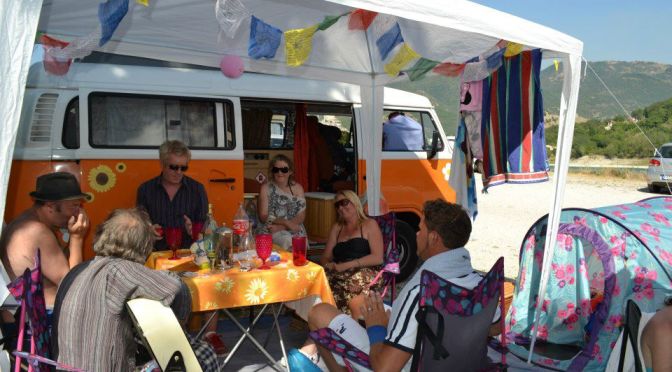
As for the light box, a big, very big, old fashioned animator’s tool like a wooden school desk from the 60’s but glass-topped with a light inside, well it ended up by the side of a road in a beautiful valley north of Rome beside an ailing VW camper, with a Scottish woman yelling at her partner, “What the hell did you let Fabrice do that for – we’ve got two more weeks of camping * * * etc etc…”, only to be rescued by another traveller in a VW on the way back to Slovakia and in the end taken back to Bratislava. But that photo of the jam in the Italian summer sun tells a whole wealth of stories (rather than being a great photo) I can only touch on here is the reason it’s up there. We haven’t even got to the time that Fabrice screwed up the birthday cake for Karen so bought a bag of raw potatoes to the joint birthday party (with my 50th) instead… he’s artistic… and French. It also is the time I had to fly back from Italy mid trip to sit and help my Dad in his passing. They mean a lot to me, these photos: friends, music, sun, summer and sadness.

But nevertheless, as Ali put it it, that’s my kind of sh*t-tip. It was just the lakeside, two VW campers and scorching summer heat, a toilet off yonder and the shower block was the lake itself. The mayor came to collect some money every couple of days or three.  A long way from winter in Devon…  We went down to Rome and stayed in Venice on the way.  It was a great wedding.

Let us Pray: Syria (a photo gallery from Damascus)…

Let us pray … for the beautiful country of Syria;

for those who have lost everything that they held dear;

for those who sold their houses, everything to escape the dangers;

for those who fled to an uncertain future in Europe.

Pre-war Damascus was, quite simply, stunning.

Songs for viewing this gallery – each one gives a different mood to the city, just as the city has different moods – so try ’em all:

Zimbabwe – Flying Mhunga Air

I got up at five-thirty to meet my first Zimbabwean bus. I didn’t like that. I like my bed too much. But the buses arrive early because there is fierce competition between rival bus companies to fill their vehicles. So the day after I arrived in Harare I took one of the slubberdegullion Renault taxis, with its pinpricks of light filtering through the floor and every other conceivable piece of bodywork, down to the bus station bound for Masvingo and then on to Renco. The driver had to turn off the engine in order to get it into first gear.

At six a.m. Harare bus station is teeming with vivid colour. Forget timetables; the buses depart as soon as they are full. That way you get to stops and pick up the passengers before the others. You know that the departure will be soon when the driver starts an elongated period of noisy engine-revving. Don’t try to ask anyone when the bus will leave – you always get the answer you most want to hear. This is the polite thing to do. It satisfies you. But only in the short term.

The Masvingo bus triggers new pandemonium as it arrives. It is besieged from all sides. The hoisting of bags onto the roof, or babies through the windows is accompanied by a surge towards the door. The rip tide of bodies carries me onto the bus. The four hundred km journey south will take five hours.

There was something worryingly unconvincing about that “Kukura Kurewra Bus Company” bus right from the start. It would only move in the lower gears and howled its protests. It was not even following the Masvingo road and is billowing a thick, black cloud of acrid smoke from the back. So the first (unscheduled) stop is the “Kukura Kurewra Bus Company” depot. They must surely have known the state of the bus before setting out, but the priority is to get it filled up before repairs can be attempted. Nobody seemed to mind much. Even the mechanics didn’t seem all that bothered. A dozen of them are lounging around on tyres ignoring the sick vehicle. Eventually one saunters over. The bus is hot and crowded: some children in smart purple and white uniforms; old bearded men with crooks; mothers with infants. Some spill out into the depot for the hour or so it took to fix the bus.

Now we are back on the road, lurching along to a cacophony of raucous chatter, animal bleatings intermingled with music from the static-ridden speakers, the crashing of metal panels and bus groans. The music is lively, optimistic and compulsive. The guitars belt out the intricate cadences of traditional mbira (a sort of hand-held thumb piano) patterns. The voices of the ancestors were believed to speak through the mbira.

After passing the industrial suburbs with their sheet-metal factories, tyre manufacturers, tobacco companies and engineering works, our gaudy little island of colourful noise-pollution is in the bush. It is a dusty landscape, a long, barbed-wire clad road with occasional clusters of round thatched huts or roadside bottle stores. Soon we are amongst huge whale-back hills. These are kopjes – enormous single rocks shaped by the weathering of the granite, some house-sized boulders balancing precariously on top of others, dwarfing the trees at their base. Meanwhile the black smoke is belching from the side of the bus now.

We passed four police checkpoints. When I asked what they were looking for, it seemed that the police did not actually know themselves. They were just doing their job. Sometimes they make everyone get off, take all the luggage down from the roof and undertake a search. They line everyone up, men on one side, women on the other and civil servants (who they must see as hermaphrodites) in the middle. The Air Zimbabwe magazine had proudly boasted that if you have forgotten your shaving mirror, then you can ask a policeman to borrow his boots. But these roadside boots would have needed a good dusting and polish first.

As soon as we hit Masvingo Bus Station we are under siege by Harare-bound travellers. A man shoves his bag through the window for me to reserve his seat. It takes a full ten minutes to fight our way off. There are no Renco buses. We are told that there may be one at six, but then again there may not. Taxi drivers helpfully offer to assist. So faced with a long wait for a bus that may, or may not materialise, we eventually succumb, one of the drivers being known to my brother who was working at a school in Renco. So negotiations begin. What clinched the deal was the fact that a young woman agreed to come down to Renco for the night with the driver. We stop off at his house to collect his ghetto-blaster-of-which-he-was-extremely-proud and for him to do his own negotiations on the price demanded by the woman. He is an effervescent character, smiling and joking all the way along the dirt road. We slow when he wants to chat to some friends and my suspicions are aroused because he does not actually stop and they have to jog up the road to continue the conversation. We were never in that much of a hurry. As we pull off he turns back to us with a smile the size of a horizon, proclaiming: “I have no brakes but I am stopping the car with the gears. I am a good driver!” He did a lot of turning round. I reserve judgement as to his driving abilities. He must have been reasonably competent to get us to Renco without the luxury of brakes, but on the other hand he could not have been of a completely sound mind to have even attempted it in the first place, especially given the state of the road. But of one thing I was sure: never have I seen anyone, anywhere, who could drive so far whilst spending so much time with his eyes averting the road ahead. The only people who suffered from his lack of brakes were the poor souls at the stream that crossed the road at one point. Despite his shouted warning and frantic gesticulations (no hands too now), he was unable to prevent the high-speed, brakeless taxi from giving them a good shower. Everyone fell about laughing. Eventually we coast to a stop in Renco.

The town is frequently known as Renco Mine, which is a pretty accurate description just as is the way South Africa at the time was always called Racist South Africa in the press. My brother assures me that the RSA they have on their stamps is commonly understood to stand for this rather than the Republic of South Africa. Likewise Renco is a town owned lock stock and barrel by Rio Tinto who were mining for gold there. The mine itself, all the houses, the three bars, the shops, golf course, squash court and land all belong to the multinational. Mine employees are allocated housing according to their grade so if you are promoted then you also have to move house. The managers live up by the golf course (complete with a water hazard inhabited by a hippo). Here the houses are spacious and airy. The miners live in the township and the middle grade workers’ housing separates the two areas. In fact many miners sub-let their houses and live in traditional round huts to supplement their income. The gold is expected to last for another six years. After that it will be lights-out in Renco just as it was in its sister town, Empress. When Rio Tinto left they sold the whole town to the army. At first the military occupied the affluent houses above the town. But the sewers were soon blocked because old shirts were used in the absence of toilet paper. So they moved to the middle grade housing, but not before they had stripped their old accommodation of anything that could be removed and sold. This included bathroom fittings as well as door and window frames. But soon the sewers to the new lodgings were blocked too and it was at this point that the army decided that they had never wanted to buy the town in the first place and pressured Rio Tinto to buy it back. However there was the problem of the unnaturally swift depreciation in the value of the properties. The government decided to uncover the missing fixtures and fittings so set about searching in the most obvious place – the surrounding villages – and in the process recovered the loot as well as something they had not bargained for: a veritable cache of arms, uniforms, ammunition and other supplies: in short, government property. When the gold runs out in Renco the minimal wages it brought to the local people will disappear along with the security guards and (white) managers. The swimming pools will run stagnant and the golf course will be reclaimed by the bush. People will probably go back to the land where in the dry season around Christmas the earth stands hard as iron, in the wet the rain simply washes the ground away. Only the original inhabitants will be left to eek out a meagre living – unless the army decides to buy the town.

We were befriended by an old-time Rhodesian at the great Zimbabwe – Chubby Gallagher. He was kind enough to give us a lift back to Masvingo Bus Station on our return to Renco. “Where’s the booking office?” he enquires, which betrays the fact that he obviously has never been to a bus station before. He is actually quite shocked. We assure him that we will be ok and set off in search of a Renco Bus. It does not take long for the bus company touts to find us.

“Where are you going?”

“Renco Mine.”

“This bus is for Renco.”

“It’s all right. We will wait for one with some seats. It’s three hours from here.”

“Five dollars forty for Renco Mine,” he declares as he ejects two people from their seats. “Here are two seats.”

And here is our problem. If we do the decent thing and reject the seats then he will lose face. This will be a problem for us all. In the end we have little choice as we are bustled onto the “Magwizi” bus against the flow of alighting passengers: a blind woman with a begging-bowl and a baby on her back; a fruit vendor and a man selling nail-clippers. In the meantime a wheel is being changed on the bus. By the time it leaves it is packed as full as a sardine can, but the conductor is still trying to pull more people inside; however some are left behind. They pursue us all the way to the garage where the wheel is changed again and are rewarded with a place on the bus somehow squashing between babies, chickens, bodies and bags.

To be a bus conductor you actually need near-superhuman qualities. You need to be able to fight your way up and down the interior through a solidly-blocked aisle to collect fares. You have to be fit too. This is so that you can climb up on to the roof via the swinging door with the bus at full speed to collect and deposit luggage. Speed is of the essence to get there before your rivals so you don’t actually come to a halt at the stops and you must swing aboard via the door. The man’s energy in the stifling ninety-seven degree heat is incredible and his agility in flip-flops is indeed super-human.

When we returned to Harare two buses arrived at the stop at the same time. For no particular reason, except perhaps the sense of disorientation which accompanies the arrival of any bus, we chose the “Zimbabwe Omnibus Company” over “Magwizi”. As we rattle away “Magwizi” is in hot pursuit, but has greater acceleration and races up to within yards of “Z.O.C.” Finally it passes, both sets of passengers yelling and gesticulating wildly at each other. The “Magwizi” conductor is swinging on the door, making lunatic gestures at his rival. So now we are in the dust storm thrown up by “Magwizi”, which swirls in through the windows. Another day of danger and excitement on the buses.

“Z.O.C.” dropped us on the outskirts of Harare and we take an “emergency taxi” (cheap fare, but crammed with anyone who wants to chance it) to the bus station to be greeted by the usual riot of touts/conductors. Hands tug at our clothes in the melee, numerous individuals pointing purposefully at their “official loader” badges and jostling each other. It is the school holidays, so the buses are on “emergency timetable”, which means they are fuller than ever, if that is possible. The word “emergency”, when applied to modes of transport, is less to do with catastrophe and more to do with vast numbers of people here. So for the “emergency” in “emergency taxi” or “emergency timetable” read “dangerously overcrowded”.

We travelled once on  the “Tanda Tavaruwa” bus out of Masvingo bound eventually for the Eastern Highlands – “Scotland with snakes” is how my brother described it to us. There is a wait at the bus station: the driver has not even got to the revving-of-the-engine-stage yet. But it was sort of worth it – this was actually quite a comfortable bus with soft seats. For reasons inexplicable and unknown, the Tanda buses have the word “Mhunga” (a drought-resistant cereal plant or millet from which they make the staple food which is a thick, tasteless porridge – how can anything so bland be so disgusting was the best description I heard of this) emblazoned across the front, and for this reason, as well as their comfortable nature, they are known in Renco as Mhunga Air. The bus is as densely packed as ever affording no opportunity to recover from the ordeal of actually getting aboard and hoisting the rucksacks onto the roof. As we are pulling out of Masvingo, I see a man with a bucket in the middle reservation of the wide road washing the trees with a broom. For that brief moment, in the stifling heat and hubbub of the bus, I had the distinct and disquieting impression of having gone totally insane.   The bus station in Harare is in as much of a state of emergency as the one in Masvingo.

The next day we travel to the airport for a flight to Victoria Falls and it is then that I travelled on the crème-de-la-crème, the haut monde, blue-blood, dog’s bollocks of all buses: the airport bus from the Meikles hotel. And to top it all, the propellered Viscount that usually does this run has been replaced by the president’s plush personal jet, which he lends to Air Zimbawe when he is not using it. An equally smart (tourist bus) is there to take us to the town from the airport.

It was soon back to the real world when we travelled out to the Eastern Highlands from Harare. It leaves at five am. The touts were out in force. There is a wait but eventually a “B & C Bus Company” bus pulls in to be greeted by the usual crush. An “official loader” grabs the bags and passes them up to the roof, aggressively demanding four dollars for his work. In the midst of the scrum I notice a hand slipping into my pocket. My hand joins that of the intruder and I turn to him, saying,

“You’re not a very nice man, are you?”

He stares ahead as if he has not heard and shoves me through the door. Once inside verbal communication is rendered impossible by the volume of the radio. The conductor is wearing an affable smile and pink nail varnish. His shirt is unbuttoned to the navel and he sports a garish replica diamond necklace. We rattle out of Harare through a township and rows upon rows of faceless blocks of flats. The bus lurches through the suburbs frothing its symphony of engine screeches, raucous chatter and the lively static-ridden zimbo-pop radio station. It has the optimistic words “B & C Luxury Tours” emblazoned across the side. In towns along the way the windows become an opaque tableau of flattened fruit-sellers pressed against the glass. At one the conductor instructs everyone standing in the aisle to crouch down. The bus is over-crowded and he doesn’t want to get stopped in town where there are certainly policemen about. His instruction is greeted with compliant laughter. Fares of those who have just got on are passed down the line of squatters. Once out of town the conductor giggles as he tells everyone they can get up now.

Our way back to Renco was on the “Shu-Shine Bus Company” vehicle, which sat revving its engine noisily for a full half-hour in order to encourage would-be travellers. Then there is the usual wait for a Renco bus. We sit on the steps of a bottle store for a cooling drink and a bag of stale crisps. For some reason, crisps were always stale when you bought them.  A man approaches and asks if I would like to play table football with him. I accept. It is not long before another man asks if he can join in too and it’s two against one. After a while a bystander observes that two against one is not fair and joins my side. He is a very good player and has this trick of trapping the ball under the player and flicking it at a gazillion miles an hour, with unerring accuracy and unstoppable, into the goal. It sounds as if it will go straight through the wood as it hits the goal with an authoritative, ear-piercing thump.

“I bet you two bucks we score the next goal,” my partner ventures. The opposition accept, but predictably we win the wager. My partner hands me a dollar: “Your half of the winnings,” he tells me. I try to demur but he is insistent. He then places a ten dollar bill on the table.

“You think you can win?”

There are only three balls left, which means that we only need score one while they must score all three. The two men opposite look at each other and then one slaps a twenty dollar bill down on the table.

“You must put in ten as well,” he tells me with an air of gravity. I turn to go, thanking them for the game. But by this time a crowd has gathered around us and I am jostled back to the table. The bet seems too good to be true. A forty dollar pot when my partner is obviously the best player by far. Things are happening in a loud and confusing manner. One minute a friendly game, the next some heavy betting. Rather than pushing through the crowd and walking away I turn back to the table.

But astonishingly, my partner suddenly seems to have lost his skill. It is as if it were three players against one. We lose our bet. Or to be more precise, I lose ten dollars while the three friends saunter off to the bar with my ten dollars. They had been working together and played quite an elaborate trick on me. I didn’t fell angry at being duped – they had played their roles to perfection and I had a begrudging appreciation of their audacity. Ten dollars was no great shakes for me and it is better than having ten dollars taken through the threat of, or actual, bodily harm.

The last bus I took was back to the first: “Kukura Kurewa” returning to Harare. After a short while I can hear an eerie hissing coming from the bush. It is a puncture – quite a regular event on these uneven roads which we had been lucky not to encounter before. There are many willing hands and much useful advice offered. The wheel is soon changed. The driver is a portly man wearing a beige safari suit, a wide-brimmed wicker Stetson and aviator shades who drove like a maniac. It was a fitting journey to end on, sort of summing up the whole bus travel experience (except airport buses): mechanical instability, borderline insanity, good humour, cacophony, over-crowding and an aching backside by the end of it. The driver swerves to avoid a donkey which is rolling in the road to relieve an itch, reminding me that bus crashes are not infrequent. If this happens the driver must run away as fast as he can or he will be lynched. So add danger to that list. But do not let that deter you; these buses give an intimate and intense window into everyday life and should not be missed in Zimbabwe.

This slideshow requires JavaScript.

A Beatle, a bum and a brewery – tales from Oxfordshire

Henley-on-Thames, Oxfordshire, England: I know, I know, it smacks of upper class, the Regatta and so forth, but let’s scratch the surface a bit.  It is a story of people, the type of story that makes the travel worthwhile.  So here it is: bums, a brewery and a Beatle.

I lived there, where my father was a minister, in a manse once occupied by the Rev. Humphrey Gainsborough (brother of the more famous painter) who had reputedly invented a steam engine with a separate condenser.  His model was stolen from the Manse shortly before James Watt patented the idea.  But let’s start with the bums.

exp-adventures-in-the-uk-competition1
United Reformed Church, Henley-on-Thames

“Chalky” White was his name.  Well known, and begrudgingly loved by the local magistrates, he lived off his wits, knocking on people’s doors declaring himself a “tree surgeon”, offering advice on “trees in need of urgent attention” and may be responsible for some trees you see there today.  He’d break a shop window every autumn, or commit some such crime in order to spend a six month sentence inside in the warm, which the magistrates kindly granted every time.  Look out for his work next time you’re there.

Now to Colin, employed by Brakspear’s brewery out of kindness.  Colin was, in today’s terminology, a Special Needs case.  He was not one of those regulars in the pubs who were given special badges to be charged regular prices during the Regatta when beer went up in price and Pimms was served.  He was just good old foul-mouthed Colin with his obsession for dog racing, who once greeted an important visitor to Brakspear’s with the words “Warm, innit?”  After the guest answered in the affirmative, Colin’s knowing response, accompanied by a nudge and a wink, was “Dogs don’t like it when it’s warm”.  I don’t know how the important visitor reacted.  Brakspear’s was sold to a large national brewery after over two hundred and fifty years as a family run business and has now been converted to a Hotel du Vin, where I once stayed for one (very expensive) night. The ghosts of the envied draymen, given tips, meals or beer at the pubs they delivered to, Colin himself, or the many brewery workers who were free to help themselves to the barrel kept in the yard (but sacked if they got drunk) may still be around.  It was fun to work down in the cellar, which is now the carpark for the boutique hotel.  You get valet parking, partly, I think, to help avoid the ancient metal pillars down there.   There were rails, like miniature train tracks with no sleepers embedded into the floor which fitted the rims around the middle of the barrels perfectly so controlled the direction of rolling. Barrels and kegs were too big and heavy to kick around, but firkins and pins were perfect.  You could play barrel-ball kicking/rolling them around the cellar.  Colin used to call himself “Banger” and you could often hear him shouting out encouragement to himself as he worked: “Go on Banger.  Need yer leggins.  Warm innit?”   Brakspear’s were a family firm and looked after their employees well.  When their general manager was busted for possession of cannabis and served a six month stretch they promoted him when he came out. And kept Colin on come what may.  Colin was famous for his exploits when “Chitty Chitty Bang Bang” was being filmed off in the beautiful nearby Hambledon valley and the director had hired local people to hold down the hot air balloon.  The wind got up and he decided enough was enough.  “Just let it go!” he proclaimed.  Off went the balloon… with Colin, who had tied the rope around his ankle…

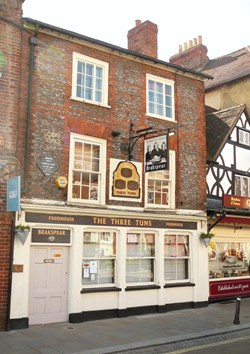
Brakspear’s may have been taken over, but the name still lives on and one of their pubs in town, the Three Tuns, was where George Harrison used to drink with his brother.  It is a tiny place and up until John Lennon was shot you may still have run into him there of an evening.

exp-adventures-in-the-uk-competition
The Three Tuns

I was living at the Manse but when my father undertook an exchange to America was when the Beatle experience happened.  The church tower was crumbling and there was an effort to raise restoration funds.  As the exchange clergyman told it, a scruffy man knocked on the door one day.  “How much do you need for the tower?” he asked.  He was sent to the church treasurer’s house where he was told by the irate Christian to remove his Rolls Royce from in front of the driveway because he was off to work.  So George spoke to his wife, after moving his car, and wrote out a cheque on the spot for the entire sum, on the condition that no-one should know about it.  When you see the spire on the URC church in Henley, thank George for that.  I somehow inherited the scruffy old chair he sat in when at my house (which was known as George Harrison’s chair) and carted this heirloom round with me for years afterwards, until it got lost somewhere along the way.

So look out for ungainly trees, drink at the Three Tuns, admire the church spire and stay in the former brewery.  But if you do, think of the stories behind them.

With Refugees on the Hungary-Austria Border

Day 1

It’s not about migration, it is simply a humanitarian crisis, it really is. I have been to Syria, met some lovely people there and now see normal, professional, poor or war-ravaged migrants just like you or I, but here… now… homeless, sleeping rough and victims of the poverty gap. Peaches the campervan doesn’t like that, and neither do we… So…

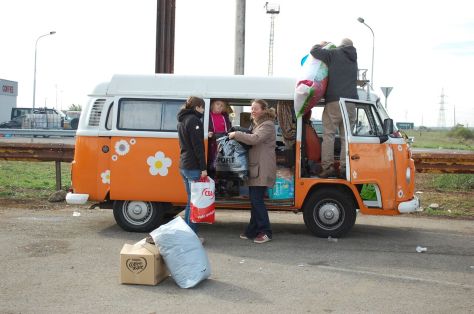
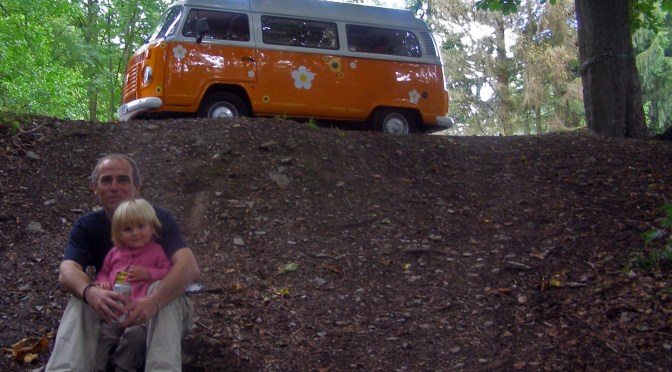
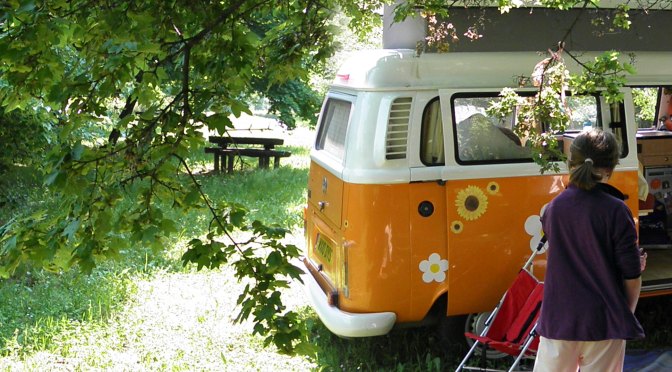
Today was a strange day. The lovely Peaches was packed full of clothes, cool boxes full of hot food, sanitary items, sweet treats and home baked cakes. We’d spent the day cooking in our flat in Bratislava – 9am to 3pm – and then climbing into the orange flower-covered and totally lovely VW (who is constantly photographed here in Slovakia) before driving down to the Austria-Hungary border to feed refugees. That was the plan. What a weird experience.

kabZd8GKpeBy-48KBULkxfIEc-zl4sQ01GHdYBdqrjE
Packed to her Peachy rafters

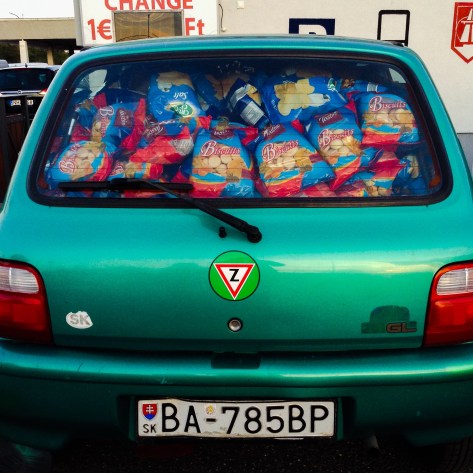
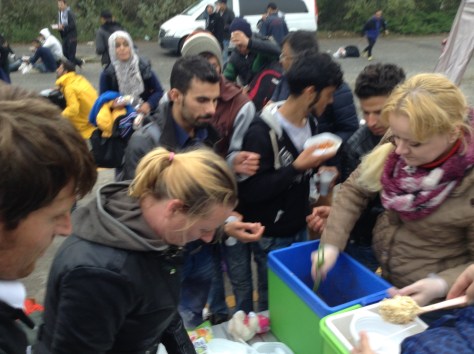
Our ex-colleague/friend who has been doing this for a few weekends now had got a group together and organised it. We were meant to meet a train with 2000 refugees on it up from Gyor (the Hungarian pronunciation is “Jee- You’re”) but the police were closing roads to the border all over the shop and amassing a significant presence in this small–out-of-the-way village and told us in German that they would not let the newly arrived people stop to eat here at the train station and would make them walk down to the Austrian border about 4 K’s away, so sent us there. We soon found ourselves at a closed border, waiting for a very deliberately delayed train designed to arrive late because they had “lost the engine” so that the refugees would have to cross the border at between 1 & 4 a.m. when there’s more likely to be no press there we were told by aid workers. There were many diverse people there to help when we arrived: Ibrahim and his mates working for an NGO charity from Bolton and Sheffield who had been driving around from Yorkshire heading to Croatia and Serbia with boxes and boxes full of clothes trying to get to Greece but were turned back all the way, and told to turn round and go back or I’ll shoot you by a Hungarian policeman at 1 am last night; Austrian Red Cross workers; a Slovak car full, and I mean FULL of family sized packets of crisps/biscuits pressed up against every window… and lots of very tired, slightly bemused, very grateful but cheerful (mostly Syrian) refugees who didn’t realise how close it is to an extremely cold wintertime here.

image1
A full Slovak car

A very strange day. We managed to negotiate a passage into Austria to deliver the food to the refugees that side who are waiting for a bus, but only the first vehicle of our convoy of three is let past. After that Austrian border police are telling us via the screaming-in-German method to get the f*** out of here, just put your foot on the gas and go, whilst stamping hard on the ground and banging on car roofs (but not of the Brazilian Bay T2-too-tall-to-get-into-carparks-around-here: well done Peachy!) because “they” had closed the border – according to the Hungarians – all a bit confusing. Finally we are driving off up the road to get into Austria from Hungary via the highway, a detour of a full ten K’s, but escorted by the Red Cross who co-ordinate everybody going along to help and got us down the closed road off the highway on the Austrian side of the border. And so the food that we had lovingly spent all day preparing eventually was allowed to be delivered to those people who needed it. It did not feel very satisfying.

1-qlNQGMbTVI35eGb5DNFLnSBS0L1tU3ckRCzB3Y3c8
Nothing else

But the thought of all these people, families with their tiny children, older adolescents looking not much different from their counterparts in Europe, except that all that they had was the clothes they stood up in and worn out shoes or inappropriate flip flops, a brother looking after his wheelchair-bound sibling, smiles that could bring on a career in modelling under other circumstances… all that which we saw today, the victims walking off through end-of-nowhere Hungarian villages and then to end-of-nowhere Austrian villages, looking for a place to sleep for the night, or if they are lucky getting put on a bus to the next place after queuing for 9 hours… where it all starts again… well I was thinking about that tucked up in my bed last night.

3 Hegyeshalom Nickelsdorf border 10-10-15
Off towards Austria

That’s what my Peaches did this weekend. Good job, Peaches. Good but very small job.

Day 2

When we got home from work on Friday night it was raining. Low clouds obscuring the hills around here and even the top floors of some of the apartment blocks. There is a thick persistent rain, the kind that just soaks you whatever you wear and I am aware sitting on my balcony, that half an hour away there are families sleeping out in this. Four thousand refugees arrived at the Austrian-Hungarian border today. Four thousand people sleeping out in this. We collect every piece of warm clothing we can possibly spare, and luckily the daughter seems to have recently undergone a growth spirt.

Saturday we cook up a vegetable stew and couscous and transfer it to cool boxes to keep warm. The local network had put us in touch with two young Ecuadorian sisters, Gabriella and Veronica, who want to come over too today. So we head off into Austria, avoiding any brush with Hungary after last week. The route is through Austrian villages like ghost towns. Smart bungalows with polite gardens behind low walls and railings at the edge and near the centre houses giving onto the path then tree-lined grass. Cars parked at right angles to the road on driveways between the lawns. One café and one shop. Both closed. And not a soul about.
“Here,” Gabriella tells us, “we say no children cry and no dogs bark.”

Down at Nickelsdorf things are a lot more organised than last weekend. The road to the border crossing is closed and we are directed off to the Red Cross centre. We pass taxis lined up further than we could see and later learnt that they were there to offer a one hundred and fifty euro ride to Vienna, the commonly agreed, well-publicised fair fare via Austrian TV. The taxi from Bratislava to Vienna, which is further, costs fifty. At the centre they are able to take our clothes and to transfer the still hot food to receptacles to take down to the border where there a thousand people stuck. We offer to volunteer in the makeshift building where there about three hundred beds and spend the rest of the day sorting clothes into boxes, matching up shoes and putting them in the boxes by size, and making a gazillion sandwiches. They are expecting two thousand more arrivals today and another estimated two thousand tomorrow. All in all eleven thousand individuals will have crossed in three days. There is a trickle into the centre. Most of the volunteers are Austrians, many of whom will be here until midnight. A supercilious policeman is going around sneering at the volunteers:
“Why are you here? How long will you do this for? Why don’t you go home?”
But the full time Red Cross workers tell us that we must have all hands on sandwich making now because the two thousand expected are imminent and they need to get the food down to the border.

A rather debonair looking man, silver haired, tall, and thin is trying on a pair of shoes. He has no socks, and makes no attempt to get any warm clothing, just to replace his worn out shoes, as if he were embarrassed to take more than the minimum. We tell Iona to take him a pair of thick socks. He is delighted and turns his kindly eyes downward, beaming at her. Taking her cheeks gently in his hands he tenderly kisses the top of her head, thanking her. “Marsh’hallah (rough translation – sweetie pie), sank you.” I remember just about enough Arabic to ask him min wayne – where are you from?
“Min Souriya,” he replies: Syria. In broken English he tells me he is from Aleppo. And he was in hospital when, “My house down.”
He is here with his daughters, both of whom were at university. One was studying engineering and spoke good English. They want to know whether to go to England, Switzerland or Germany to continue her studies. What a peaceful, lovely family they were. And what could I tell them? That England has pulled up the drawbridge to migrants, that he had better have money to send them to university in Switzerland?
“Germany is open.” I tell him. I don’t even believe myself sometimes! We make sure he is pointed towards the warm clothing.

Others who arrived were from Afghanistan and Somalia.

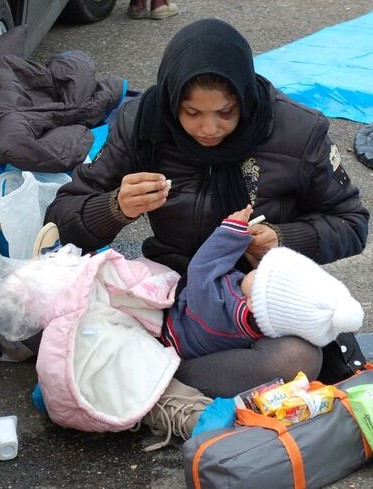
We are given a word in German by the Red Cross to say to the Austrian police at the closed off road and directed down to the border to help serve the food we had spent the day preparing. There were many there. Some families were sleeping rough and there is a bit of a scrum around the clothing. It is not pretty and there is rubbish everywhere. Some are waiting for buses to take them to the Red Cross Centre, others are simply camping down where they are. The buses would not start to arrive until nine o’clock – we saw them heading towards the border reception centre just as we were leaving.

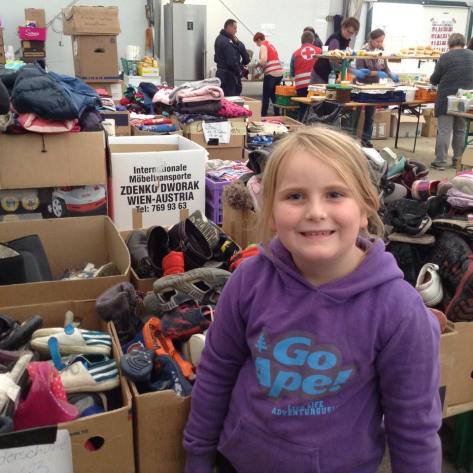
Iona, at six, has been working absolutely flat out on all tasks all day. Twelve hours. Amazing. And now she is keen to go down and give out sweets to the children. How proud we felt.

11139449_10154417261768018_556749208516946008_n
Sorting donated clothes and shoes

One large, Afghan family we spent time talking to. Although we had no common language. The old lady’s smile was something I took away with me today, and will keep with me. They will sleep outside tonight.

12063456_10154417259668018_4266784371518166424_n
Her smile is unforgettable…

And so it goes on… In the end it was not the expected 2000, it was 20,000 through on Sunday.

Day 3

The long line of cabs has been moved from the road out of Nickelsdorf to the lane behind the border post, less visible and off down past the police road block. And so they should hide. Hide in shame. In an emotional outpouring of sympathy for the plight of the refugees, their fellow human beings, who are still streaming through the Hungary-Austria border between Hegyeshalom and Nickelsdorf, the taxi drivers have agreed to put up the fair to Vienna to one hundred and seventy Euros. There can be no justification for this. If is a shameful and shameless exploitation of desperate people. They have become legalized people traffickers.

The Red Cross camp is very quiet. The authorities seem to have elected to bus people out straight from the border as quickly as possible, or throw them to the sharks driving taxis, bypassing the aid available. So we volunteer at the centre, get official jackets and identity badges to go down to the border post with the hot food we have prepared and a box of bananas. Gabriella, our Ecuadorian friend from last week, is there and we meet a lady who had driven down from York with a hired van full of the supplies she had collected. The people waiting for a bus are hungry. There is immediately a crowd around us jostling for the hot food. One young Syrian stops to chat in perfect English. She calmly stands there telling us how her Lebanese Mum taught her the language while others elbow, shoulder and stretch out arms through any space they can find through those in front of them, surrounding her as we hand out the food as fast as we can. Imagine a dignified lady standing stock still sipping tea in the middle of the rush hour in a London underground station. We suddenly realise that in our frantic efforts to distribute the stew at full speed we have actually missed her and hand her some of the hot food. These people are really hungry, especially the children and two of them end up in a tug of war with a plastic bowl, an it’s mine, no mine scenario which ends up being settled with one biting the other on the hand. In ten minutes both cool boxes are empty. There is no more we can do except go back to the centre and sort out the clothes we had brought down into the boxes. There are a lot of donations down here. I wonder if they will let any of the arrivals come here to the beds, blankets, food and shelter tonight. Who knows? The priority is to move the people on as quickly as possible after the trains arrive rather than to feed them, clothe them or to offer them shelter for the night. And if they can be squeezed for one hundred and seventy euros along the way, even better.

It just got even less pretty.

On the way home Iona asked,
“Mama, why isn’t everyone from school helping the refugees?”
“Well, maybe because they are different.”
“What do you mean, Mama?”
“Well because they have a different coloured skin, or believe in a different god. Maybe they are afraid of the refugees.”
Her reaction was to laugh with spontaneous gusto, long and unrestrained, as if someone were tickling her. Maybe if we were all six then this crisis would be resolved very quickly.

Day 4

I am too tired to write about this in detail now. It’s been a long day.  10,000 through Heygeshalom/Nickelesdorf border this week. Many without shoes.  4 coolboxes of  vegetable stew and a curious pasta that they eat here (a bit like couscous) fed 80-100 people.  Hot food gone in 20 minutes, 20 boxes of clothes gone in one hour.  All day light rain. Winter coming very soon. It was a four and a half hour wait for the train.
We met doctors from Bratislava who were Syrian and came to help. Many refugees are suffering from depression and stress related disorders.  But still time to laugh when a man sat on a bag that he thought would seat him well, but was empty and he ended up a lot nearer the tarmac than planned!  His accompanying females were amused.

27 Hegyeshalom Nickelsdorf border 10-10-15
Time to laugh when he sat on an empty bag ending up a lot nearer the tarmac than planned

Sweets – here they are the international language of children.

0 Hegyeshalom Nickelsdorf border 10-10-15
Sweets – the international language of children

Clothes and blankets and nappies and cosmetics all snapped up. But one toddler walking in nothing but a soggy footed baby grow. We had no shoes to give her.   This train, the second of four for the day, bought another 1000+ through. The average is 4-5 trains daily with 1000 to 1500 people on each.

When the refugees are over the Austrian border there will be a clean-up operation by the volunteers.  Many asked us for shoes –  the one thing that we did not have, but was desperately needed. Some told us they were heading for Sweden. Even the 4K walk from the station to the border would be tough for those in need of footwear… and it’s a long way from here to Sweden.

Yes, a long day for us and, I suspect, another long day for them. Followed by a cold, wet night.  Prepare for rain well, I think. It will get very cold very quickly here now. The young and the old will die outside in this. That is the hard reality. The elephant in the European room.

Day 5

It feels like meeting old friends this week, shaking hands with the familiar faces. But a sombre mood.  The Swiss team, Gabriella, the American Pastor and his wife, and many familiar Slovaks. We all know that there are only two more trains to come through.

16 Hegyeshalom Nickelsdorf border 10-10-15
Yalla, yalla, faster, faster

Hungary has closed the Croatian border having completed the razor wire fence and no more will come through this border after today.  The Red Cross workers tell us that the first train to arrive contains people who have been locked in the stationary train for 23 hours so to expect some traumatised people. And what a wild, mud spattered lot they were.

It has been raining heavily in this area this week. So many, so inappropriately clothed, 2000 of them on this first train. And the now familiar pleas for shoes.

Luckily our contact in the university in Bratislava has so many boxes of donated clothes that Peaches is packed to her VW rafters and above so we actually needed another two cars to transport all the donations.
And there were individual tales we learnt.

One poor, poor young woman, who could not have been more than in her early 20’s, with her baby, a huge bruise and totally bloodshot eye who was so clearly completely traumatised. A faraway look in her eyes, too tired even to cry although this is obviously what she is doing inside, in sandals. We sit her down and she begins to breastfeed her crying baby – something so totally taboo in her society in public that she has clearly lost all dignity, hope and sense of reality. My wife takes her child while we look for clothes blankets and shoes for her and the infant. We have learnt that some items need to be kept in the locked van for such desperate cases, but every time we open it up to do this people start to hassle for shoes or whatever, even if there is no real need. She is on her own with her baby.

h60nC4gM1i0cc6ITAR65Q3CvG8IHkk6UWcH990tTJn4
Where did that bruise come from?

Goodness knows where her bruised face and completely red eye came from. My heart bled.
And then were the familiar faces from the Swiss team who asked me to take a group photo in front of the lorry they arrived with. It started as two people asking for volunteers and donations and ended with 60 people and over 10,000 Swiss francs. One of them was a chef and children’s party entertainer. She has a bucket filled with water and washing up liquid and is blowing bubbles using two garden canes attached by a weighted string on the end which makes the most enormous bubbles. Inappropriate? Not on your nelly. These children have not played happily for goodness knows how long. They are children, children, and they need to play. She had it right in so many ways. The smiles tell it all… dammit, they were, just for a brief moment having real fun. Is that not what anyone would wish for their children?

There is time to brew up some coffee and chat to our friends while we wait for the last train. It is a remarkable contrast to the last. Mostly Syrians. Even handing out plastic bags to these people, clutching armfuls of food, clothing or other items is a simple service well worthwhile. They are so calm, polite and grateful for such small kindnesses that we can offer that it is truly humbling experience. The Red Cross Medical team are very busy.

A wife with battered shoes is taken away from prying eyes by her husband. She has not lost her dignity. Her feet are covered in mud and my wife and her husband take her off to the side to remove her flimsy shoes, wash her feet and then arrange for a wheelchair for her to be taken for medical help for her trench-foot. Medical help was so needed.

npD0mjU51pYHSBcXI2NUlTkGB4fMnuwGErTutGHWeDA
Trench-foot was one problem, as were snake bites, chest infections and many more…

Another wheelchair is used for a child, who must have been about four years old, who is just shaking and shaking, not even acknowledging the sweets that were put into her lap. It is so, so pitiful.  Depression, snakebites and any number of other conditions added to the misery.

28 Hegyeshalom Nickelsdorf border 10-10-15
And where many of these lovely people are now. The eyes tell the story.

So now Hungary is closed. But this will make no difference to these people. All they want to do is walk through the country. They certainly do not want to stay there given the way that they are treated. So now they must find a longer route. But that won’t stop them coming. They are coming from Syria, Somalia, Iran, Afghanistan, Iraq and goodness knows where else.

My daughter was buzzing around using the little Arabic we had taught her to say “Marhaba” (hello) and giving out sweets. Making friends. What all children would do? And every time she is “Habibi’d” (Sweetie-pie-ed) and kissed by grateful parents I have to swallow, very, very hard. We all did a lot of this today. It has not hardened us to the extent that it does not hurt. But this is the fifth week now and Iona actually asks each Friday if we can go and help the refugees. We’ve just read the BFG where the Queen of England saves the day and that is what she wants to do now for these refugees – write to the Queen who will sort it all out. How I wish she could sort it out. But look at the pictures: the bubbles actually made a heart at one point.

12088122_10154463750993018_996219176844939844_n
A heart starts to form

And then, at another point the evening sunlight shone directly into the bucket from where the bubbles came.

And the toilets have a hopeful Bob Marley lyric sprayed on to the side of them.

12072665_10154463751543018_554792712039235083_n
A sign of hope

Maybe, just maybe there may be some small, small hope. I would like to think so. None of us will never forget today.  I learned of others who were banding together to help in a similar way in Budapest, for example (read their story here).  Many wrote blogs from their time in the “Jungle” in Calais (further reading here).  We all share this hope.

And finally, can I express my sincere thanks to Austrian taxi drivers who have now put the tariff up to 200 Euros for the ride to Vienna. Get in there now before it is too late, it is your last chance to make big money from these people. But it is still only 50 from Bratislava.

Please see this blog entry for photos from Damascus to see how stunning it was.

The Sounds of Silence – from our home in Stupava, Slovakia

I republished this post because my friends Martin Bellamy and Alison Bellamy reminded me of this. It still means a lot to me: that walnut tree with the rope swing chair; the woodshed full of wood we inherited at the end of the garden; those shrubs that all went pop with a big sound, all exactly on the same day that they decided to explode each year; the constant rotation of flowers that the clever previous owners had planted to give all-year-round surprises and pleasure; that fridge and rope swing seat on the terrace with the big table we salvaged when the kitchen was renovated with low hanging lights over it; those big beams, similarly salvaged for seats around the fire pit under the walnut tree and the evenings we spent there with friends; that garage full of ancient communist days’ memorabilia – wood burners, old tools and cigar boxes etc… ; an old window saved from a previous renovation that was now shelving embedded in the terrace wall; the little Japanese garden Tash made; the old well in the garden; that nutty rabbit that used to free range around the whole caboodle; a fabulous 50th surprise birthday party enjoying all of the above and people flying to get there; even that time the neighbours’ child, Branco, climbed over our wall and set fire to one of our daughter’s dolls for reasons unknown; those birds that nested on the terrace outside the door and listening to the sounds of silence of an evening on the terrace…  Here is the original post:

I am sitting on the terrace of my house: Stupava, 20 k’s north of Bratislava, Slovakia. Sometimes the walnut tree, planted the day this house was finished, seventy years ago, and it’s attendant pines, fill with birds and they get this crazy call and answer conversation going. When the rush hour hum of the motorway two k’s away (only during the week) isn’t there it is magical. And then there are the speakers in the streets in towns and villages all over Slovakia. Hangers-on on since communist times, these are used to announce town events, deaths, marriages and the like. But when not even a mouse stirs elsewhere in the house, and it is evening, you get this curious echoing effect from the speakers in streets all around the town. Goodness knows what they are saying. They start with a sort of jolly country accordion jingle and then the echoey call and answer tidings mingle into a jumbled mess of announcements. And tonight my thoughts take me back to one post-poker night echoing in the early morning streets of Amman six or so years ago.

Swaying homeward, floating on exhaustion and Amstel beers, the Mosque call begins all around me. The streets were so empty in the first glimmers of sunlight that morning, silhouetting some of the mosques against the rising golden dawn, that the apartment blocks are acting as sound deflectors. So the timeless chant that somehow always managed to give an “everything is ok” feel to life here, the reminder to come to pray, starts to envelop me from every side, a three dimensional, melancholy colliding of calls. Some of the Imams are shrill, some passionate, and some deep. Here they all combine, and it is beautiful.

But we are still on my terrace this evening contemplating the sounds of travel over a cigarette. And now the thought train travels to Africa. Who can forget the sound of the African bush when camping at night? Or the distant hum of the Smoke That Thunders (Mosi oa Tunya – otherwise and more ridiculously known as Victoria Falls)? And talking of Zimbabwe, what about the clashing of metal panels over potholes, raucous conversations, goat bleating and the glorious static ridden Zimbo pop radio stations that together make up the signature tune of African buses? Or maybe even waves on the beach in Bali backed with hotel voicings? Carnival in Trinidad? And we haven’t even started on Indian train journeys. I think that sounds have all the colour of sights.

Here are some of the visuals to back the sounds:

This slideshow requires JavaScript.

Bratislava is for life, not just for Christmas Markets

Do you want to go deeper than these Christmas markets?
It was a bank holiday this week in Slovakia to commemorate the uprising in 1945 against the Nazi occupation. But this is just one of many festivals going on at this time of the year. When people think of Bratislava they are likely to envisage Christmas markets and snow, or perhaps stag do’s. Maybe even the castle or the UFO bridge. Quite right too, these all happen here. But what a shame to not get a little deeper into the place. You can do Vienna, Budapest and Bratislava Christmas markets in three or even two days starting from here, warm yourself with the delicious punches and buy things that people don’t really want, but interesting artifacts nevertheless, plus have a fantastic time yourself in the process. Believe me, from Nurnburg to Budapest Christmas markets you will have a fantastic time. I know, I have done them. And they all seem much of a muchness to me. There are only so many times you can buy the ceramic, wooden or sweet trinkets before they become boring. You will still enjoy the markets though. But if you want to get under the skin of a place, for example Slovakia, then come when the local festivals are due. Now. In September/October.

Devinska Nova Ves is a large village, or small town, about 16 km north of Bratislava. Its wide main street is lined with old houses, there is an enormous Volkswagen factory and a few tower blocks, but it’s nothing special really. But in 2012 it came to the attention of the world’s press, even Reuters. It was all about a bridge.

Devinska Nova Ves (or DNV as I will call it from now) is on the Morava River. The border between Slovakia and Austria. The Morava flows down to join the Danube and in Cold War times this was a heavily militarized zone. Barbed wire fences and constant patrols by border guards. Many people died trying to run to freedom through the wire here. If they had tried swimming they would have had to deal with some serious currents on both the Danube and Morava rivers. In 2012 a bridge was completed over the river at DNV to join what was formerly an impenetrable frontier. The Bratislava Regional Assembly set up a Facebook vote to name this historically significant link between the old communist block and Western Europe. The Regional Governor, Pavol Freso, affirmed that they would probably go with the people’s wishes. That is until the “Chuck Norris Bridge” polled more than 25 times as many votes as the Regional Assembly’s proposal. Or indeed any other suggestions. Now Reuters started to take an interest. Chuck Norris was always a source of jokes concerning kitchy fun or macho invincibility in Slovakia (Chuck Norris can delete the recycling bin… Giraffes were created when Chuck Norris hit a horse under the chin…), but hardly a feasible choice for naming a bridge (No-one walks over Chuck Norris later was mentioned by the Assembly). But you can walk or cycle over this historic bridge today at any time of the year. The floodplains beneath you will be a Site of Special Scientific Interest, teeming with rare flora and fauna. The river will remind you of the historic border you are crossing from Slovakia to Schlosshoff Castle in Austria, where you may even catch a festival of gardening if you are lucky.

About two kilometers South of DNV lies the village of Devin, where the Morava joins the Danube. Today it is festival day in Devin. There are so many festivals at this time of year. Broadly harvest type celebrations, but it could be a dance festival in the small concrete amphitheatre-let in between the tower blocks in Dubravka on the Northern outskirts of Bratislava, where teenagers perform traditional folk dances in traditional costume; or a ceramics festival in Pezinok (small town North East of Bratislava); the Cabbage Festival in Stupava (a bit further out than DNV with local craft and food stalls, traditional dancers, folk groups, or even samba orchestras); or today’s Medieval festival in Devin. If you sit on a bus out of Bratislava today you may well sit next to a knight, complete with chain mail, sword and helmet on his mobile phone. Then you will get to the site itself.

Devin Castle, first mentioned in 864 in written records, lying atop a cliff on a rocky outcrop overlooking the Danube. In the thirteenth century it was the frontier post of the Hungarian Empire.

It featured on a coin and a note of the former Czechoslovak currency (koruna) in Cold War times as an important national symbol. Now it lies in ruins (thank Napoleon for that). We drive to the Festival from our home in Stupava and the highway is blocked off for the road runners, the first signs of the event. My daughter Mollie (4 “AND A HALF” years old) instructs me to tell the policeman to let us through, but I think better of it. We will just wait. At the castle we pay our eight Euro entrance fee, and then walk up past “medieval” tents with costumed people sitting around cooking over open fires in iron pots, with metal beakers to drink from and wooden bowls from which to eat. It has the feel of an authentic camp.

All the men have long hair and a young man is undressing to his boxer shorts to put on his chain mail vest, leather thigh protectors, boots, helmet and heavy knee length jacket.

We walk up the hill to the ruins, where Mollie is delighted to shout “bottom” down the 55 metre well on the cliff top and enjoy its echo. From up here you can see the Danube curving round where the Morava joins it, and look down on Devin. Or across to the mountain between here and Dubravka.

Steep terraced vines sweep down to the village from the Dacha’s (summer homes, often small wooden villas here) on the mountain top. One huge, elegant residence dominates all of these. I later found out that this belongs to the Russian mafia. We walk back down the hill through the encampments and Mollie gets her face painted on the way. There is a stage below and the announcements suddenly include some English: “The last man standing.” Some sort of contest is about to begin. Here they are. Now they don their full helmets and five men on each side face each other for a “fight”. So… it is not just an excuse for a medieval barbeque, a bit of dressing up outside a tent, and full bosomed women enjoying the attention in their Medieval costumes. A choreographed re-enactment! How wrong I was. Apart from beers (1 euro a pint), picnics, and waffles grilled over open fires on wooden rolling pin type affairs, there are actually men fighting over there. But not choreographed. Not in the least. This is some sort of competition. Lines of five men walk towards each other.

Then all hell breaks loose. While two knights fight, one man is smashing the hilt of his sword down on the head of another who has his back to him, being engaged in one to one combat with one of his opponents. I work out that the aim is to get another man to the ground, when he has to retire from the competition. Huge cheers erupt from the crowd as the victors leave the battle.

But worse is to come. Next time it is an axe, not the sharp side, but the blunt side, repeatedly hammering down on one member of the next team. He has a metal helmet on, but I am sure that will be sore in the morning. These guys are serious! The fallen knight removes his helmet, blood streaming down the back of his head, and is led to the first aid (medieval) tent. What is going on here? If you want to play knights, then, hey, each to their own. But this?! It did at least give quite a vivid impression of Medieval warfare around here. Perhaps a little too vivid though. After the fight, white vans, some emblazoned with medieval crests, drive up the hill to collect what is left of their teams. We retire to the coffee tent, a Czech café styling itself on an Arabic Shisha lounge where a member of the medical team is crashed out next to the hubbly bubbly while away to our left a belly dancer takes to the stage. This is all getting a bit too diverse, shall we say… “It’s like a theatre” is my wife’s comment. It’s certainly not like any festival we have been to in England before, that’s for sure. “You wouldn’t get into a festival for eight euro’s in England”, is my reply. “That’s bottom too much money!” is Mollie’s comment. Now there is an archery contest and some poor bugger is kneeling, holding a six foot pole with a cabbage on the top of it for the archers to shoot at while running. Health and safety executive field day! They would flip their corporate lid if they had seen the “Two euro’s to chuck three axes at the target” stall which crossed the path. “ Just wait there for a moment,” you say to yourself. Enough already, too much. We leave the festival and walk down to the river. Here you can throw a stone over the Morava into Austria. Which is why so many tried their luck here. If it wasn’t running through the militarized zone and the barbed wire then trying to swim to freedom, it was (possibly homemade) hang gliders from the hilltops. Down by the confluence of rivers there is a serious ceremony taking place. Flags and sombre faces down by the monument to the unsuccessful attempts to leave the Iron Curtain. Over four hundred people died between 1945 and 1989 attempting this.
Nearly one a month for 44 years from one small village on the Austrian border. Each name listed on the sculpture and explained in four languages. Judging by their ages, the seated assembly down here could well have been the brothers or sisters, or even the parents of these poor, desperate unfortunates who died for what all Slovaks have today. So there you have it. Five km road racers, sites of SSI, foul mouthed four year olds (she’s so like her mother), uprisings against the Nazi occupation, Russian mafia, Medieval knights, belly dancers, would be escapees of communism, shisha lounges, waffles, Chuck Norris and beer tents. What a festival! Or you could do the Christmas market. And as a post script, the Bratislava Regional Assembly, led by Pavol Freso, in their infinite wisdom and in memory of the people who died trying to leave the communist block for democracy, actually rejected the 12,599 votes for the “Chuck Norris Bridge” in favour of the “Freedom Cycling Bridge” (457 votes), which is now it’s official name. However, thanks to Reuters, it is even today easily findable in Google under its more democratic name.

PS: If my daughter were able to understand any of this, I am absolutely sure that she would say, “But that’s bottom democracy!”

PPS: What a senseless waste of lives. These human beings were only trying to make their lives better. They died for their optimism. Full respect to these people.

Road-tripping through Europe


This slideshow requires JavaScript.


I have driven the Brussels ring road three times in my life. Each time it has been packed with far too many cars, driving far too fast and close, whilst negotiating nutty junctions. And each time I have seen an accident. Thanks to Brussels, Belgium has one of the highest death rates per capita in traffic in the European Union. This is mainly due to the fact that many Belgians speed at drastic levels. Take my word for it: the Brussels Ring is a nightmare concerning traffic and averages at least one accident per day. My hatred has developed into an obsessive fear, bordering on a phobia. Despite trying to persuade Marilyn, the Satnav, to send us south of the ring road via Waterloo, I make the mistake of listening to her at one point and ended up on the dreaded road anyway. I definitely need to be more assertive when it comes to Marilyn.

The previous night’s stop before traveling to Liechtenstein had been in the Grand Duchy of Luxembourg. We plan to fill up on petrol there where it is cheap, and cigarettes are only a third more expensive than in Slovakia, so we stop at the first service station. The queues could have signified an oil crisis, but in fact merely show that everyone else has had the same idea. There are two boys directing the vehicles into lines for the twelve pumps and a bit of a party atmosphere. People are hanging around chatting outside their cars or motor homes while they wait. But it is efficient. Fill up, drive to the booth (a bit like the ones on toll bridges) where the cashier pushes open a metal drawer to collect the money, pass over the card reader or give change. Up goes the barrier and off you go. Or you would have done had the motorway not been such a stop start affair.  I was looking forward to Luxembourg, simply because I have never met anyone from there.  I don’t even know what they call themselves.  Luxembourgish?  Maybe Luxemburgers.  Nevertheless they were an elusive race, even in their own country.  At the service station there were German and Belgian cars, French and Dutch, but no Luxembourgolian.  I bought a baguette and coffee but don’t ask the girl who served me where she is from.  If I started a “Where are you from?” conversation with a random young female, even if in an honest quest to meet my first Luxembourgino, Tash would… well let’s just say “I choose life”.  Another way to get yourself in trouble at a Luxembourgillon service station would be to take advantage of the free massage service offered to travellers by a very nice young lady.  I sort of like Luxembourg but still cannot say for sure if I have met a Luxembourgian.  Finally we head off the motorway into a rolling, rural setting which reminded me of Devon. I had thought of Luxembourg as a city. Wrong. The goal of finding out more about the little countries beginning with ‘L’ is achieved, however I did manage to lose my car key in Luxembourg. Tash had assured me that it must be somewhere in the camper, so I had used her key. Mine never turned up though. Finally, in desperation I later emailed the friendly Dutch couple who ran the campsite. They immediately replied that they had found the key in the shower and were kind enough to send it to Slovakia, refusing any payment for their efforts.  The whole sorry affair with the key was just another chapter in the lost car keys in Europe saga. Once, in the Ardeche, Tash had pulled me in to a river to swim. The Vauxhall’s keys were in the pocket of my swimming shorts. The keys are, to this day, at the bottom of a river in the Ardeche. All this led to an encounter with Eric le Garagiste. But not before I had had to purchase a pair of Incredible Hulk swimming goggles to search the muddy water, much to Tash’s amusement. Eric le Garagiste, his side kick used to tell us, was always out buying bread, or eggs, or doing whatever it was that he did all day. But rarely did he ever take on the role of Garagiste. We did catch up with him once, only to have a conversation about how he did not want to break the window to get in, and how if it had been a French car he would have been in by now. The conversation ended with him pronouncing solemnly, “La prochaine fois, Monsieur, achetez Francais!” All this took days and it was not until the evening of the day before our ferry back from Calais that he was in. OK, the car started with a screwdriver, which Eric le Garagiste/obsessive grocery buyer kindly donated, and now it was an all nighter back to the port. This did at least have the advantage of a drive through the very centre of Paris in the small hours when the streets were completely empty.

I have a wall map at home with pins in the places we have visited. Tash smugly points out that I should have one of Europe, but with pins showing the places where I have lost car keys after the Luxembourg incident. “I never lost any keys before I met you,” I tell her sulkily.

The return journeys from the UK to Slovakia have taken us  through France, Belgium Holland, Switzerland, Luxembourg, Liechtenstein, Italy, Slovenia, Hungary, Germany, and Austria. Some days we drove four countries in 12 hours.  We collect fridge magnets for our van, “Peaches”, at the places we stay. Last time we had not got one from Belgium and had decided to stop in Bouillon for a night and hopefully to find a magnet. Belgium, a country of countless friteries and no toilet paper on campsites.  In fact, the Belgian appetite for frites is so keen that you can actually buy potatoes from twenty-four-hour vending machines, so you need never need run out of the raw materials for chips (see See the article here).


Bouillon is a pretty riverside town in the south of the country, has a castle above it and styles itself with a medieval theme. It was there that we found the perfect fridge magnet – a cone of chips backed by the Belgian flag.

The perfect answer to a long, hot day travelling: HAVE A WATER FIGHT!

wf

The brown tourist roadside signs in Belgium showing the delights of the regions often have photographs on them. But why would I want to look at a photo when I can see exactly the same scene through the windscreen simply by looking away from the sign? Then there are the usual berserk slip roads into the fast lane or doubling as entry and exit roads. Whoever is responsible for these roads must have had chip fat on the brain, if you ask me. Or just be insane. Having said that though, the people in Belgium we found to be friendly and helpful. The campsite and friterie owners had lent us an electric hook up cable for free and were interested to chat about our travels.

We crossed the Maginot Line near the fortress of Hakenburg. This line of concrete bunkers, tank obstacles, artillery or machine gun posts, and other defences, was constructed in the thirties by France along its borders with Germany.   Although it successfully dissuaded a direct attack, it was a monumental failure, as the Germans indeed invaded Belgium, defeated the French army, flanked the Maginot Line through the Ardennes forest and via the Low countries, completely sweeping by the line, and subsequently conquered France within days. The Maginot Line was impervious to most forms of attack, and had state-of-the-art living conditions for garrisoned troops, including air conditioning, comfortable eating areas and underground railways.   It is a stark reminder that all these open borders, with little more than a blue EEC “Welcome to wherever” sign and a few deserted buildings (Liechtenstein/Switzerland and the UK being the only exceptions), that we cross so freely, were actually hard won, long-fought-over dividing lines in the past. You cannot help but appreciate the freedom and relative peace of today when this strikes you.

Do you ever fantasize about “The Sound of Music”?  Bear with me, it’s about a road.  Are you impressed by Cheddar Gorge, or are pine clad mountains your thing, or do  you actually dream of running naked, hand in hand with Julie Andrews (or Christopher Plummer) through upland flower meadows, with her(or him) intoning softly, “Oh Pete… why did I ever even bother with that surly, sour-faced loser Von Trap when there are men like you in this world…  come with me into the forest!”?  Obviously, it goes without saying, I am not one of those people; only the worst kind of sick, perverted, menopausal mind, with no regard for the feelings of his wife and who was clearly smack bang in the middle of his sad midlife crisis would ever even dare to fantasize in such a way.  But if any of this ticks even a small box, then the E31 between Freiburg and Geisingen will be the road for you to take through Southern Germany.

l2

This is close to the source of the Danube, but still some six hours from the majestic, wide, fast flowing river we know and love so well from our home in Bratislava. Marilyn guides us south around Bodensee before sending us via Munich to the A8, giving us great views of the Austrian Tyrol off to our right.

Why we like Austrian service stations.

Untitled


Germany is a country to explore more and offers some breathtaking scenery. And then into Austria and back to Slovakia, before heading down to Italy. In Austria we have learned to love the service stations! In the UK these can be a bit like a cattle market with their teeming fast food joints, but at least you may get a Marks and Spencer’s, or even a Waitrose if you are lucky. And in Italy they are like a cattle market conducted in a Reliant Robin. But the Austrian version is more like a stately home with rare breeds roaming free in the landscaped grounds. The food is fabulous, served by smart waiting staff in a rarefied atmosphere of wood panelling, china lanterns are hanging on chains over each table, old ceramics line shelves between double curtained windows looking out onto the lovely lake. And for once I am glad to have listened to Marilyn. All is forgiven. We are friends again.


Getting to Know Liechtenstein

What a country!

Some places seem to attract people who give rise to serendipity. I hoped that Liechtenstein would be one of those. At the campsite just outside Vaduz, there is a wide mix of nationalities and storytellers all: a Scottish family, a South African of Liechtensteiner parentage and the wild-haired, handle-bar moustachioed character standing in front of me now, peering through bottle thick lenses while I sit over my morning coffee outside the camper van. The sun is rising over the mountains on the other side of the valley and he cuts a striking figure silhouetted against this backdrop. Somewhere on the wrong side of sixty, the man has a suitcase on wheels, more suited to plane travel than hiking. He and the lady he describes as his “girlfriend” travel light. Just the flight-bag and small backpacks. I ask where he is from but he just shrugs.
“I am a citizen of the world; I have lived so many places. Now I live in London. I was born in Belarus. I served in the Russian Army for a while. Do you know the only country in Europe to still have the death penalty? Belarus!”

He has tales to tell of the Red Army, describing how soldiers were made to run, with bare torso, but heavy backpacks, in temperatures down to minus twenty. Many contracted pneumonia. In Moscow, he complains, there are no Russians. Everyone has an accent; Tartars, Georgians, Armenians and scores of others, from deepest Asia to the shores of the Baltic. He learns that we have come from Slovakia, smiles wryly and confides, “When Hitler invaded Poland from the north, they came from the south. And then when the Russians came they welcomed them!”

His girlfriend arrives back from her shower and they tramp off towards the mountains, heading for Italy.

Liechtenstein is a member of a federation of small countries. They even have their own Olympics. You must have a population of fewer than one million to be a member. We had driven through Vaduz on the way to the campsite, but I had just thought that it was another of those quaint little towns with a castle on a hill. The mountains are on a grand scale, but the rest of the “little and large” country, like the capital city, compensate by way of a clean, Lilliputian charm. Like the Tyrol, the chalet style houses seem overly large, but the border post was tiny. They waved us through but were giving the occupants of the Polish car ahead of us a bit of a hard time at the border.

We spent a great day just driving up a mountain to where the road finished.

Liechtenstein has the claim to fame of being a world leader: the number one exporter of… dentures! Judging by the apparent affluence, people do probably live long and healthy lives. The rarely exported wines here are, apparently, excellent. At eighteen euro’s for the cheapest, people probably can’t afford to shorten their lives by over-indulging anyway. That, along with the clear alpine air no doubt conspires to give people every chance of enjoying their excellent dentures, in turn creating a booming industry for the younger generation. It is a beautiful landscape and was indeed the begetter of encounters. What a country!

L

On Satnavs – Slovakia-Austria-Liechenstein-Germany-Luxembourg-Belgium-France-UK Trip

We decided one time to visit the little countries starting with “L” on one of our regular journeys between Slovakia and the UK.  So a satnav would be useful, we thought.  But I prefer maps any day!  I can spend hours reading an atlas of Europe, planning routes and working out where we are near, enjoying the romance of place names and finding the best or most scenic route to take.  You can’t have a relationship like that with a satnav.  So I am firmly on the side of maps, but whenever I ask my wife to navigate she goes into a blind panic and it ends up in cross words! Is there a term, like disgeographia, for this quirk? Sadly I also argue with Satnavs.  Which all goes to show that you can have some sort of relationship with the beast.

We are a family of three; myself, Tash, and our daughter Mollie (who now uses her middle name, Iona), but sometimes we are four. The fourth is Marilyn, our Satnav. She has taken through fifteen European countries with a rather varied level of success, it has to be said.  Occasionally I needed to play assertive father with my equally assertive three-year-old, but with Marilyn I am only just learning. Having worked out that I can fool her by omitting house numbers and giving road numbers as via points (Marilyn, that is, not Iona), I keep her off Swiss motorways, which cost a year’s worth of vignette, even if you’re only there for a day. It probably said all this in the manual, but real men, as the saying goes, don’t read the instructions. Mollie/Iona, who at the time was living in a totally pink world of princesses, fairies and big bad wolves, was totally convinced that Marilyn was a real person. At times family members have disagreements; Marilyn is no different, especially when she tries to send us via Switzerland and its wretched motorway fees. She bangs on about the “highlighted route”, with me shouting, “WE ARE NOT GOING TO SWITZERLAND, MARILYN!” This gives Mollie the chance to indulge in her damn-beloved “Why?” questions.
“Why is Baba cross with Marilyn? Why Marilyn her not answer me, Mama? Why Marilyn want us to go there?”
Eventually Mollie elects to support the black box, shouting at me on her behalf.
“Baba! You made Marilyn sad! Now I’m very cross with you!”
Marilyn, goes silent. For some reason there are no more voice commands until Belgium. I think Mollie may have been right about Marilyn being real. She is actually sulking! I wonder what she is wearing and how old she is? Tash, for her part, and because this musing was unfortunately vocalized, will tell you that this is all just part of a mid-life crisis. But I‘m still with Mollie when it comes to Marilyn. She is real to me.
539436_10151501443768018_676748533_n