

The Silk Road has been on my bucket list for a while now, so I jumped at the chance to travel to Uzbekistan. Tick! Uzbekistan is a rarity in that it is one of only two double-landlocked countries in the world. That means all (5) countries which border it are also landlocked. And in case you were wondering, the other country is Liechtenstein and Uzbekistan shares borders with Afghanistan, Tajikistan, Kazakstan, Kyrgyzstan and Turkmenistan.
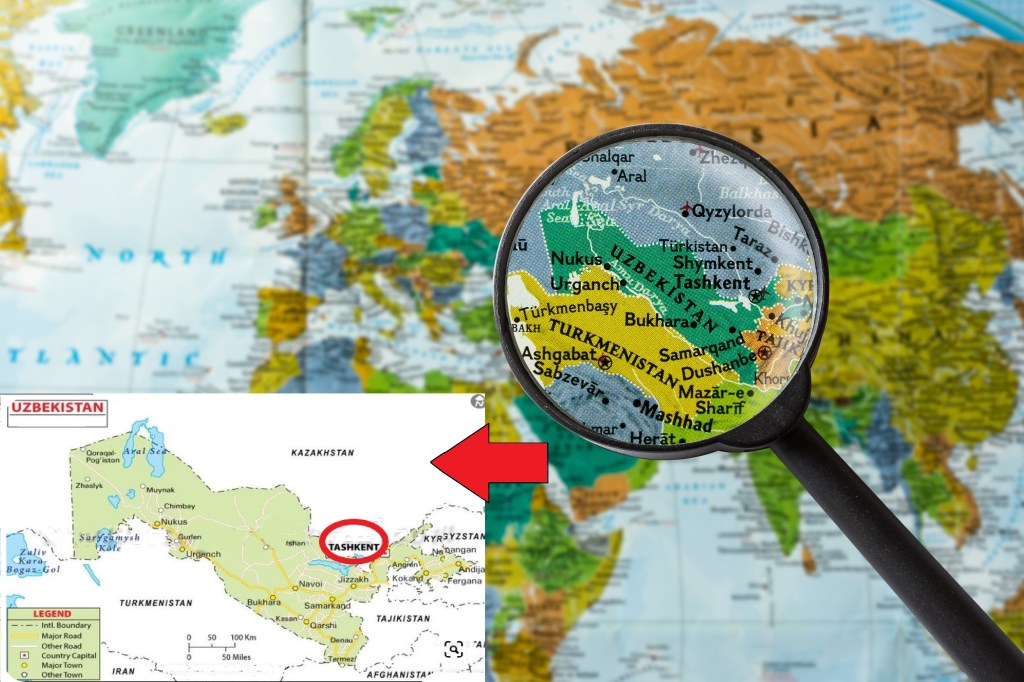
The Silk Road is not a road as such but a network of routes between China and Turkey where silk and other goods were transported backwards and forwards. Along this route lay cities, with markets, mosques, hammams and caravanserai to stay and rest up in along the route. And their names have the sort of exotic sparkle that tweaks at your wanderlust like nothing else: Bukhara; Tashkent; Samarkand.
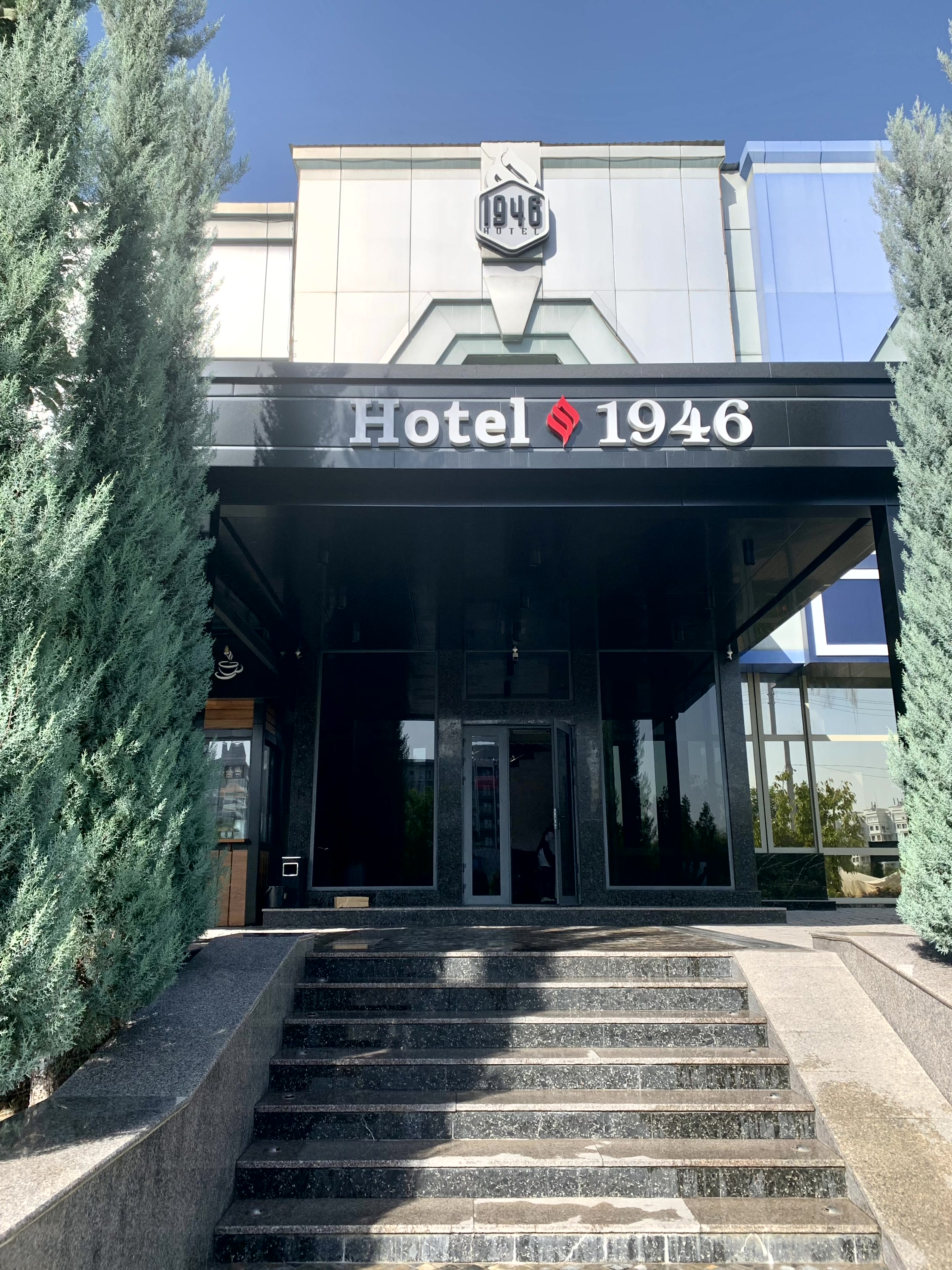
I started in Tashkent, the modern-day capital of Uzbekistan where the first thing that struck me was how nice the trees lining the roads looked with the bottom few feet of their trunks painted white. I had travelled for a day and a night to get there and got to the 1946 hotel at 5 am. I could see two smartly dressed receptionists asleep in armchairs in the lobby and there was a sign on the door saying to phone this number if the door was locked. I’d bought an Uzbek sim card at the airport but ummed and ah-ed about whether I was mean enough to wake them up and doubted they’d let me in this early anyway. Was I that mean? Well, yes, actually. The thought of maybe being able to get a coffee was all a bit too much for me and soon I could hear the phone ringing through the glass doors. I immediately liked this hotel because not only did they let me into a room at five o’clock in the morning, they also told me what time breakfast was. It was a good breakfast too with little filo pastries stuffed with cheese, squash or creamed spinach; fresh fruit and nuts; chips and fried cauliflower; stuffed eggs or pancakes; halva, mushrooms, olives and salads.
Abdulrahman, the abused receptionist I’d woken up, bore me no grudges and was now waiting at breakfast. I got chatting to him. He’s looking a bit bleary-eyed after his night concierge role but his shirt has not the slightest crease in it, even after sleeping in an armchair. They must make some wicked starch around here. He won’t finish until after ten. I never learned the name of his sidekick, the other night concierge, who had not even woken up when I’d arrived, because he was always dozing in the armchair whenever I passed the reception area. Although I did once see him tucking into a piece of cake so voraciously that I didn’t want to disturb him by starting a conversation. You see? I’m not all that mean.
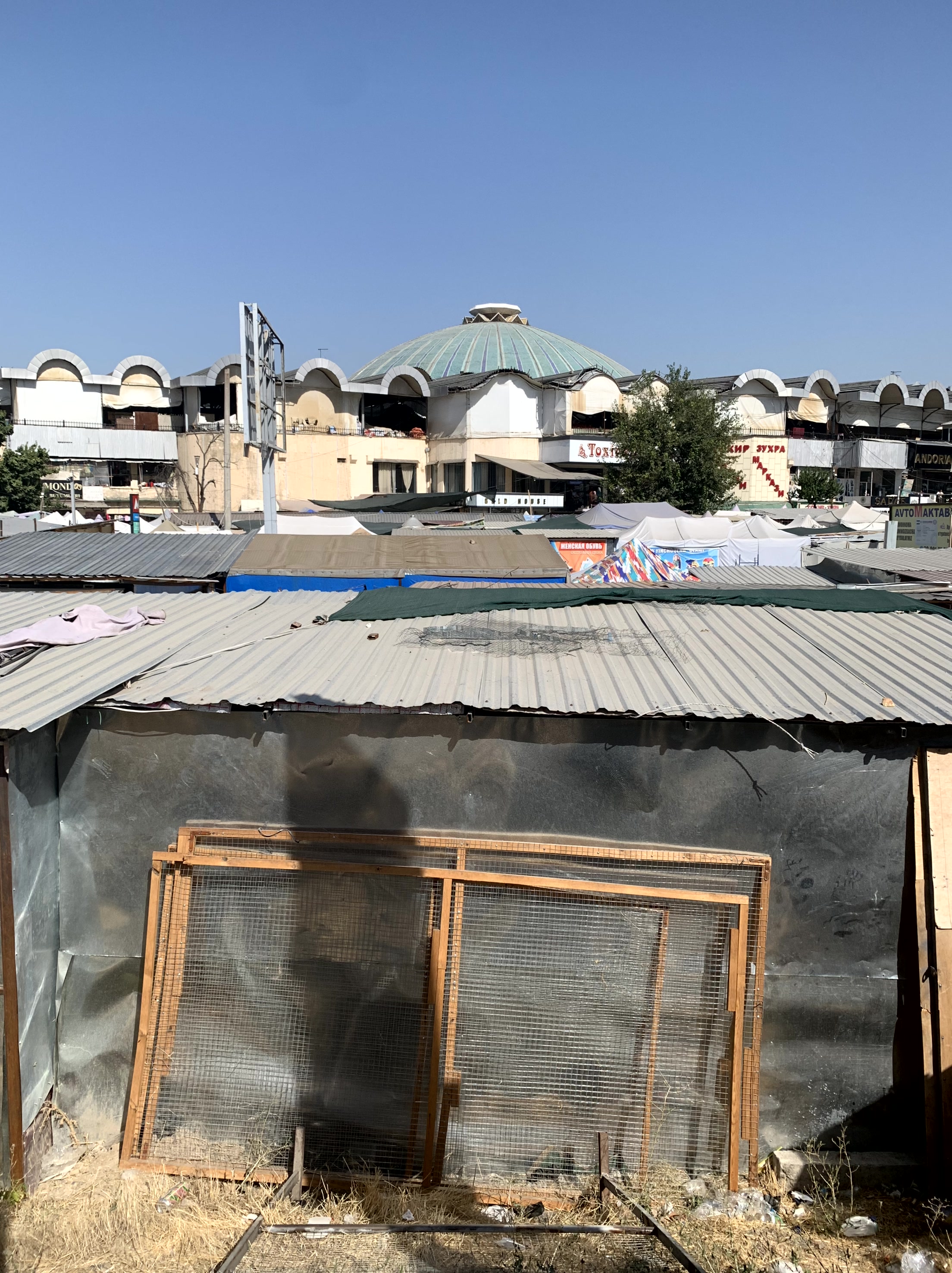
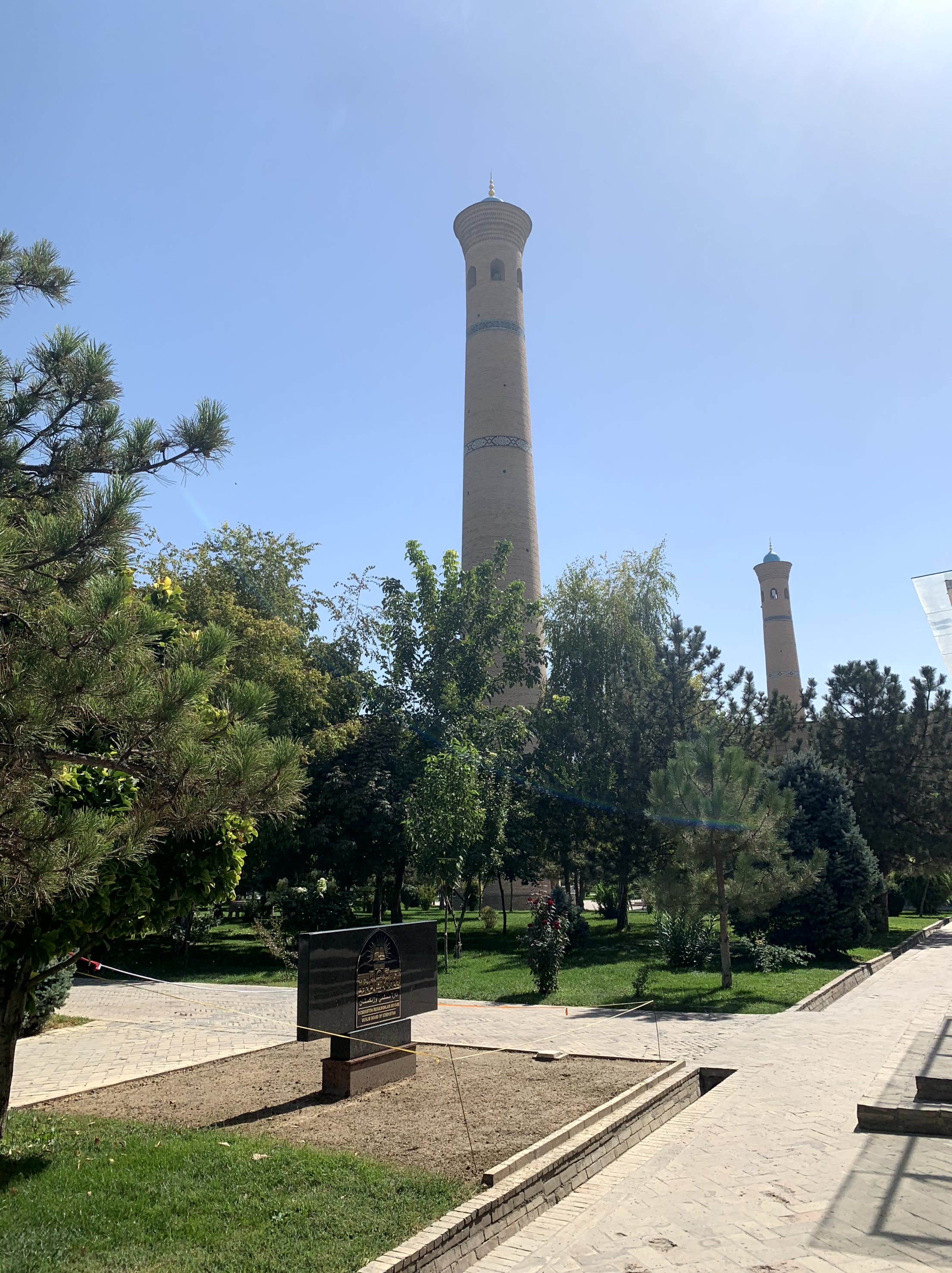
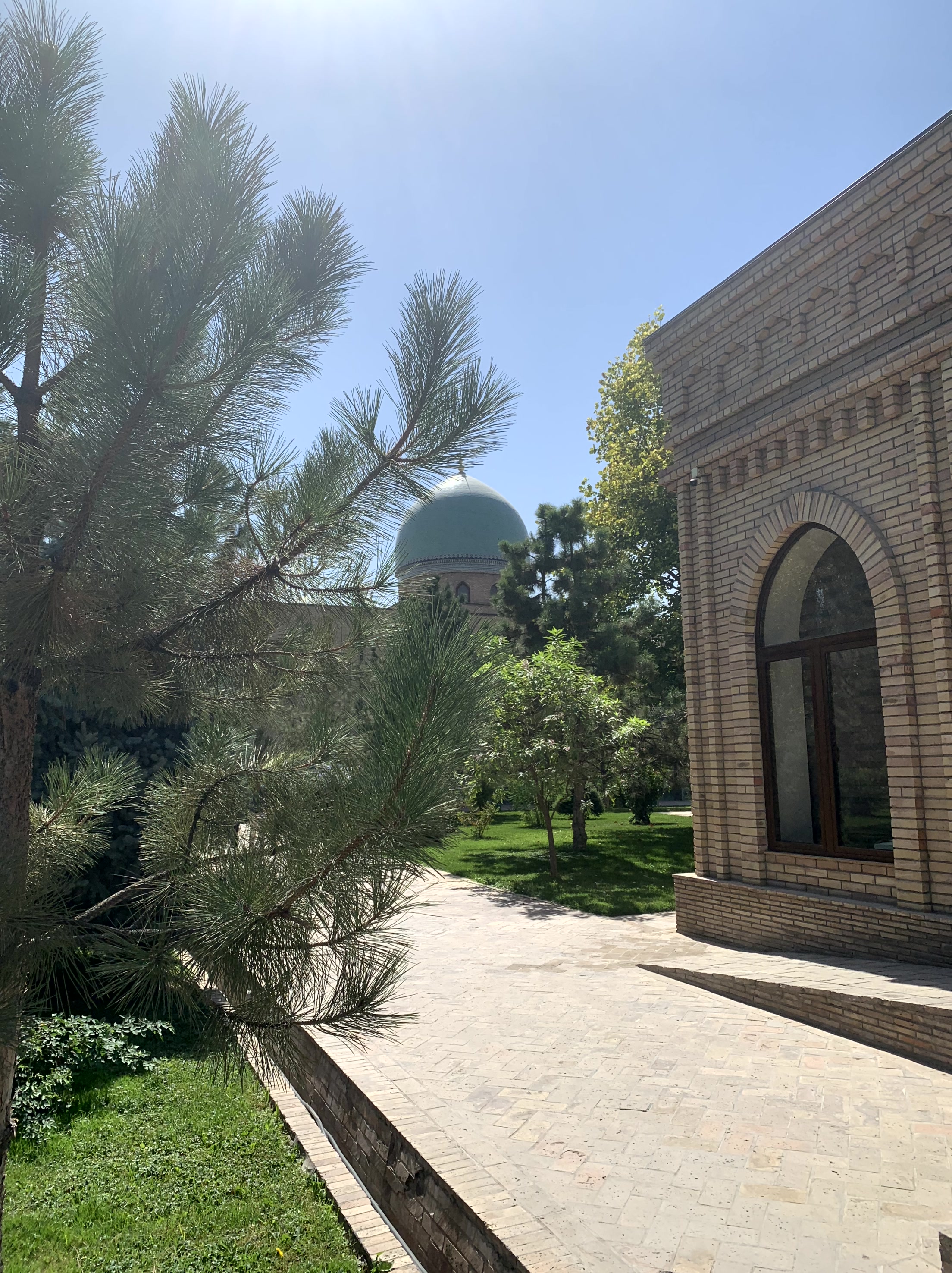
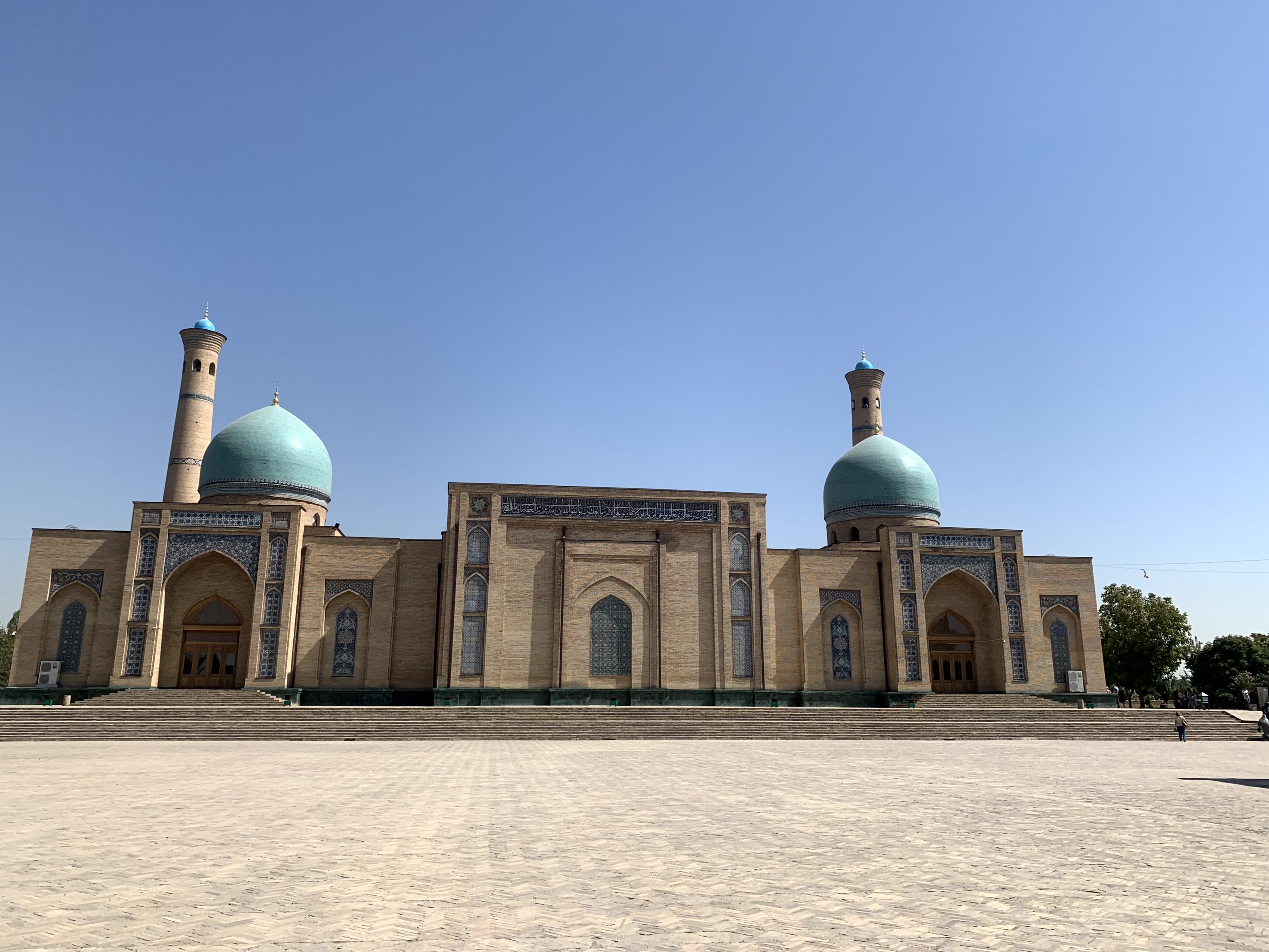
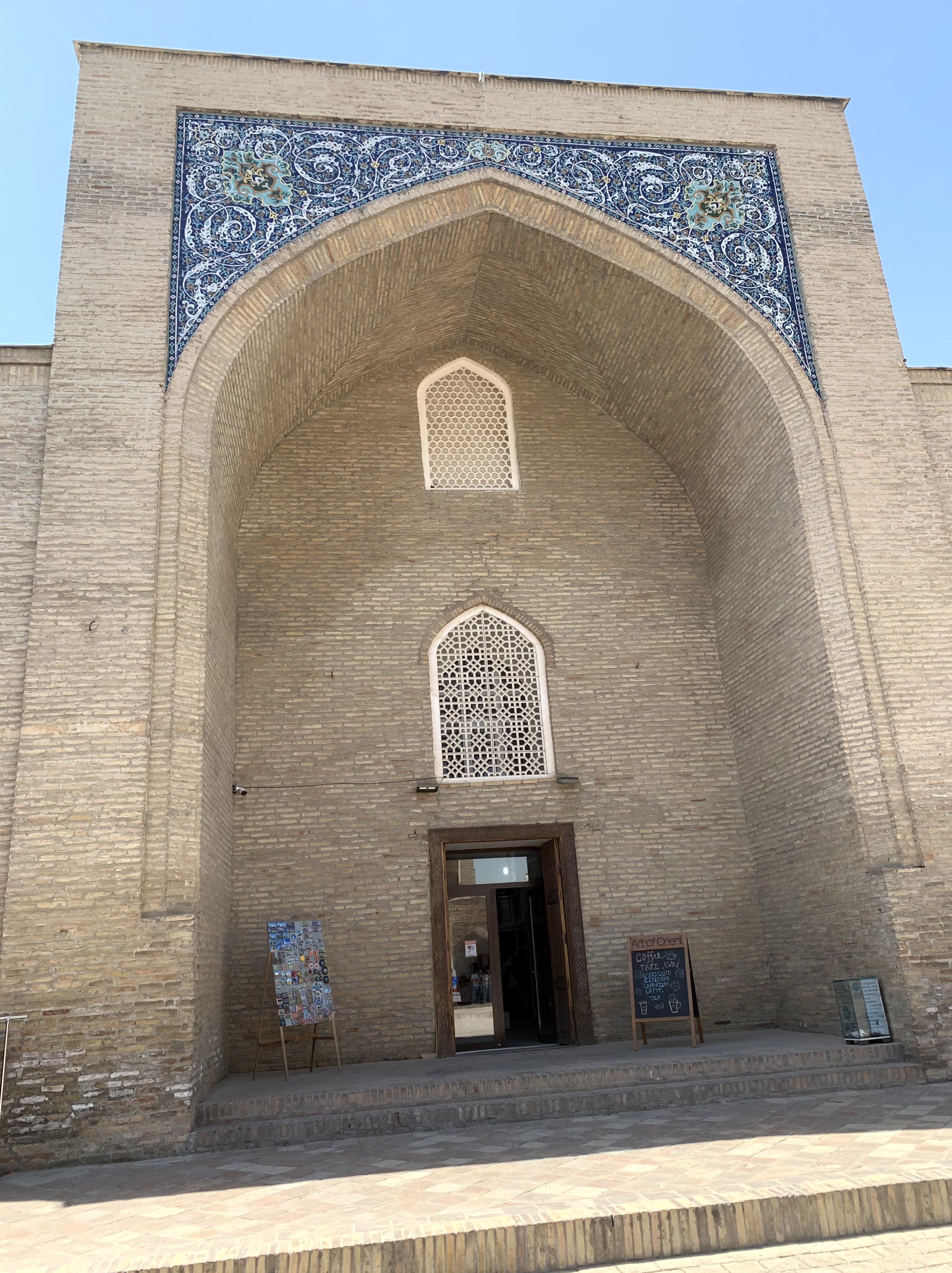
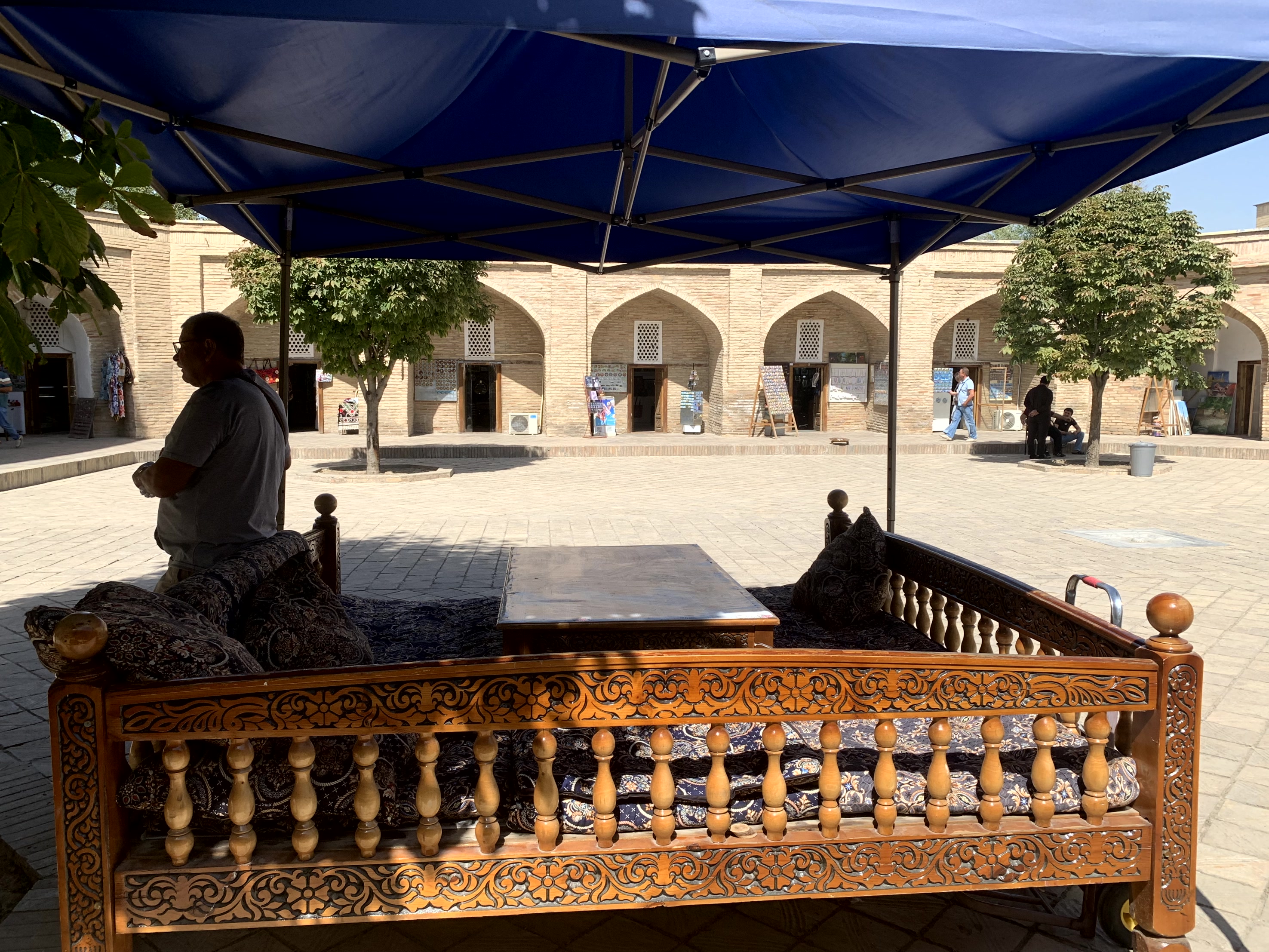
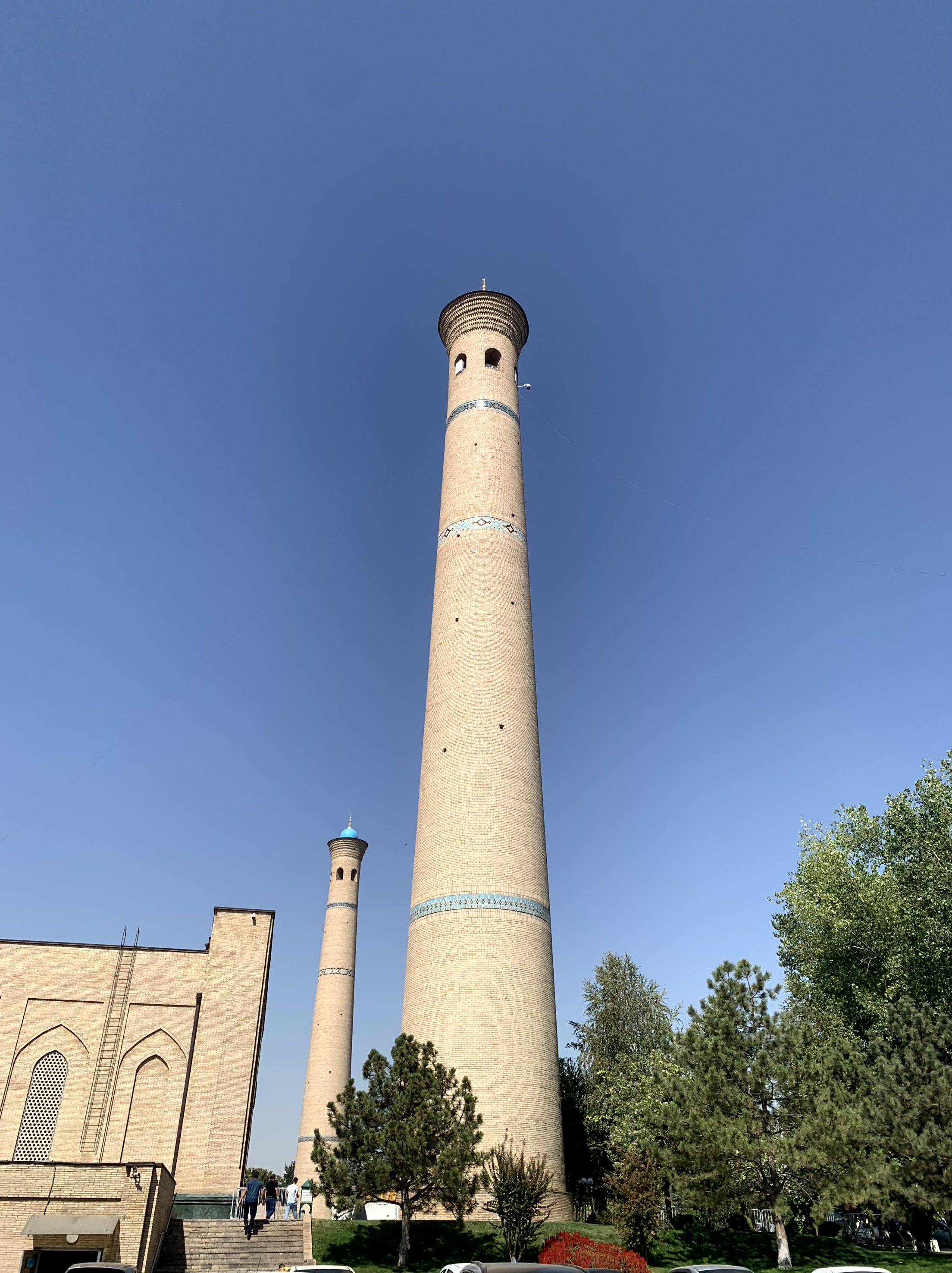
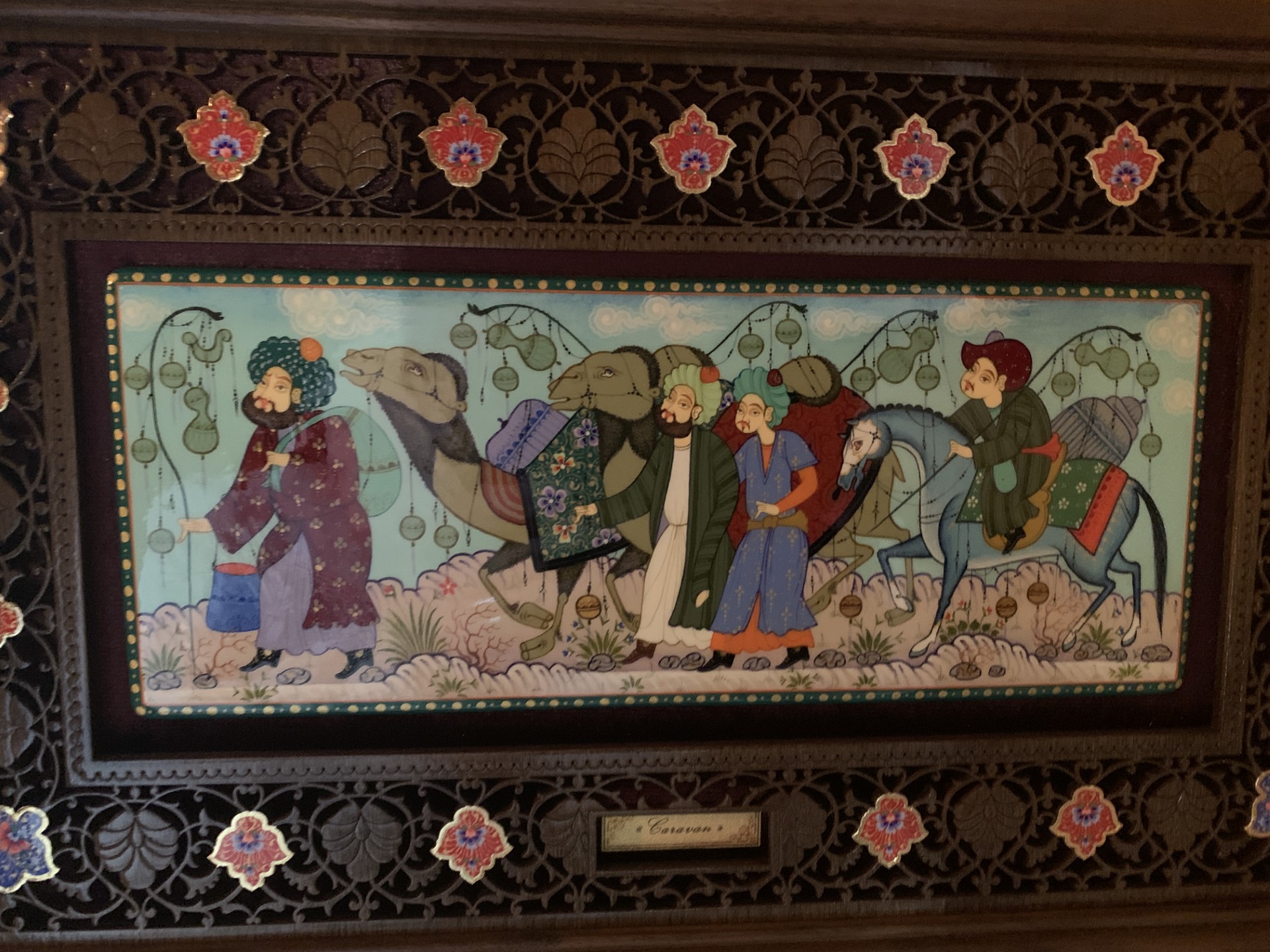
Tashkent is an intriguing mixture of brutalist Soviet architecture (Asia’d up with bright murals), wide tree-lined roads, ultra-modern highrises and ancient complexes of mosques, madrasas and mausoleums. I spent the day walking around the city, starting with a wander around Chorsu Bazaar with its distinctive blue dome and stalls piled high with foodstuff or cheap household wares. There was a ceramics workshop nearby too and then I headed for the Khast Imom, a complex of stately minarets (54 metres high), mosques and madrasas around a spacious square. In the Barak Khan Madrasa, the former cells where students lodged have now been taken over by tourist craft shops. The buildings are impressively decorated with intricate tilework and after having read Orhan Pamuk’s ‘My Name is Red’ I was taken by a painting in the Ottoman miniaturists’ style to add to our collection of original artworks from our travels. This book, although a novel set in sixteenth-century Turkey, is to be recommended for the interesting details of these miniaturists’ lives, culture and methods (although you have to get through the first 100 pages before it grabs you).
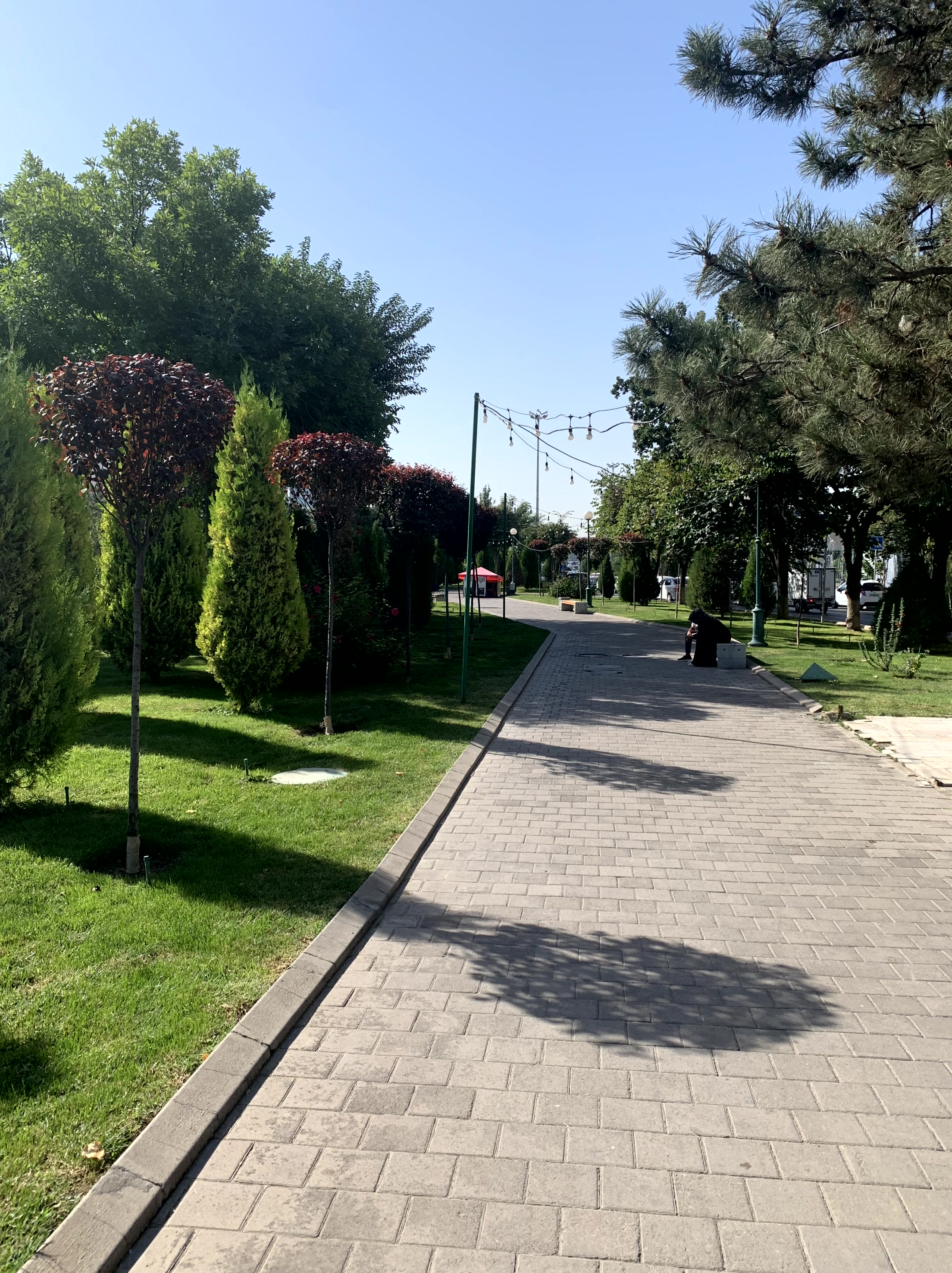
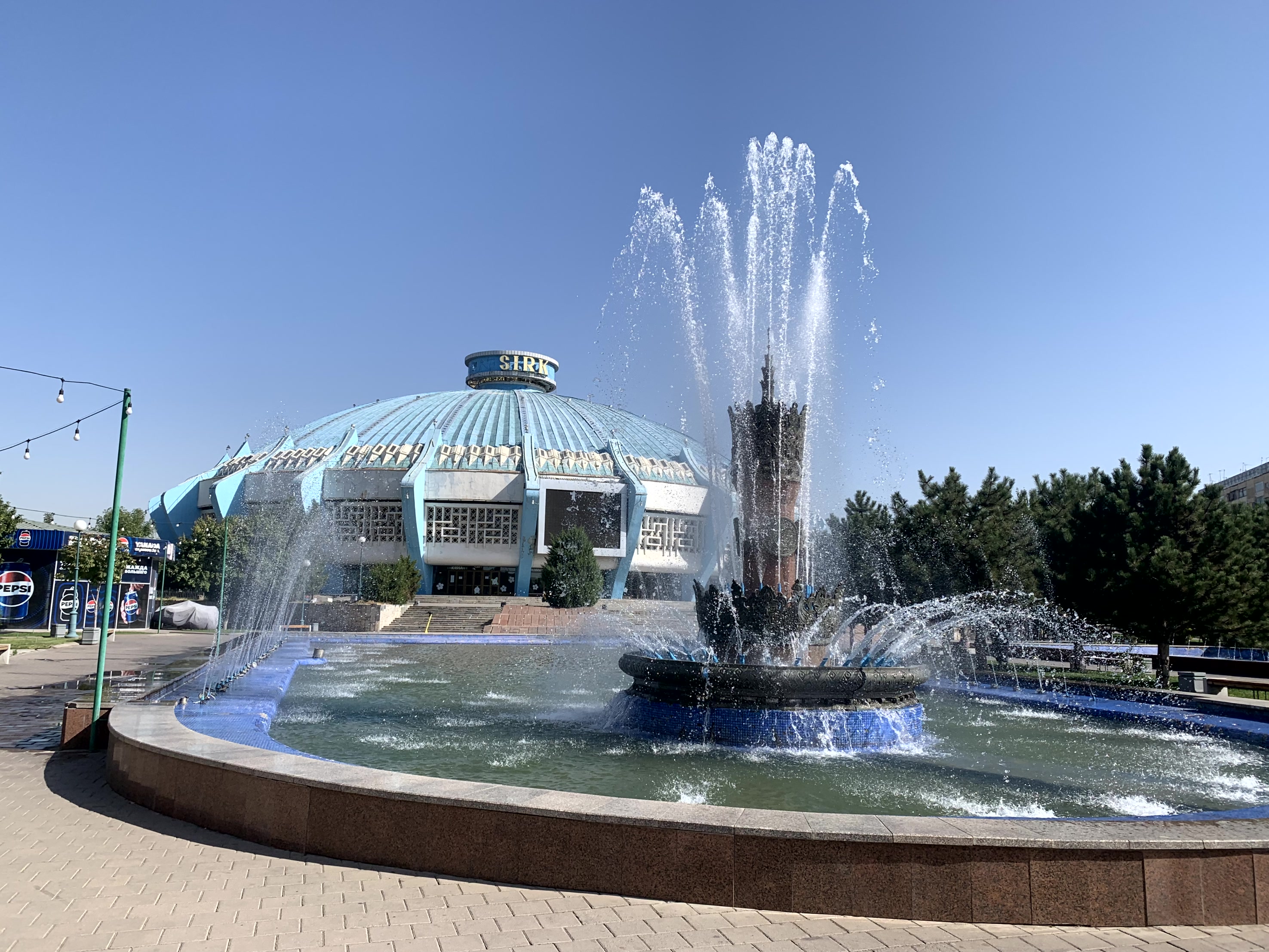
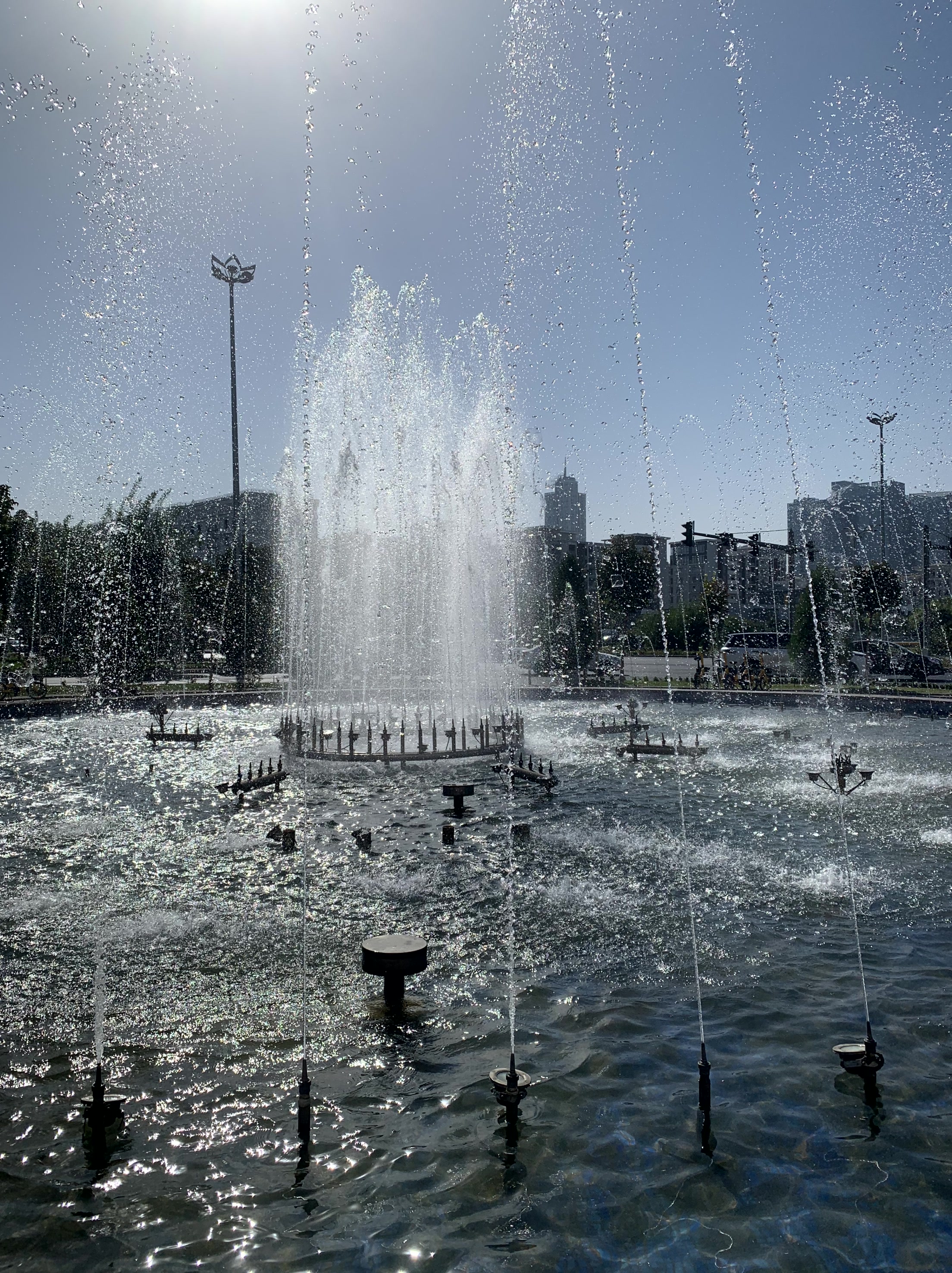









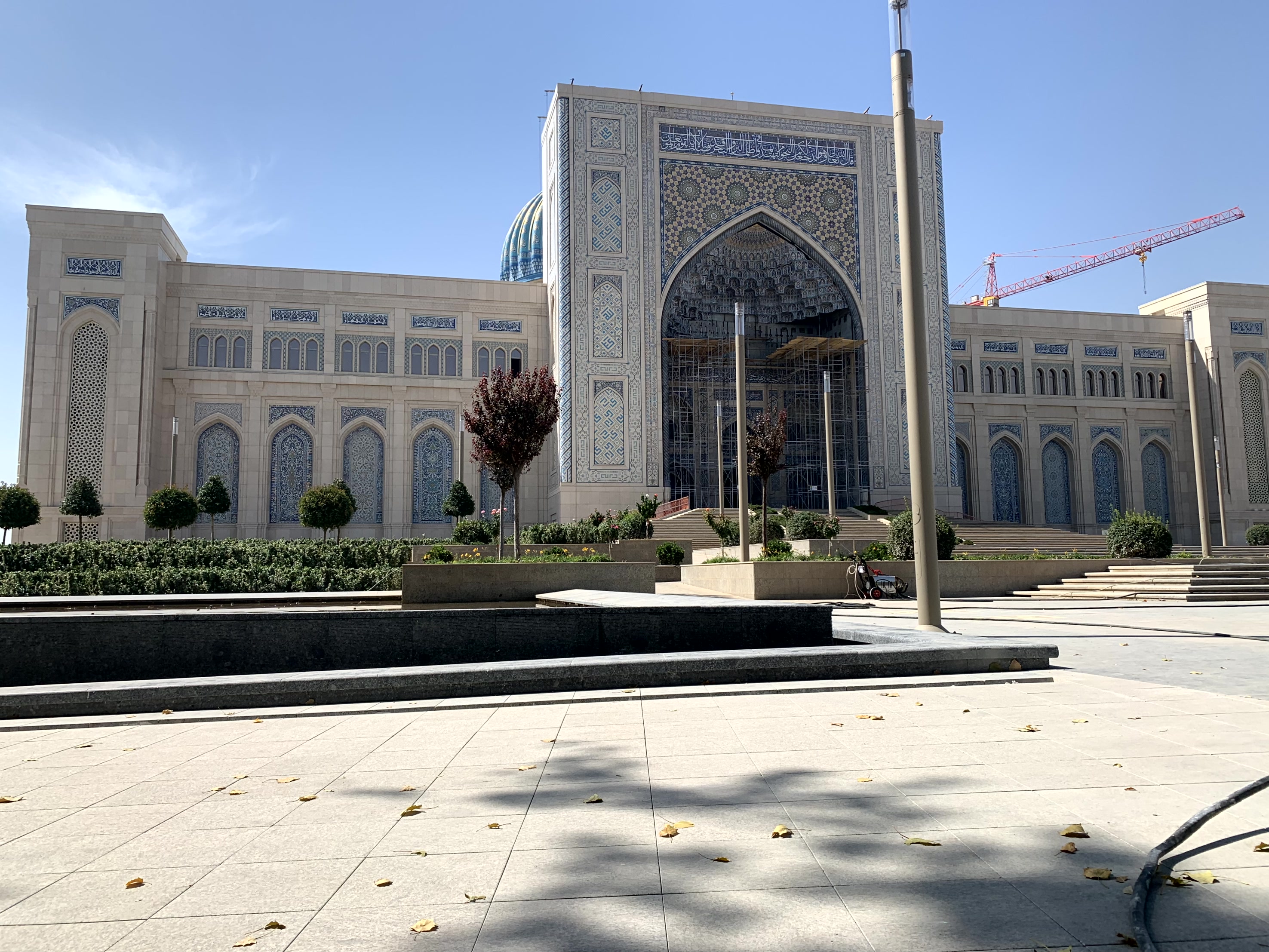


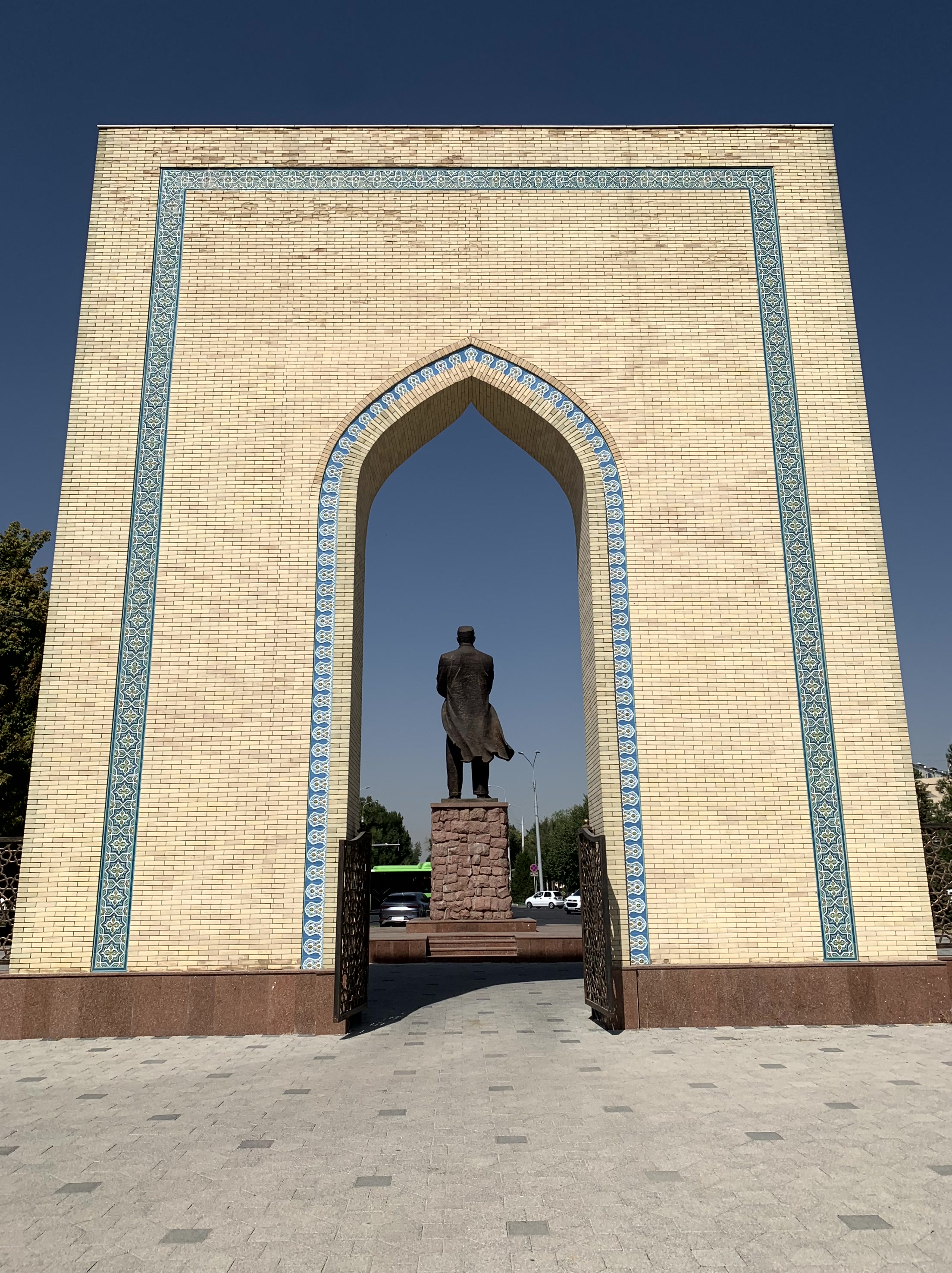
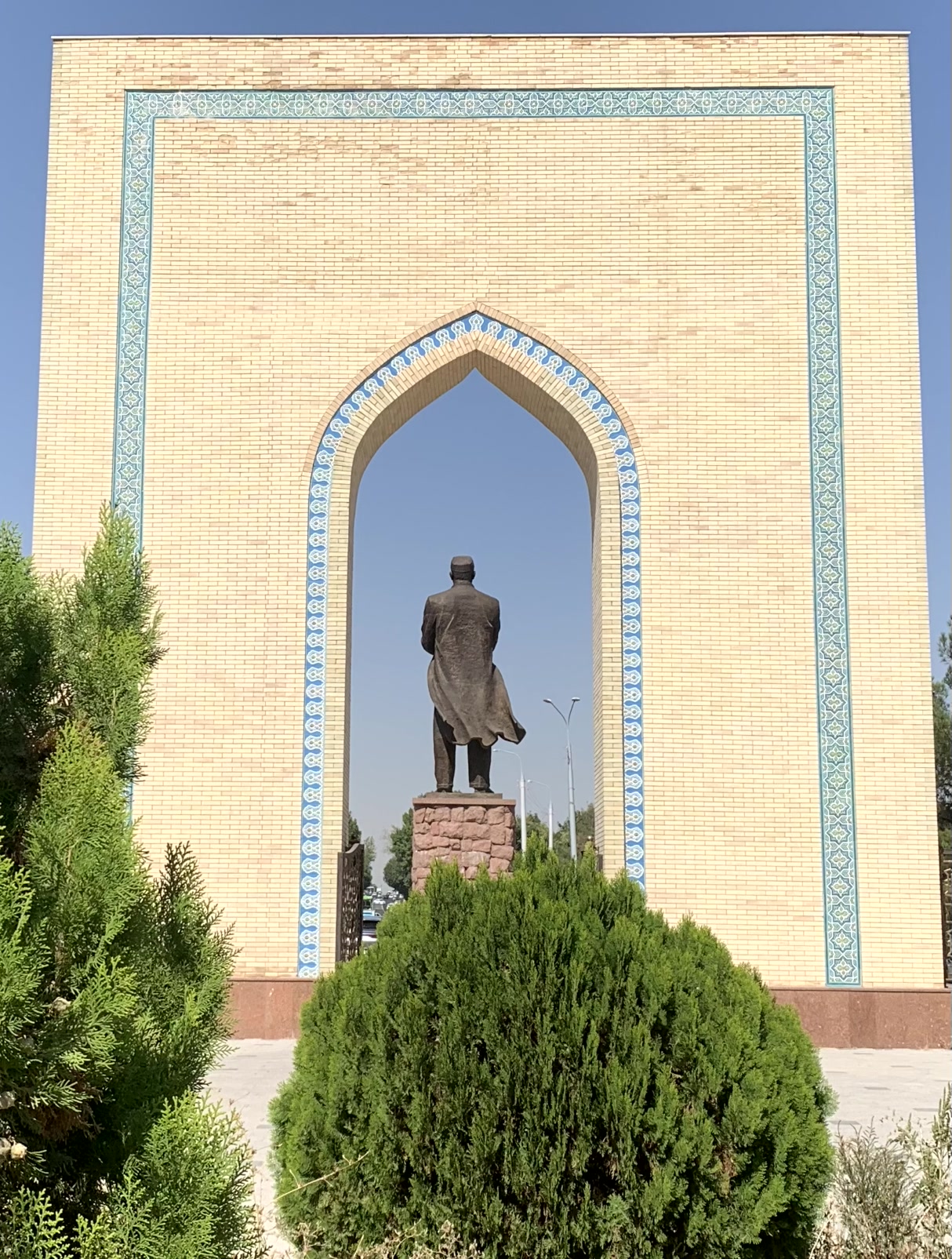







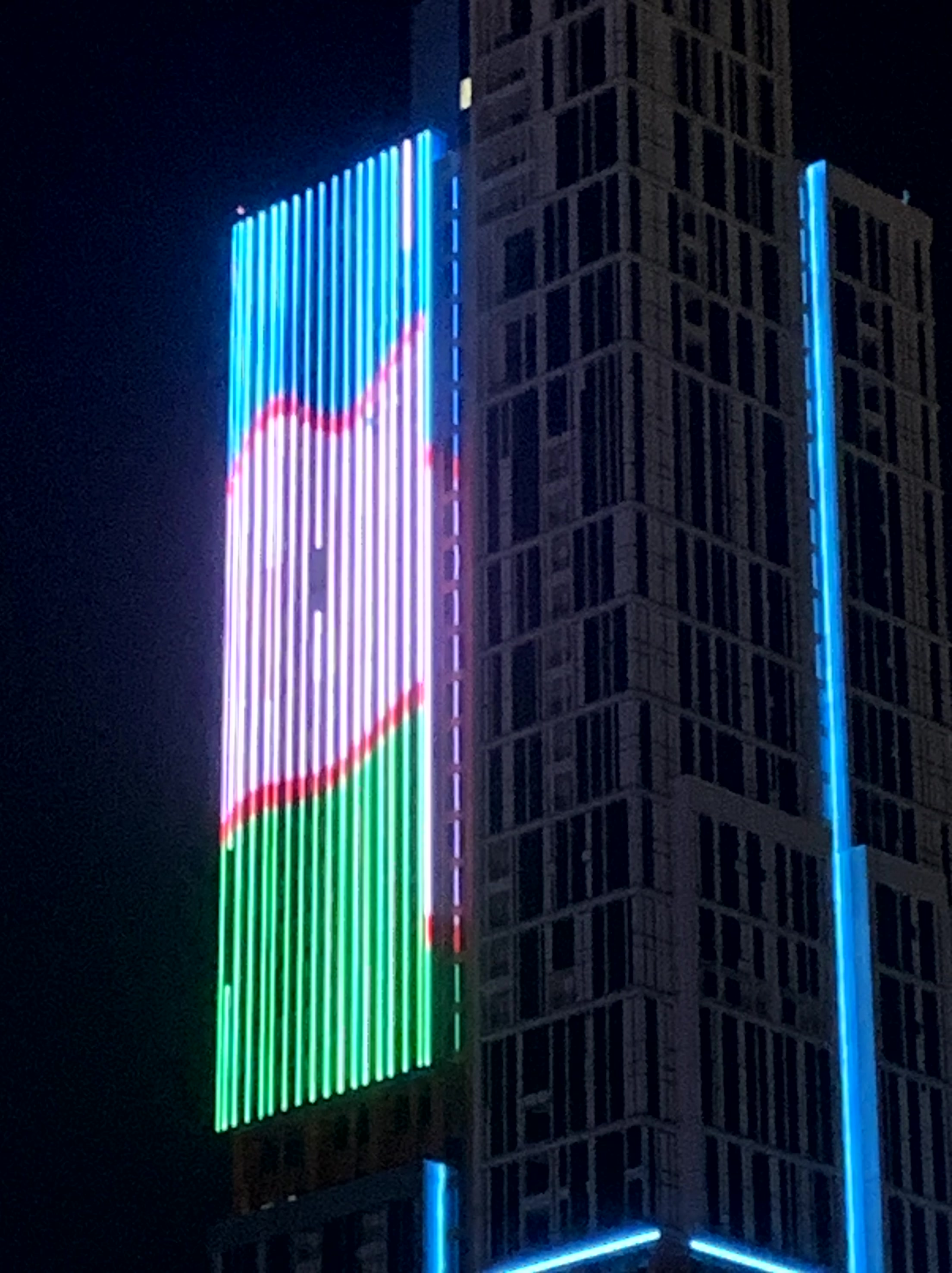
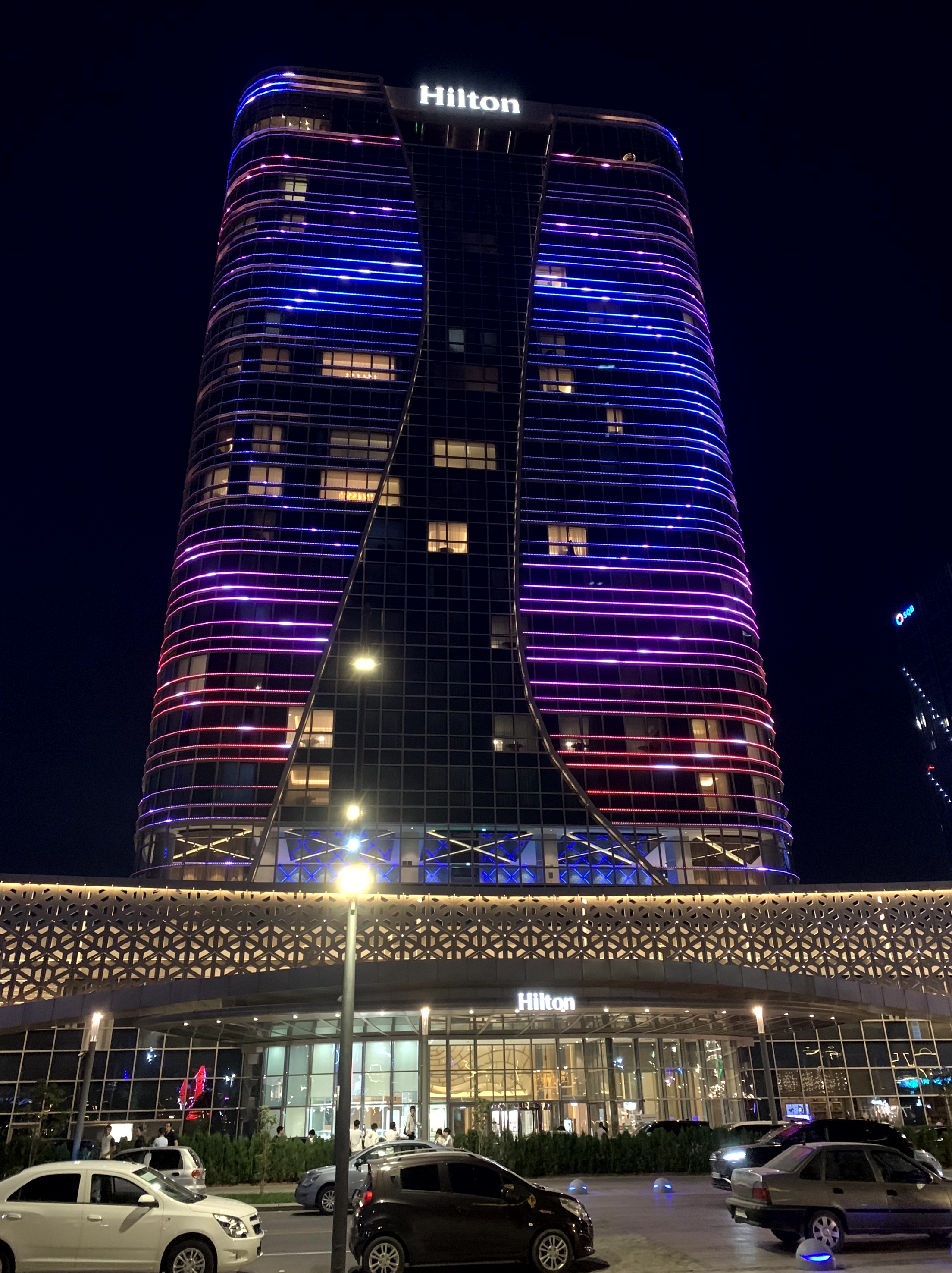
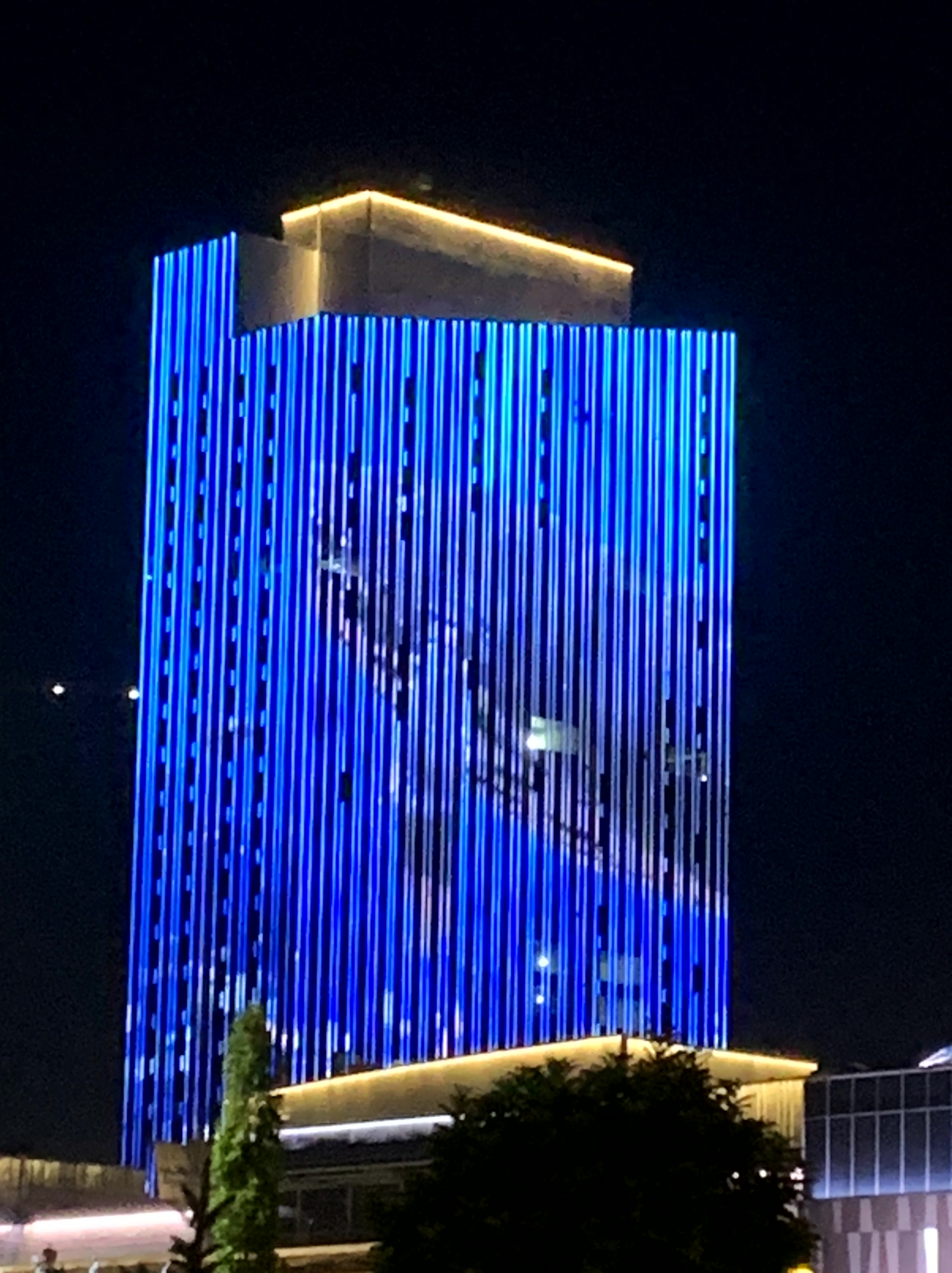
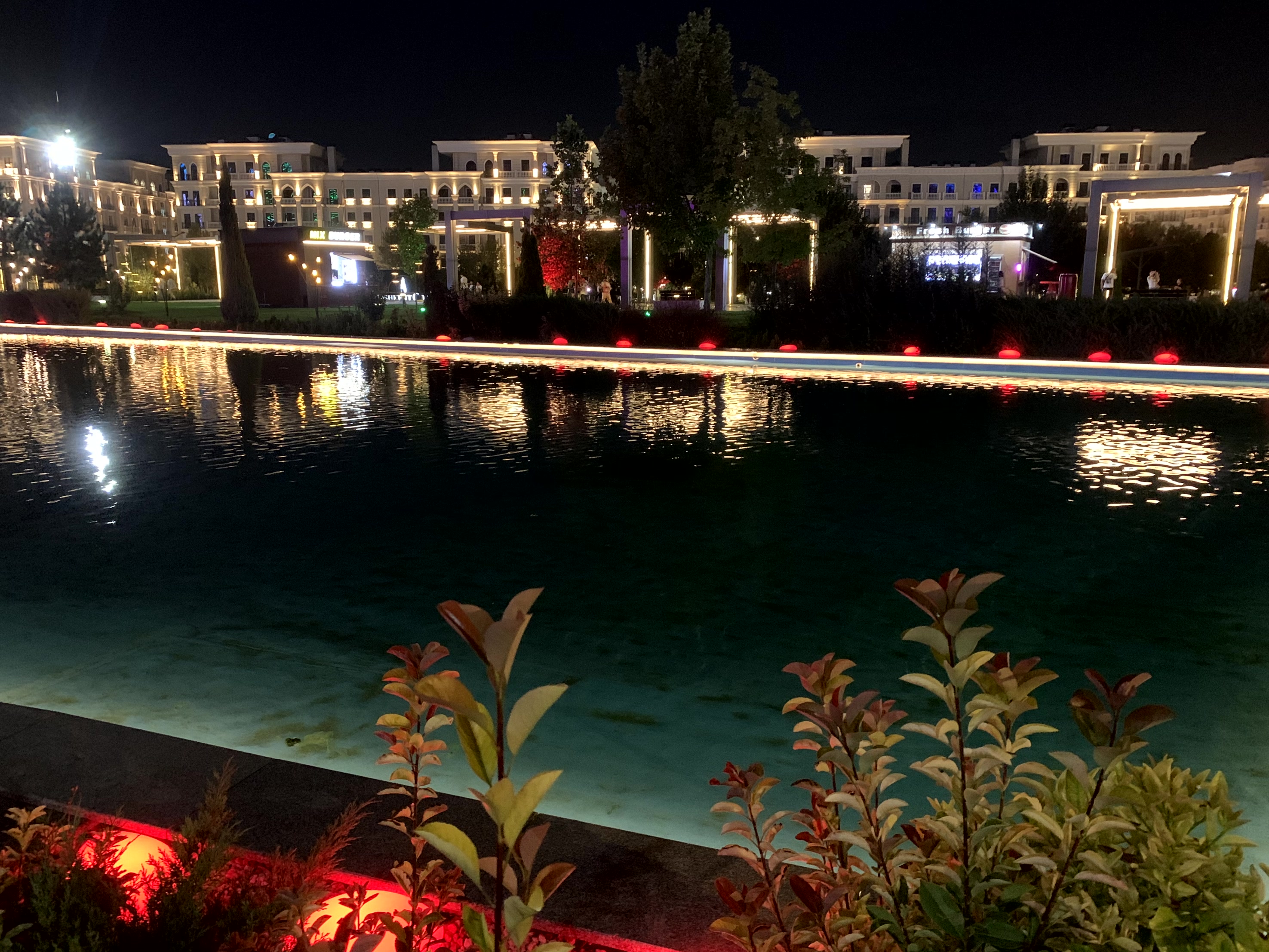
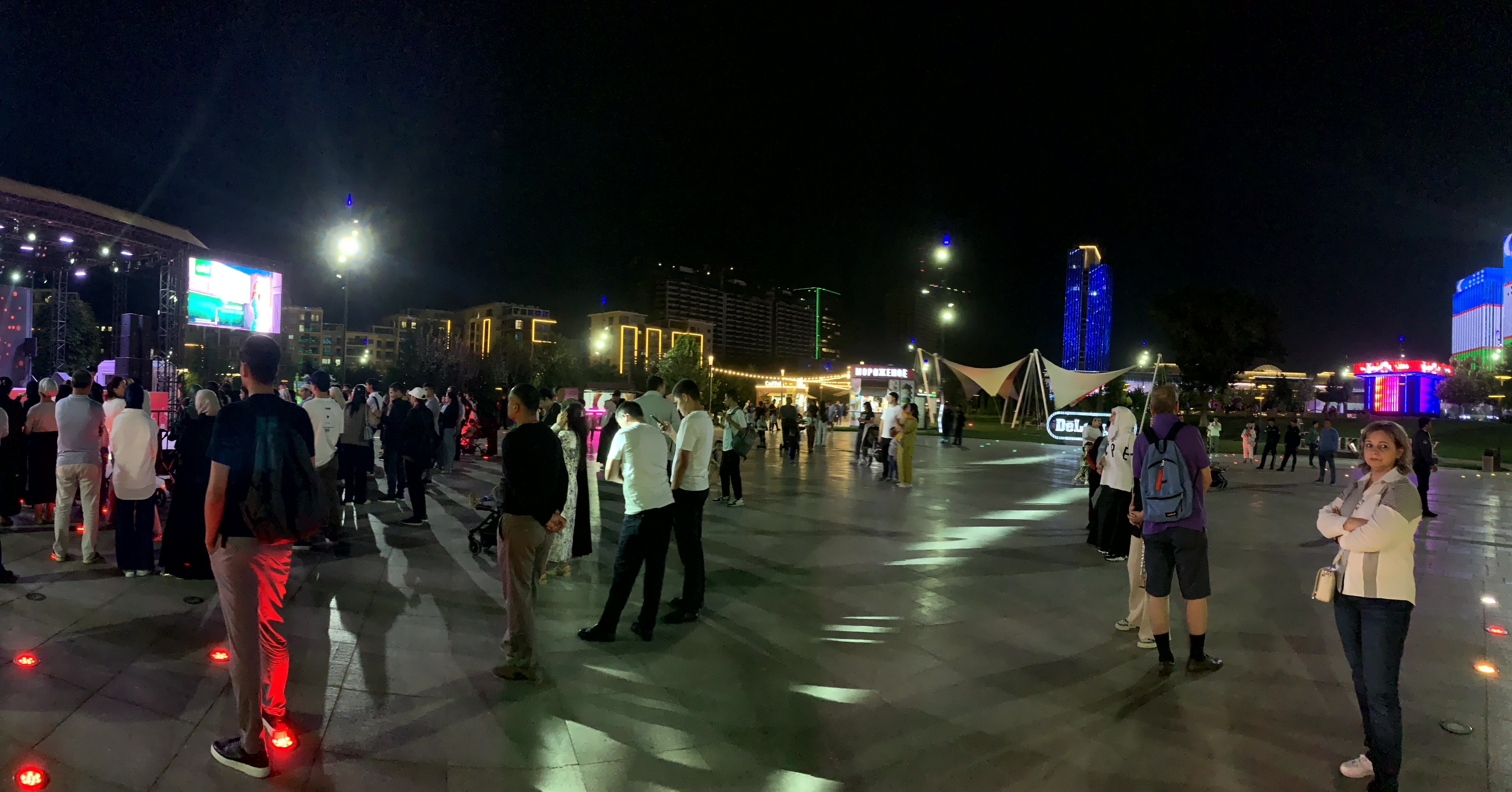
Uzbekistan only opened up to tourism in 2016 and since then the likes of Holiday Inns and Hiltons are starting to move in. There is a modern part of Tashkent basking in the glow of swanky new highrises that light up after dark in changing colours, behemoth scenes of swimming dolphins, shooting stars, or the fluttering Uzbek flag. I know this because after a hot day’s footslogging I went in search of the Hilton because that seemed the most likely place to get a cold beer. I found myself in a pleasant park where families were out on a trip to marvel at the spectacle of lights from the buildings and fountains to the accompaniment of music piped into the park: Joan Osborne’s ‘What if God Was One of Us’ and The Beatles’ ‘Can’t Buy Me Love’. It was all quite jolly and there was a distinct lack of edge compared to many places at home after dark. And the difference? No-one was drunk or high or aggressive. Just out with their children. I almost felt guilty that I’d come here looking for a cold beer.
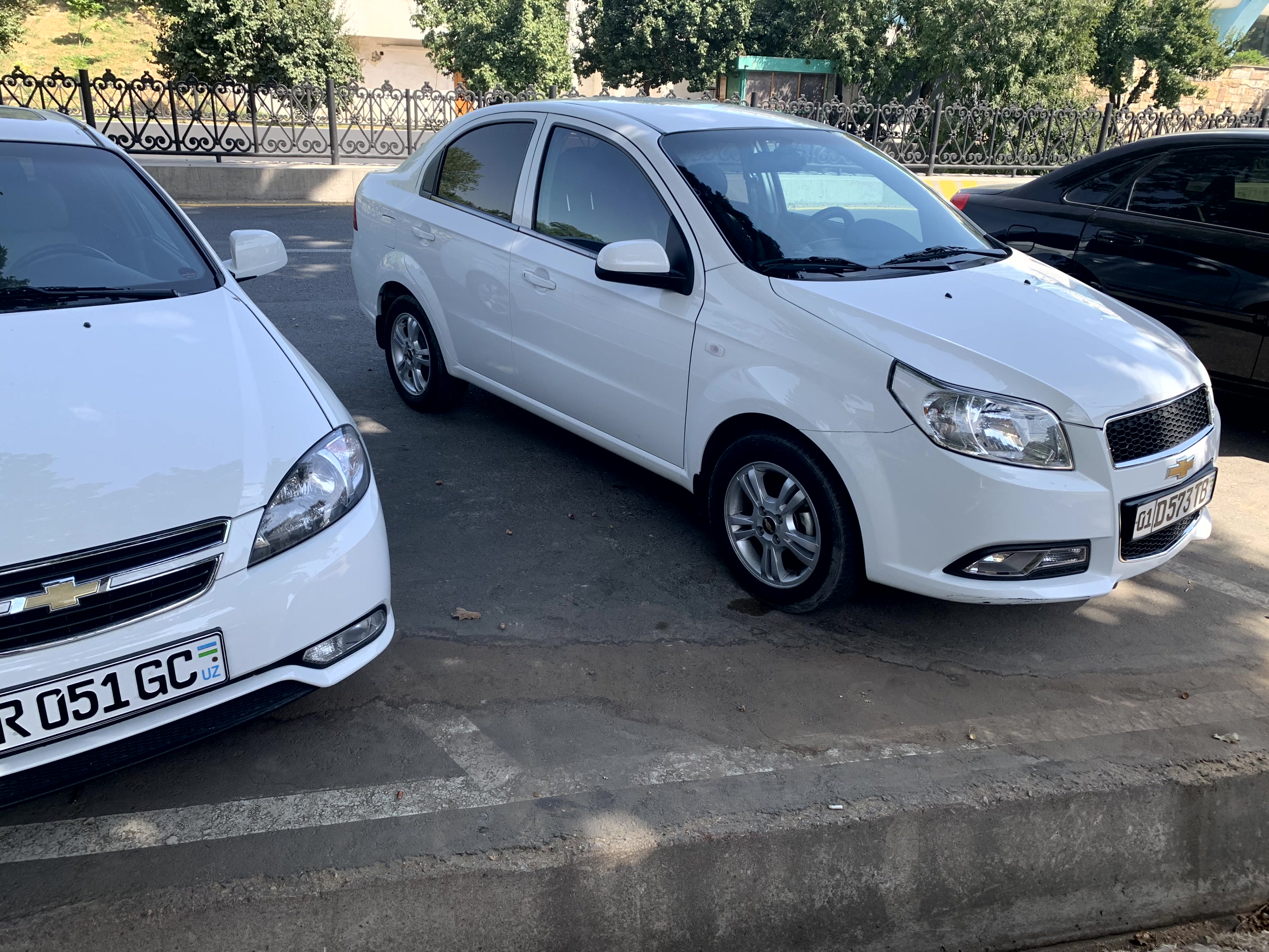
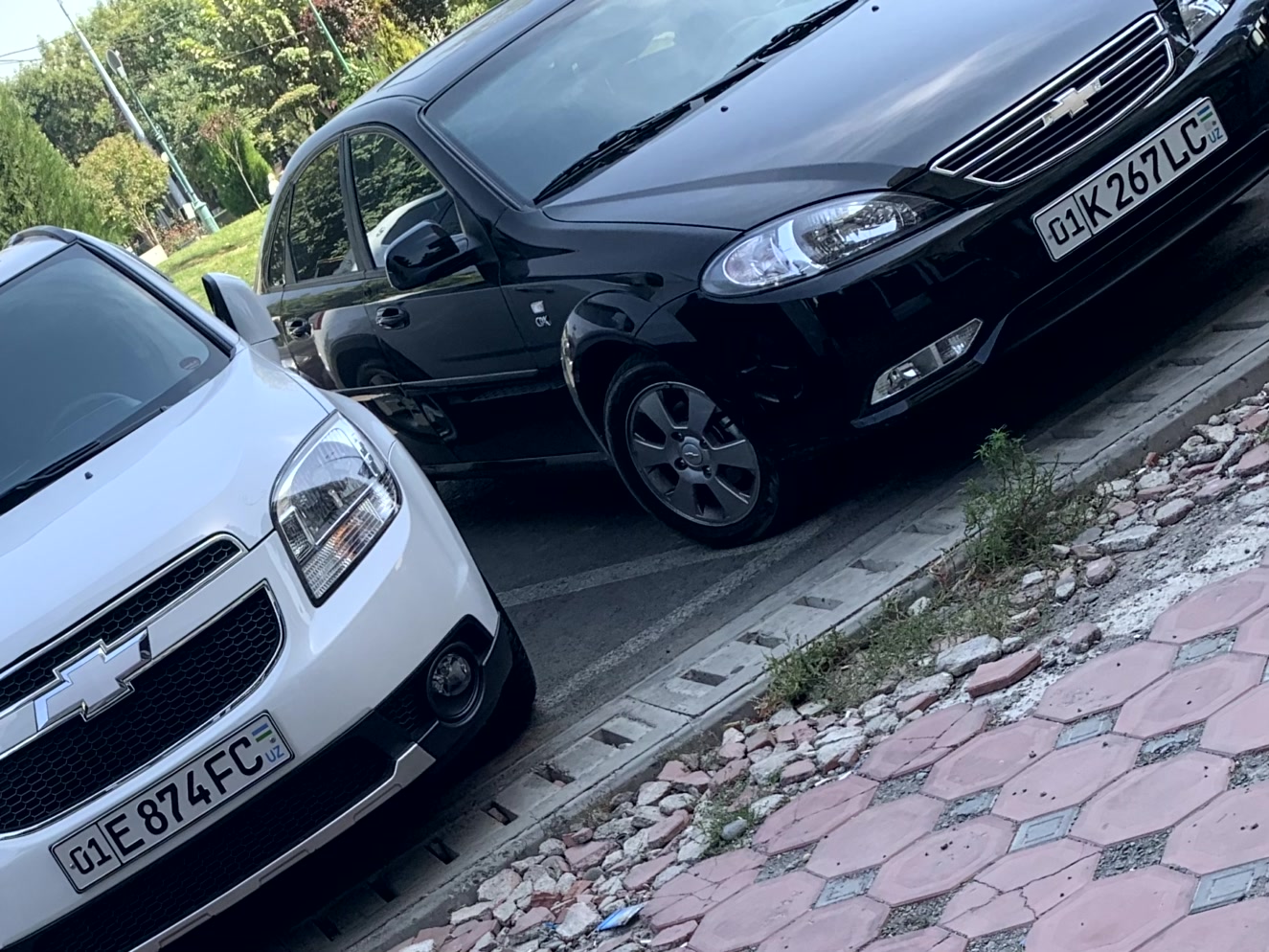
In the hotel, the waiting staff are immaculately dressed and magnificently professional. One of them, a young girl who looks about the age of my fifteen-year-old daughter, wears a smart suit, her jacket just a little bit too big for her. She over-laughs at the jibes her male colleagues are directing at her and smiles at them, a smile that I notice disappearing as soon as she turns away from them. The streets are still busy when I walk home and as I cross under the dual carriageway, I dodge unlit cyclists and a horserider chancing their luck amongst the speeding Chevrolets (the vast majority of cars here are Chevys – I wondered why).







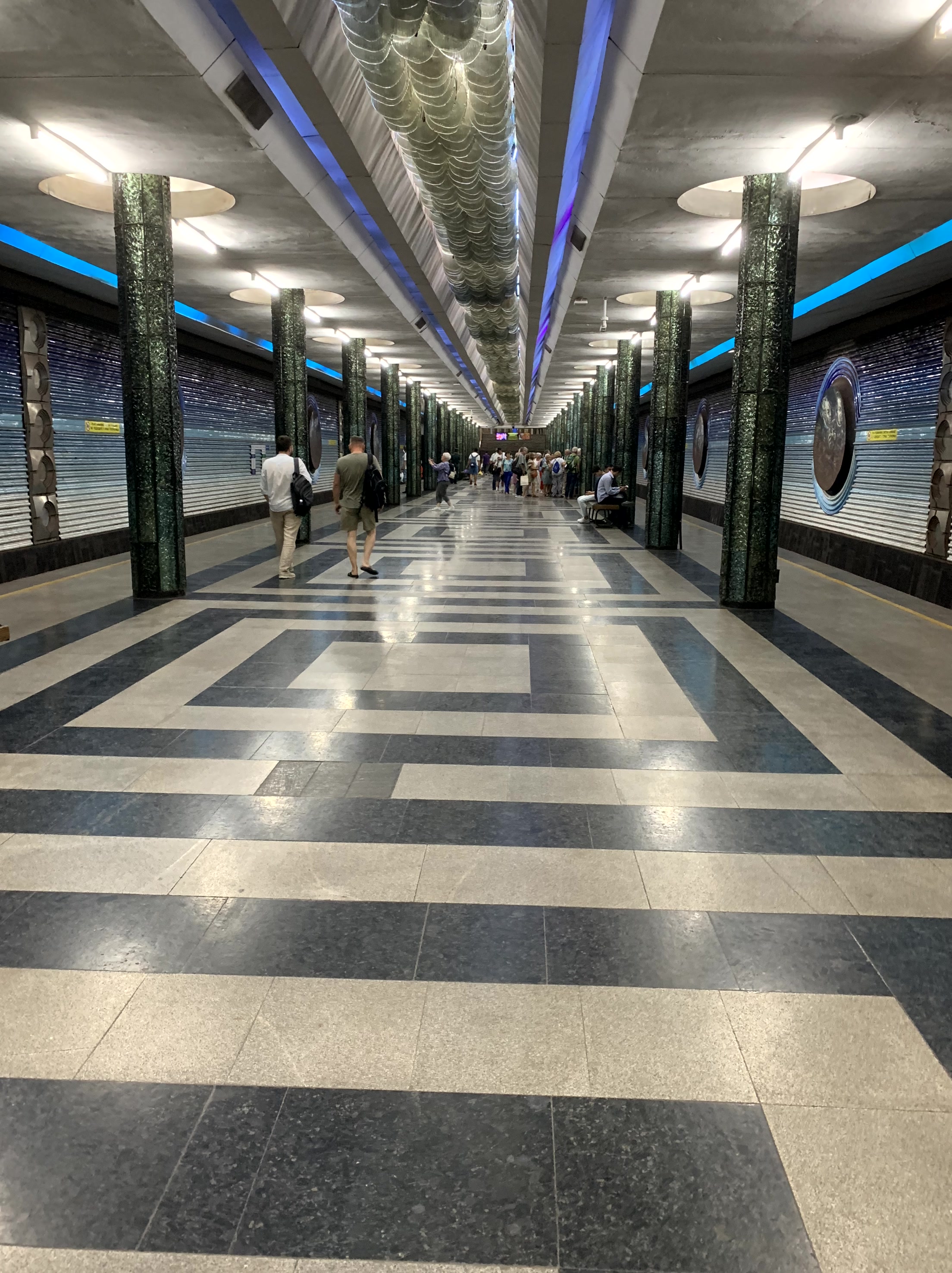
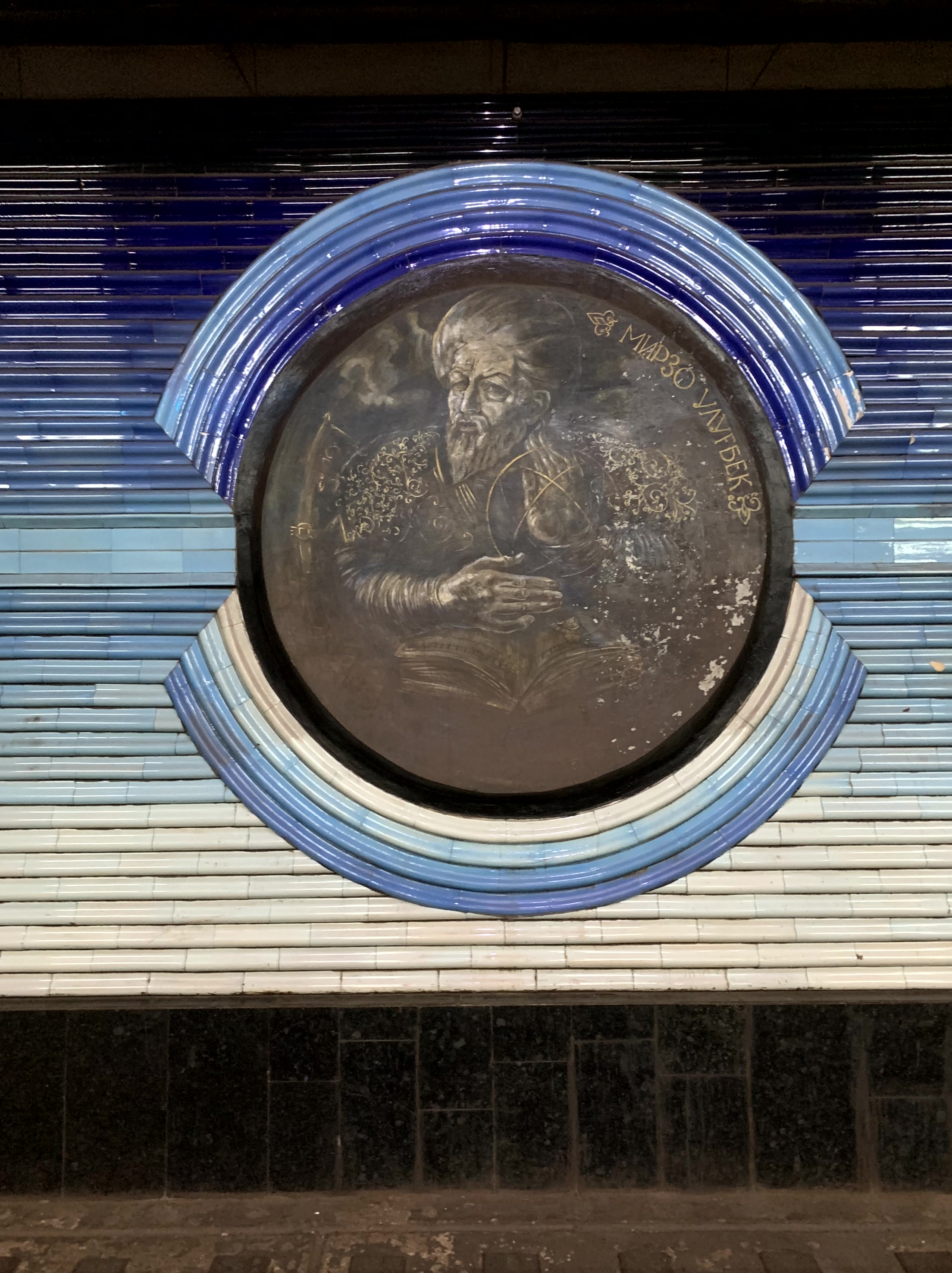
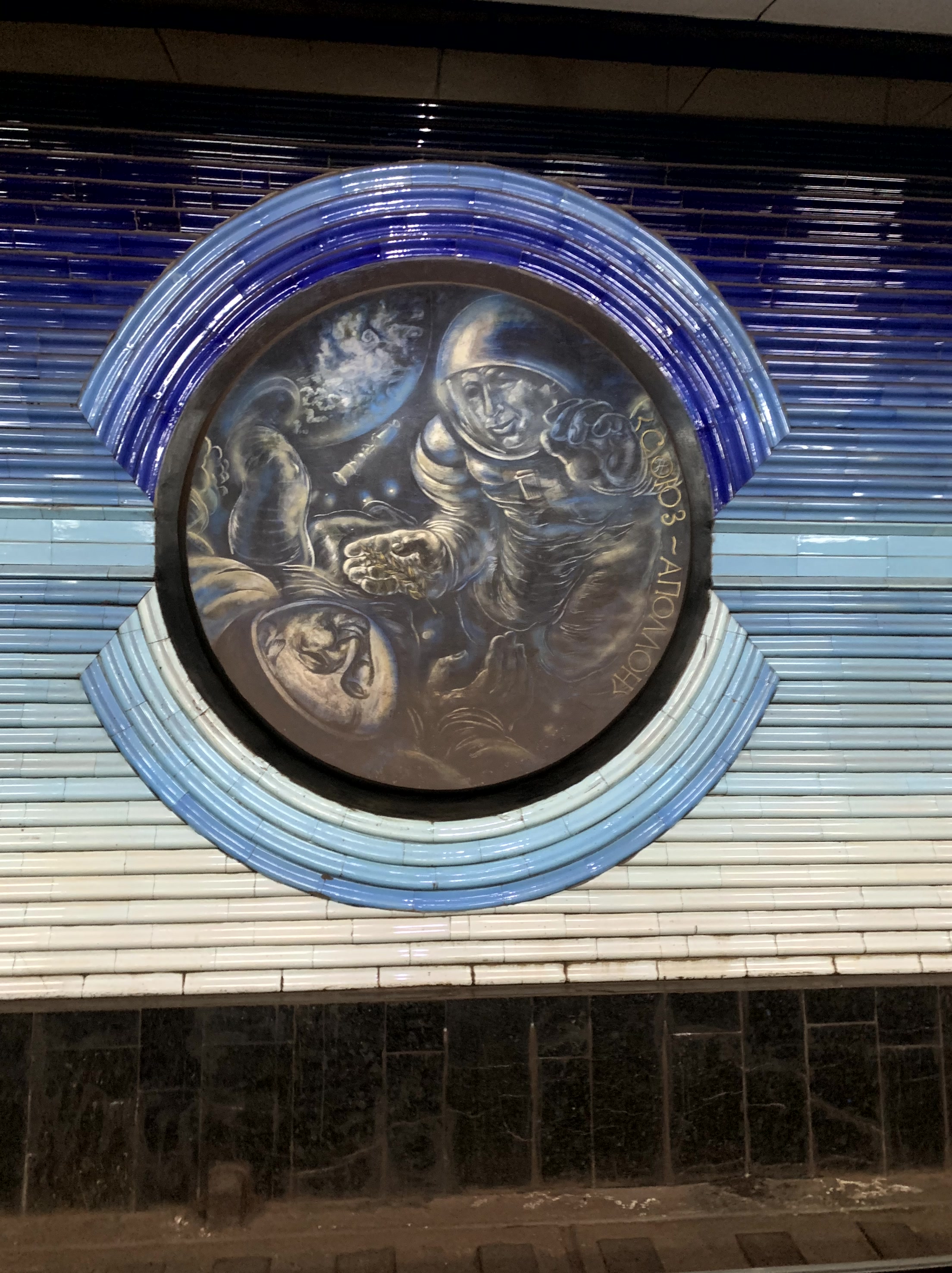
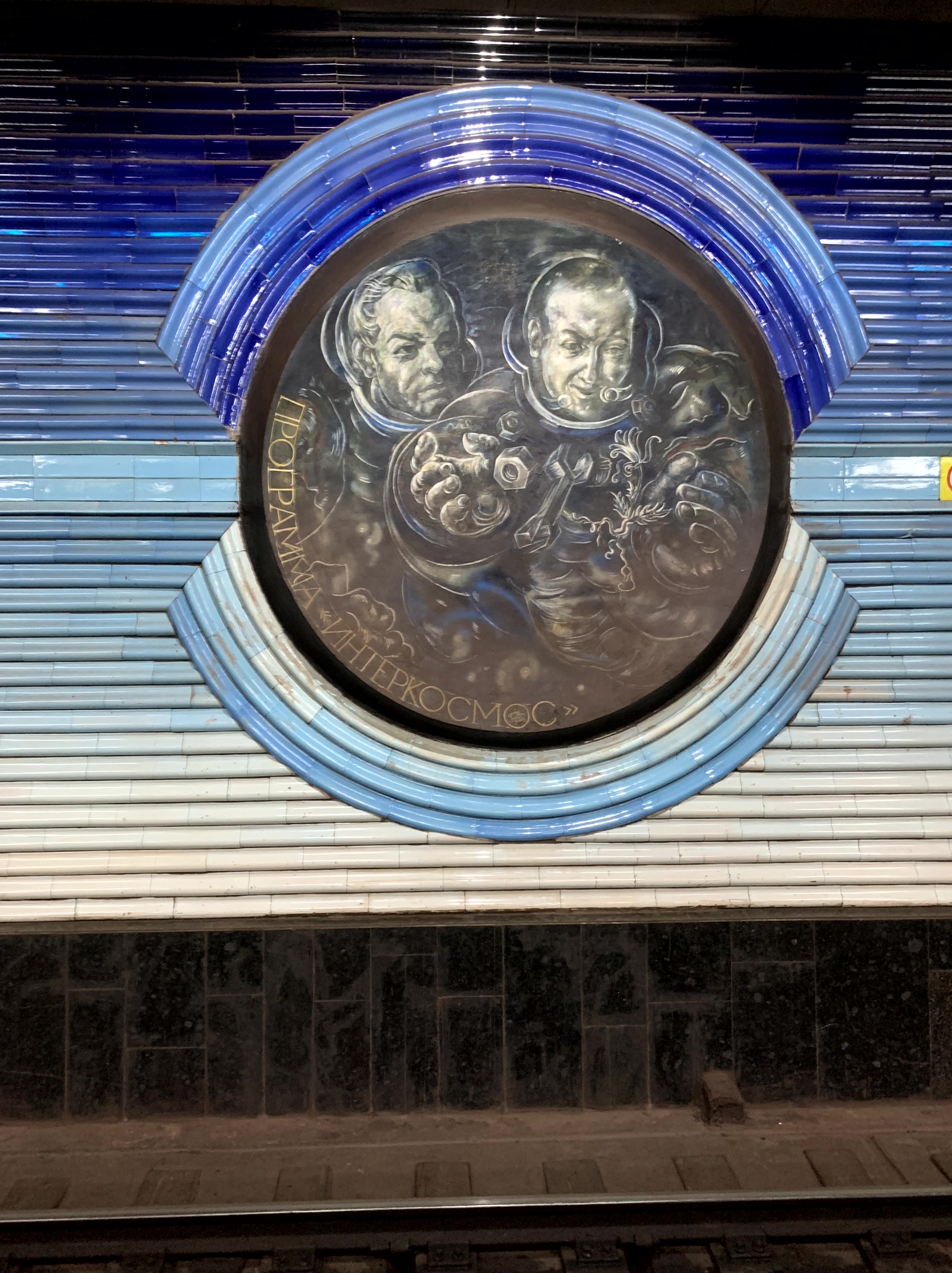
Guidebooks and websites about Tashkent often recommend riding on the metro here. It’s a tourist destination in itself and following Soviet decrees, the stations are all themed in their architecture and are strikingly beautiful places. Up until 2019, it was illegal to take photographs down there, which was a pity because the chandeliers, ornate pillars and artistic tile works are a sight to be seen. Kosmonavtar station was one of my favourites. Dedicated to space exploration, it features portraits of Amir Temur’s astrologer grandson, Ulugbek, Soviet cosmonaut Yuri Gagarin (the first man in space) and Valentine Tereshkova (the first female cosmonaut), amongst others. A ticket for half an hour’s travel on the metro (you could not spend any longer between any two points on the network) costs you 1700 Som, or about 10 pence sterling.






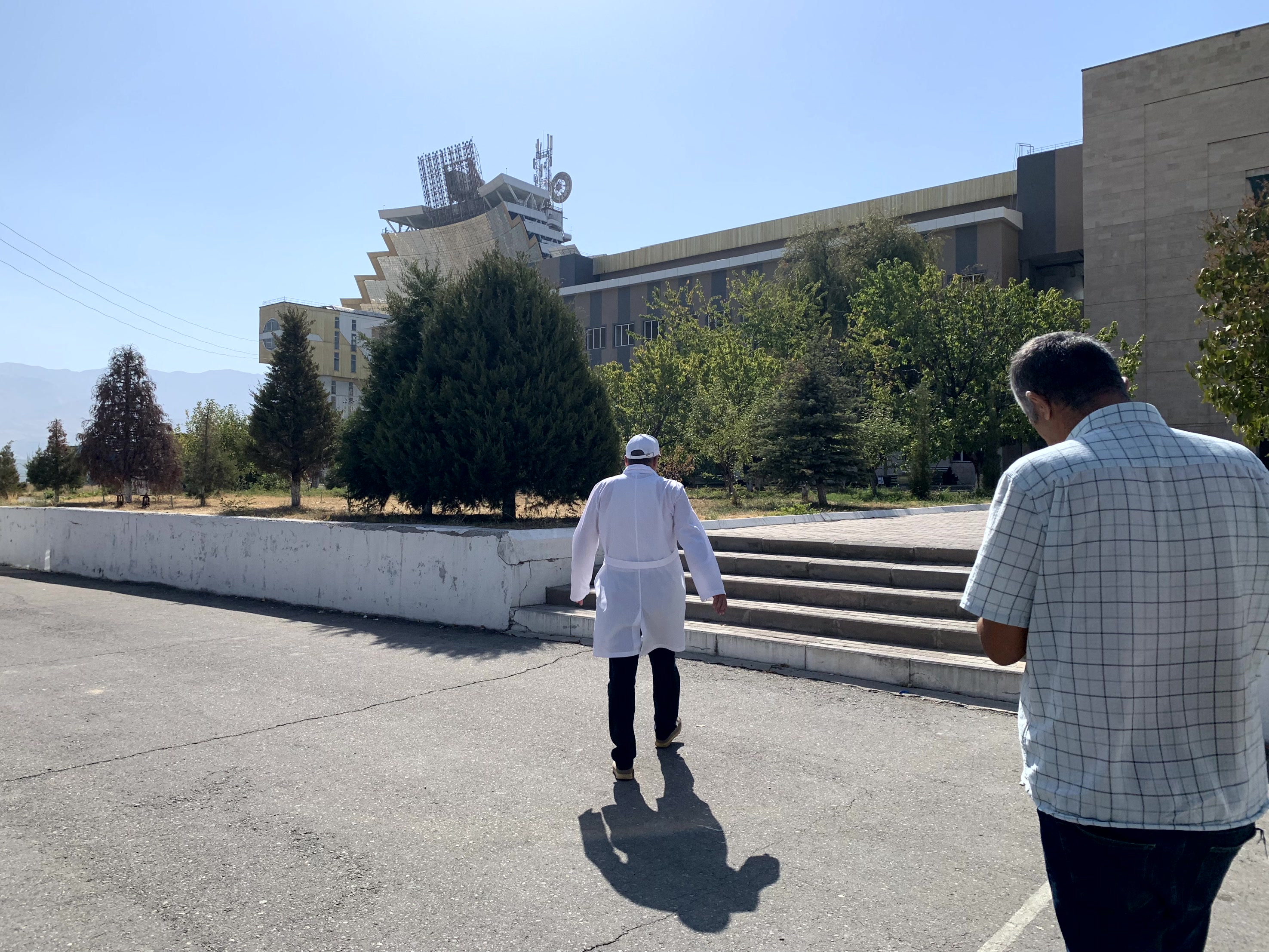
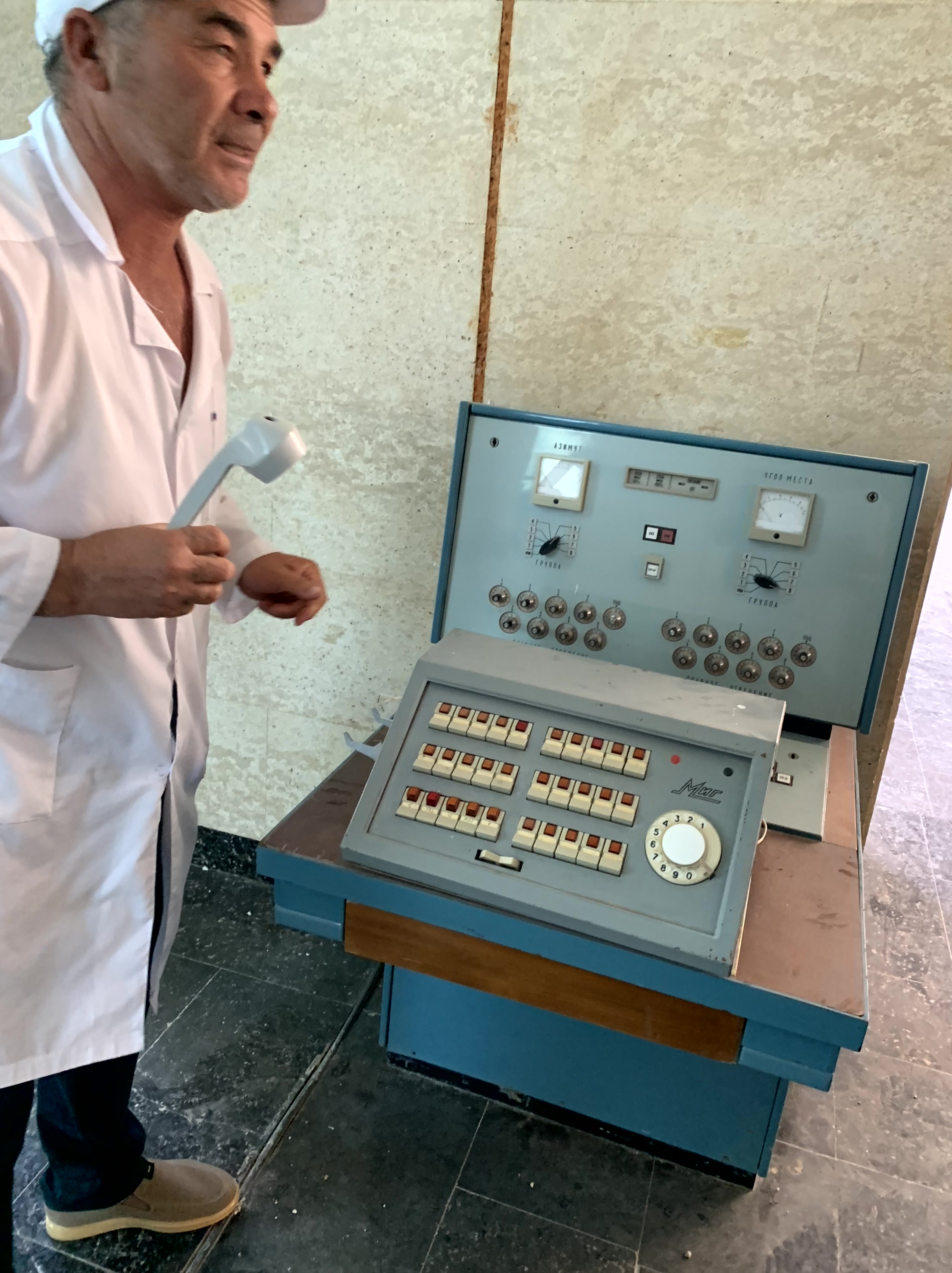
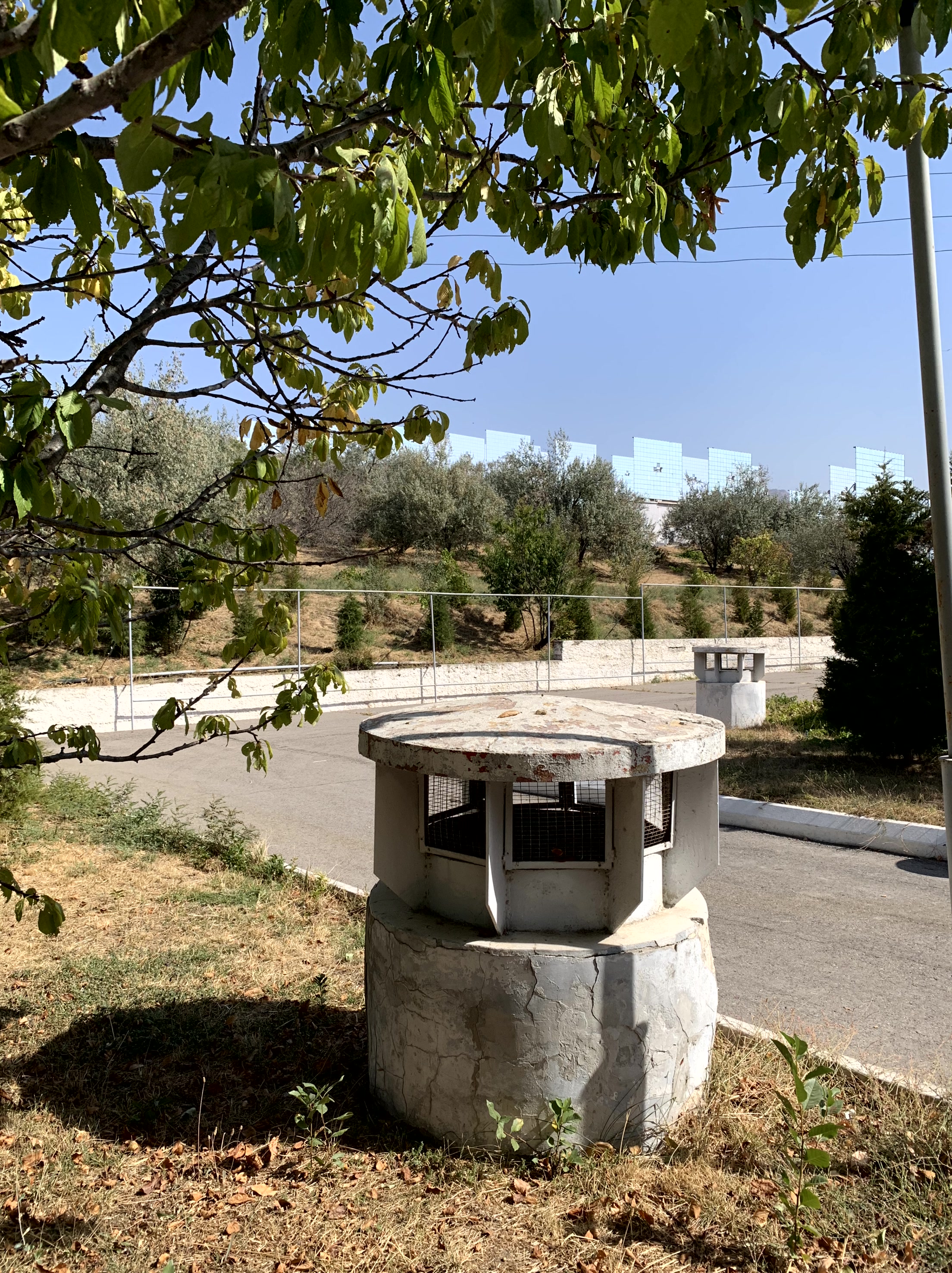
I wanted to visit the Parkent helio complex, about 45km east of Tashkent and the best way to do this was to hire a guide for half a day. We were shown around by a proper scientist-looking scientist in a white lab coat, with unnervingly twinkly eyes who told us all about it, and then gave us a large bunch of sweet grapes straight off the vine to munch on on the journey back to Tashkent. Up until 2009, this was a top-secret site run by Soviet overseers. Built in the 1980s, this is a solar furnace still in use today to test the effects of extreme heat on materials, such as the tiles used for re-entry into the atmosphere on the exterior of spacecraft. They can manufacture temperatures entirely powered by sunlight and which are rarely achievable on Earth. It was built up in the mountains where the location enjoys 9 months of sunshine each year in exceptionally clear air and on top of one massive, solid chunk of bedrock which protects it from earthquakes. It is basically hundreds of special ultra-reflective mirrors that can track, then focus the sun into a very small area via an enormous parabolic mirror to reach temperatures of 3000 degrees Celsius. If you ever used a magnifying glass to set fire to things on the school field, then you’ve got the principle, but not the scale of all this. There were a few small parabolic mirror devices, that could turn bricks into nanoglass, burn holes in iron rods and boil water or set fire to large bits of wood in seconds. So imagine a whole hillside of mirrors, focussing the sun’s rays onto a huge parabolic mirror which in turn concentrates the sun’s rays into a tiny point. When the Russians left, they took everything with them, from the highly-trained scientists housed in the now empty and grim apartment blocks at the bottom of the hill to the technical secrets of how to manufacture the specialised and exceptionally high-quality mirrors. Since then, replacements had to be ordered from Russia, but all they were prepared to send were inferior versions of the reflectors. We are shown the 70’s style phone consuls, formerly used to instruct employees on turning the mirrors to track the sun’s path across the sky and the ventilation shafts for the emergency bunkers built tens of metres down in the rock beneath us. When it was built, the local population demanded compensation from the government because they believed that the plant was stealing their sunlight which would therefor lead to a loss of their livelihood and the crops they depended on. The whole system is controlled digitally nowadays.




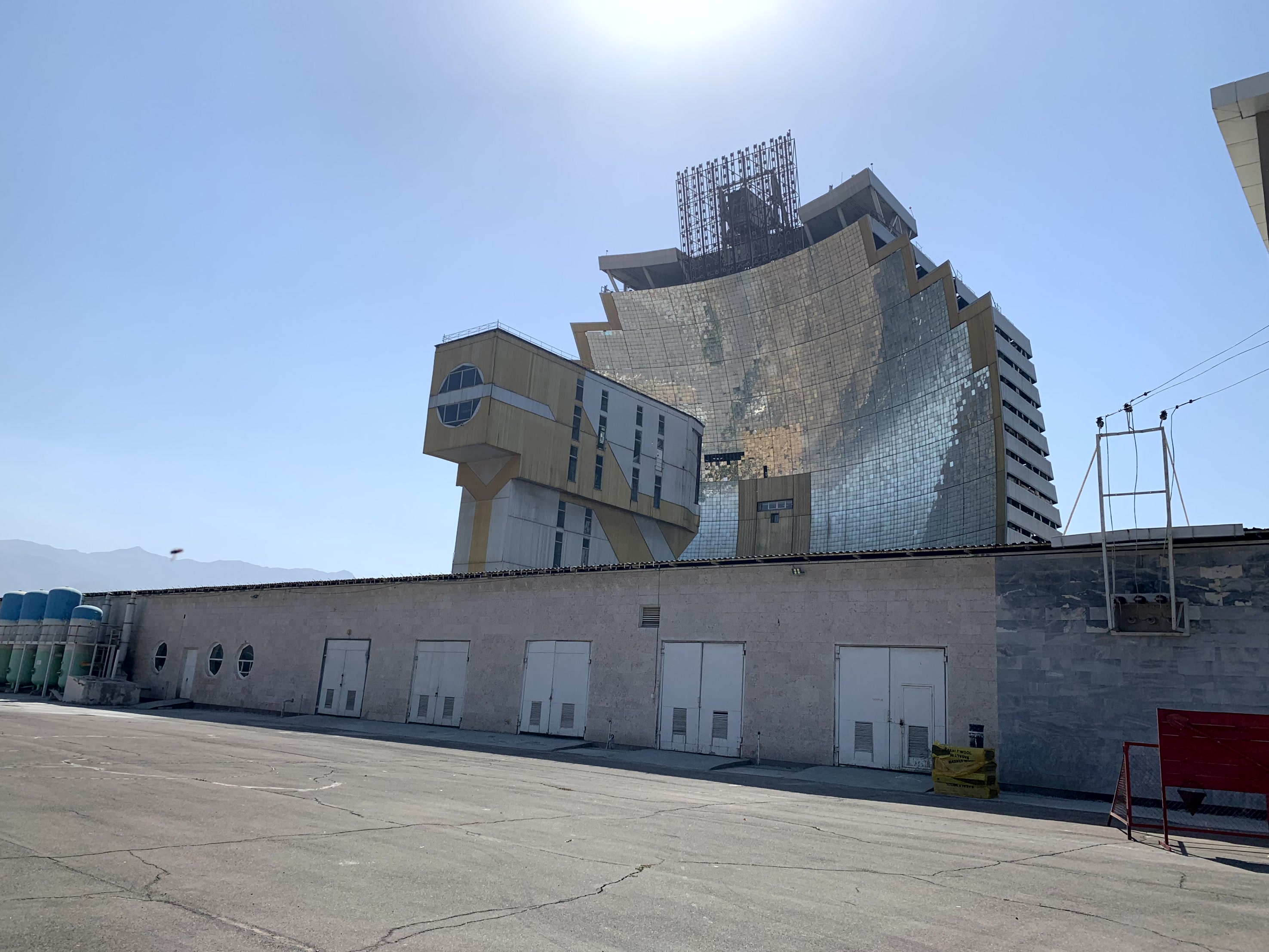
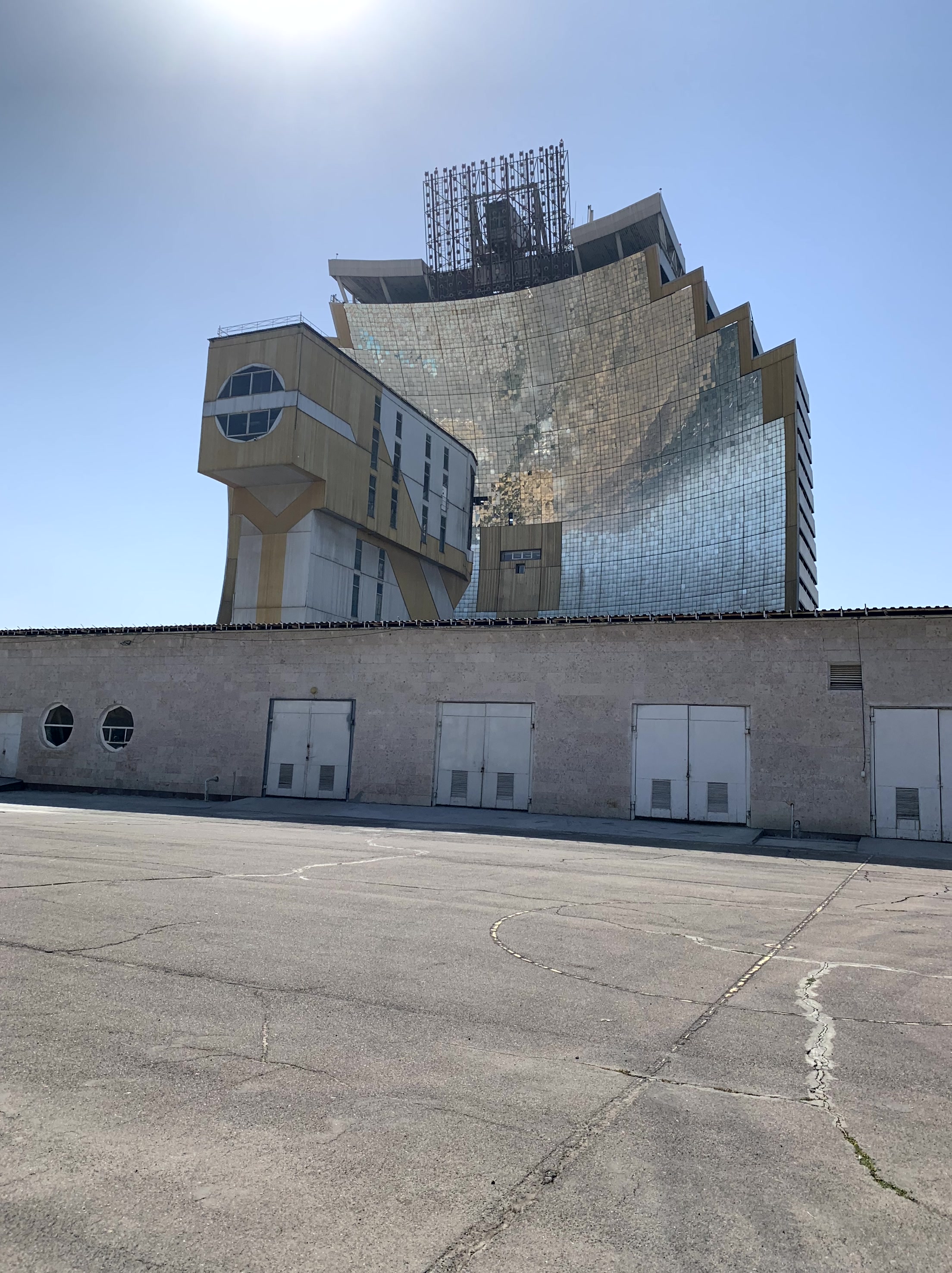


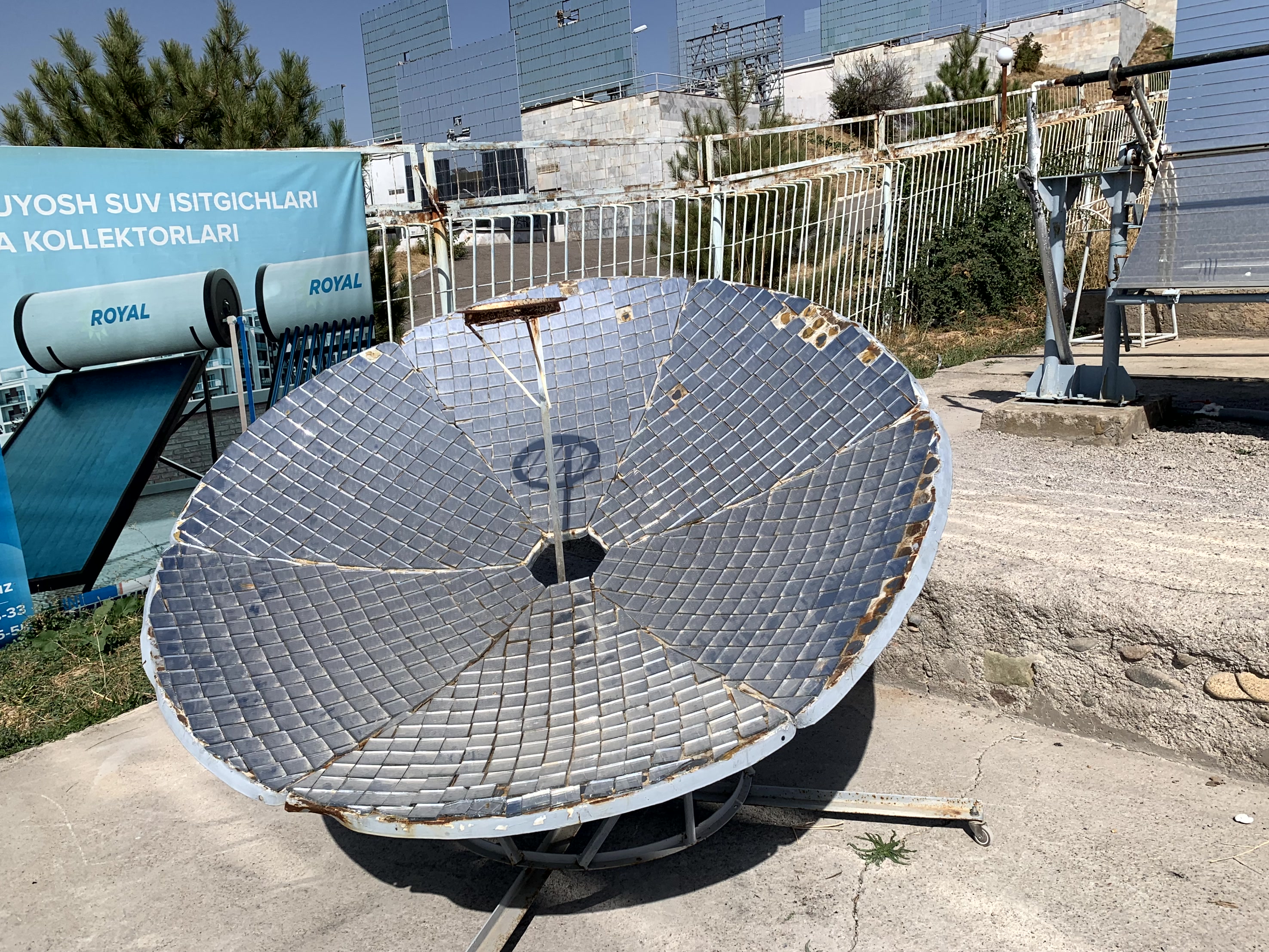


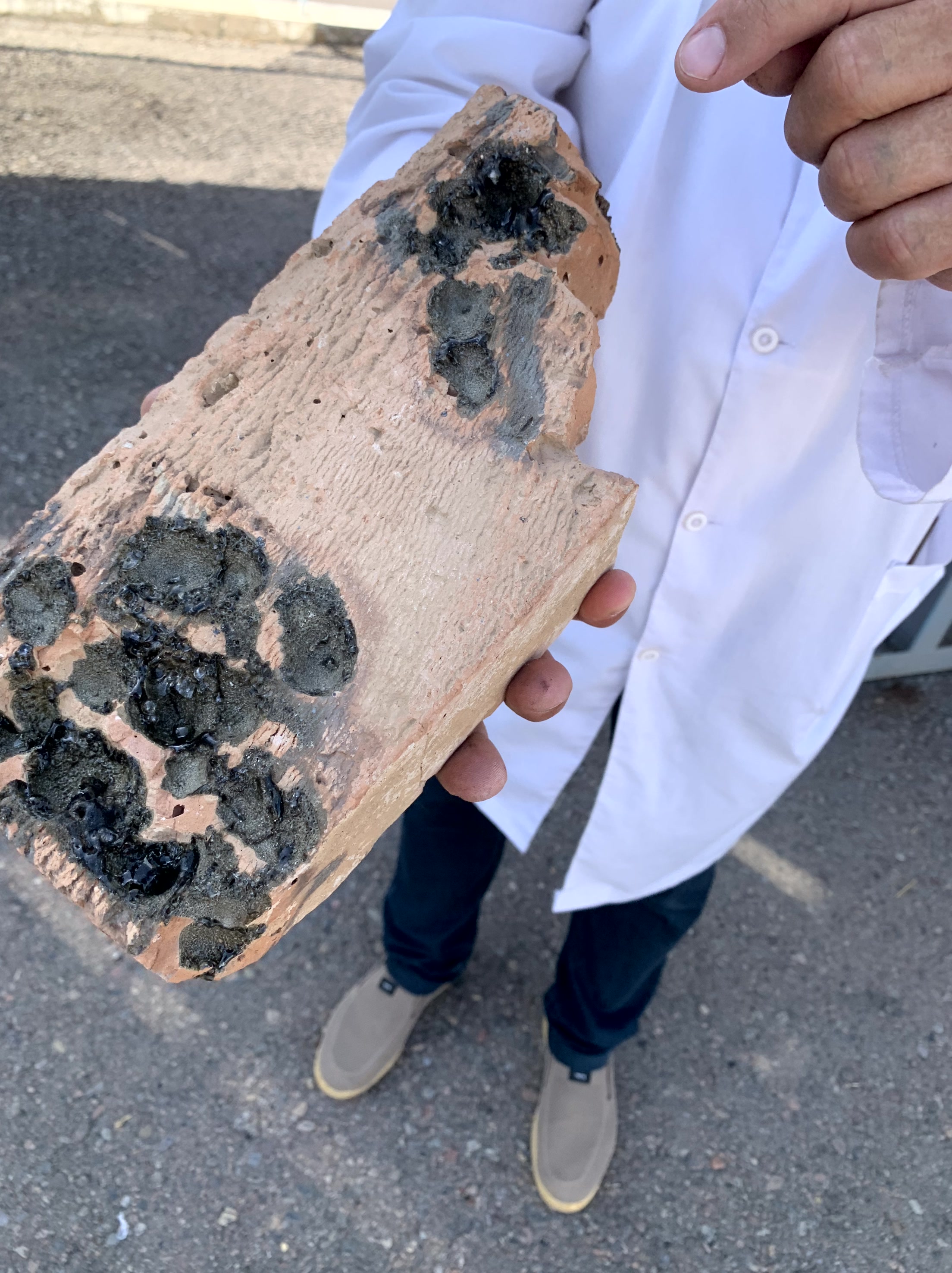


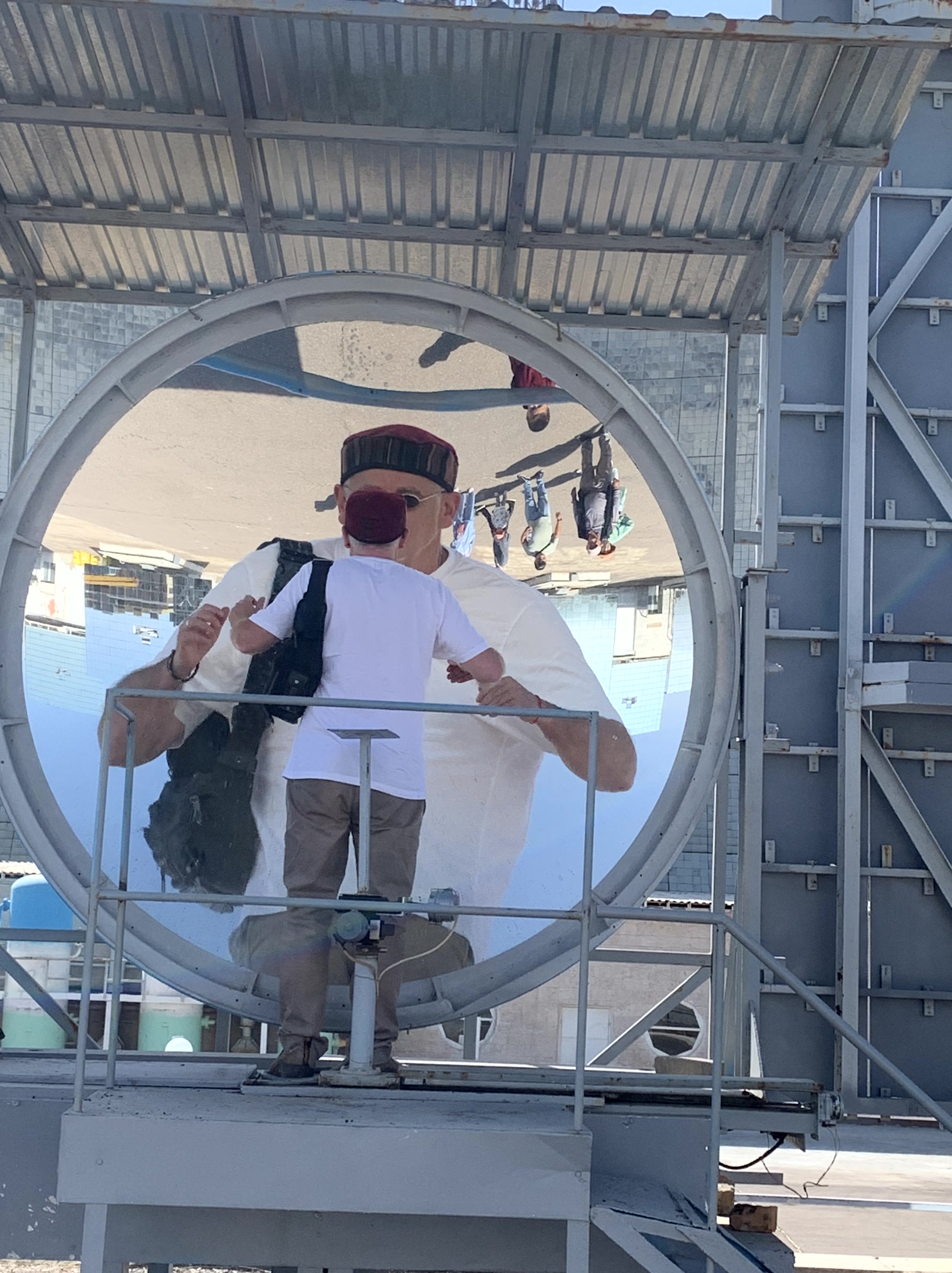


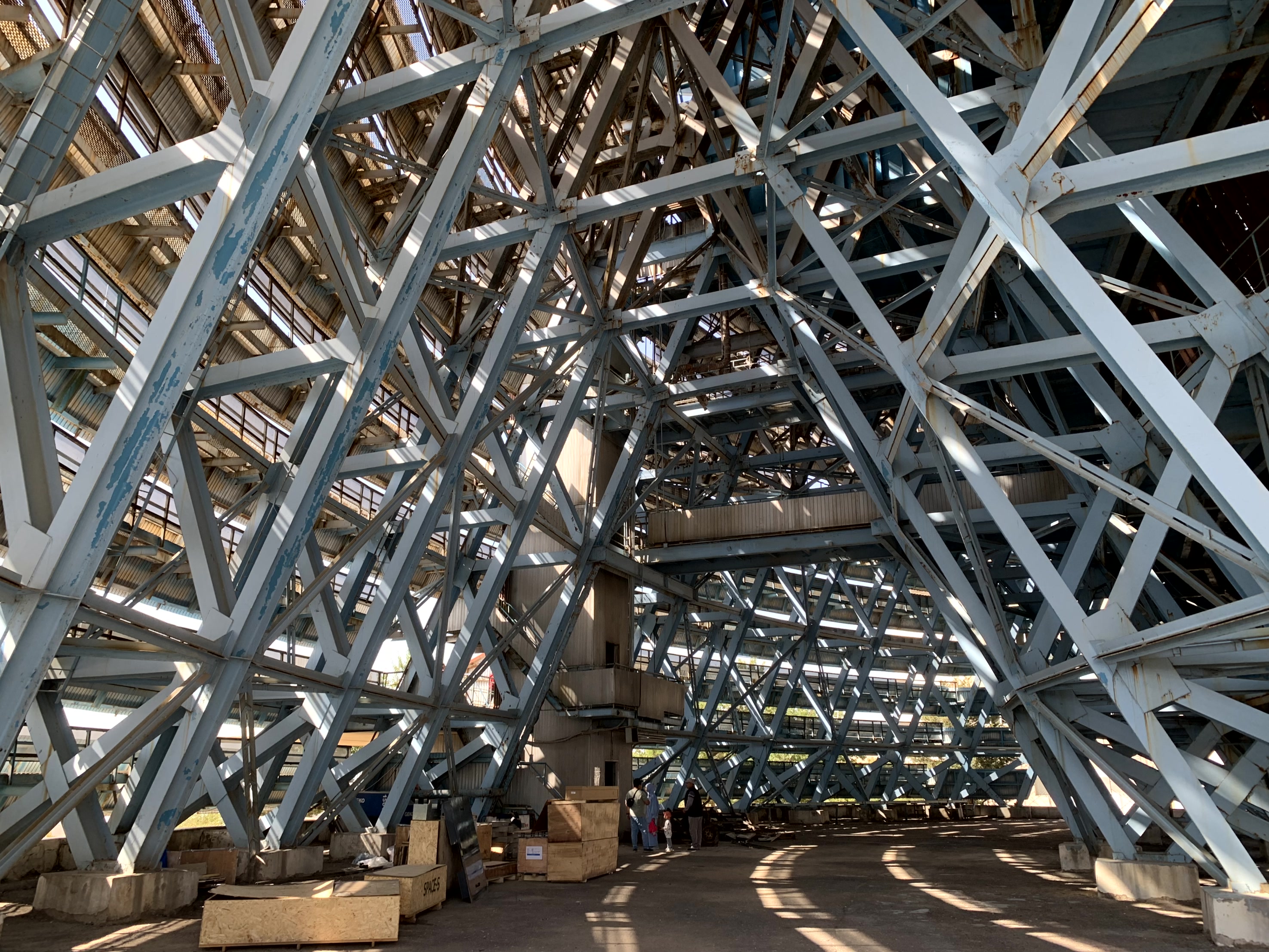

I lucked out with the guide, Shovkat, who had an encyclopedic knowledge of just about anything I asked him about, spoke excellent English and didn’t stop talking from the moment we met in Tashkent to the moment he dropped me back at the Hotel 1946.
Ten Things I Learnt From Shovkat
- The major crop in Uzbekistan is cotton which is mostly exported to Russia to be used in the manufacture of gunpowder.
- Water is power around here. The Kazaks want to build a dam upstream that will diminish the supply of water from the river flowing through Uzbekistan. There have been negotiations between the two countries about how high the proposed dam should be due to the danger posed by the earthquakes which are quite a regular occurrence in the region. The results of a dam collapse would be catastrophic for the nearby population.
- Under Soviet control, everybody worked and there was a lot of heavy industry which subsequently disappeared.
- The question of the predominance of Chevys was solved. They are heavily subsidised by the government (due some some deal or another) so most people can’t afford anything else.
- In the time of Russian control, there were ‘mono-cities’ that existed purely because of whatever industry was going on there.
- On the outskirts of Tashkent, there used to be an aircraft factory and if you worked there you had a job for life, like many other factories at the time. Your accommodation came with your job, whatever your rank.
- The origins of the city of Tashkent date back to a Zoroastrian fire temple in about 200 BCE. Its remains were discovered beneath an eighth-century palace when it was destroyed by Arabic invaders. This ancient settlement was known as Ming-Uryuk: the city of a thousand apricots.
- The climate and geology of Uzbekistan are responsible for the fact that fruits from here are so exceptionally and naturally sweet.
- The main difference between Sunni (who comprise about 80% of Muslims) and Shi’a Muslims is that the former believe that the Prophet (PBUH) did not appoint a successor and this person should be chosen from the Muslim community whereas the Shi’a belief is that it should be handed down the family line. Sunnis fall into four main madhhabs (sects): Hanafi, Maliki, Shafi’i, and Hanbali. The differences between these come down to traditions, for example whether the deceased are buried lying down with their heads facing towards Mecca, in a crouched position with their head turned towards Mecca, or whether women are allowed to pray in mosques, the shape of the beard, the way you stand when praying and so on.
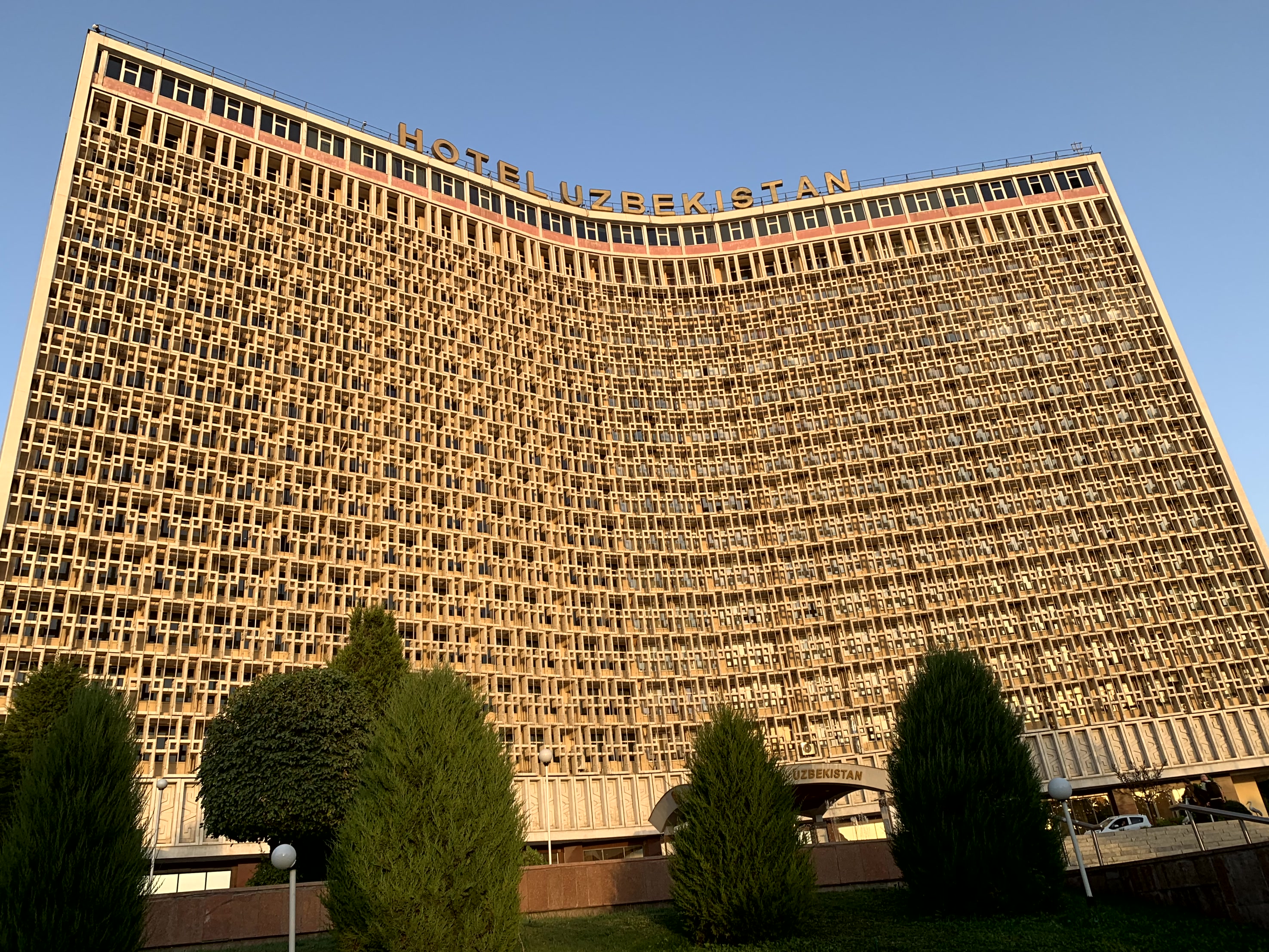
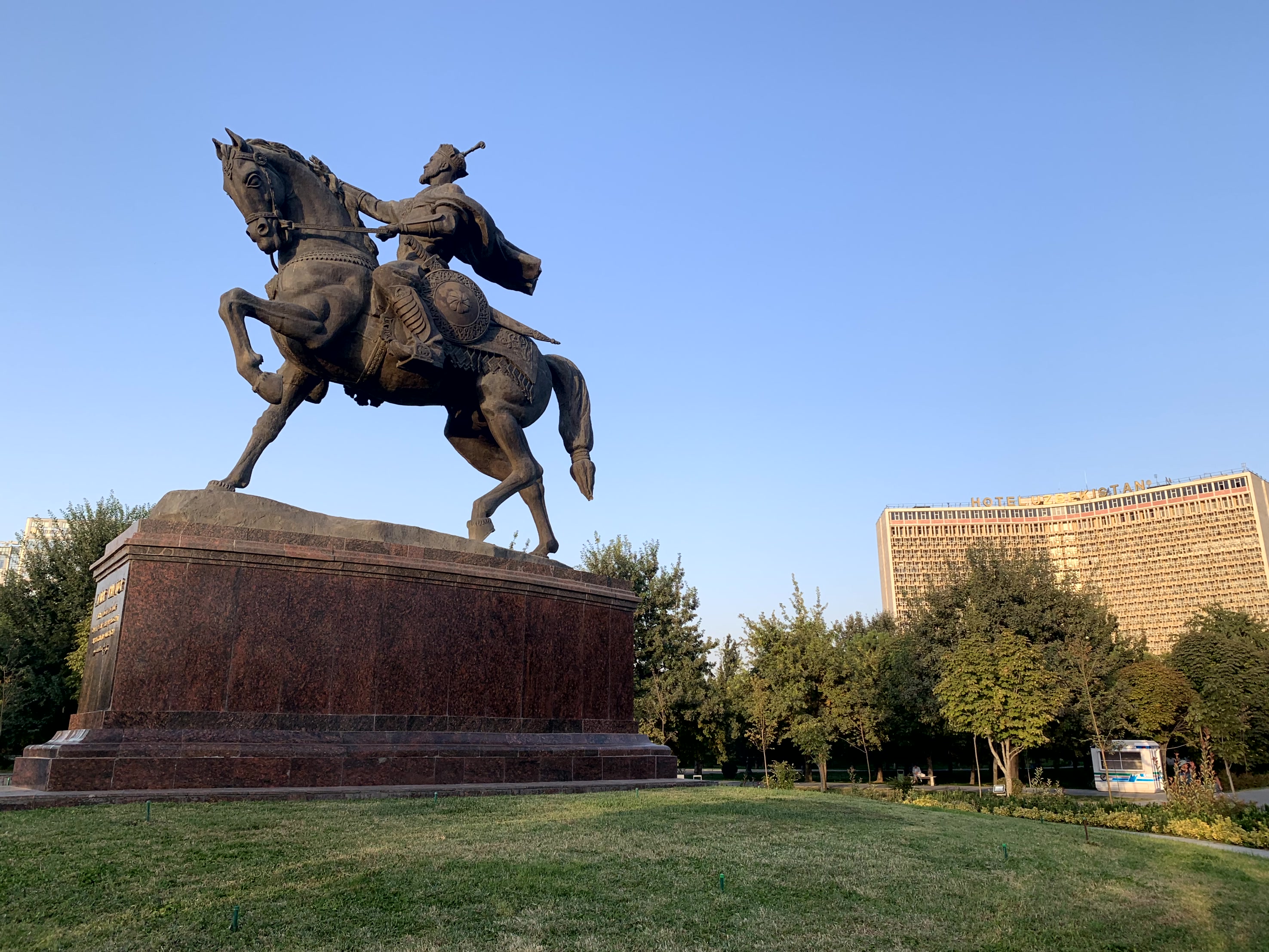
- Emir Timur (Tamerlane) was a Sunni Muslim who lived from 1336 to 1405 and was a leader in this region. His conquests brought about an empire that stretched from India and Russia to the Mediterranean. He is remembered for the cultural and scientific achievements of his dynasty as well as for the barbarity of his conquests. ‘Tamerlane’ (‘Timur the lame’) was a title used in contempt by his enemies. Once, while he was busy slaughtering up in Moscow, the Persians went into revolt, which he suppressed with his usual vigour massacring whole cities and building towers of their skulls. It is said that he was responsible for the deaths of over one million people. There’s a statue of him in Tashkent in a square named after him by the Uzbekistan Hotel (a great example of Brutalist architecture). There he proudly sits, arm aloft, on his mighty charger. This impressive beast, however, is not a happy horse. Someone once cut off his tonker. Nobody knows why, how or who, or where it currently is. It’s a good job that Emir Timur is not around today. He doesn’t strike me as the kind of guy who’d have approved of this sort of mindless act of vandalism. He’s buried in Samarkand, where I’m headed next.


 WheatyPete's World