Tag Archives: uzbekistan

Uzbekistan 3 – The Silk Road: Bukhara

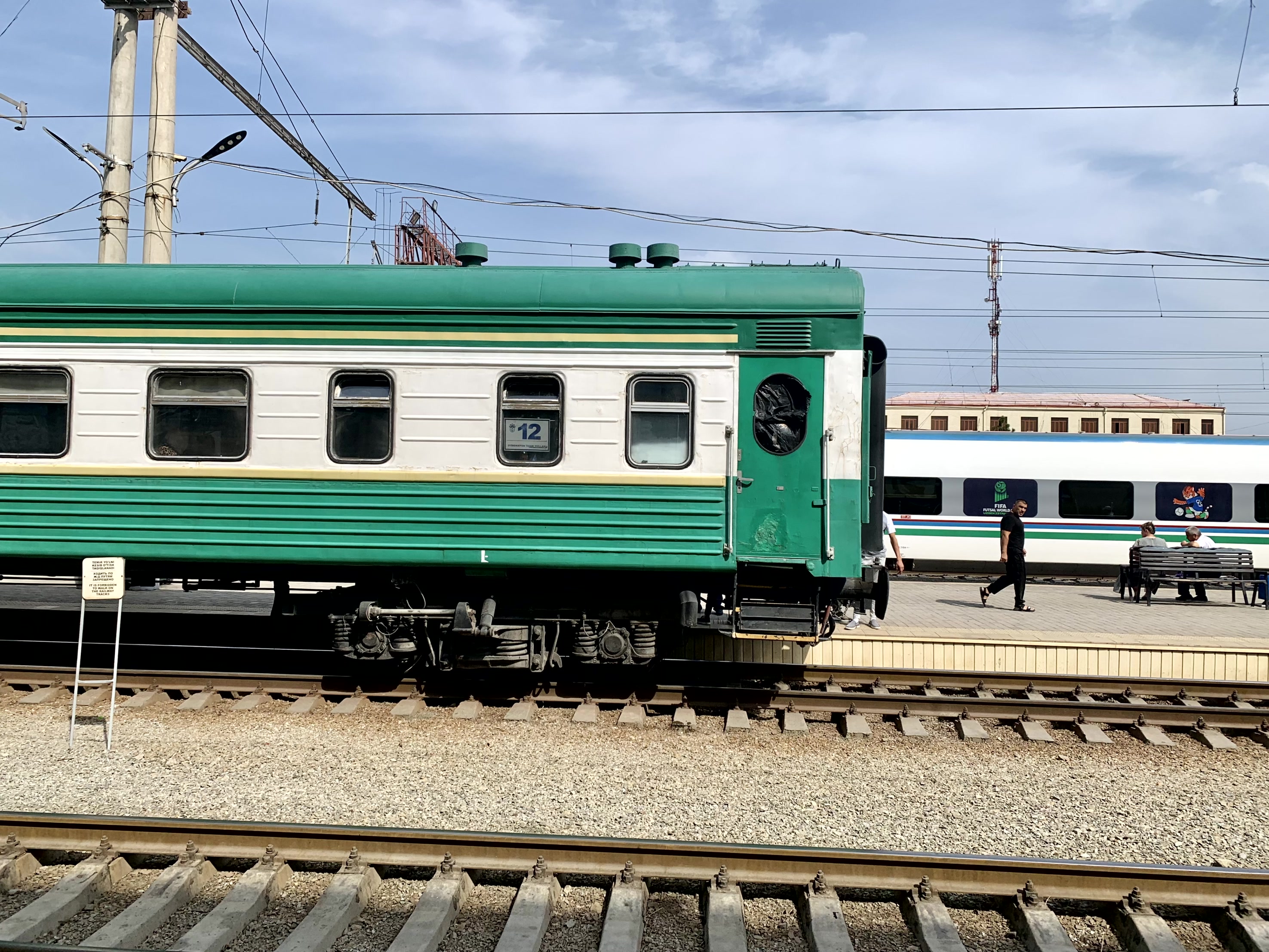
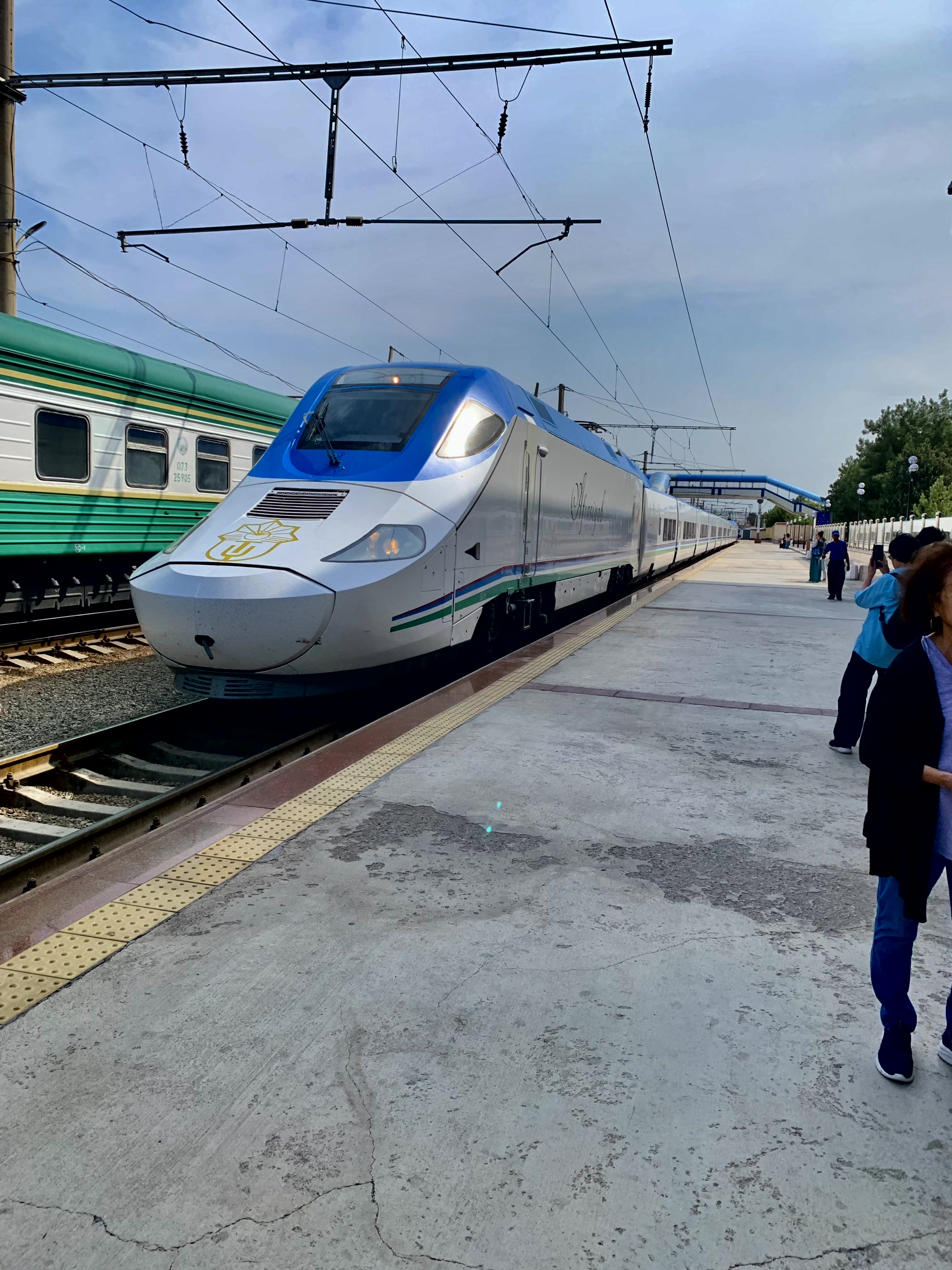
My final stay in Uzbekistan was in Bukhara, another fabled Silk Road city. Fahoot, the son of the owner of the hotel, met me from the bullet train from Samarkand and had excellent English gained from his time as an agricultural worker in Hereford. He used to get to work a quarter of an hour before the six o’clock start, he told me, whatever the weather, whereas others turned up late and he’d been asked to come back this year. But, he told me, the ‘easy’ life he enjoyed working for his Dad, plus his vending machine business in hospitals, as well as having a young family meant that he prefers to stay here for now.
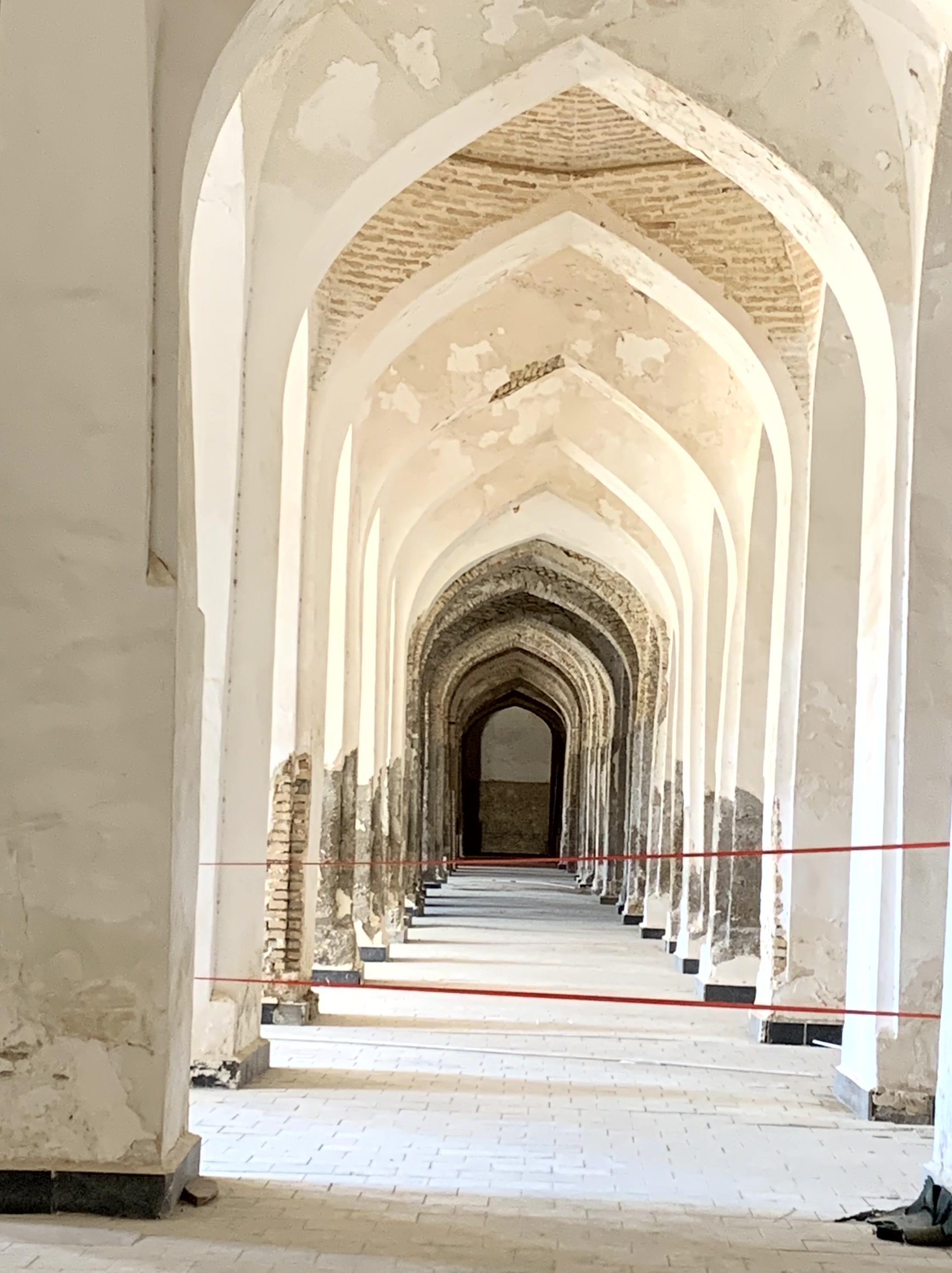
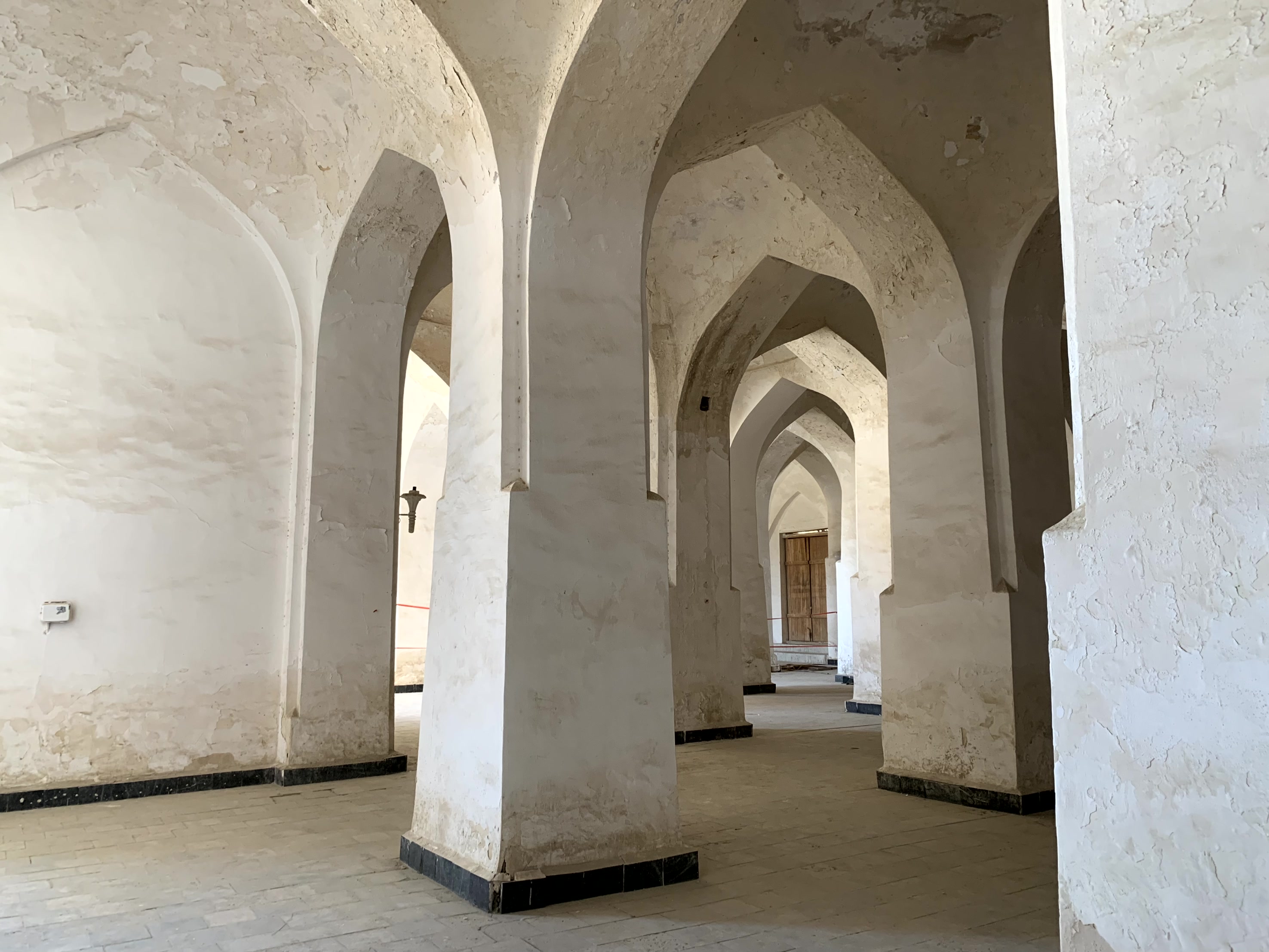
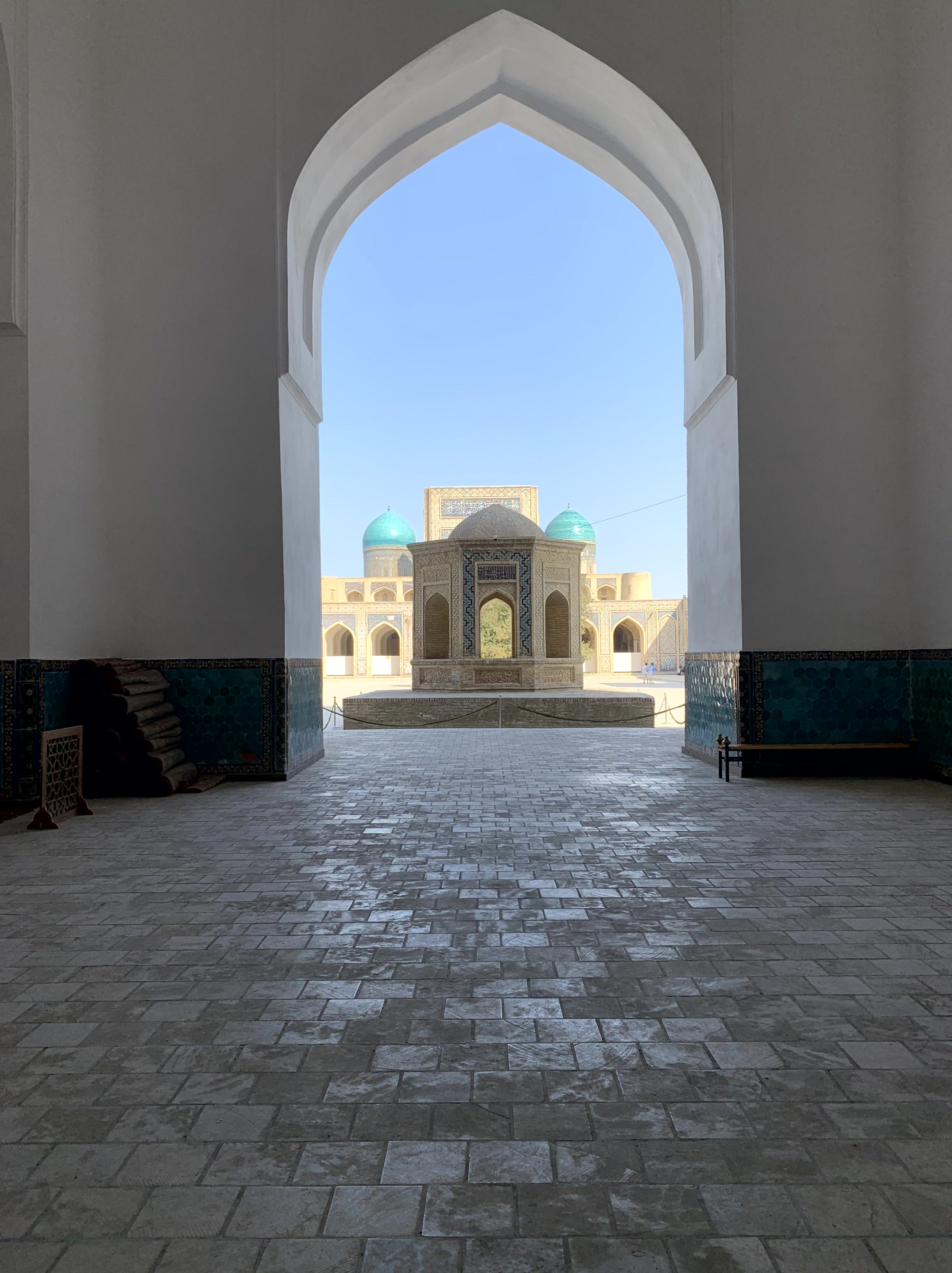
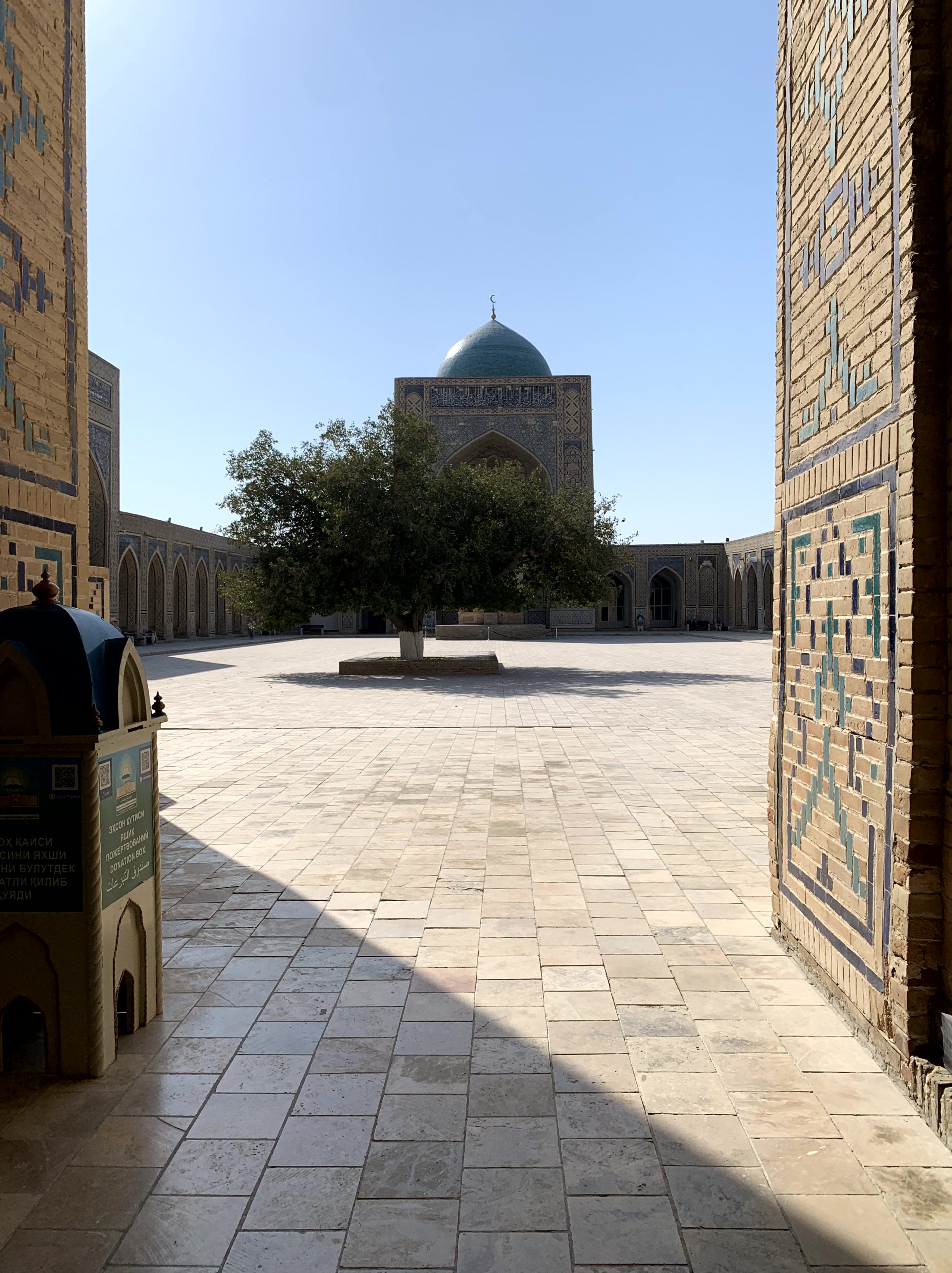
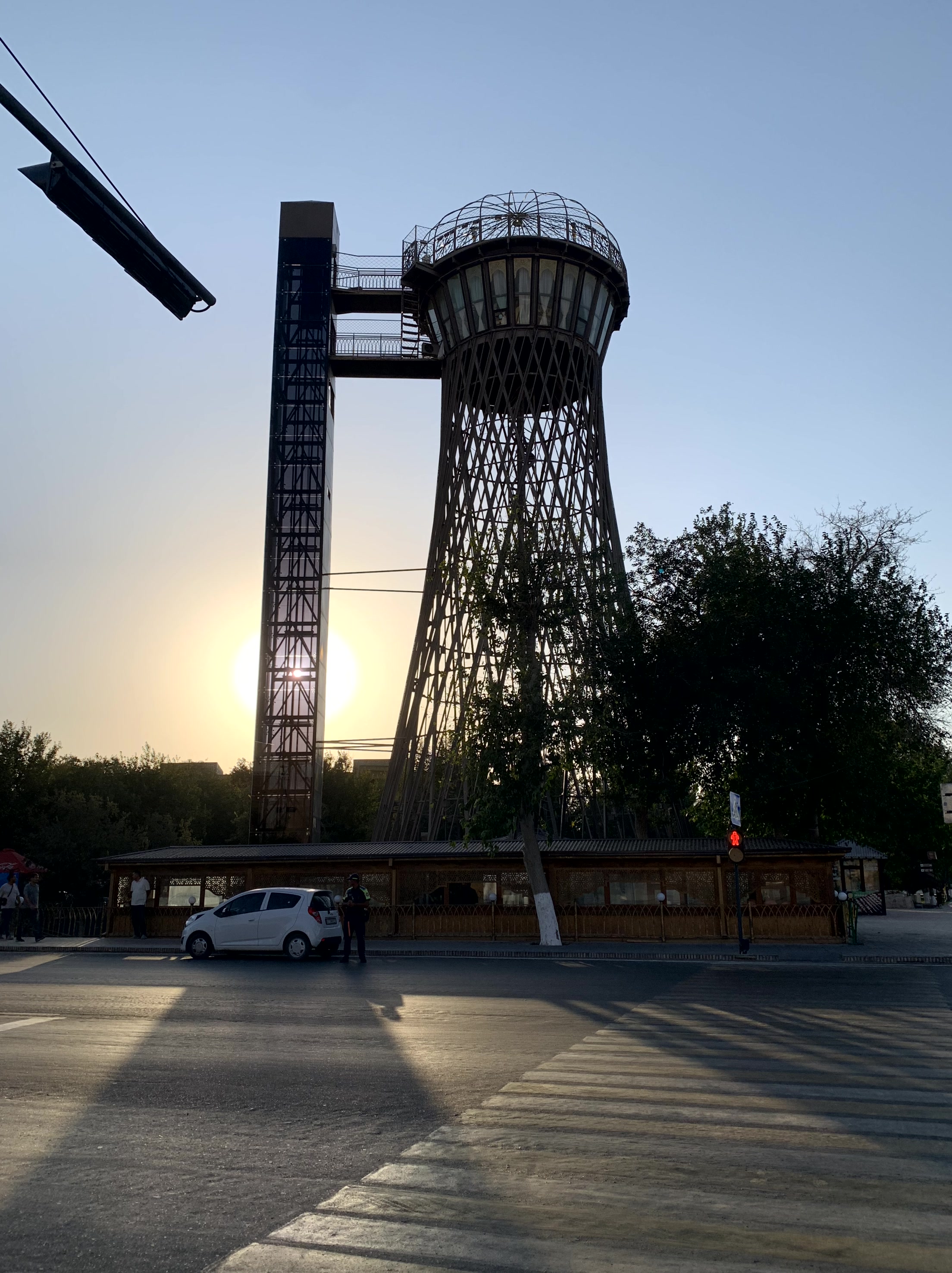
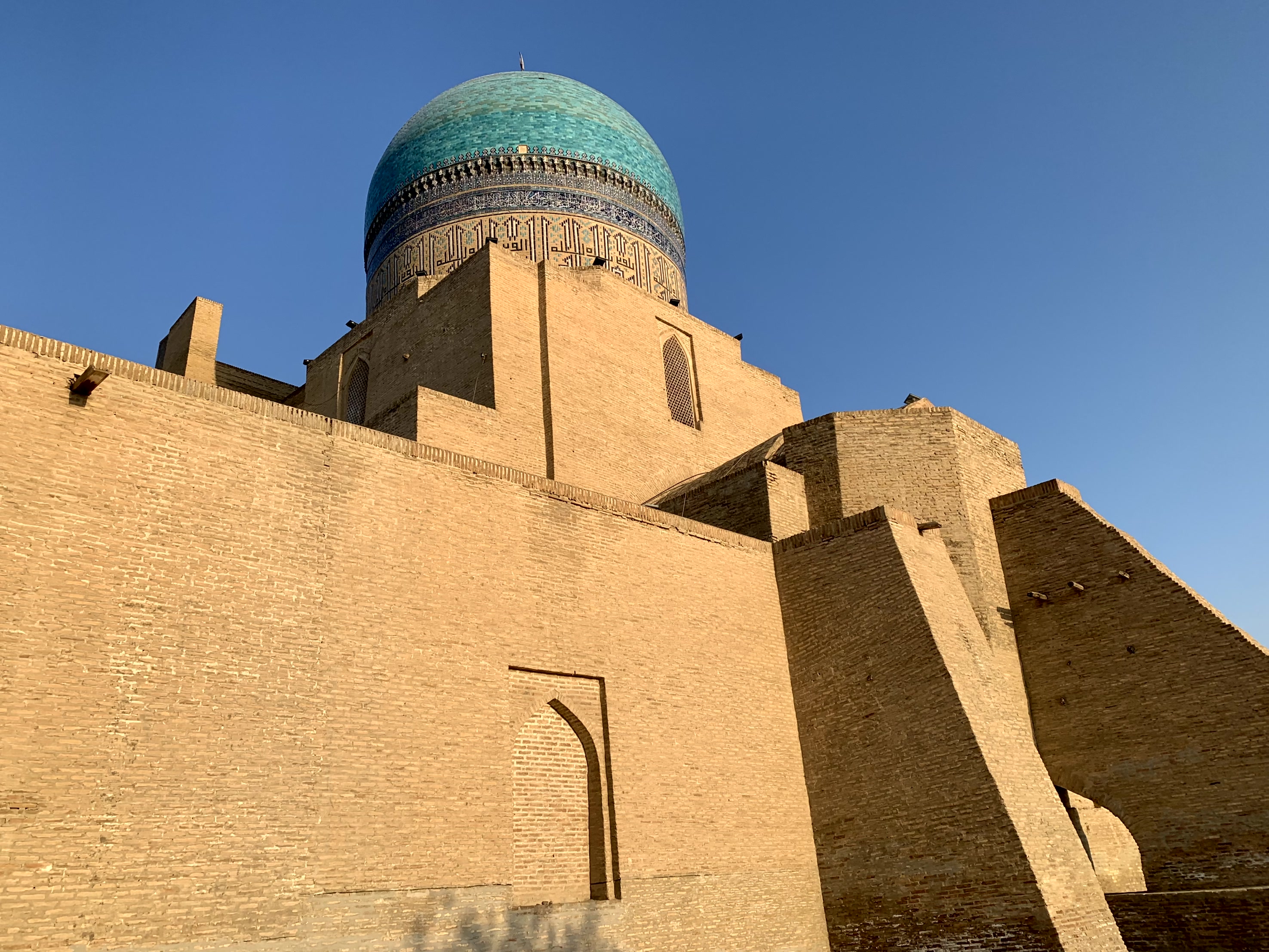
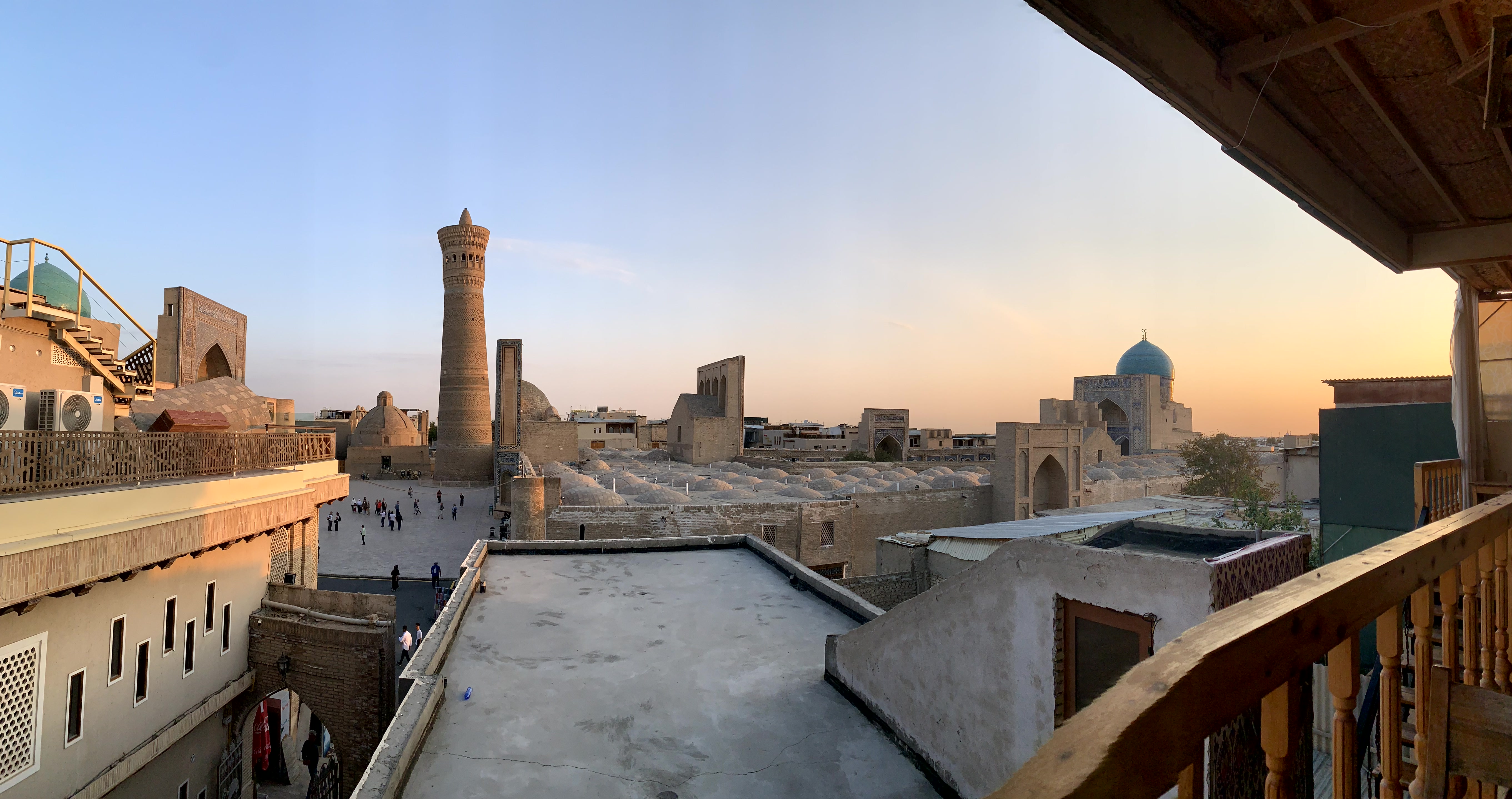
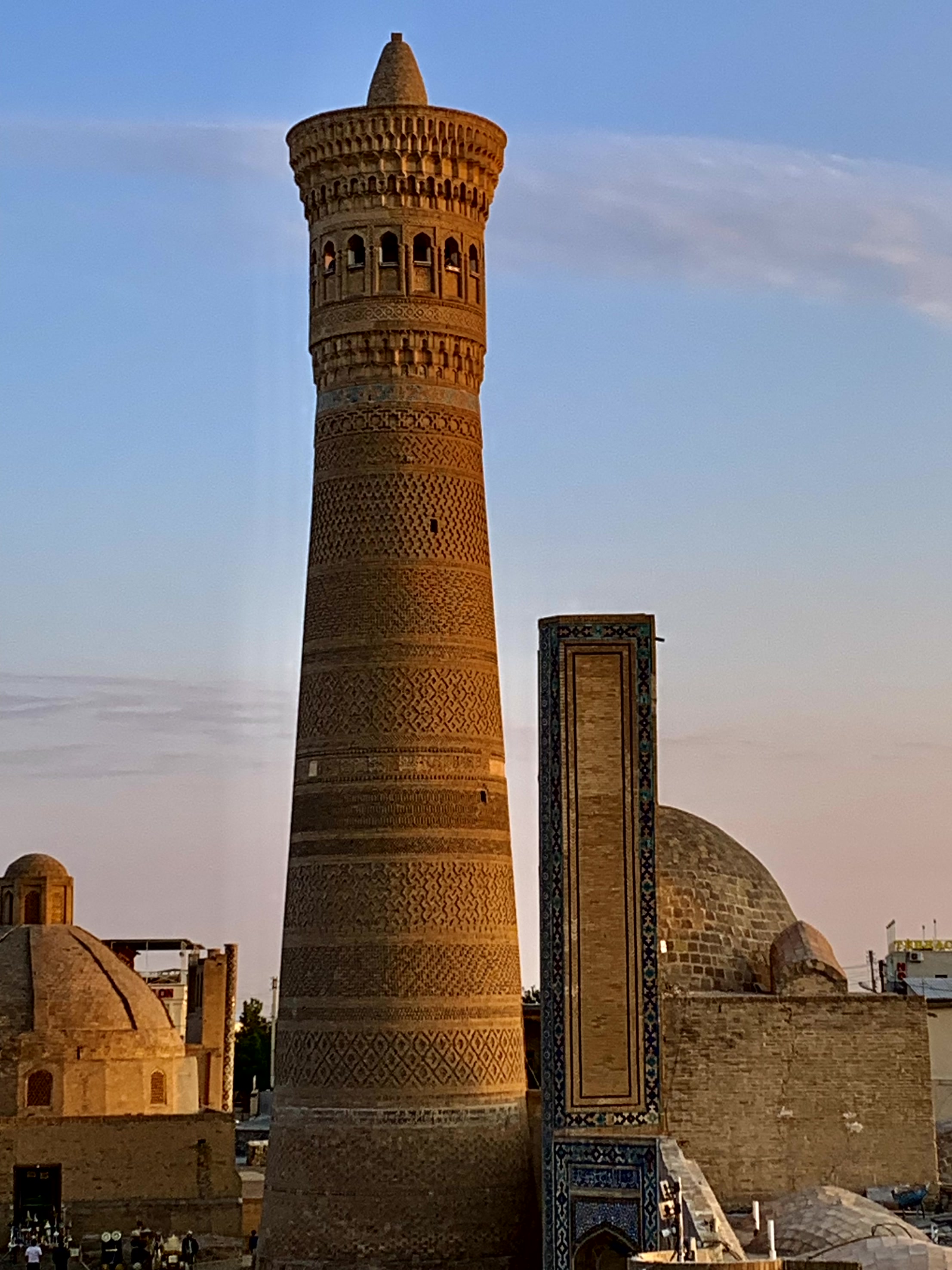
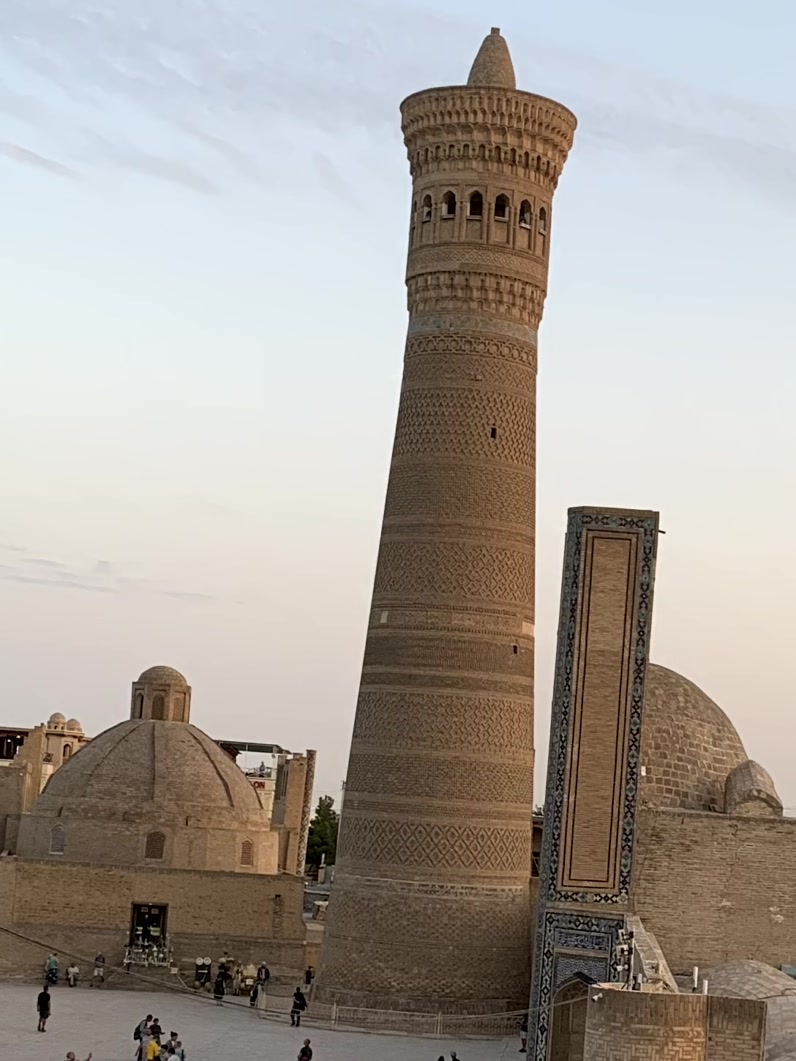
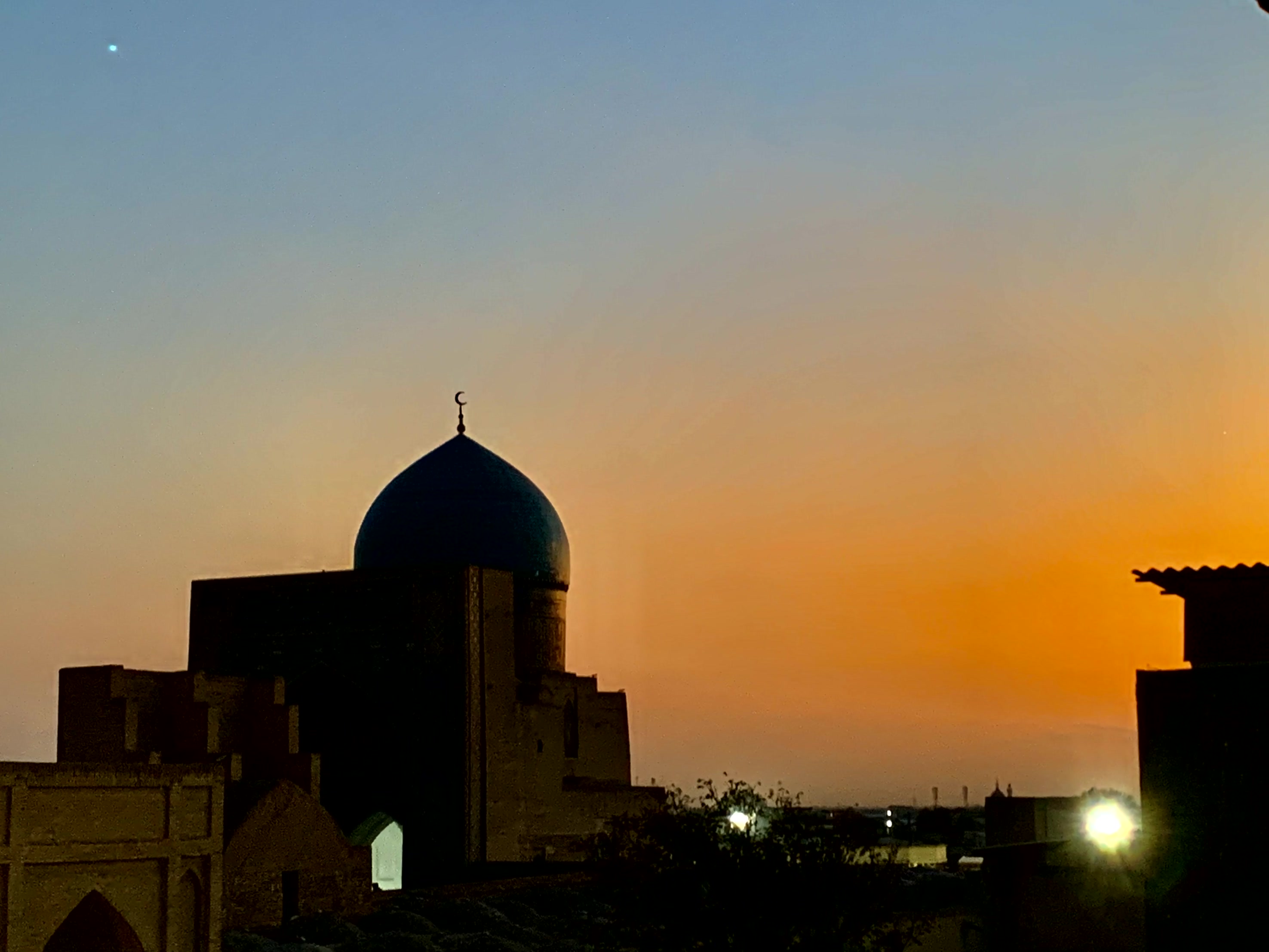
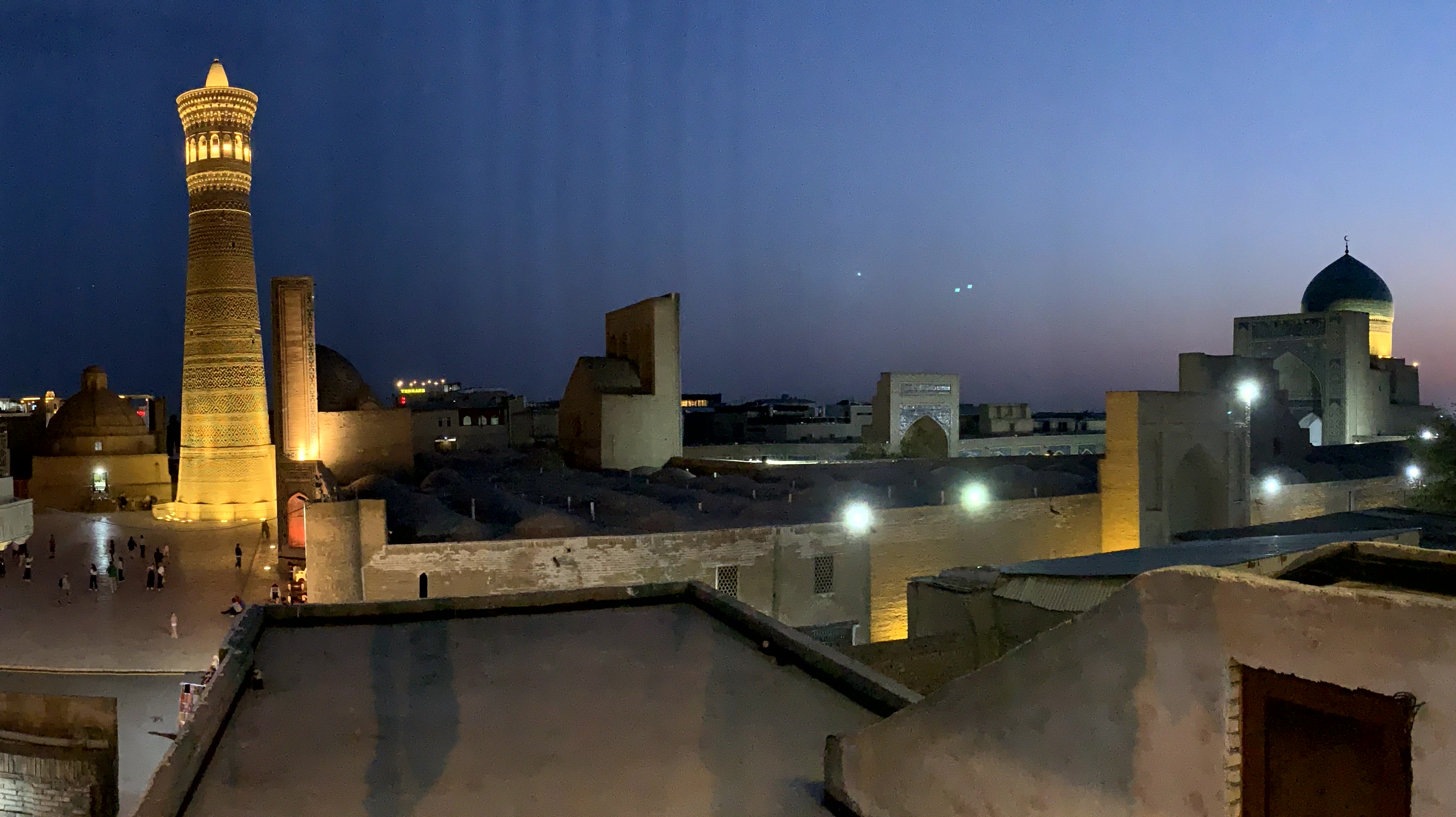
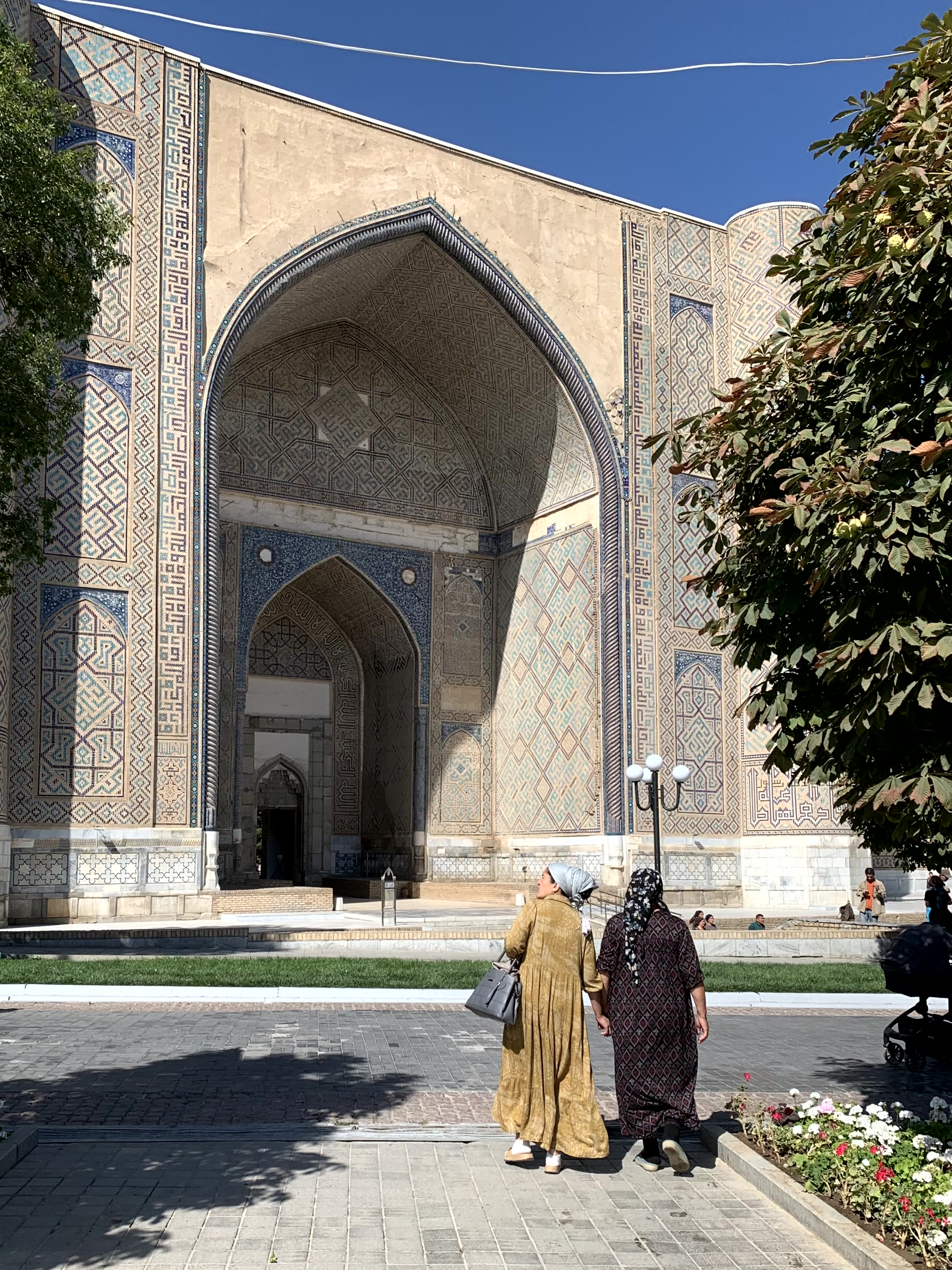
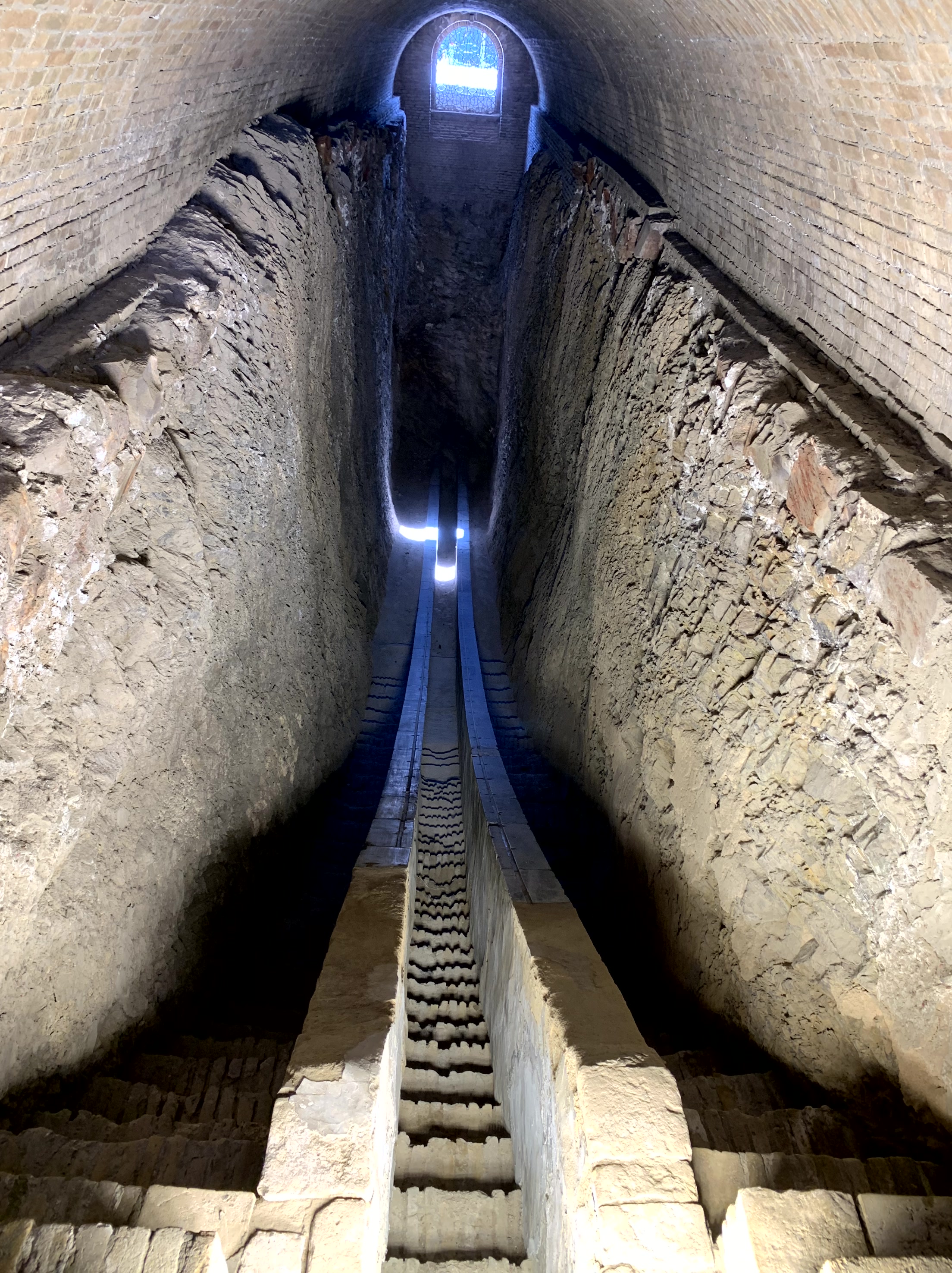
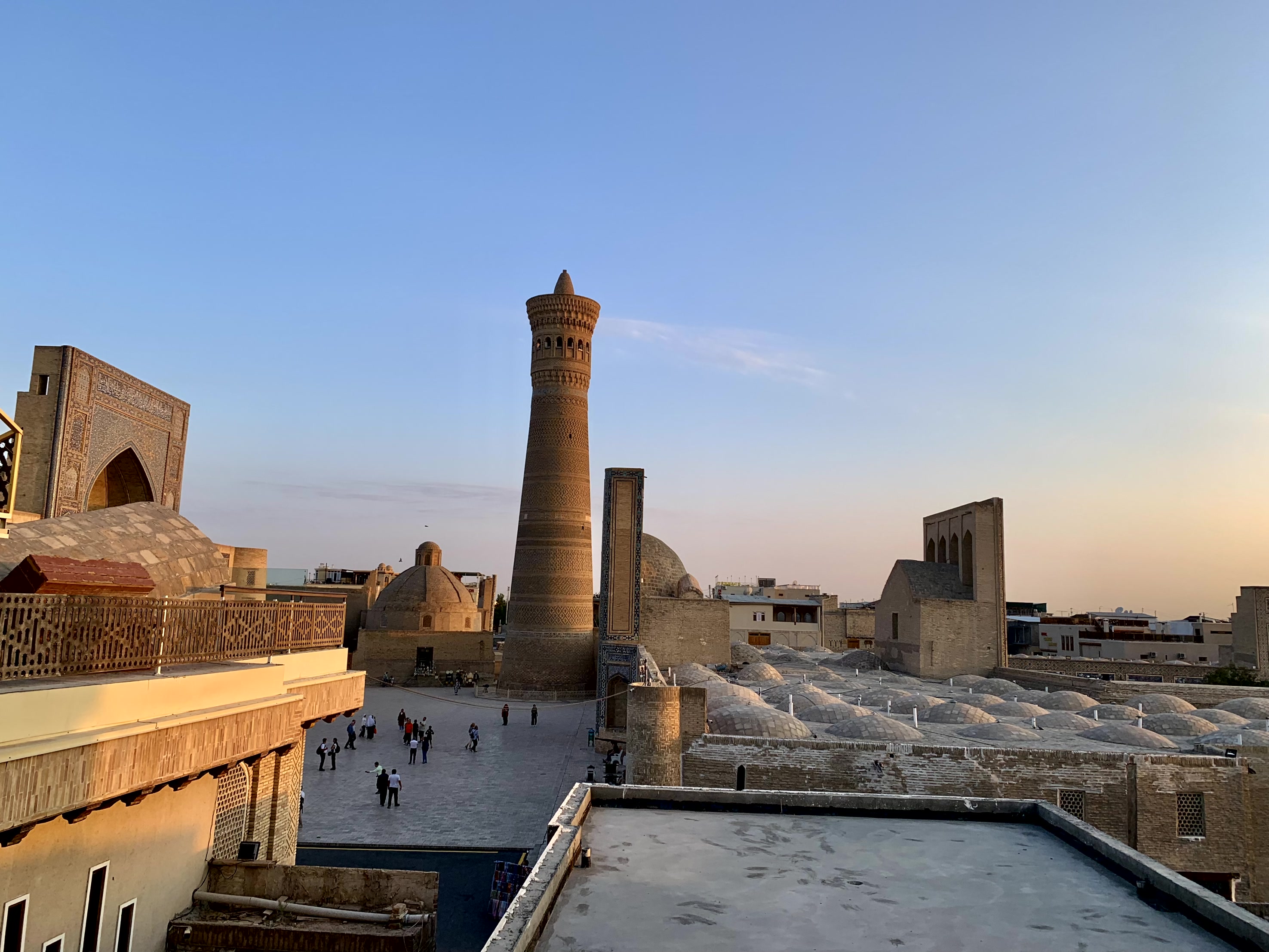
Bukhara dates back 2,500 years. After independence, when the second Uzbek president came to power in 2016, the city was off on the tourist trail. Then, airlines came and credit cards began to be accepted. Its centre is now a UNESCO World Heritage Site listed as ‘a well-preserved example of a 10th to 17th-century Islamic city in Central Asia’. Bukhara is an oasis city that has been destroyed and rebuilt many times. The most notable of these periodic phoenix-like moments were in the 1920s, when Russian shells and an aircraft wreaked havoc on the city and in the 1220s when Ghengis Kahn raised the city to the ground. Water channels had supplied the city since early times and the Russian bombs damaged them ushering in a cholera pandemic that led to the water tower being built and the redundancy of the water-carriers. Sogdians, Persians, Greeks all had a turn in the city. Even Emir Timur popped in. When Ghengis Kahn stopped by, by the time he left only three buildings were left standing – no older buildings survive in Bukhara today. One was the mausoleum of Ismail Samani, whose enlightened rule encouraged education and he was so popular that the local population buried his mausoleum to save it from the Monguls when Ghenghis Kahn was laying siege to the city. The second is the eleventh-century Magok-i-Attari Mosque (now a carpet museum and built on the site of an ancient Zoroastrian temple) which probably survived the flames because it was set in open ground. The last survivor is the Kalon Minaret. The story goes than when Ghengis Kahn rode up to this impressive structure, his helmet fell off. He dismounted and knelt down on one knee to pick it up. As he arose, he looked up at the minaret and noted that this was the first time he had knelt before a building, so spared it. The Kalon Mosque was not so lucky. But this was still rebuilt with amazing knowledge and skill: the wooden pillars stand on plinths and hold up the entranceway. Between them, the builders put camel’s hair, which makes them flexible enough to withstand earthquakes.
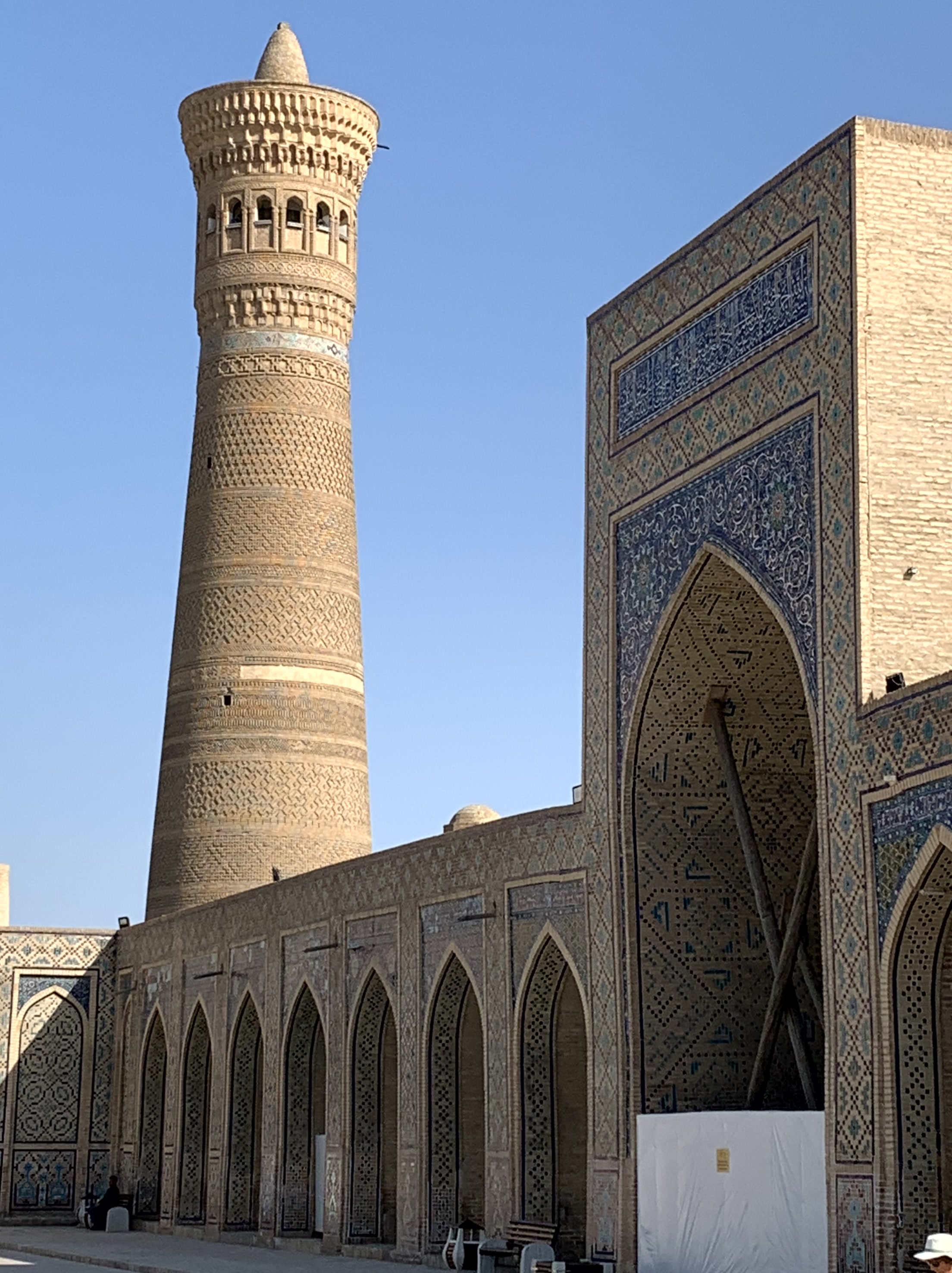
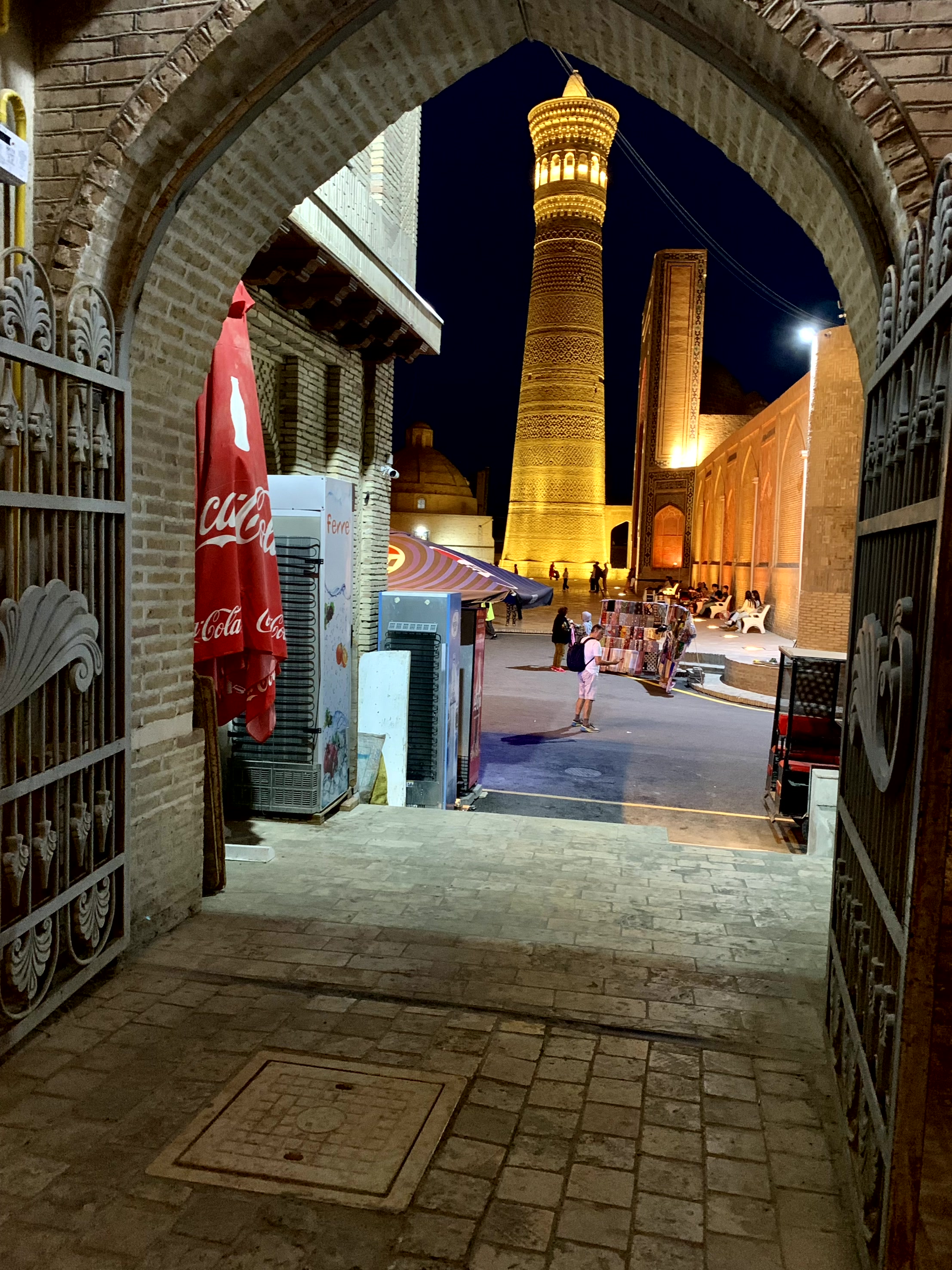
The 47 metre tall Kalon Minaret was built in 1127 by Arslan Kahn and its foundations go down a further 10 metres. It would have been one of the tallest buildings in Asia. Once the foundations were completed, the ruler’s architect (Usto Bako) simply disappeared and was not seen or heard of again for the next two years. When asked what he was playing at, the architect explained that the foundations needed to settle for this time and if he’d hung around, he knew that his ruler would hassle him to get on with the work. He obviously did a good job, using local stone and mixing mortar with camel’s milk, egg yolk and honey which was the right thing to do: the minaret has stood tall through nearly nine hundred years of earthquakes, sieges and invading armies. Bako would only work in July and August, the hottest months, and would only add two courses of bricks at a time, leaving them to settle overnight. He had his grave built at the tip of the midsummer shadow from the minaret so that if it ever fell, then it would disturb his rest.

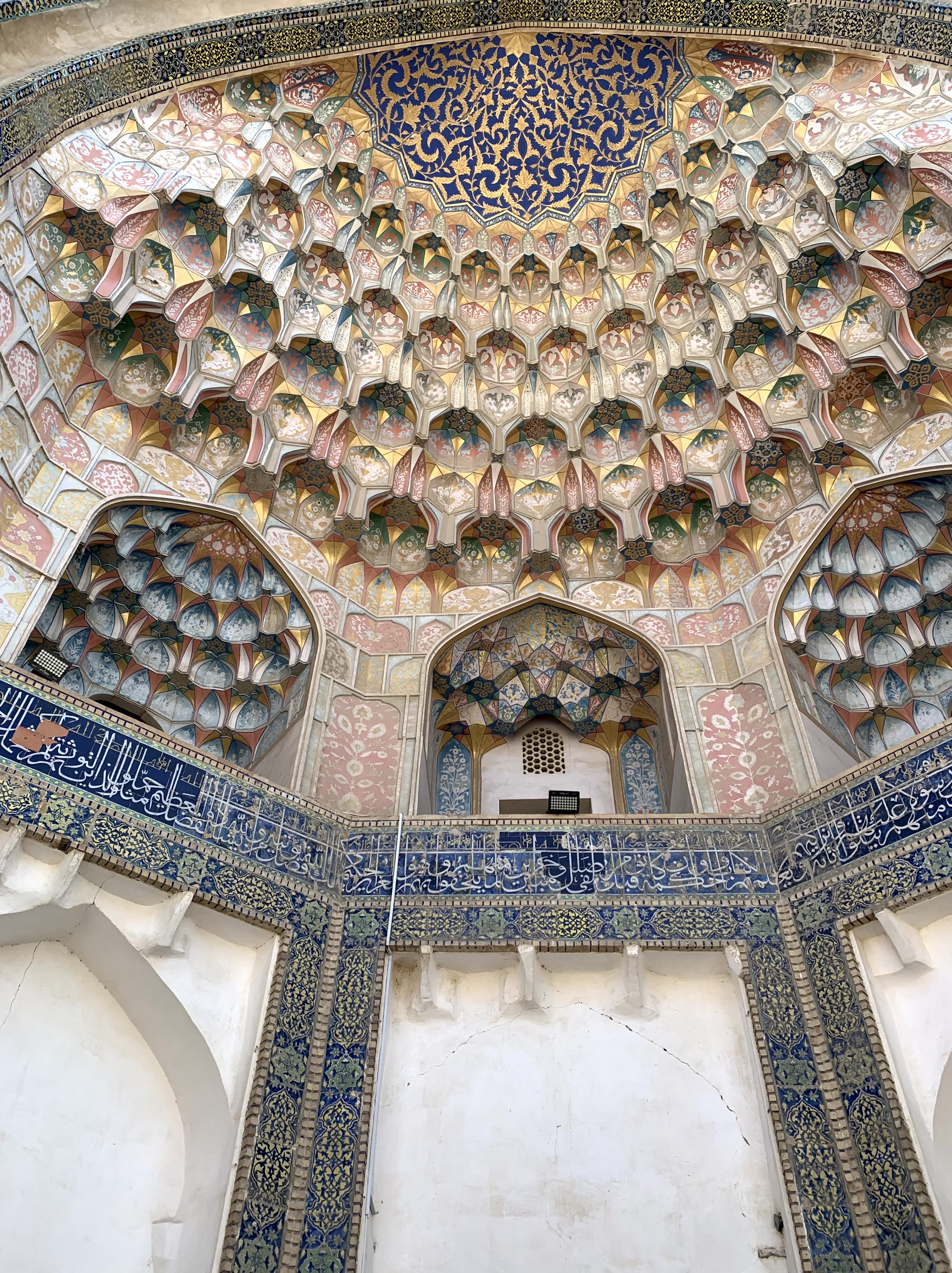
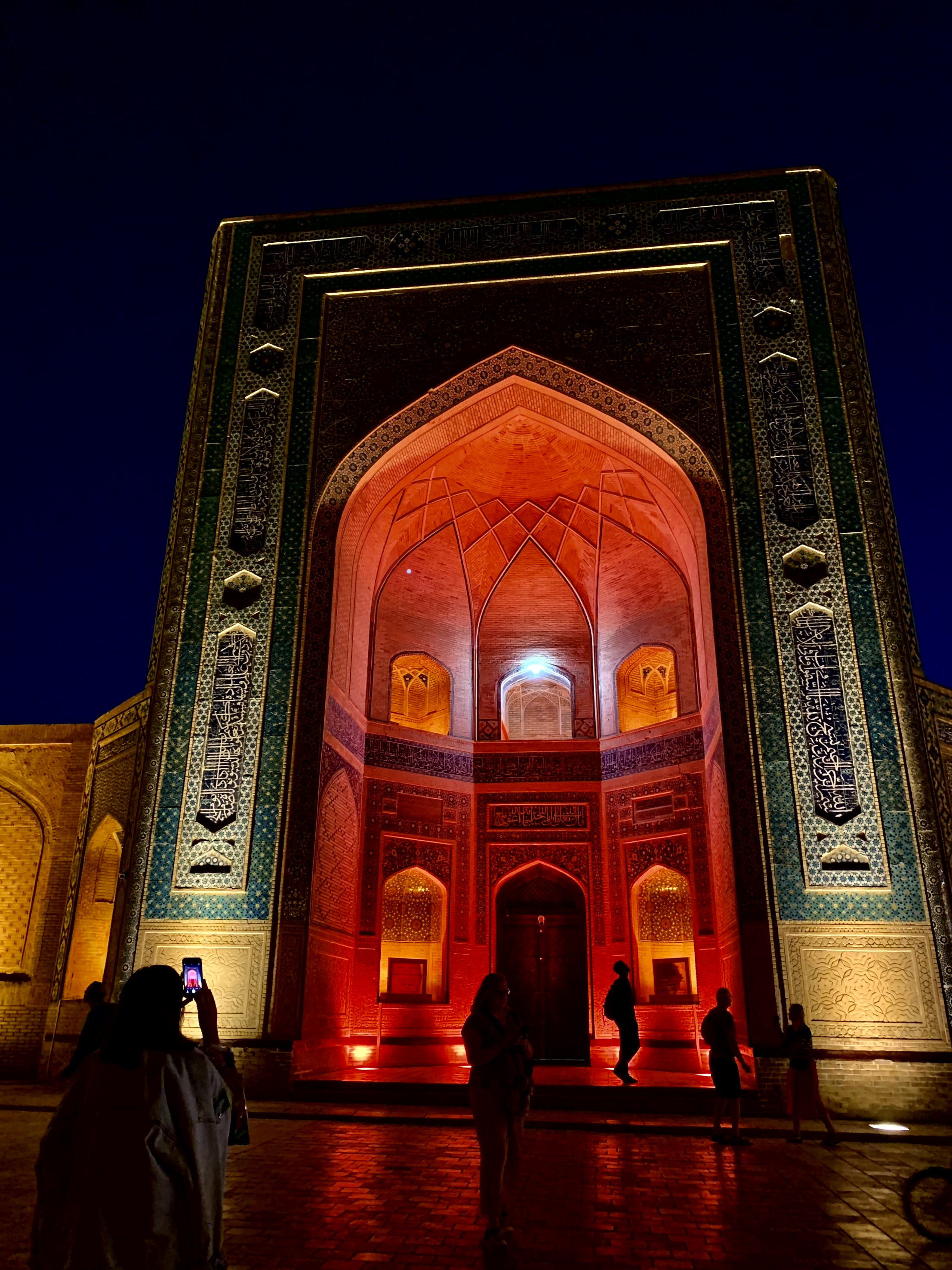
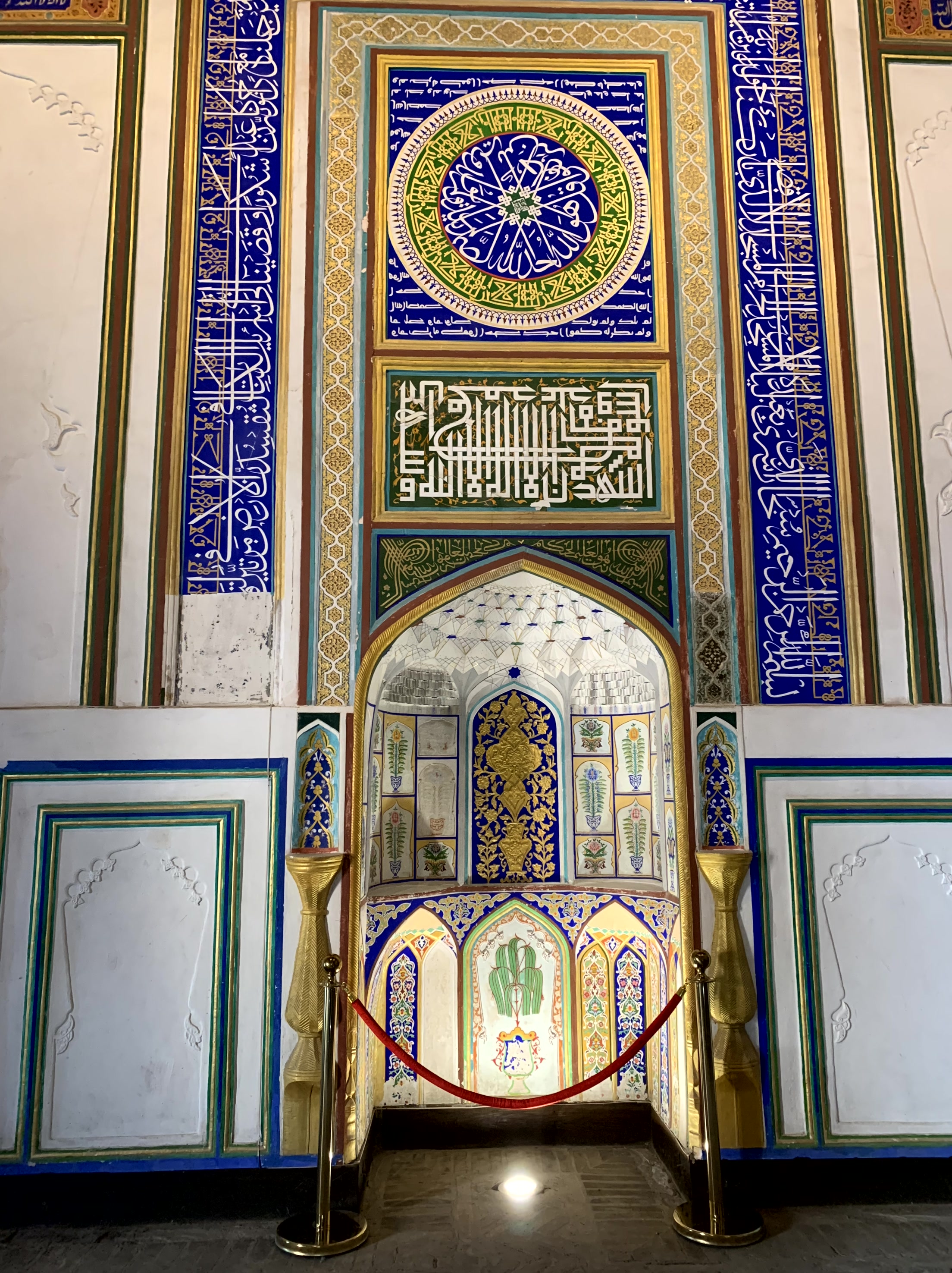
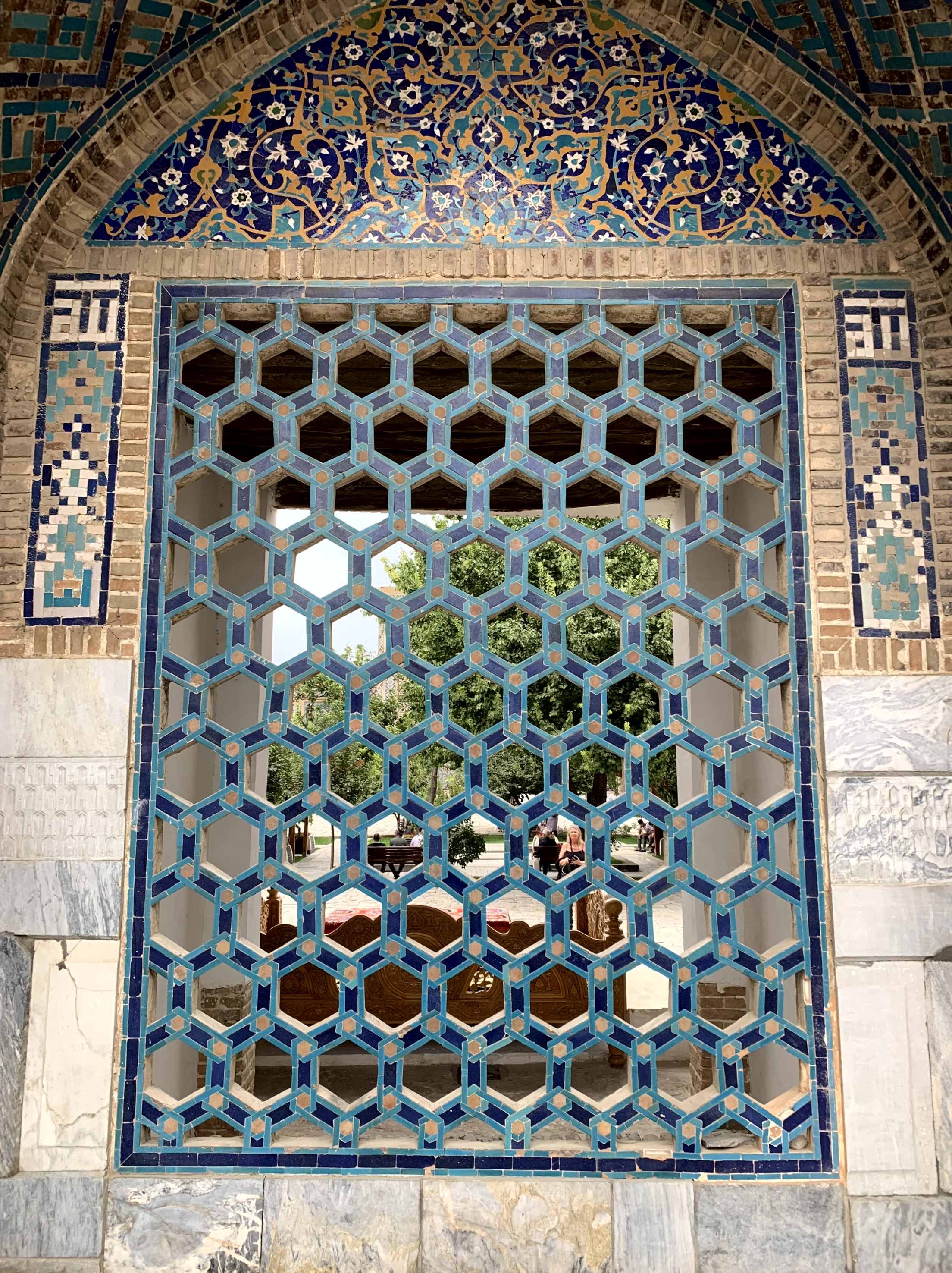
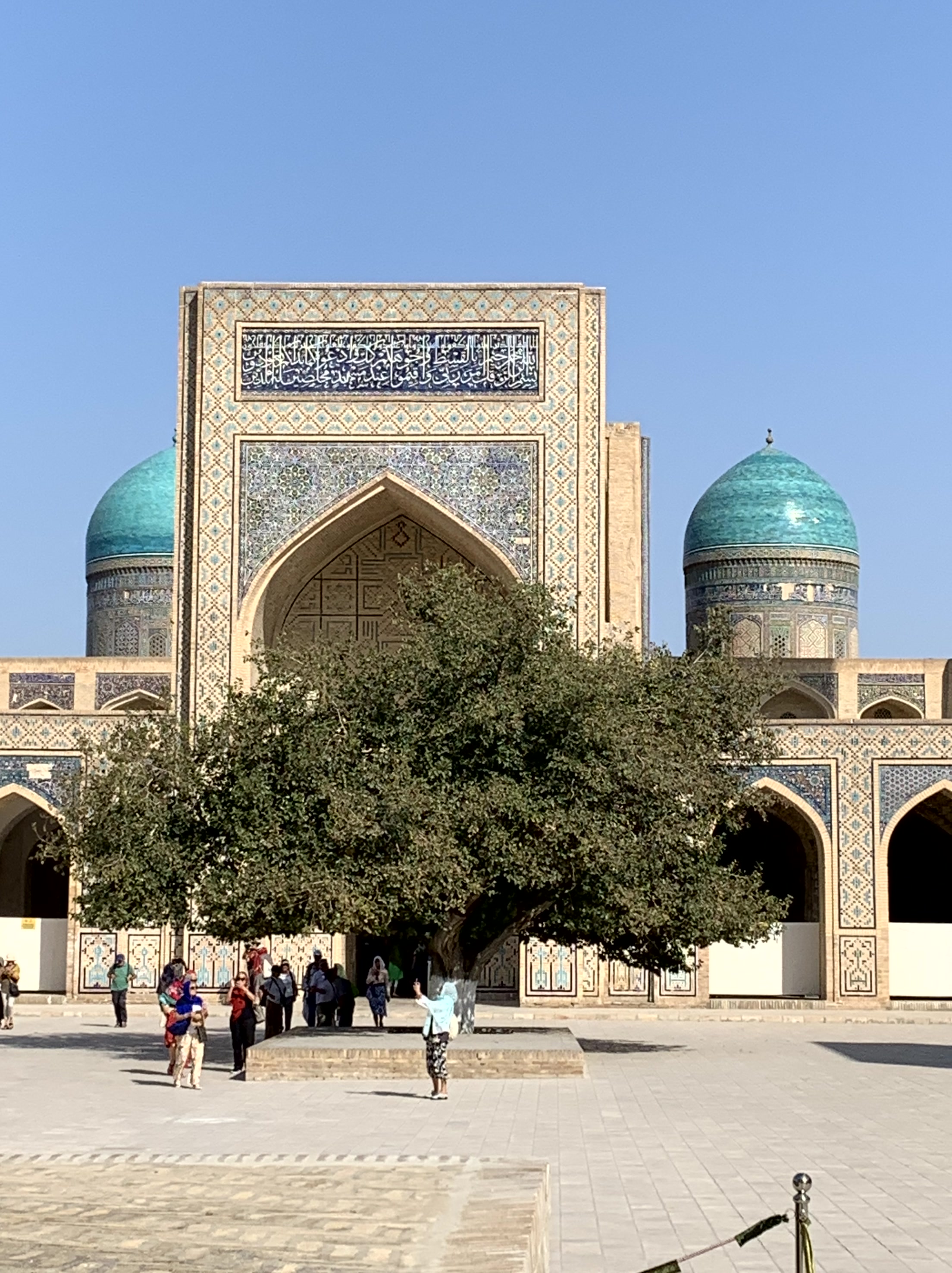
The Mir-i-Arab Madrasa is one of only two still in use as a centre of learning in the country. It’s the Oxford University of Uzbekistan, where boys come to study science, the history of the Qu’ran and where they learn about the Prophet (PBUH) before becoming imams. I can see some of the future imams through the grille, the academic elite, strolling around the courtyard and playing table tennis in the shade. When it was built, the very best of craftsmen were hired from as far away as China and India. This accounts for depictions of dragons and phoenixes (an ancient Zoroastrian symbol and the emblem now of Uzbekistan). I had always thought that in Islam people did not depict living creatures but for a short period in the 17th century this was permitted. Half of the frontage is decorated intricately, the other half was left plain in the hope that in the future, more skilled artists would come along and finish it. One side of the building is still left plain right up to this very day, which must say something of the original workers.

I only had two nights in Bukhara so I spent two half-days solo-wandering with a guidebook and hired a guide for a day’s tour to get some more background. Faïs turned out to be a fabulous guide and arrived with a folder full of documents of historical and cultural information so that he didn’t misrepresent or forget anything interesting. A very personable and diligent guide. Consequently, I learned a lot about Bukhara, and my questions were answered admirably and accurately.

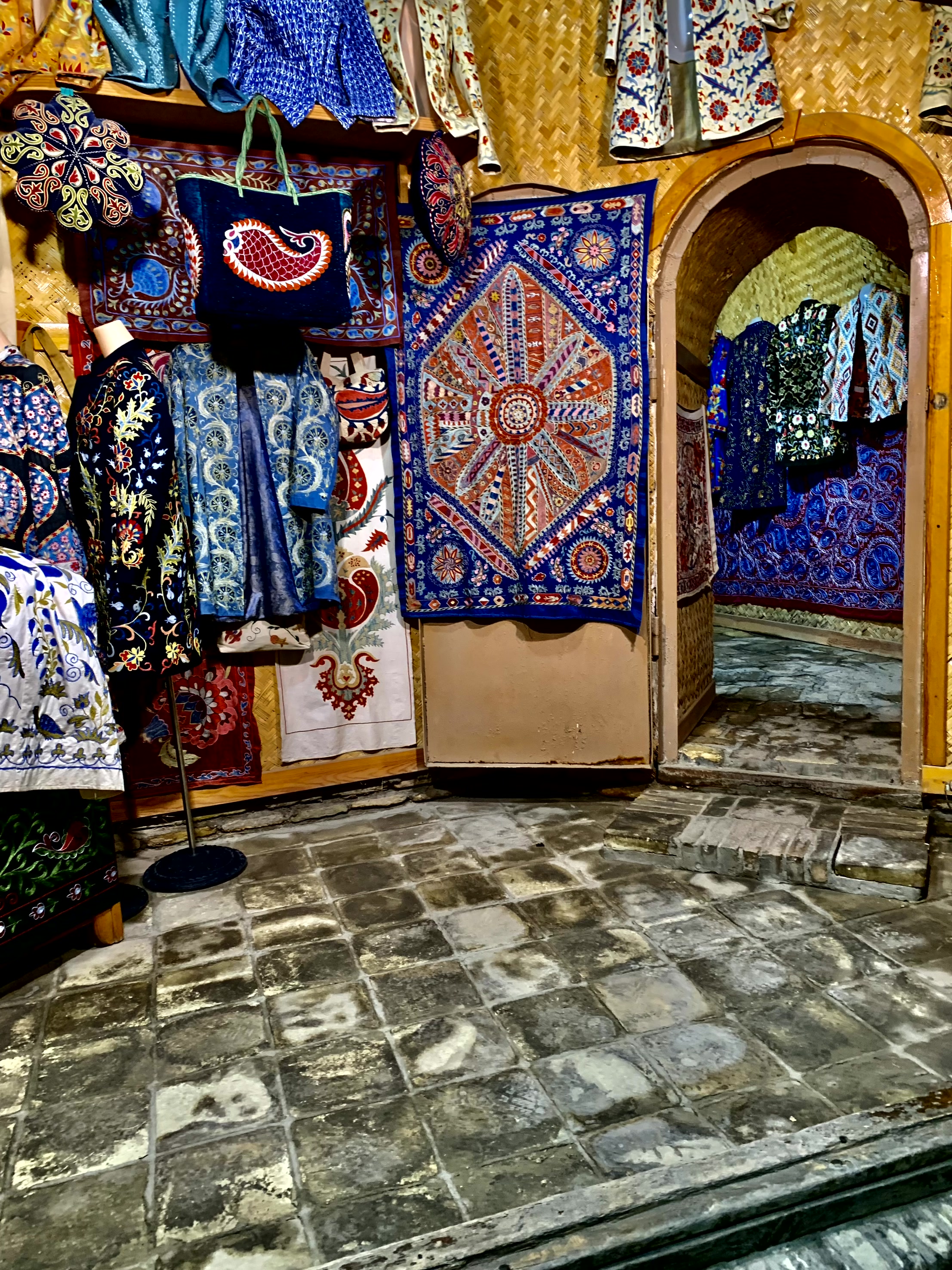
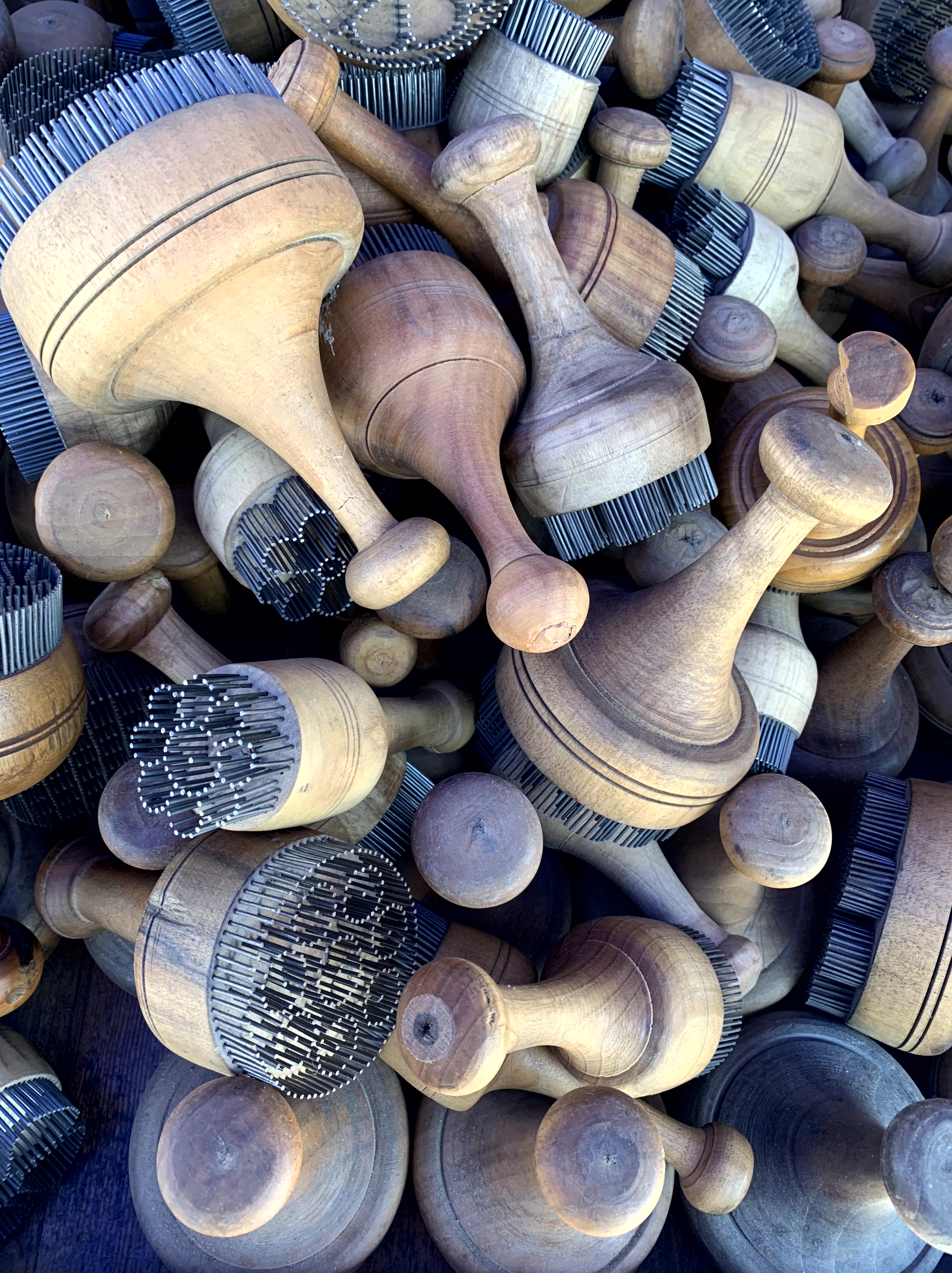
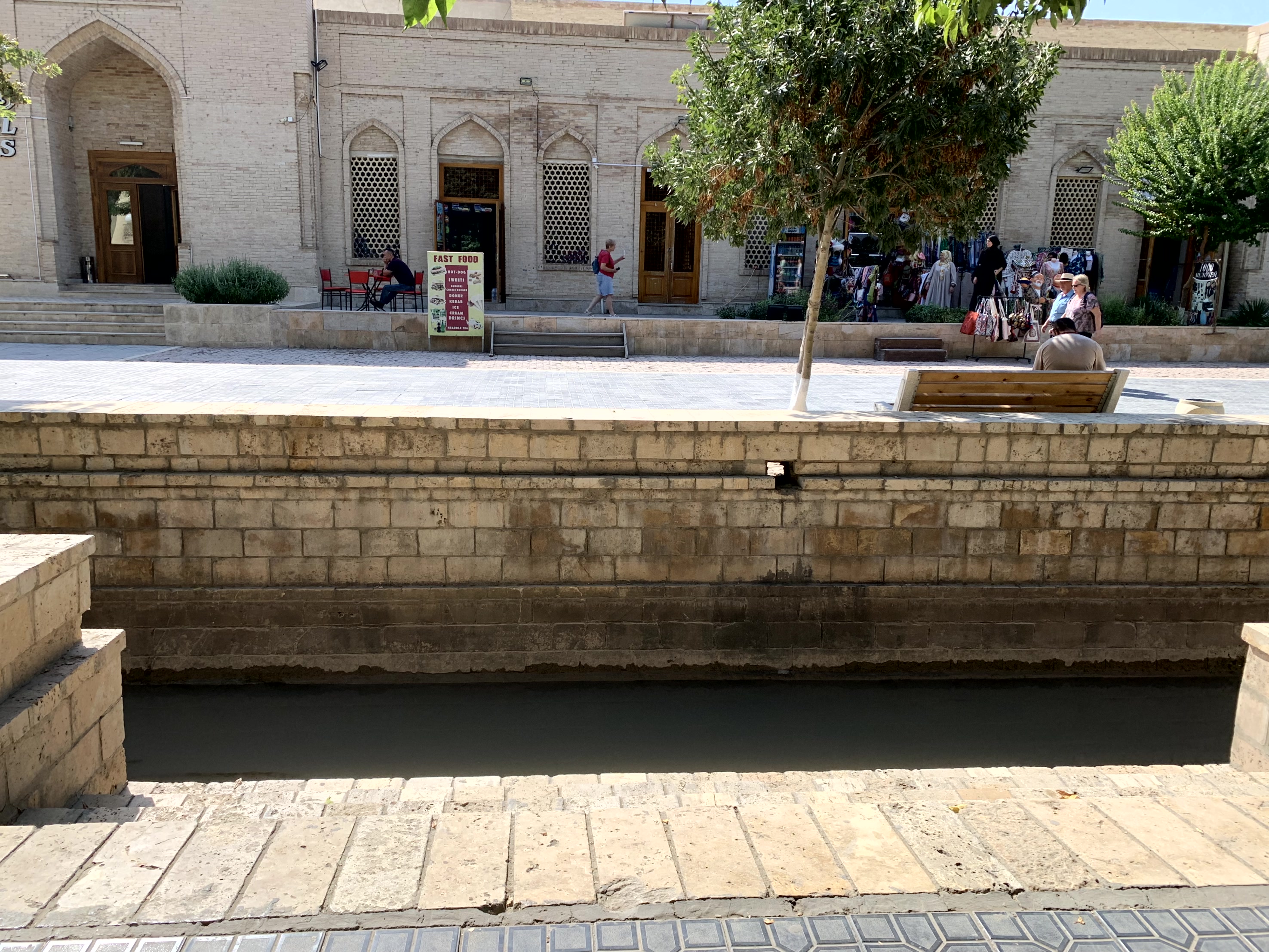
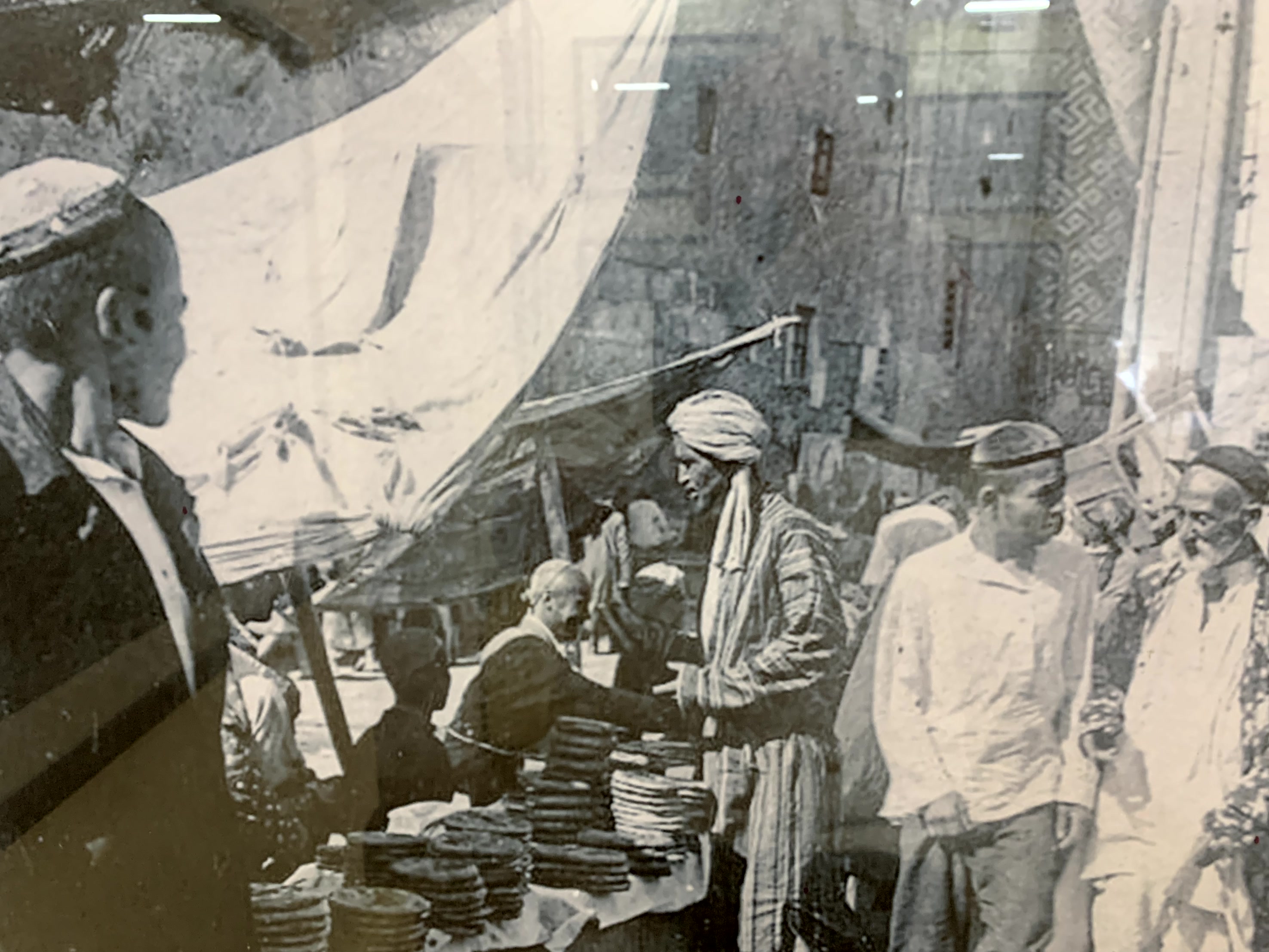
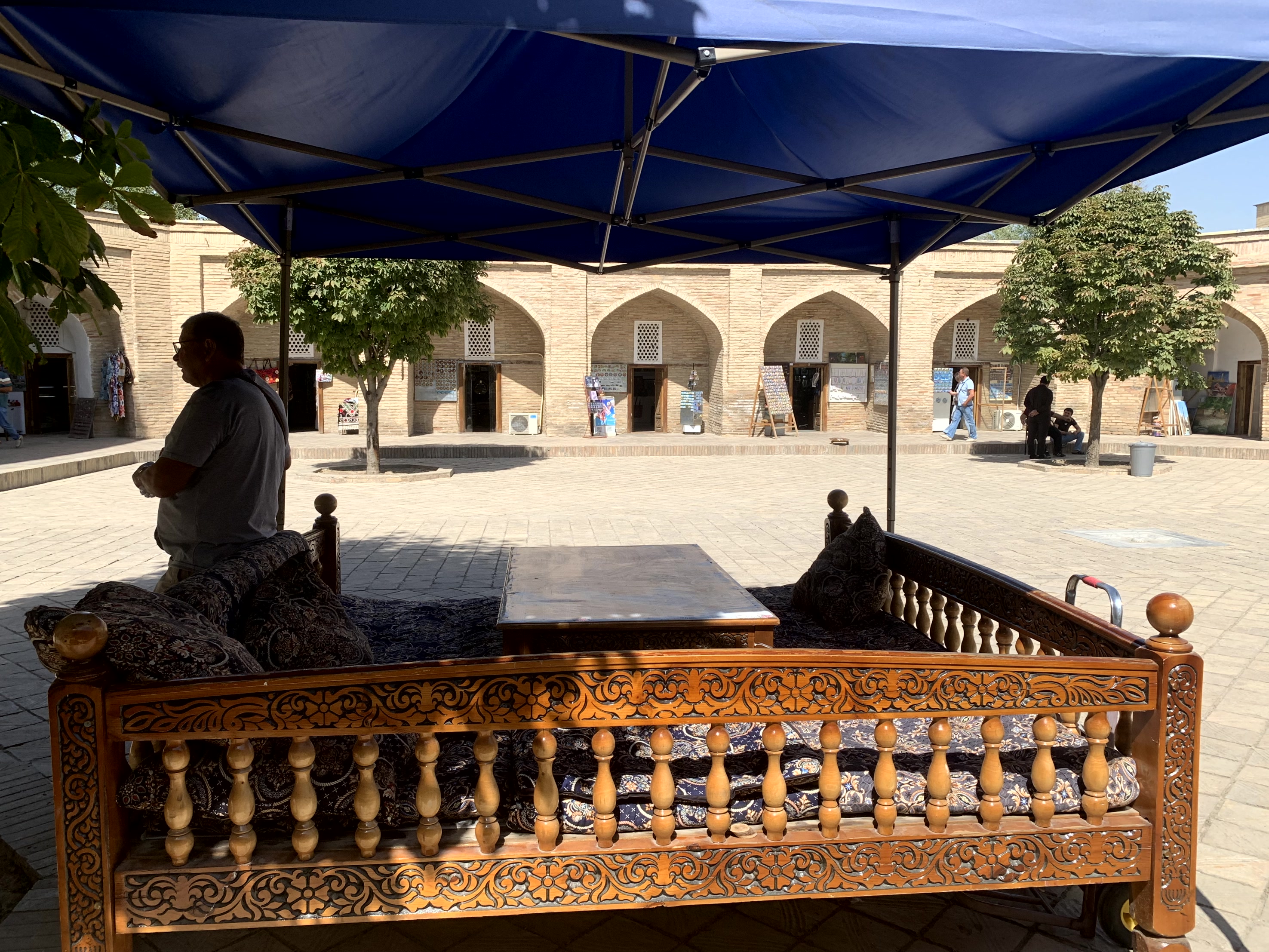
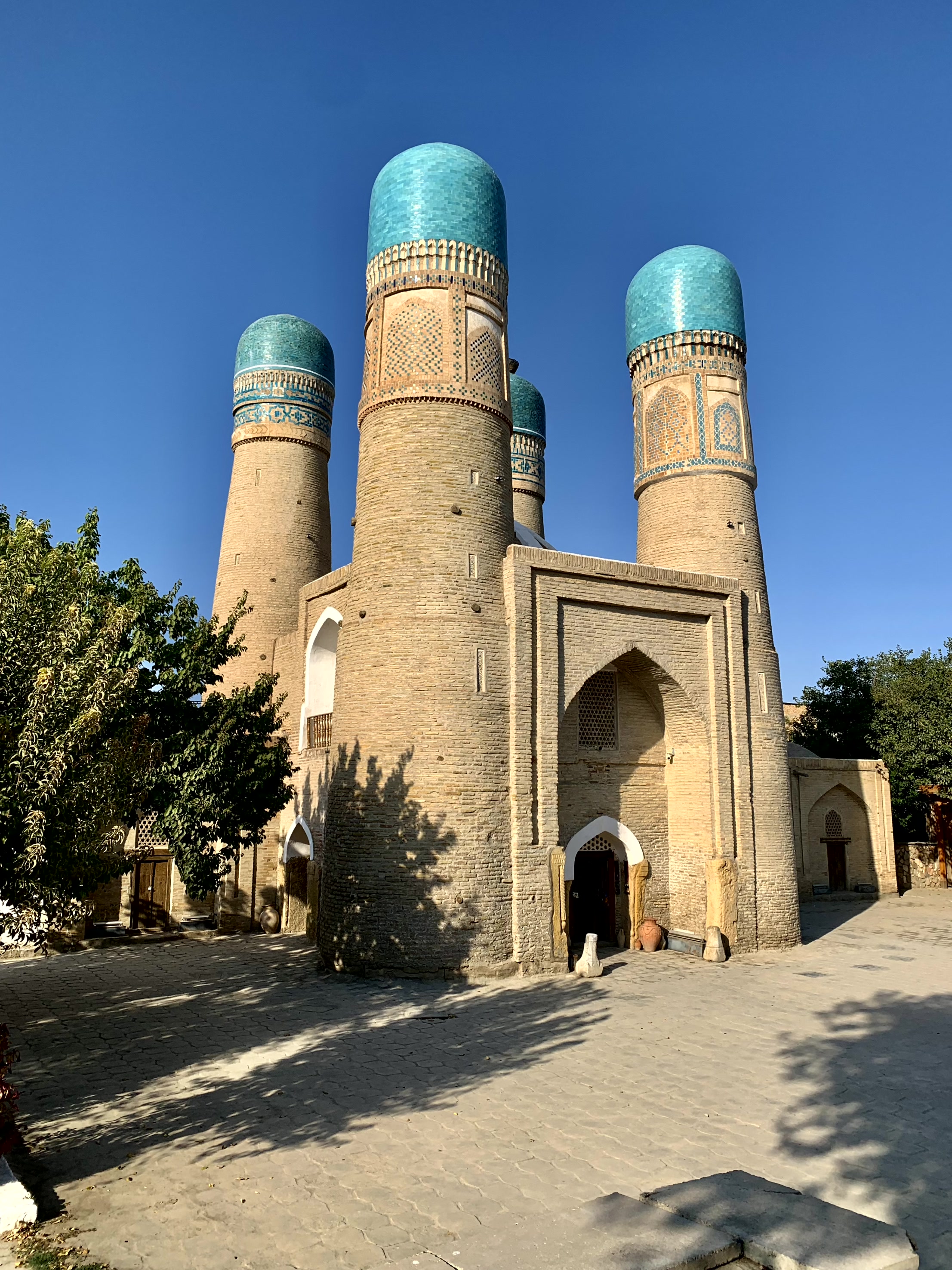
‘Chorsu’ is a word which means crossroads and here in Bukhara, this is where specialised traders set up shop in covered marketplaces. So, one is the moneychangers chorsu, another sells spices, and another hats and so on. The hats are in styles that show which tribe you are from, how old you are or whether you are married… There is one stall selling what look like sewing bobbins, but I learnt that they are for imprinting the sign of the bakery into loves of bread.
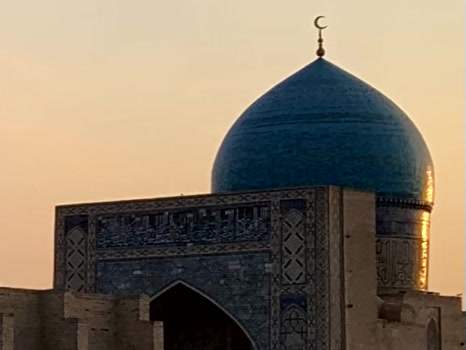
Armed with my trusty Lonely Planet guidebook and information I found online, I made for the unusual top site recommended. This was to sit on the Chashmai Mirob Cafe terrace and watch the sun go down over the Kalon Minaret. I tried to walk there but got hopelessly lost so had to flag down a taxi. The man had no idea what I was talking about when I asked for the cafe but I managed to get a deal to the minaret and he didn’t overcharge me. Now there’s a first. And it was worth it. I got chatting with a Russian mother of about my age and her daughter there, which I enjoyed immensely because when I told them I’d been walking up to 15km a day on my travels in Uzbekistan, the daughter told me that this was the reason I looked so good for my 61 years. I liked them.
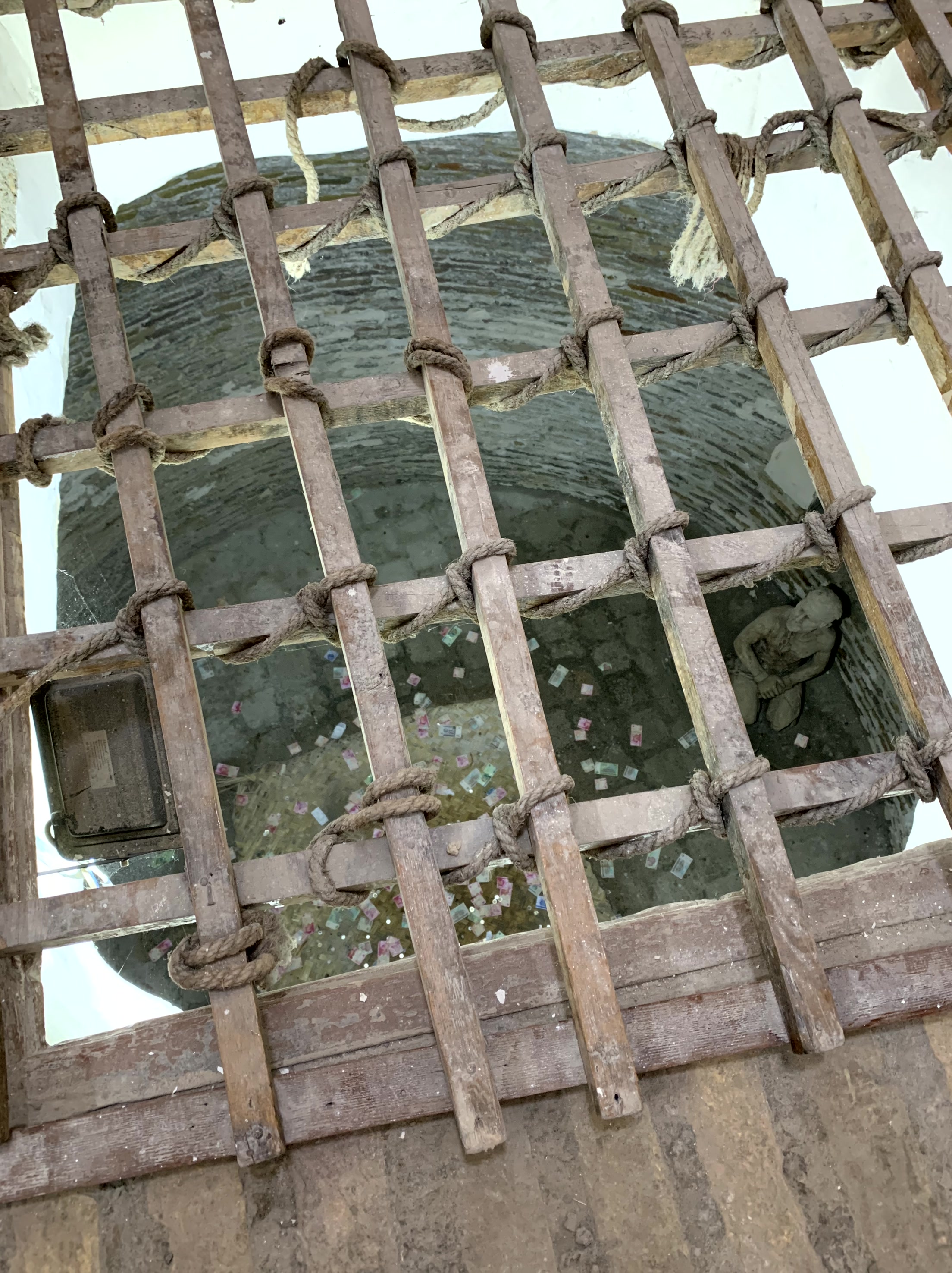
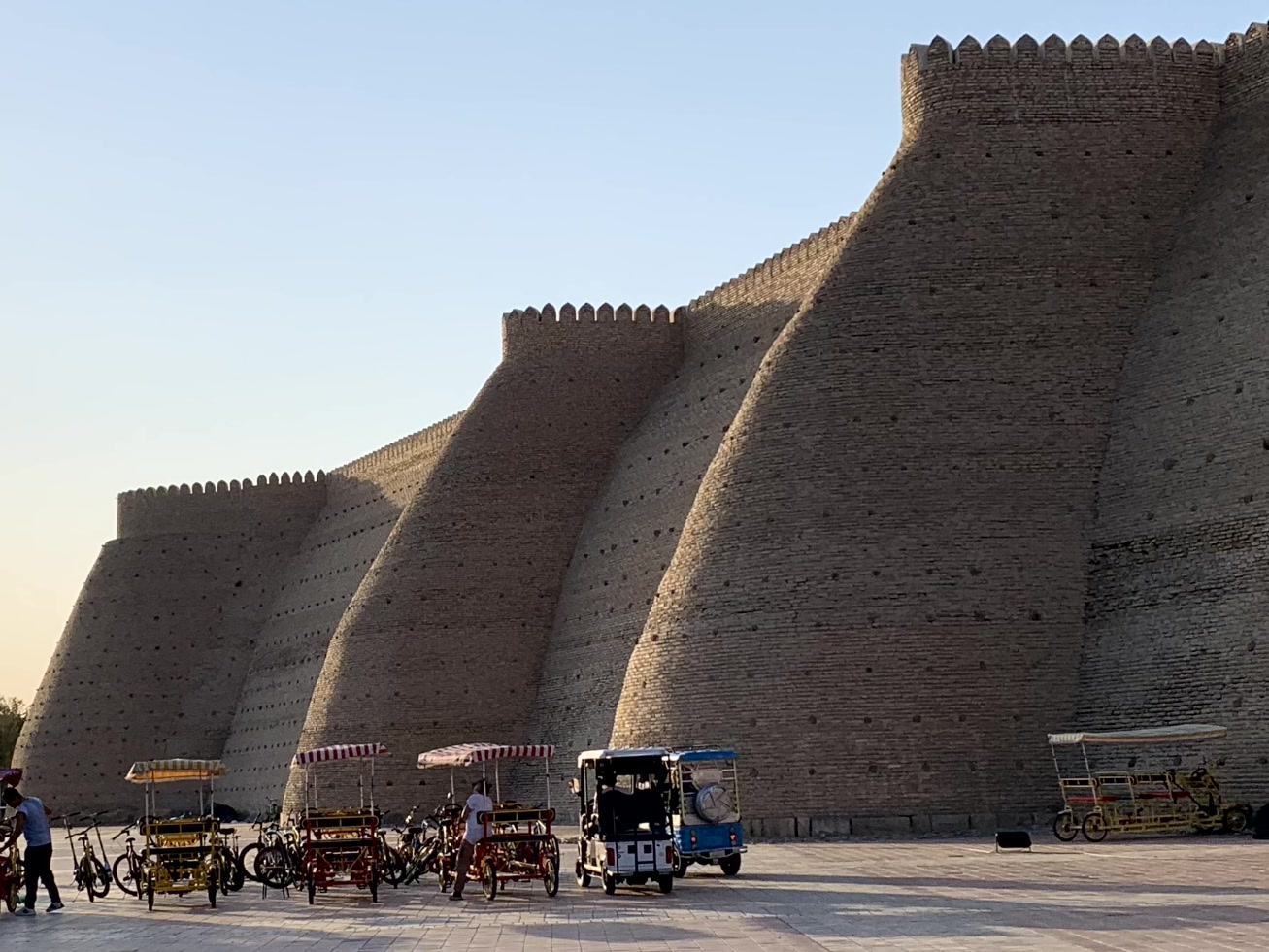
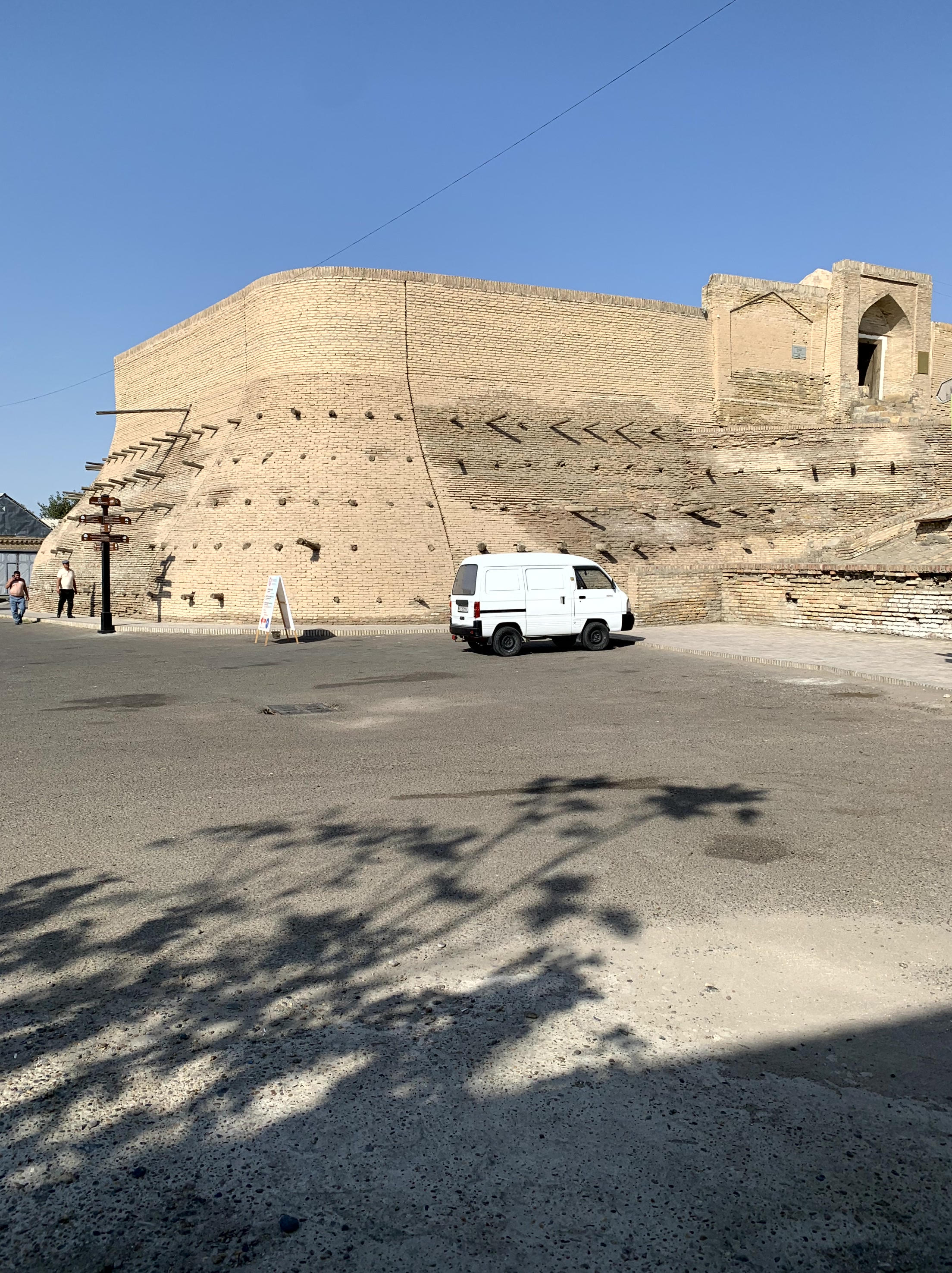
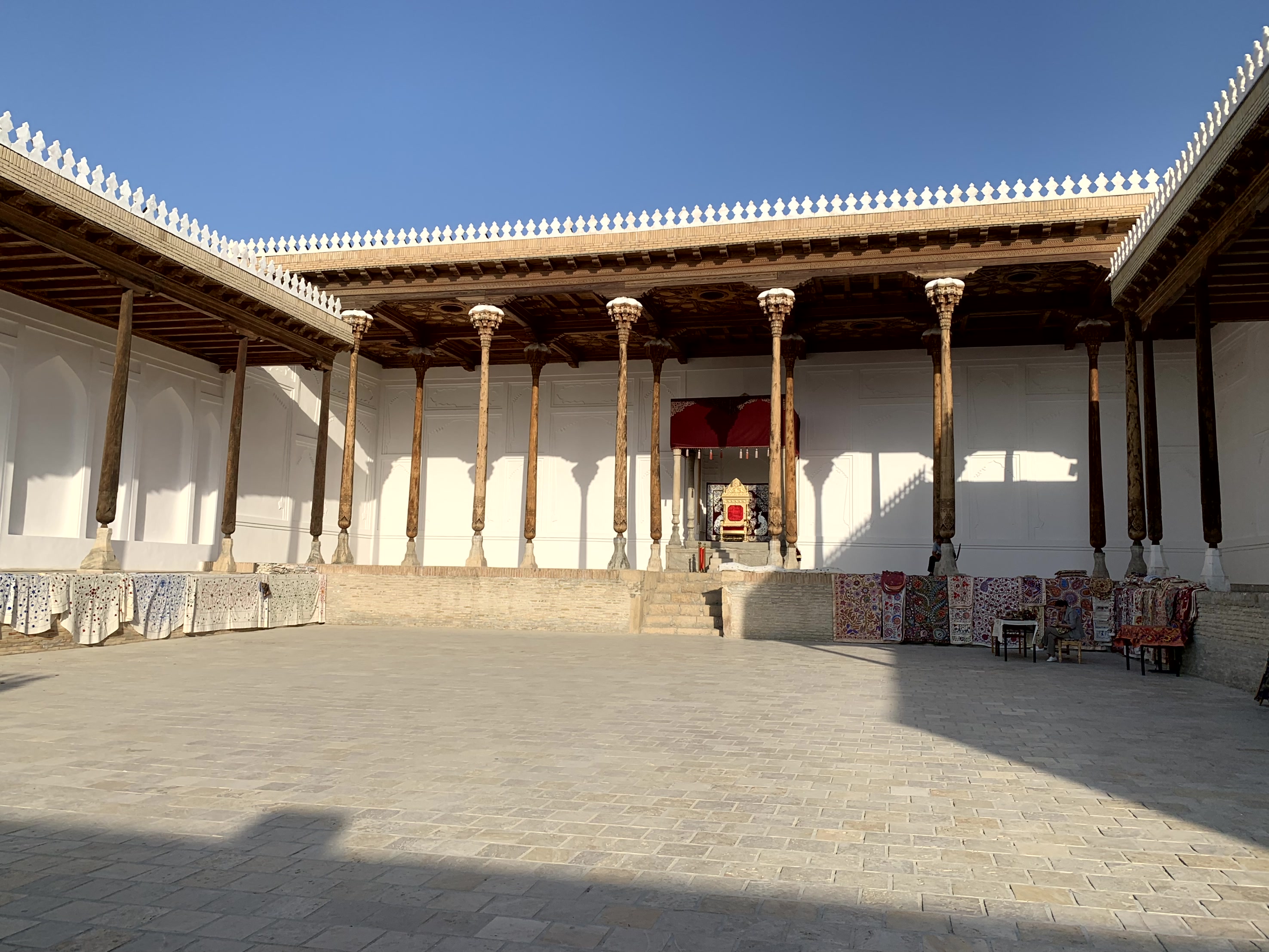
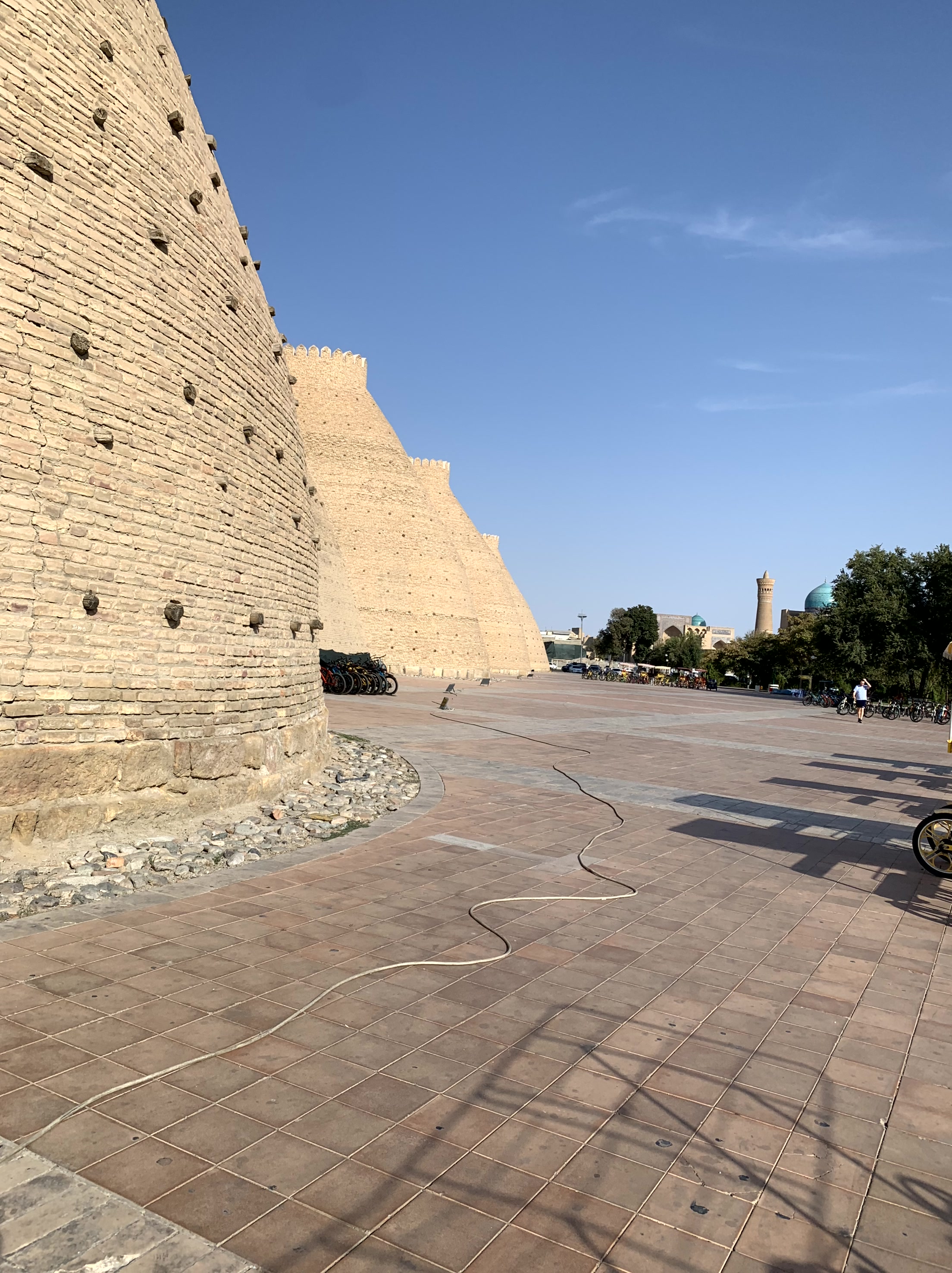
Up on a hill by the Khalon Minaret and mosque is the Ark. This is where the Emir lived, or what is left of his impressive palace complex. Most of it was smashed to smithereens by Russian bombing. Under the ramparts, is the old and infamous Zindan Prison. In 1842, Colonel Charles Stoddart and Captain Arthur Conolly were released from here and told to dig their own graves in the square under the entrance to the Ark, where the Emir had a good view of proceedings from the balcony above. They were then beheaded. The problem was that Stoddart had come here to appease the Emir after Britain had invaded Afghanistan and did not want the Bukharans siding with the Russians; he arrived with no gifts and did not dismount when approaching the Ark. The Emir considered himself an equal of Queen Victoria and was also disappointed that Stoddart had come with a letter not from her, but from the governor-general of India. In fact, he was so disappointed that he had him thrown into the ‘bug pit’. He remained here for three years and was joined by Connolly in 1841 when he had come to try and get him out, by which time Stoddart had converted to Islam having being told to do so by his jailor under the threat of beheading if he didn’t. The ‘bug pit’ was reserved for those who had really upset the Emir and amounted to a death sentence (the regular throwing of rats, scorpions and other biting or stinging nasties into the pit notwithstanding). You can visit the jailhouse today, with its three cells: one for people who had committed crimes against other citizens; another for those who had wronged the state authorities and then the notorious ‘bug pit’ for those who had no hope of ever getting out. When the Emir received no reply to a letter he had sent to Queen Victoria, he had both men killed. The British Government let the matter drop, but friends and relatives of Stoddart and Connolly raised money to send their own emissary to Bukhara to verify their fate, a clergyman called Joseph Wolff. Wolff only escaped certain death and a stay in the ‘bug pit’ because he dressed in full ecclesiastical garb and the Emir found him hilarious and somewhat ridiculous and sent him away with his head still attached to the rest of him.
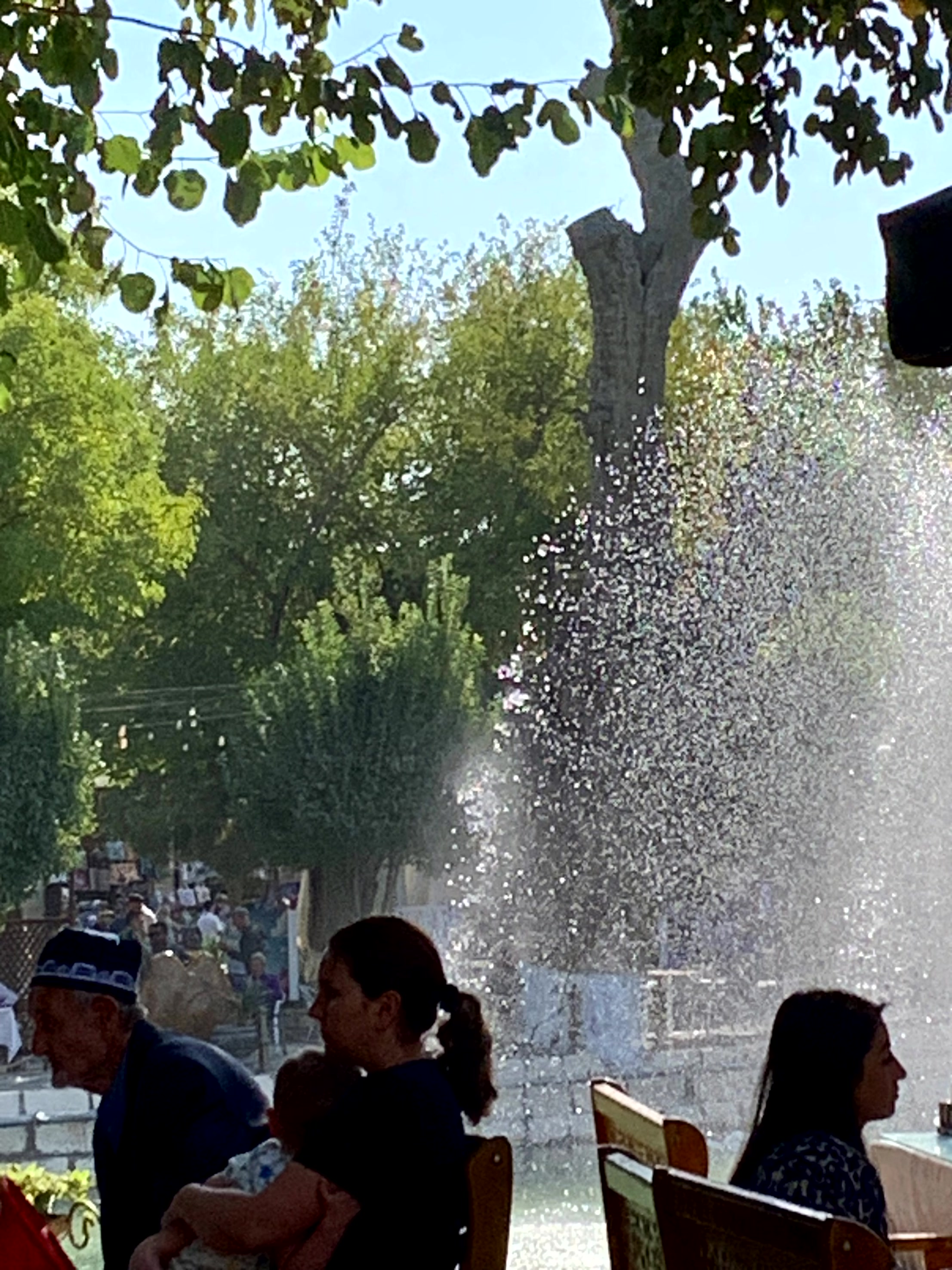
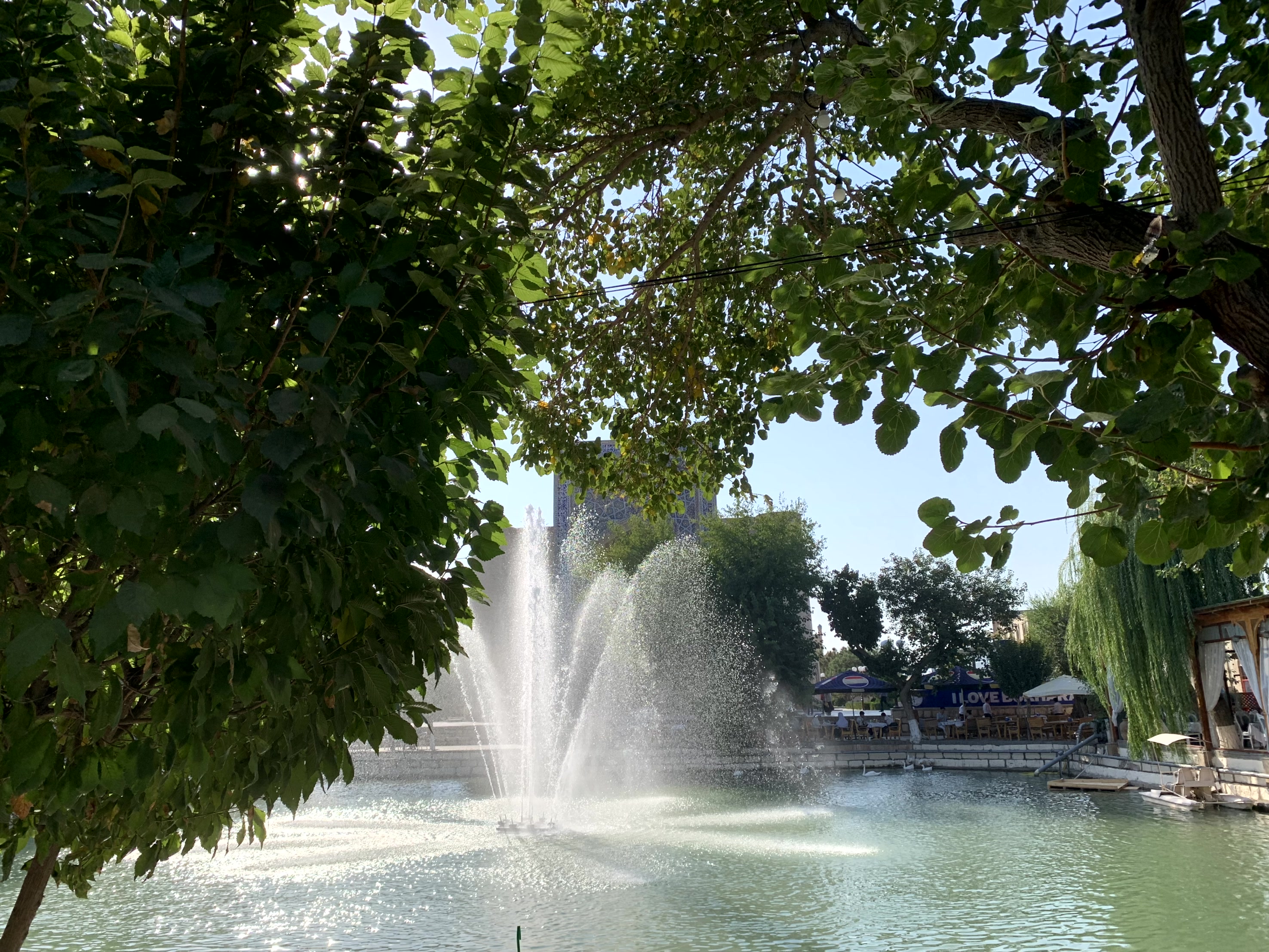
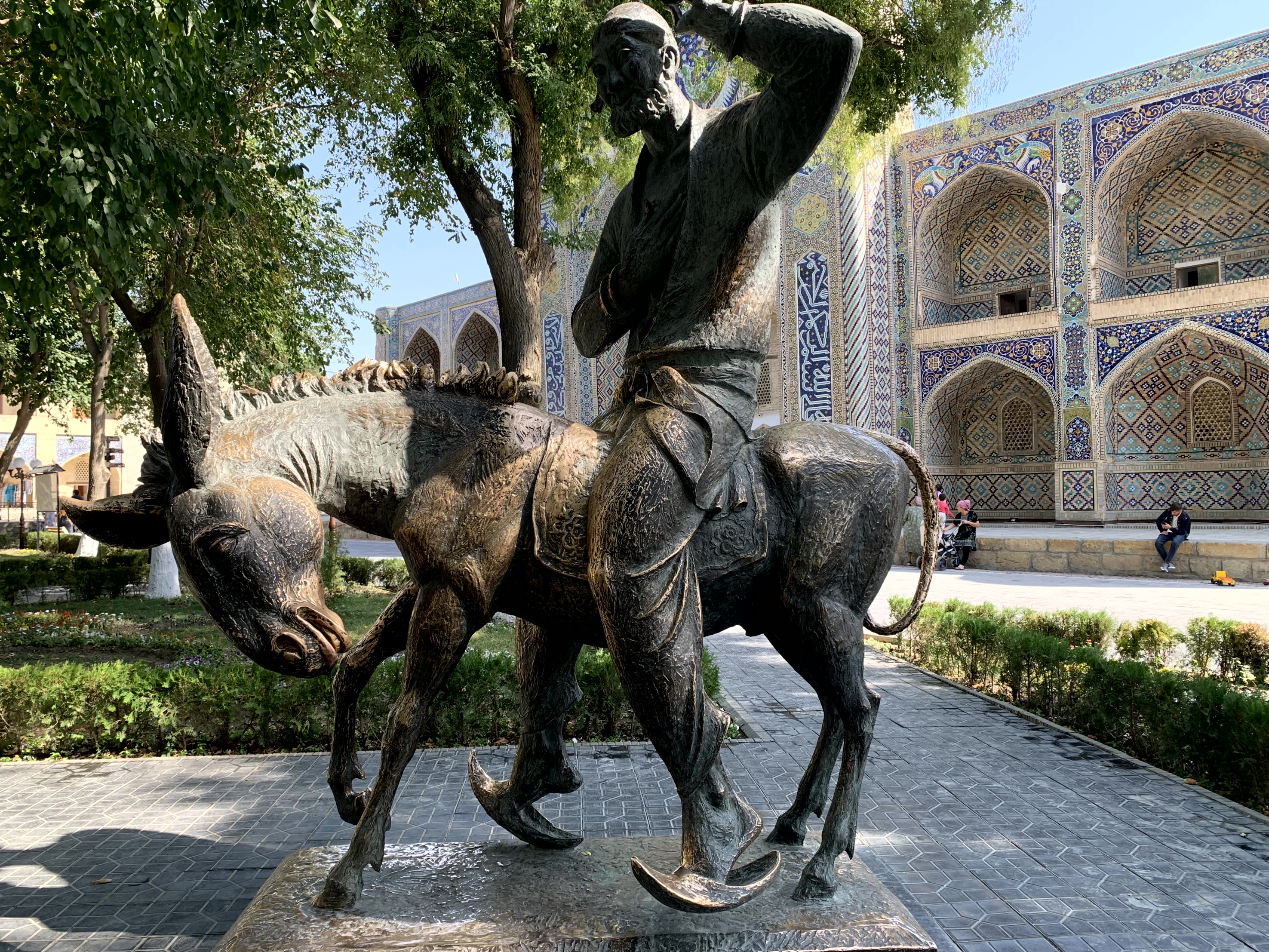
I learned from Faïs that the pond just next to the hotel, the Labi Howz, dates back to the 16th century. A famous film from 1943 was shot here chronicling the adventures of Nusradin, a sort of Uzbek Robin Hood who travelled on a donkey. There is a statue of him next to the pool, riding his donkey. One story is that once he came across a fat, rich man who was drowning in such a pond. Nobody could reach him with ropes so Nasradin showed him a gold coin and said, “Come, and I will give you this gold coin,” and low and behold, the fat, rich man got himself out and was rewarded with the coin. Another tale recounts how Nasradin went to the Emir one day and asked for one bag of gold in return for his clever donkey who after twenty years would actually be able to read. People said that he would be in trouble. “After twenty years,” Nasradin told them, “neither me, nor the donkey, nor the Emir will be alive,” and off he went with his bag of gold.
People bring prospective brides to the Labi Howz, if the parents of the prospective bride and groom agree, unchaperoned to meet and size each other up. It is a popular place to have wedding snaps taken and is known locally as ‘Love Square’ and Faïs had come here with his wife before they were married. The 5m deep pond is fed by one of the canals built from the river and it is surrounded by ancient mulberry trees which help to keep the water clean and whose roots support the brick walls it is made of.

There is a story of one Nadir Divan Begi, who had financed the building of the pool and surrounding buildings and one day decided to get married, presenting a pair of earrings as a wedding present to his bride. The bride got offended by the fact that only earrings were offered. She was sure that the groom was from a wealthy family and could easily afford to present more valuable a present.

After a few years, he began construction of the Lyabi Howz complex and his wife became quite indignant and told him that it was not fair to spend such a huge amount of money on the construction when she was only presented with earrings as a wedding gift. Then, Nadir Divan Begi asked her wife to check her jewelry box and she found that one earring was missing. She cried ” I’ve been robbed!”, but then her husband explained that the entire complex was going to be built on the value of the one earring he had taken back. To build this, he had had to ask a Jewish widow to move out so he could demolish her home. It took a lot of persuading this Esther and she held out until a deal was agreed that he would build a synagogue in return so that Jewish people would no longer have to go to a mosque to worship, which is the four-hundred-year-old synagogue we see today. Also today, Jewish and Muslim worshippers co-exist in mutual respect and harmony in Bukhara. Now, there’s a thought. The Jewish community numbers only 100 to 150 Jews nowadays, most having emigrated after the Russians left, but probably no more than five families who keep kosher and follow Jewish traditions. The city has only one elderly rabbi.

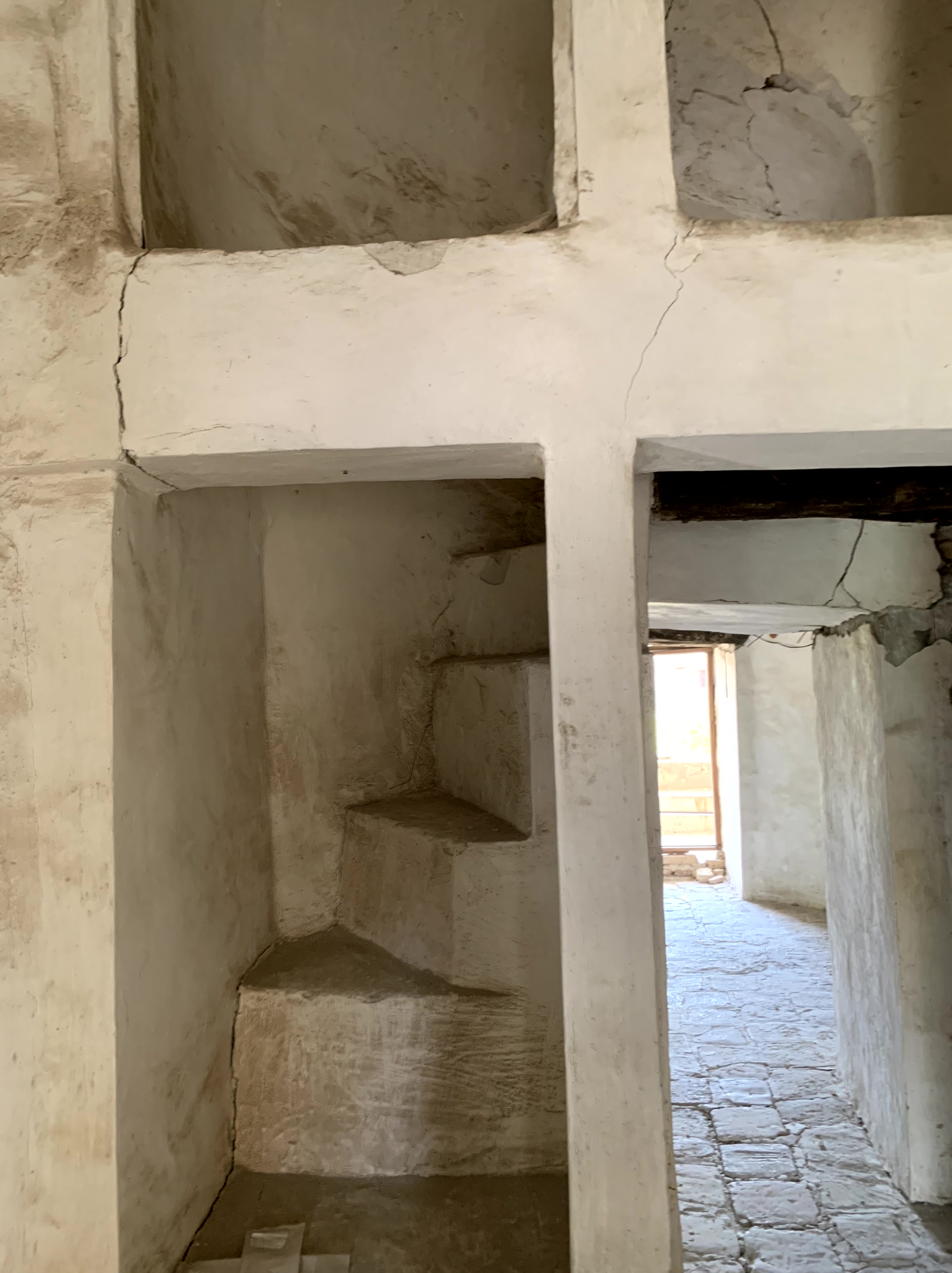
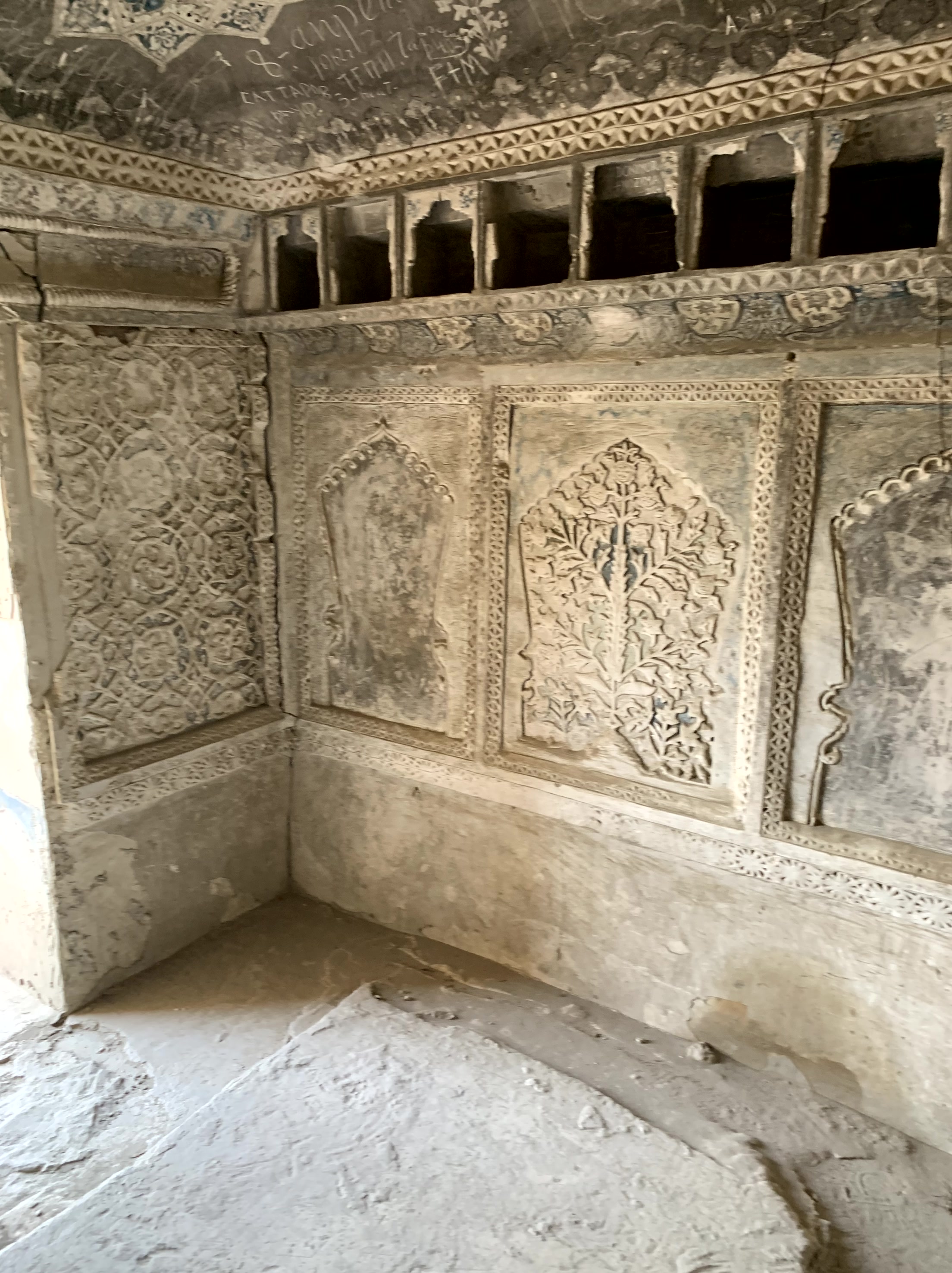
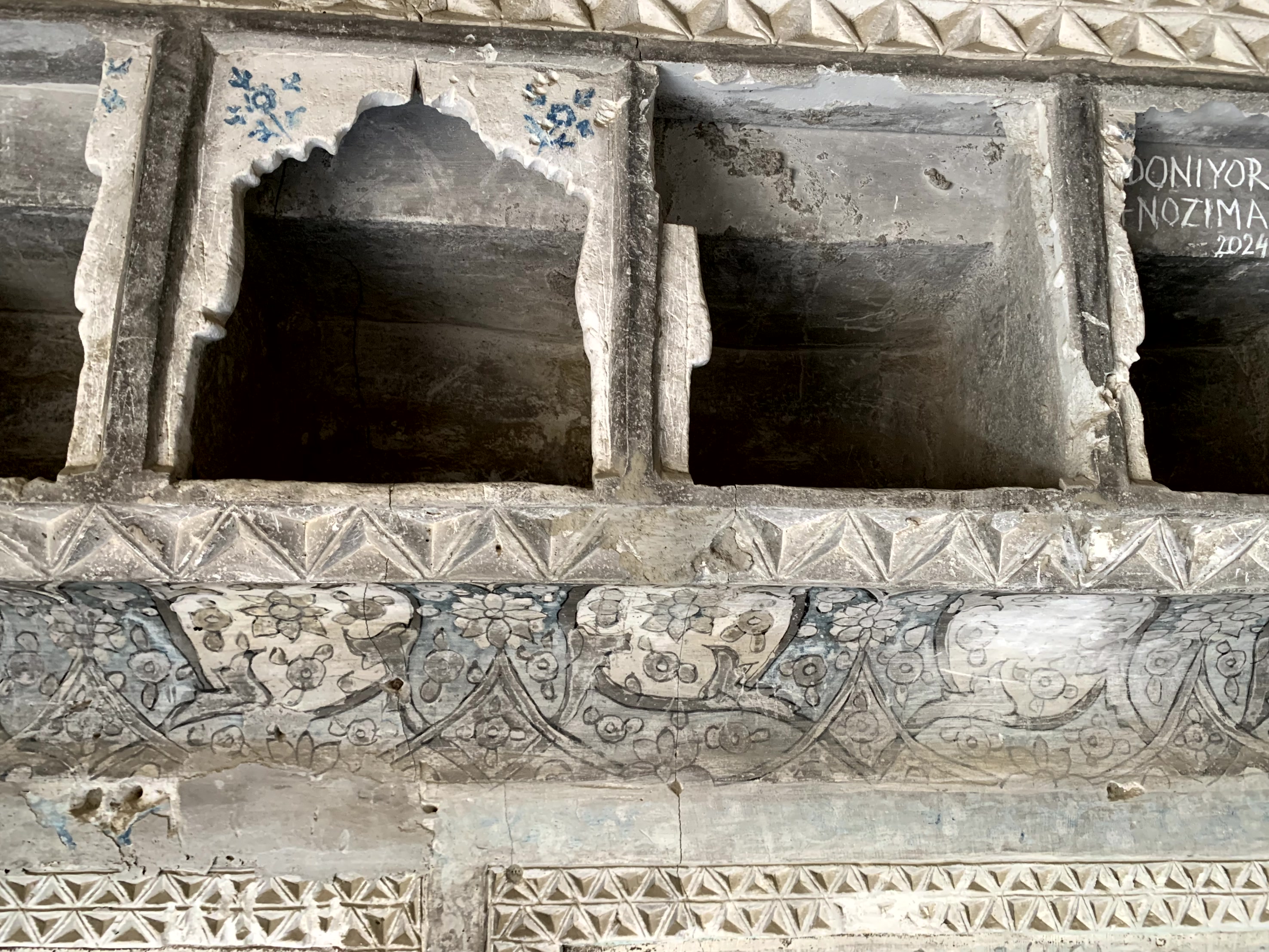
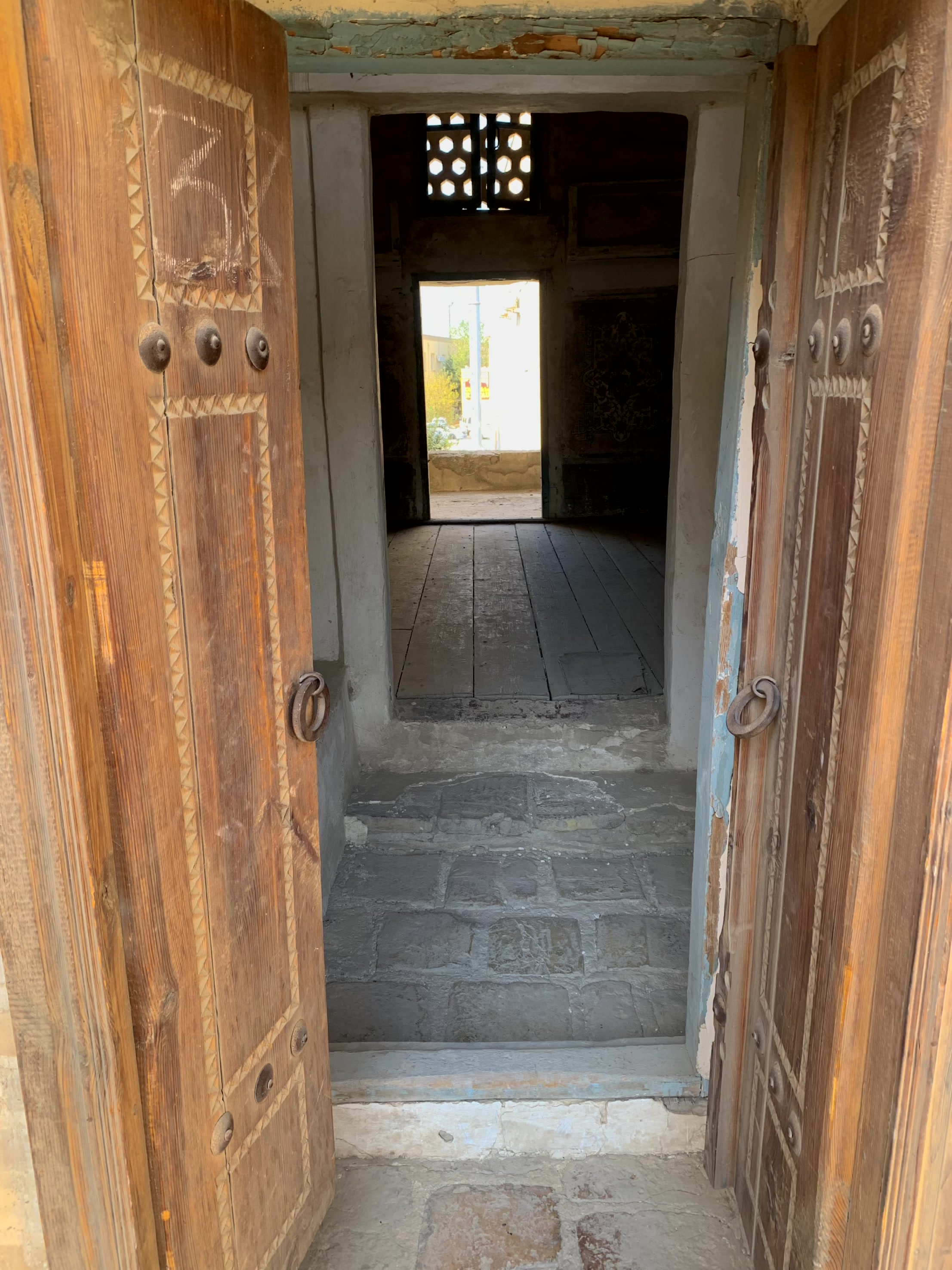
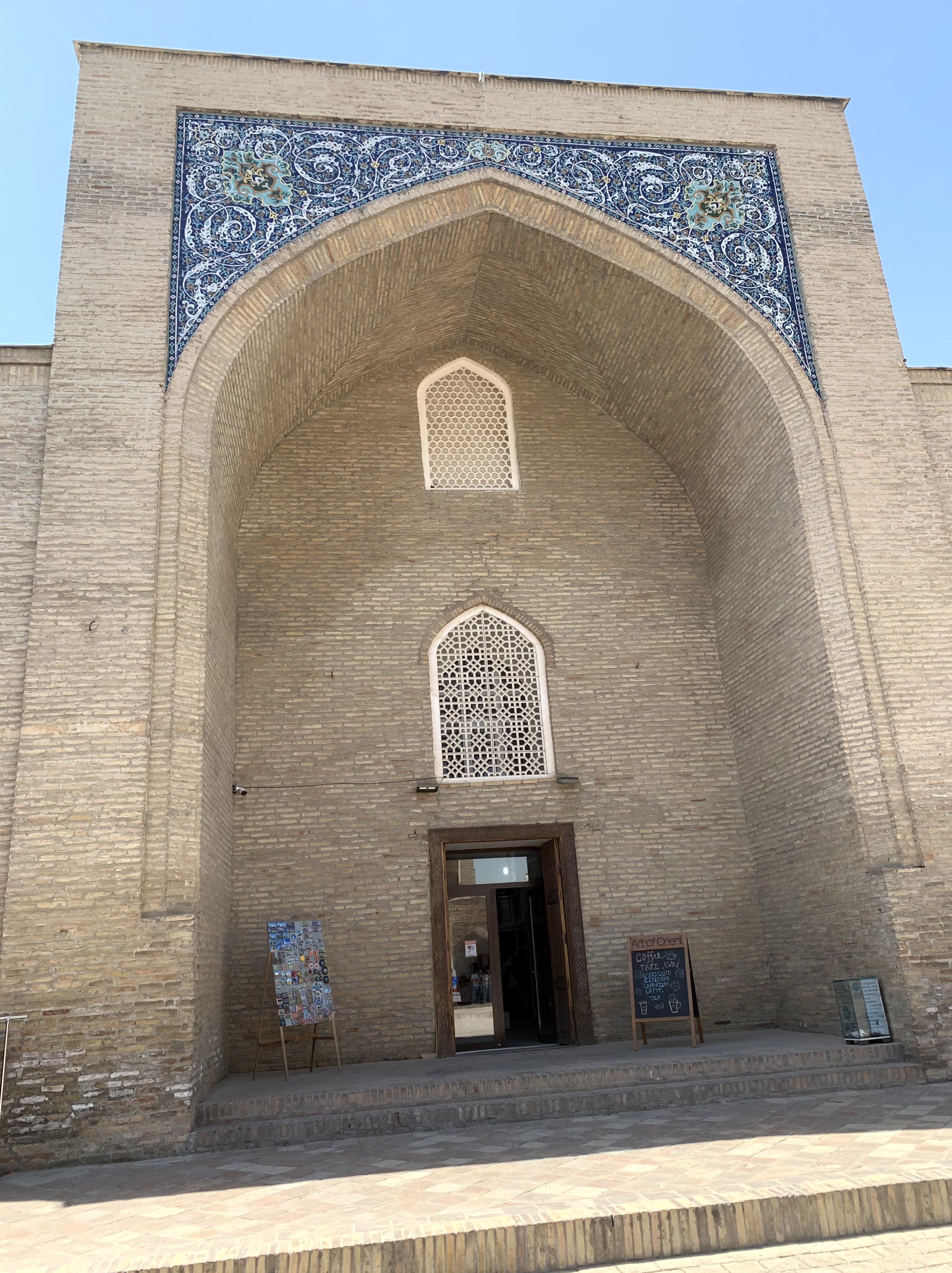
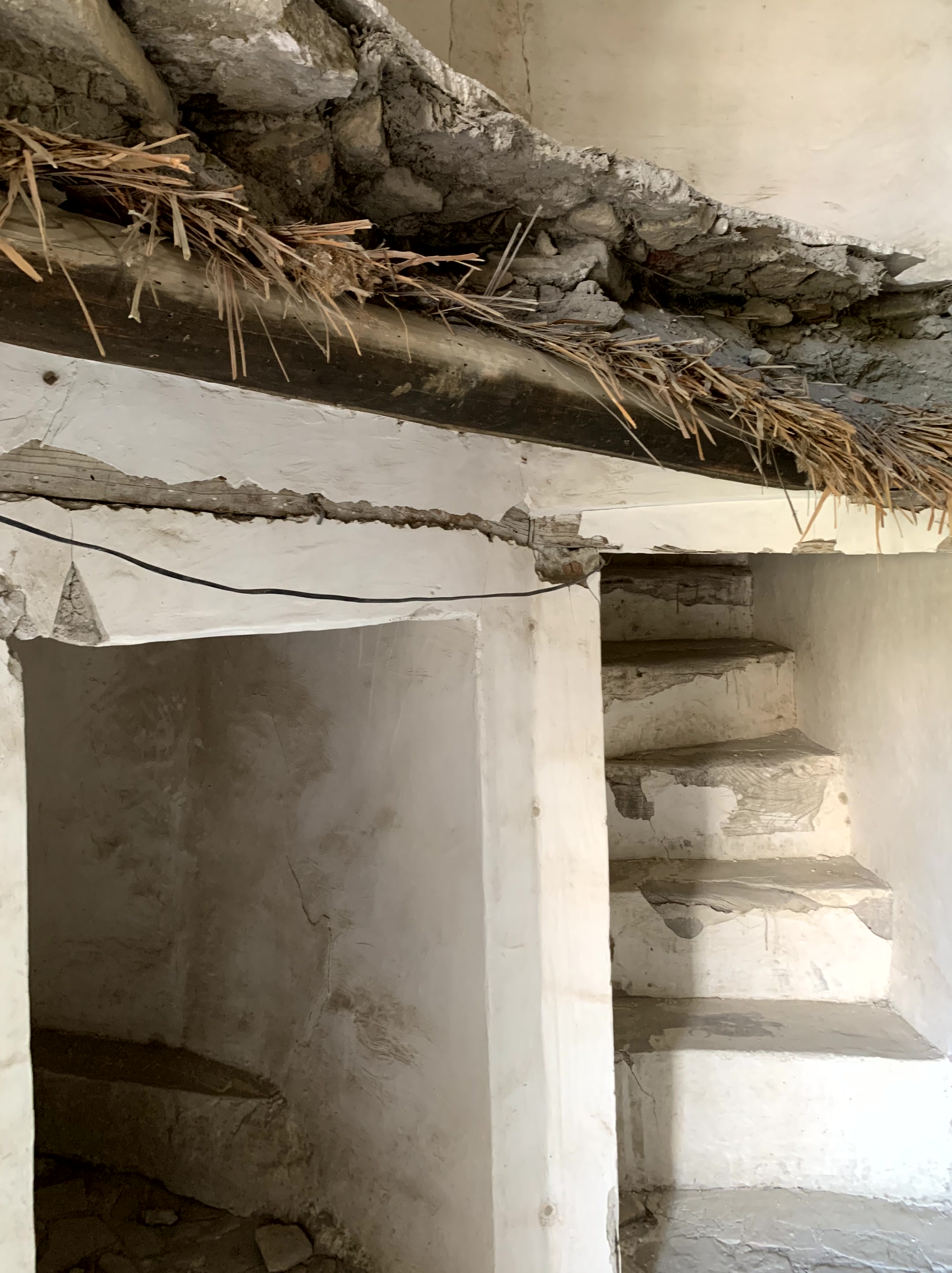
Faïs took me around the Kukeldash Madrasa, built in 1568 and by ‘took me around’, I mean that we explored the bits tourists would not necessarily find their way to: the upstairs living quarters for example, reached via a narrow stairway behind one of the inevitable stall-holders downstairs. At one time, it was the largest madrasa in central Asia. This was a science academy open only to males (like most) and entry was by exam. It was funded by its own caravanserai. From the age of about fourteen or fifteen, rookie students arrived with two bags of edible treats, one for the student and one for the teachers. They said that the bones belonged to the parents, but the meat to the madrasa: in other words, licence to beat as necessary. The doorways are low, to save wood and also so you had to bow before entering and learn humility. The architecture is designed to be cool in summer and warm in winter. Cooking coals were put on floor slabs, which in turn provided heating for the building. The living quarters upstairs had handy storage shelves and layers of peeling paint telling the stories of centuries of use, including graffiti from the 1920s onwards when the madrasa was shut down so the building could be used as barracks by the Russian military.
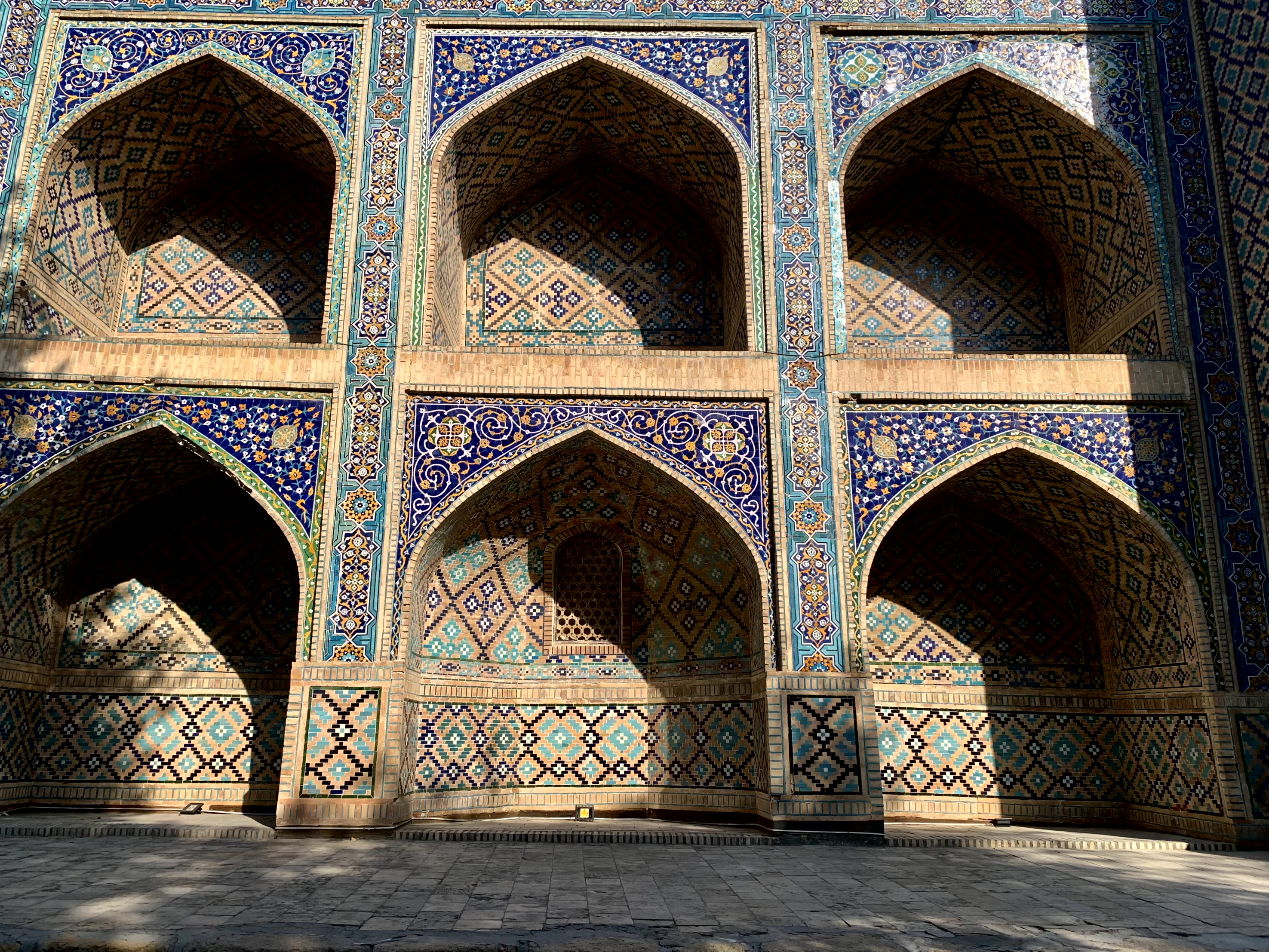
The crème-de-la-crème of Asia’s artists and architects, bloodthirsty invaders and rulers, scholars and philosophers, a Russian bomber and Silk Road travellers have all left their mark on Bukhara over the centuries. The stories of these adventurers ooze from the very bricks of the stunning madrasas, the pleasant shady pools, the beautiful mosques, caravanserais and minarets we see here today. Now that deserves a visit, wouldn’t you say?
Uzbekistan 2 – The Silk Road: Samarkand

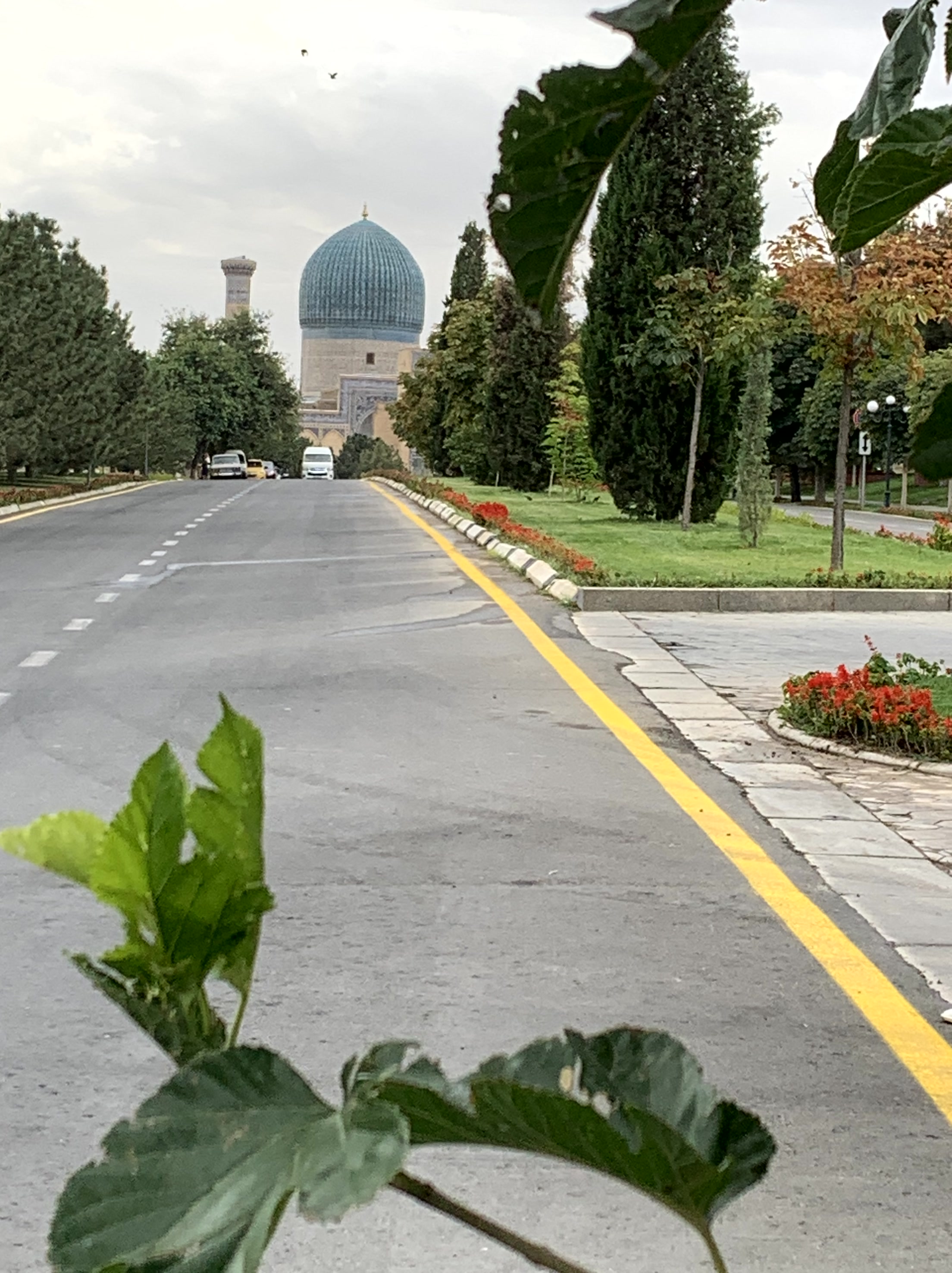
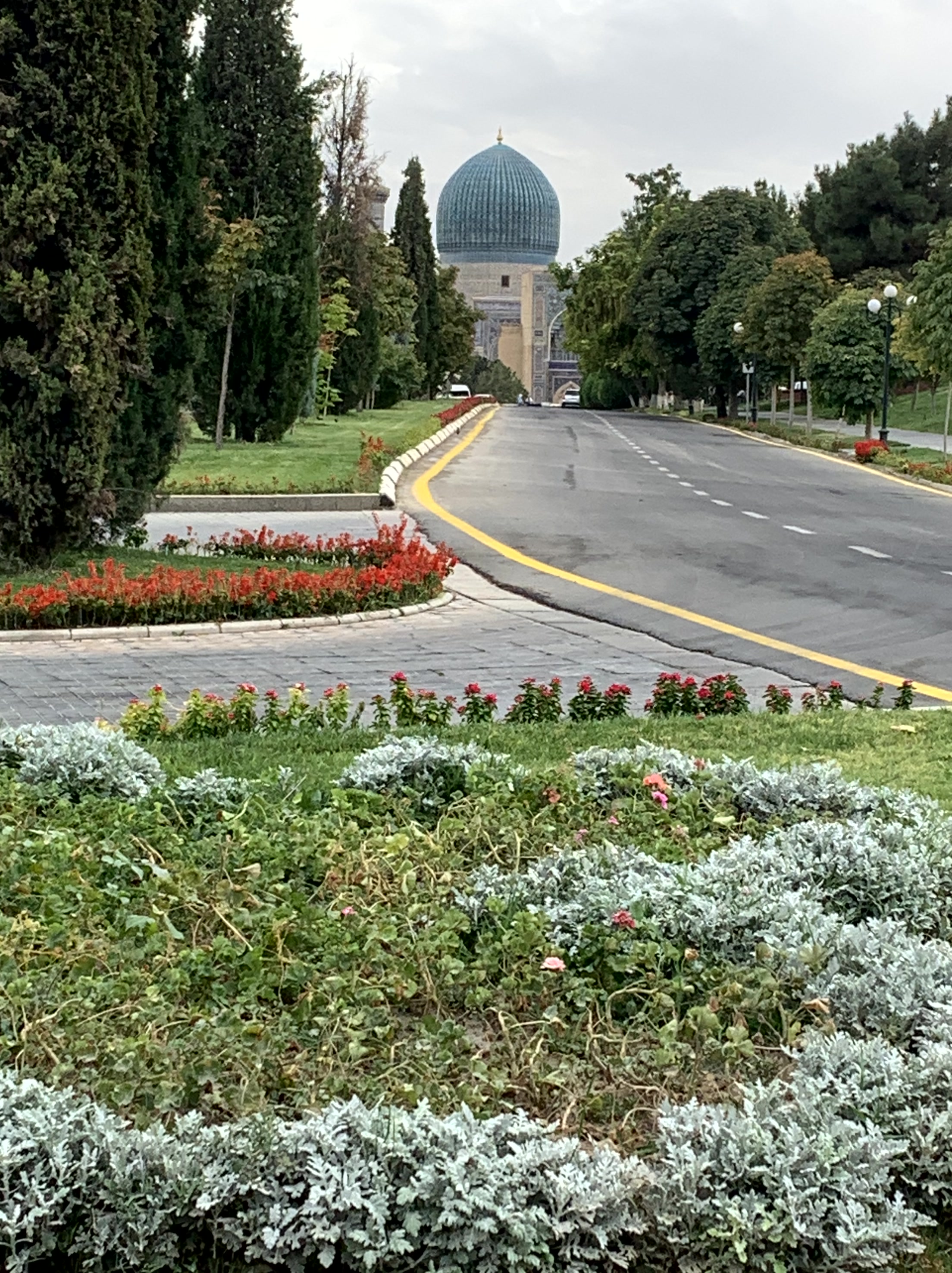
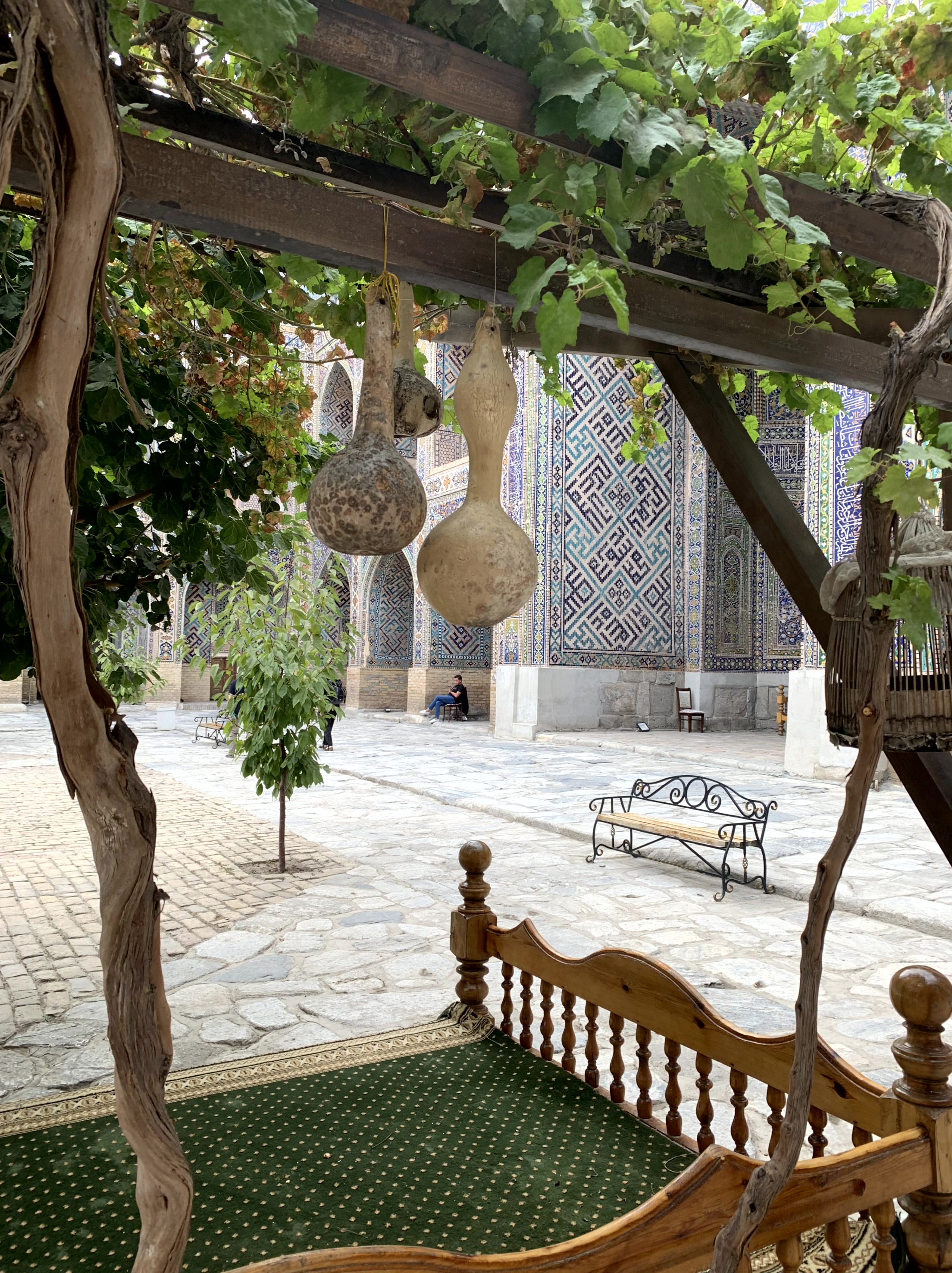
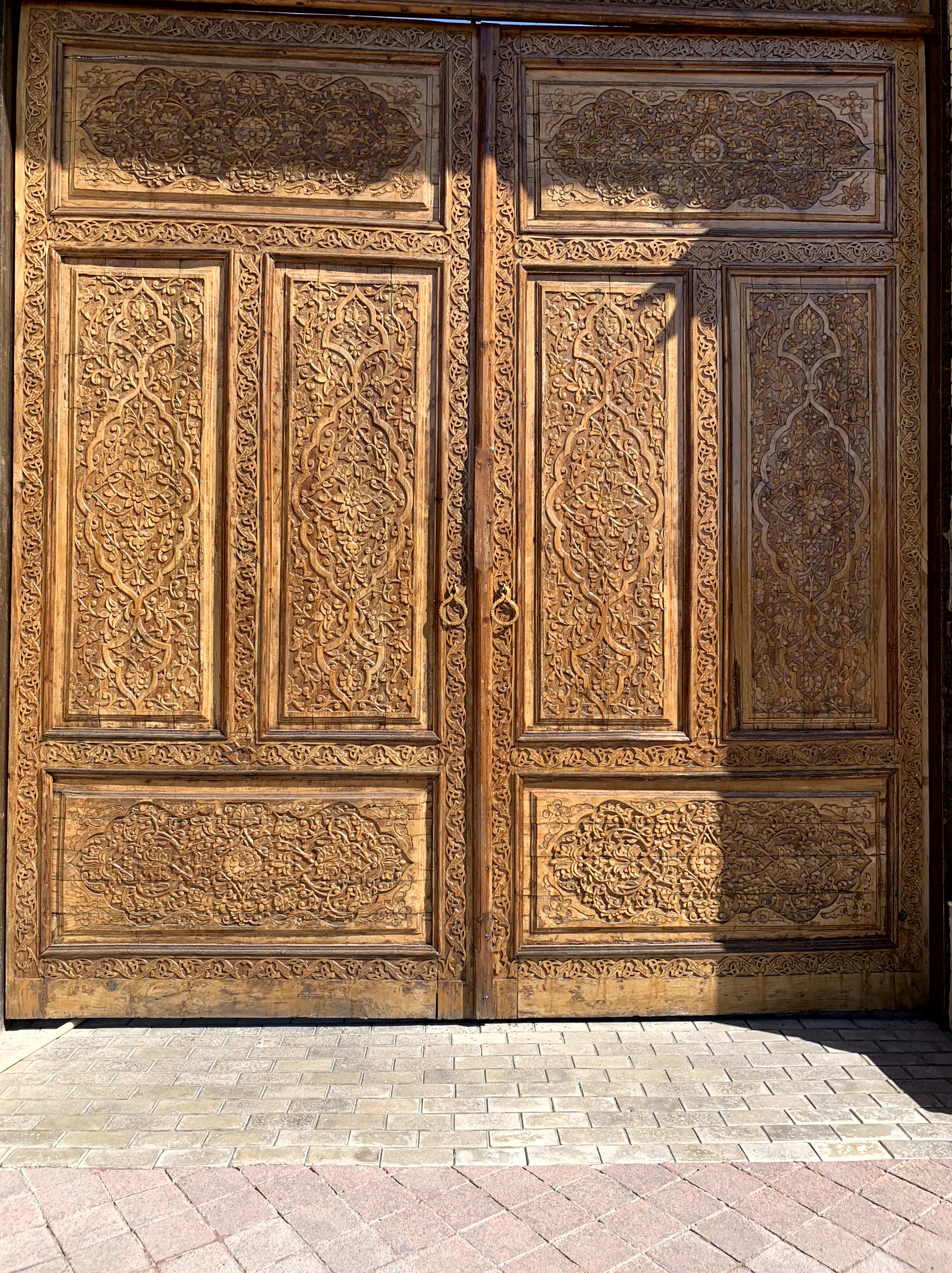
In Samarkand, I stayed at a charming family-run guesthouse (TOP TIP: the Antica Family Guesthouse – don’t tell a soul about this place, I want to keep it a secret, just for me) a stone’s throw from Tamarlane’s mausoleum. Behind a stout, ornately-carved gateway, the rooms are comfortable, tasteful and decorated with local crafts, the breakfasts are a slice of local home-cooked cuisine, delicious at that, there is a gorgeous central courtyard with a lush garden and the whole place is run by four generations of women from the same family.

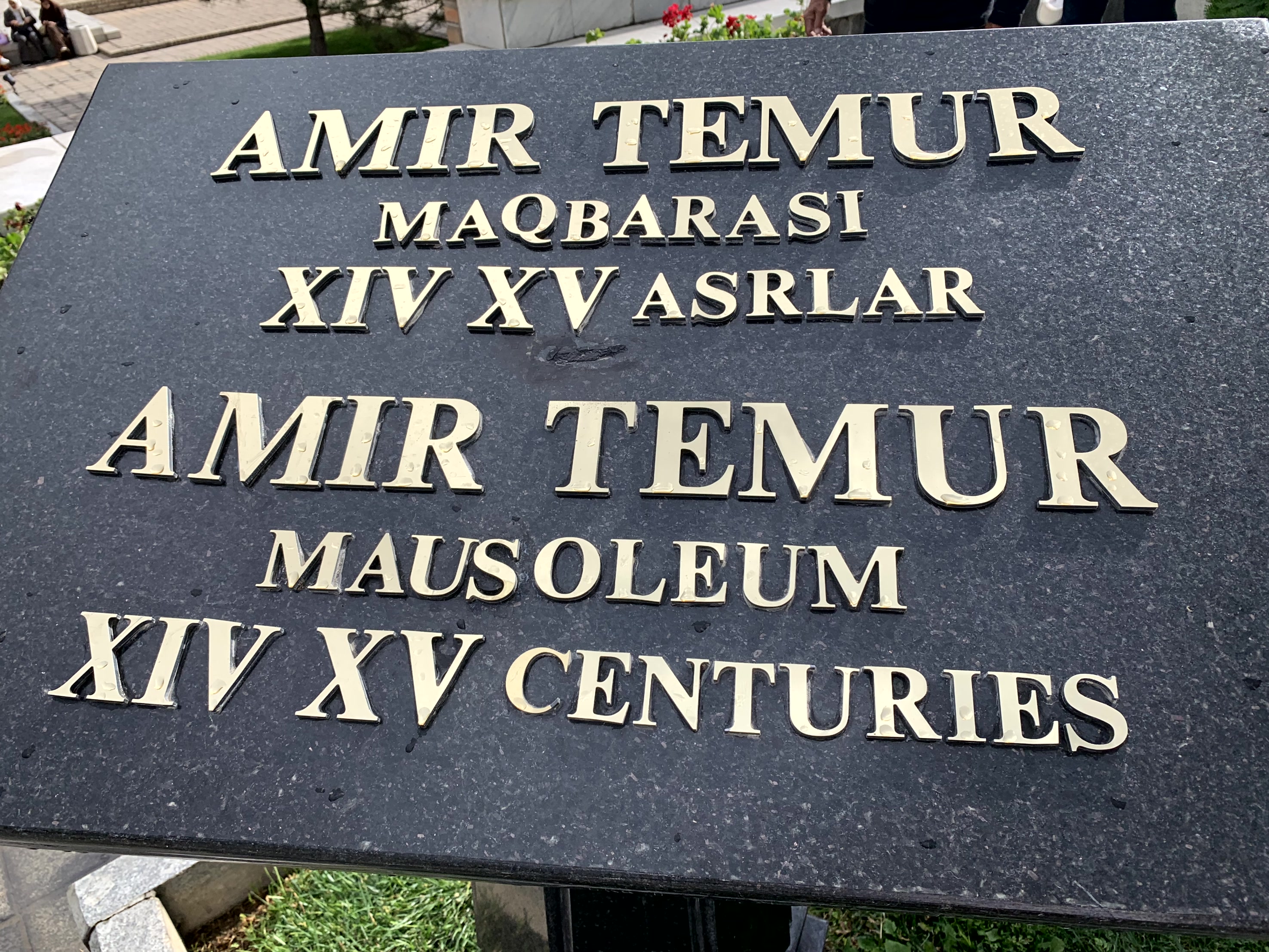
We met Emir Timur in Uzbekistan – The Silk Road: Tashkent. Who knows, the missing horse todger may have even ended up here, in Samarkand. During a break in the work, when Russian archaeologists decided to open up the tombs of Tamerlane and his descendants in 1941, some local elders came to the photographer for the expedition, one Malik Kuyumov, and told him about the curse. Kuyamov took them to the dig leaders and they showed the Russians a seventeenth-century book. In this was written:

‘Whoever disturbs Timur’s tomb will release a spirit of war. And such a bloody and terrible slaughter will commence that the world has not seen in all eternity!’

Inside the tomb, inscribed on the coffin were the words:

‘Whoever opens my tomb shall unleash an invader more terrible than I.’

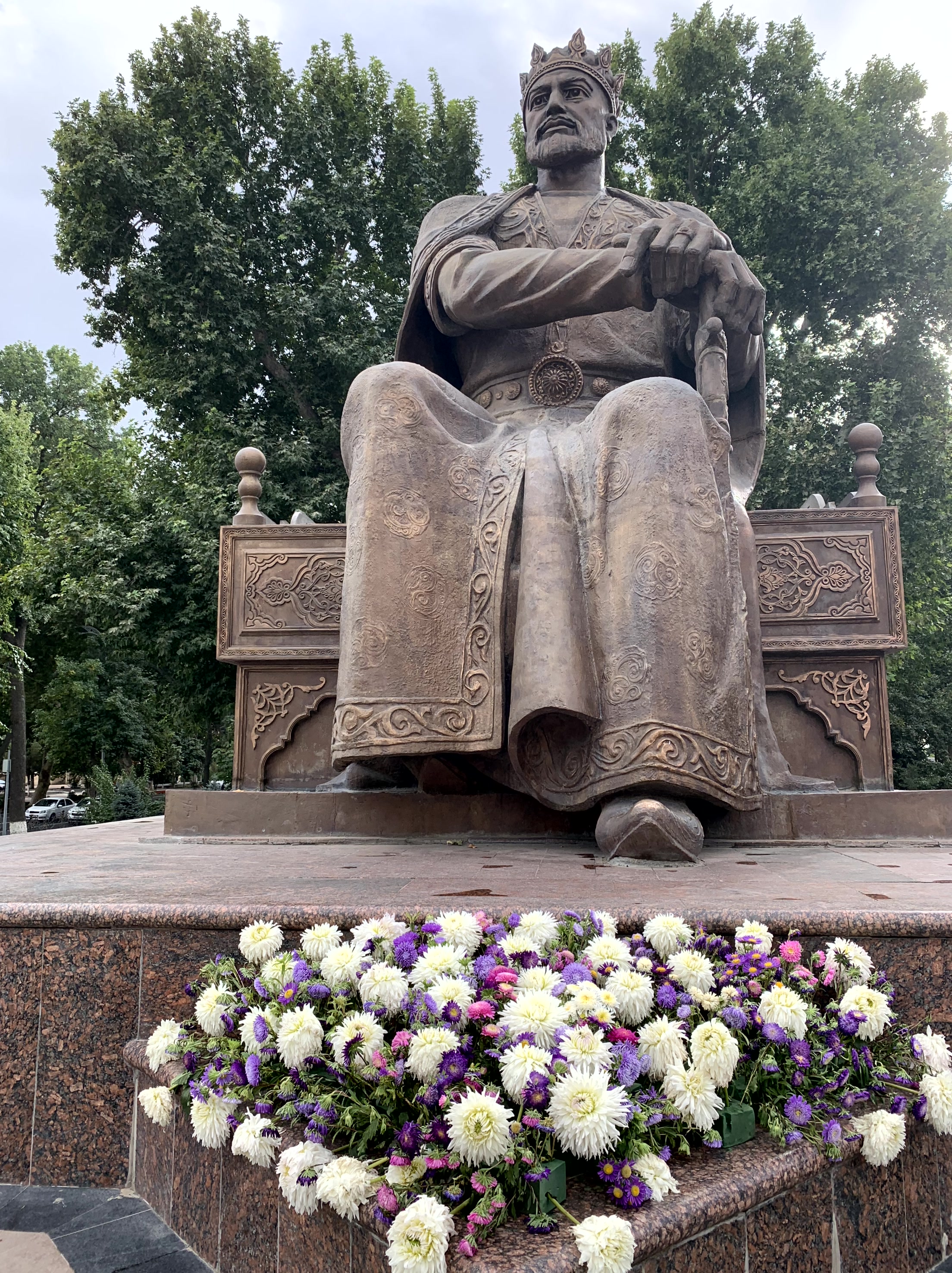
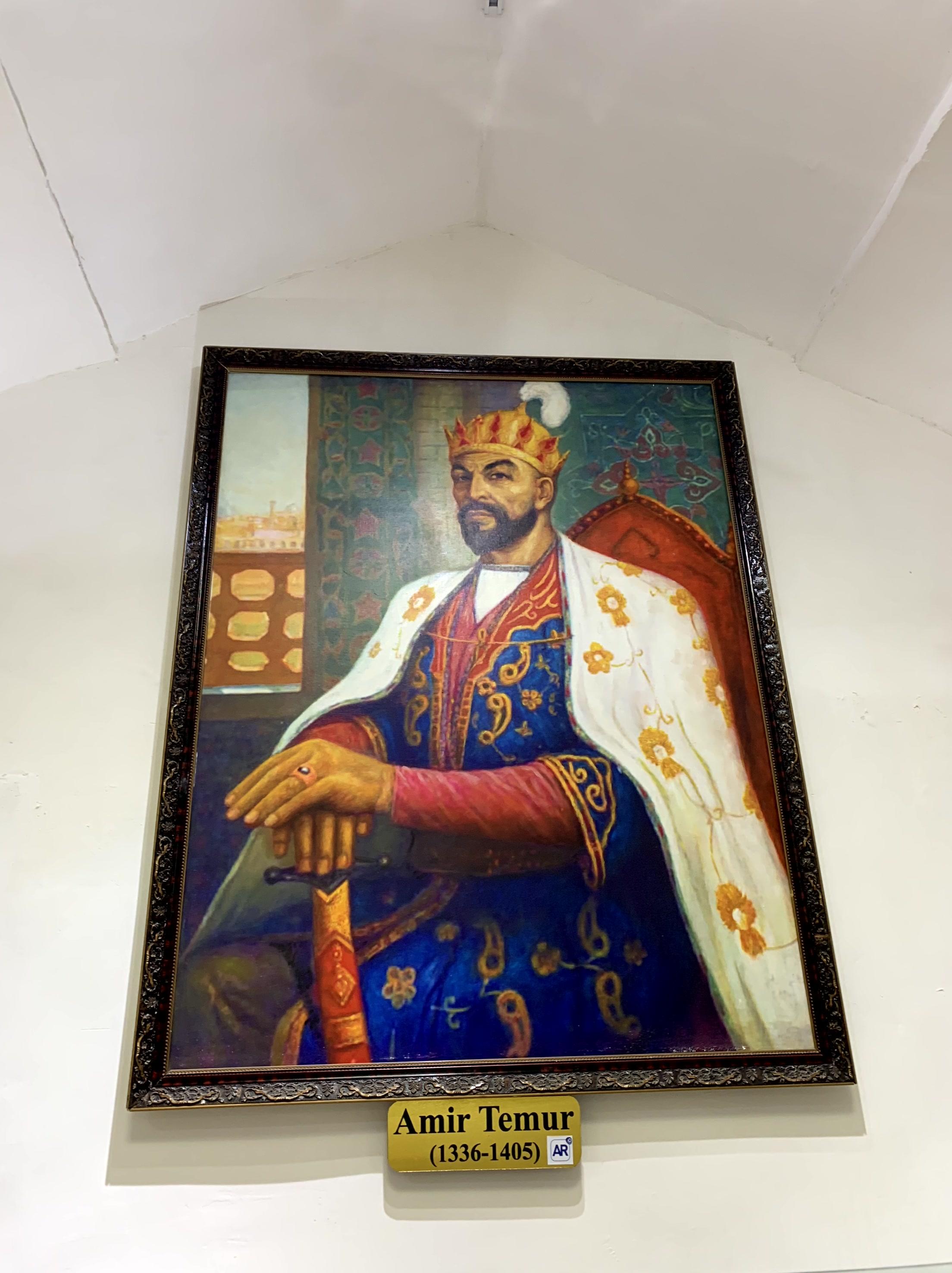
The day after the tomb had been opened, on 22nd June 1941, Nazi Germany invaded Russia. Tamerlane’s remains were taken for study to Moscow. While they were in Moscow, the anthropologist/sculptor Mikhail Gerasimov managed to reveal what Tamerlane looked like and even sculpted a portrait. This is the basis of the many statues and portraits you see around Uzbekistan today. He was above average height for the epoch, had Mongoloid features, red hair and a wedge-shaped beard (Timur that is, not Gerasimov). Gerasimov also found evidence that the medieval leader had an injury to his right arm and leg sustained during his twenties and the remains told of an individual of great physical strength. His grandson, the famed astronomer Ulugbek, had died from being beheaded. Ulugbek had set up an observatory and drew up astronomical tables of astonishing accuracy that predicted eclipses and the like in a time 200 years before the invention of the telescope. His observatory was built in 1429 and Ulugbek could subsequently calculate the precise times of the rising sun, measure the length of the year and determine the tilt of the earth. In 1449, Ulugbeks’s observatory was destroyed by religious fanatics.

When Stalin heard about all this, he ordered the remains to be put back in their rightful place where they were buried according to Muslim traditions. This occurred on the 19-20th November 1942, the very days that a crucial battle was fought around Stalingrad – a counter-attack that was a key point in turning the war back in the Russian’s favour.

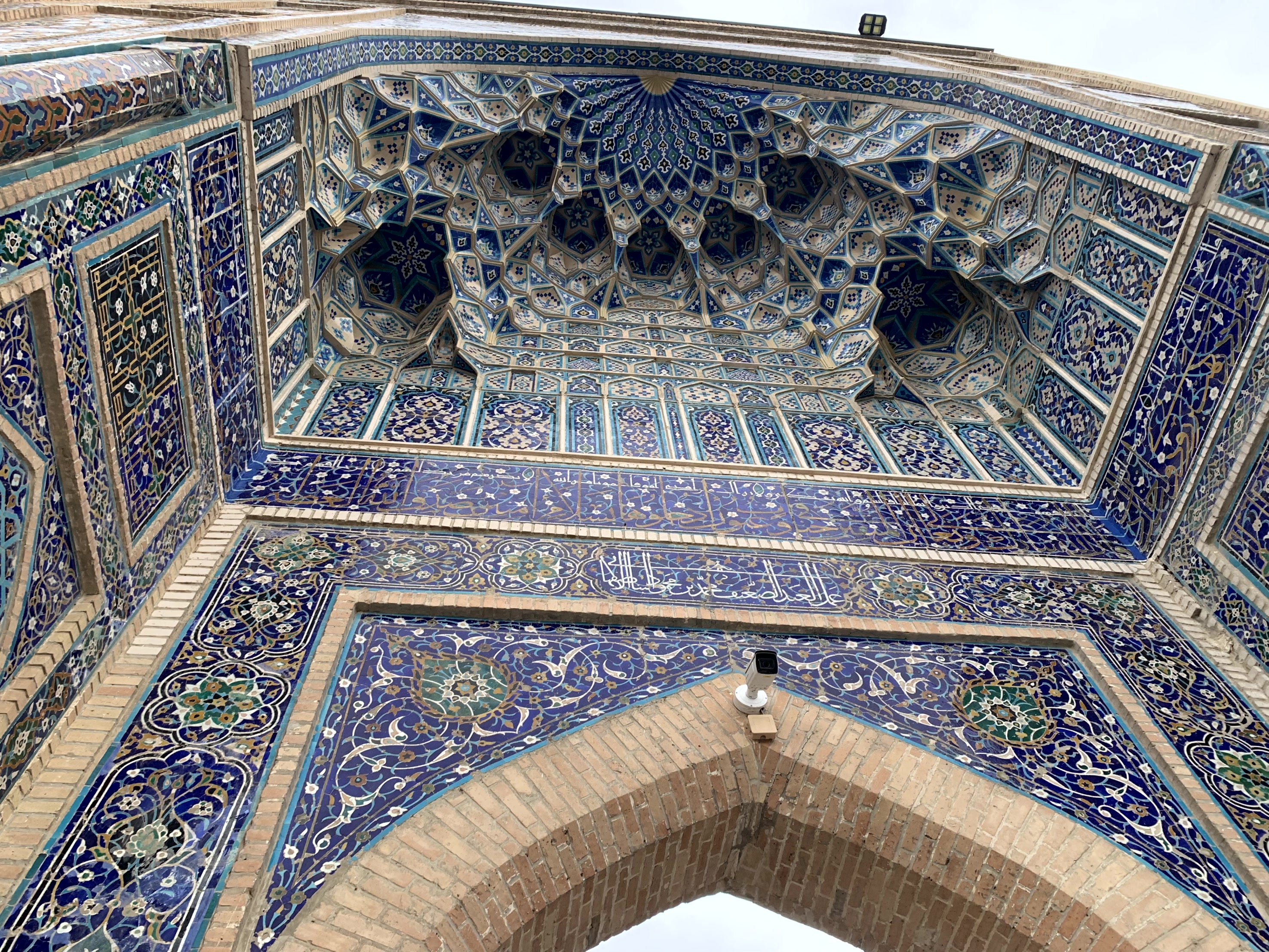
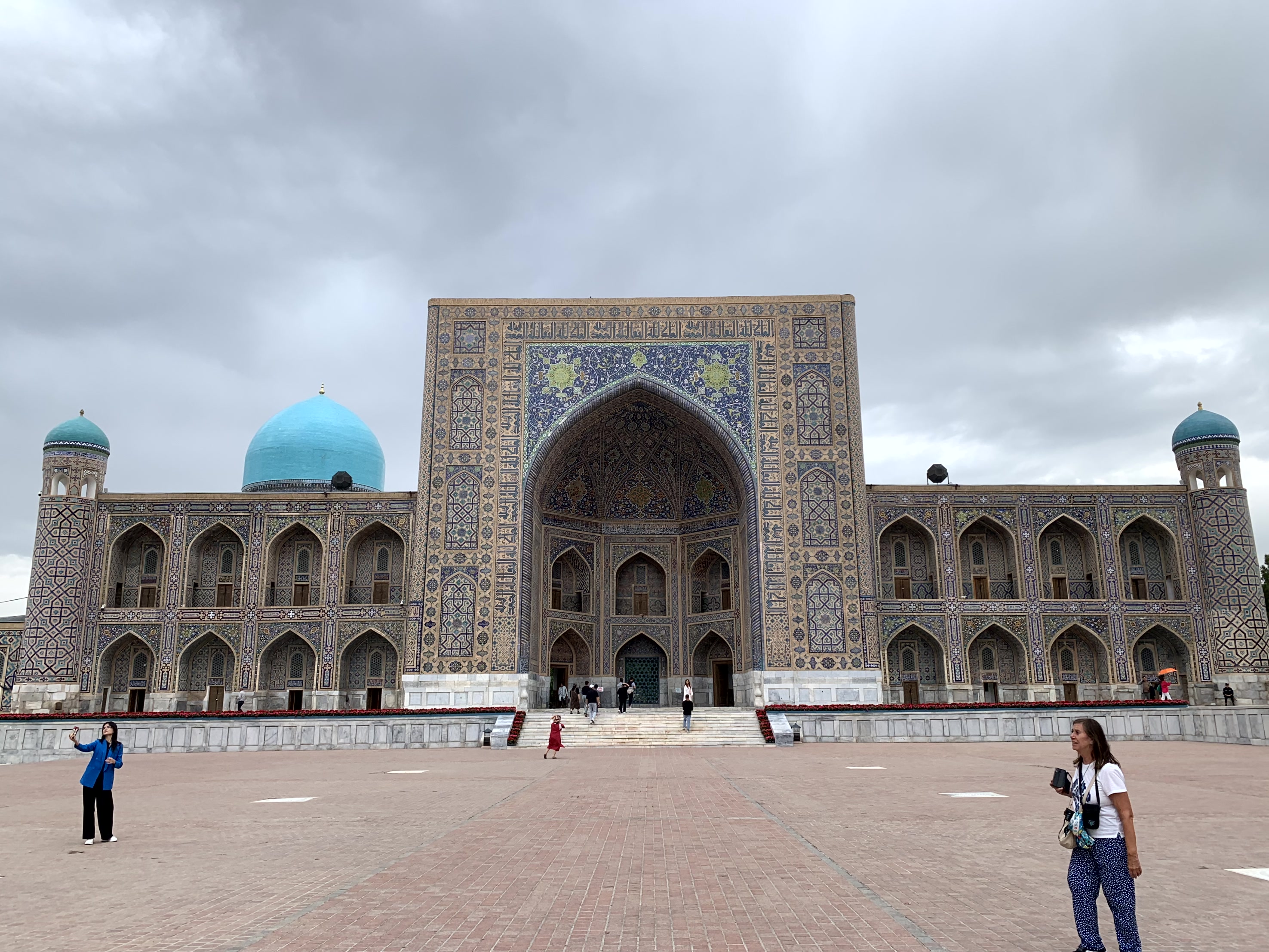
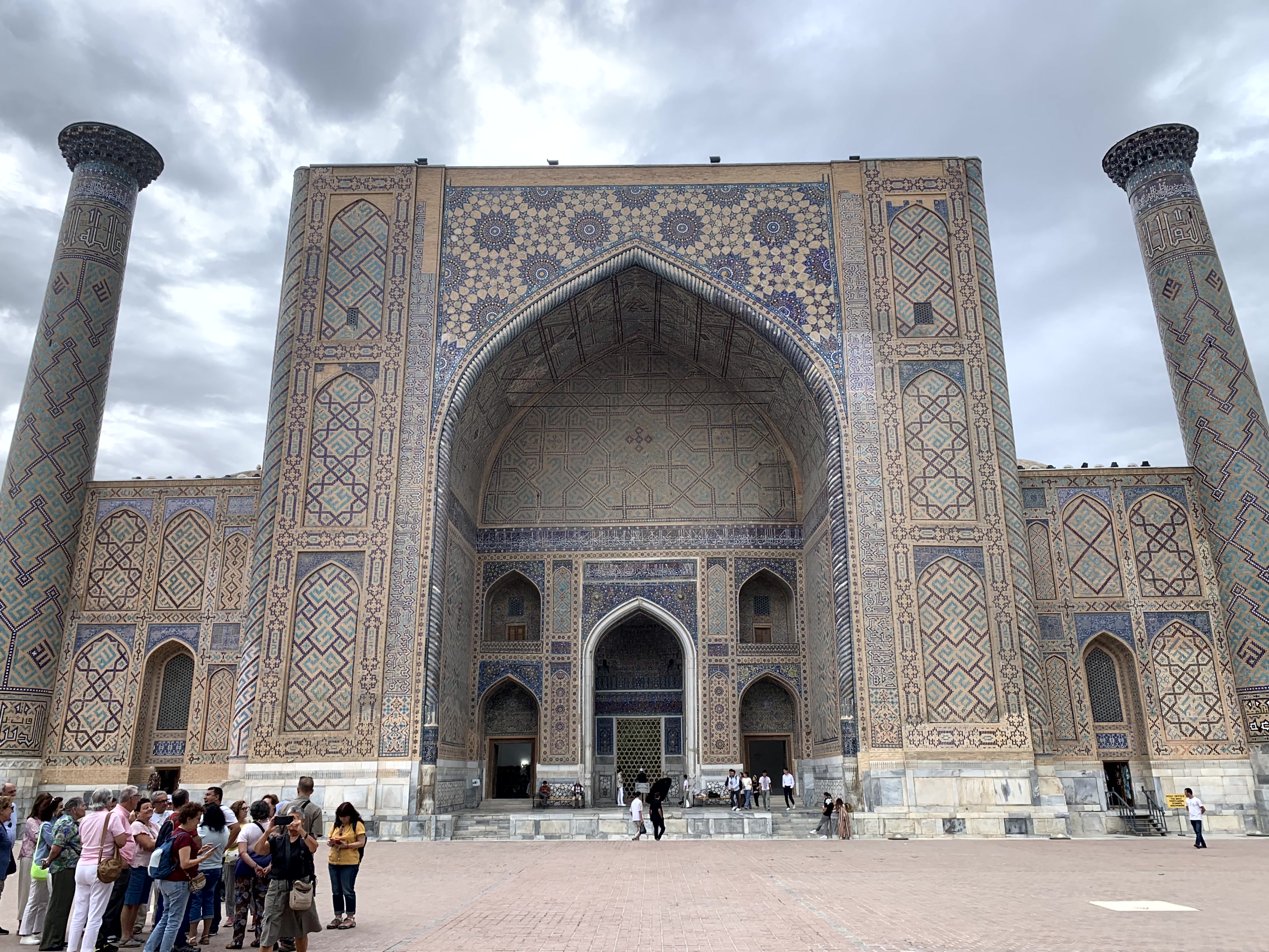
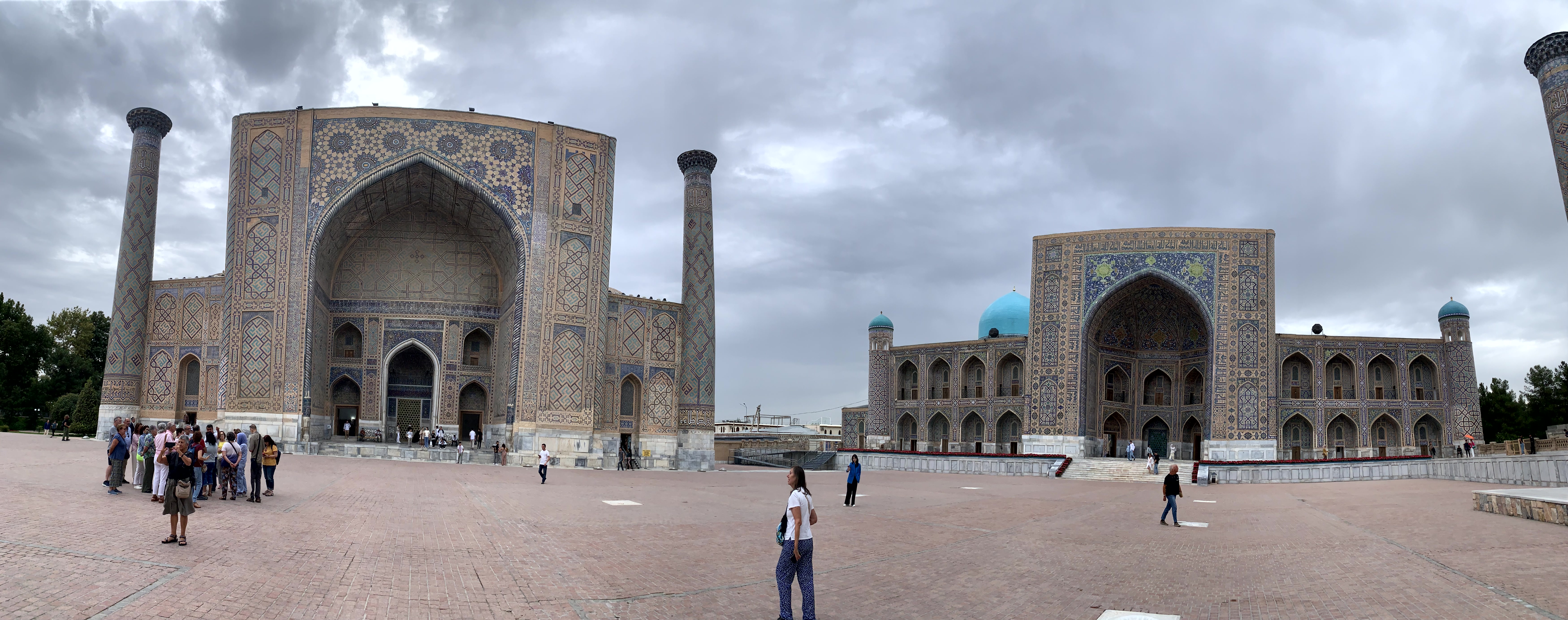
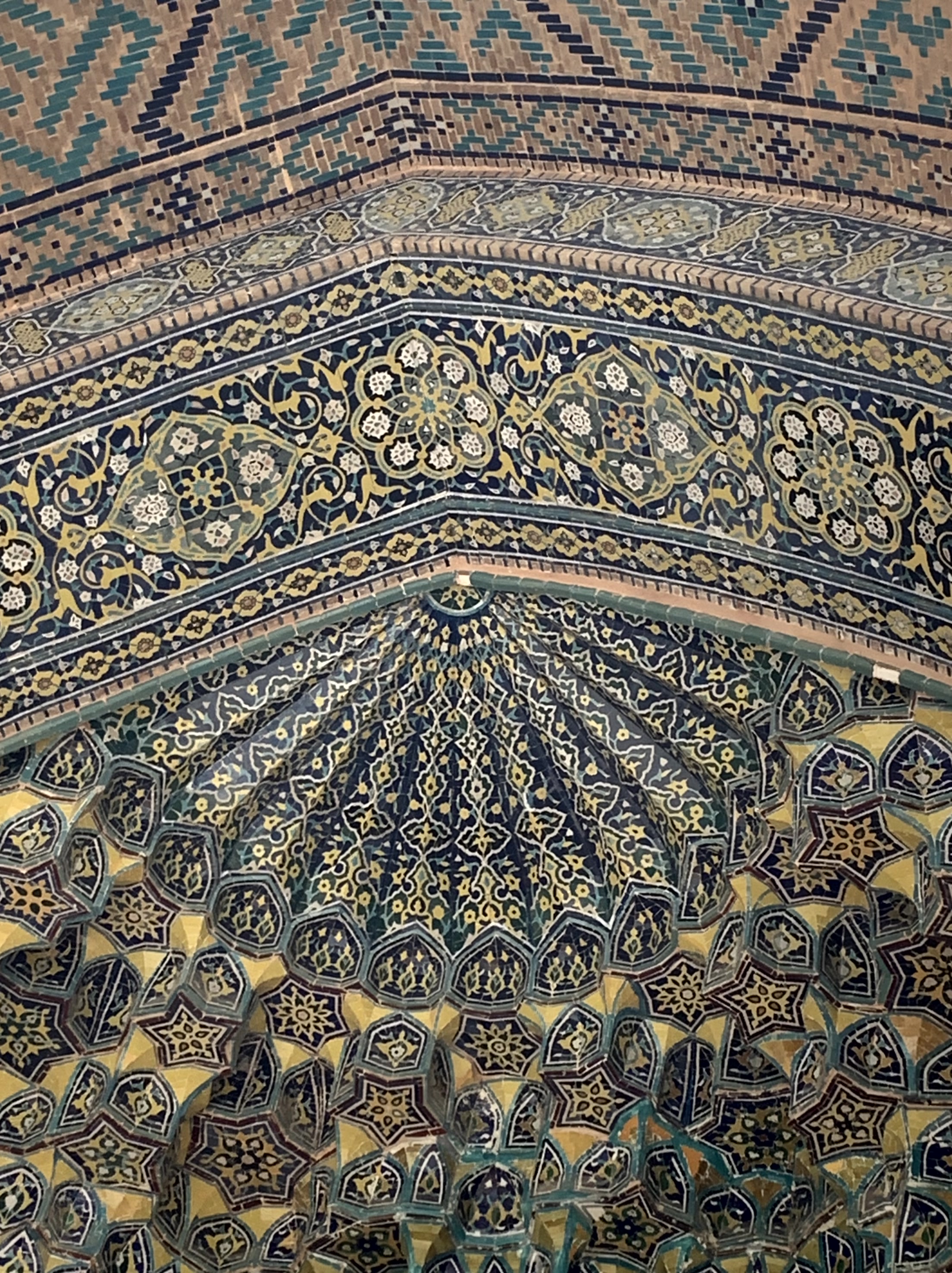
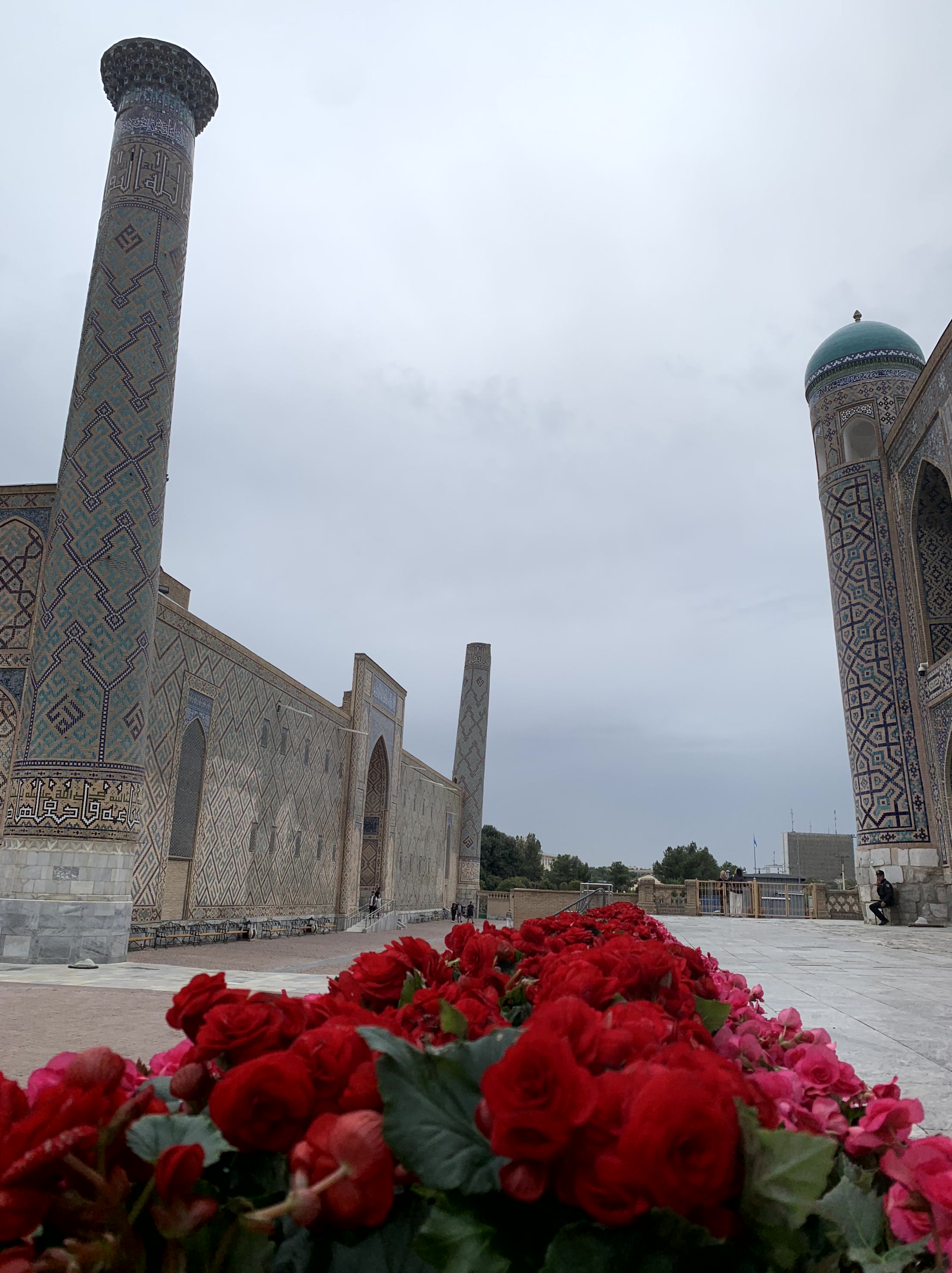
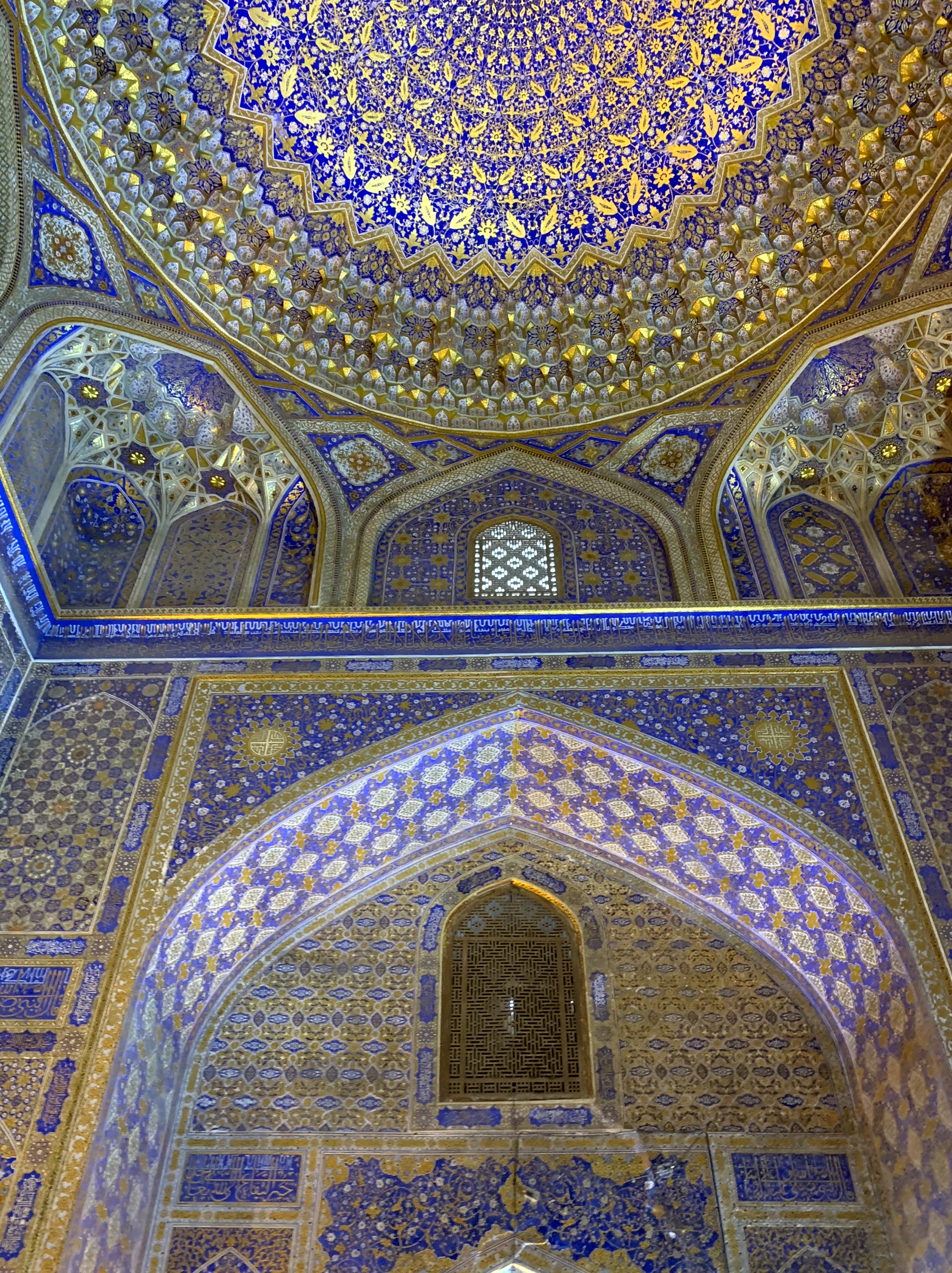
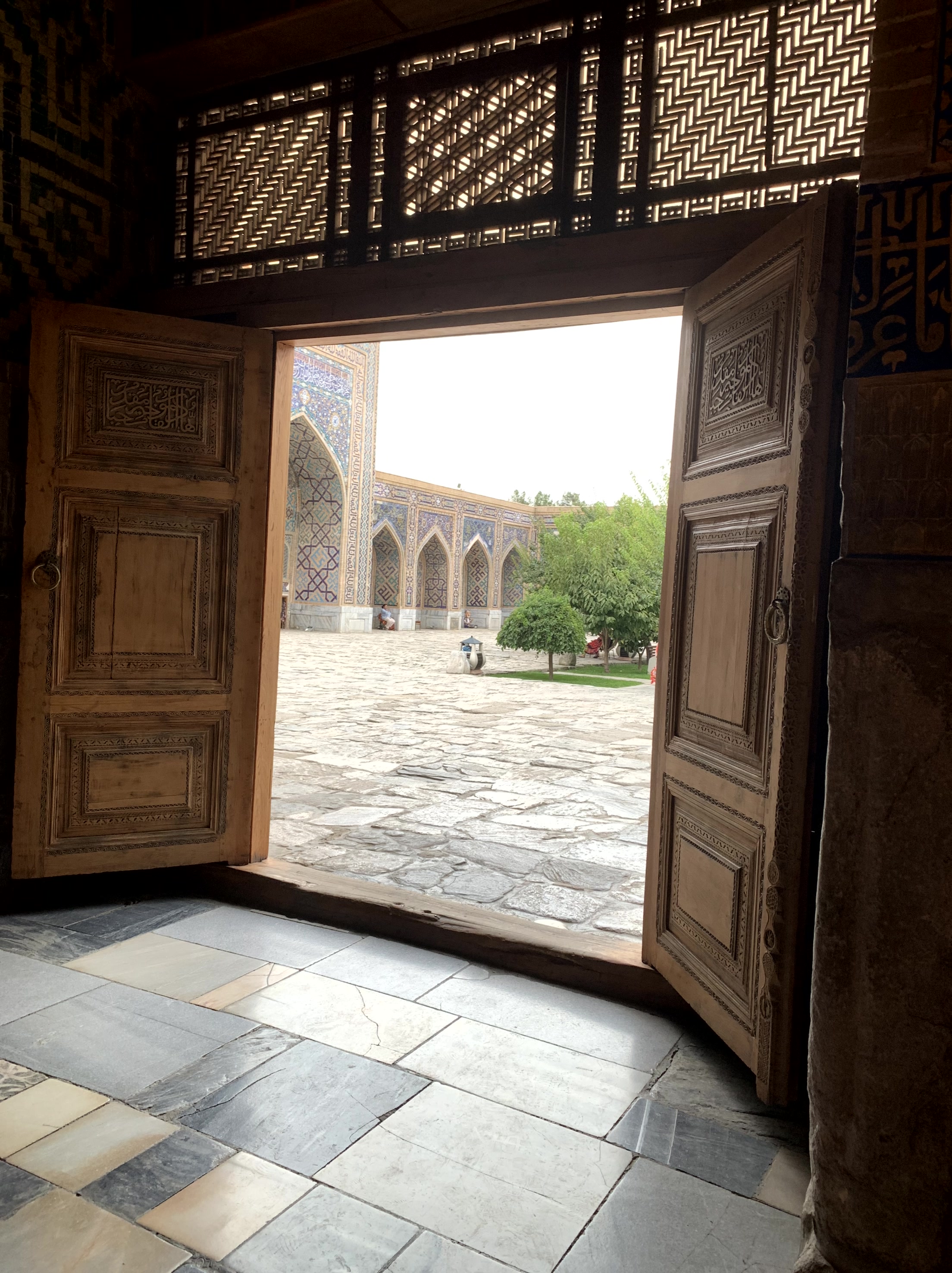
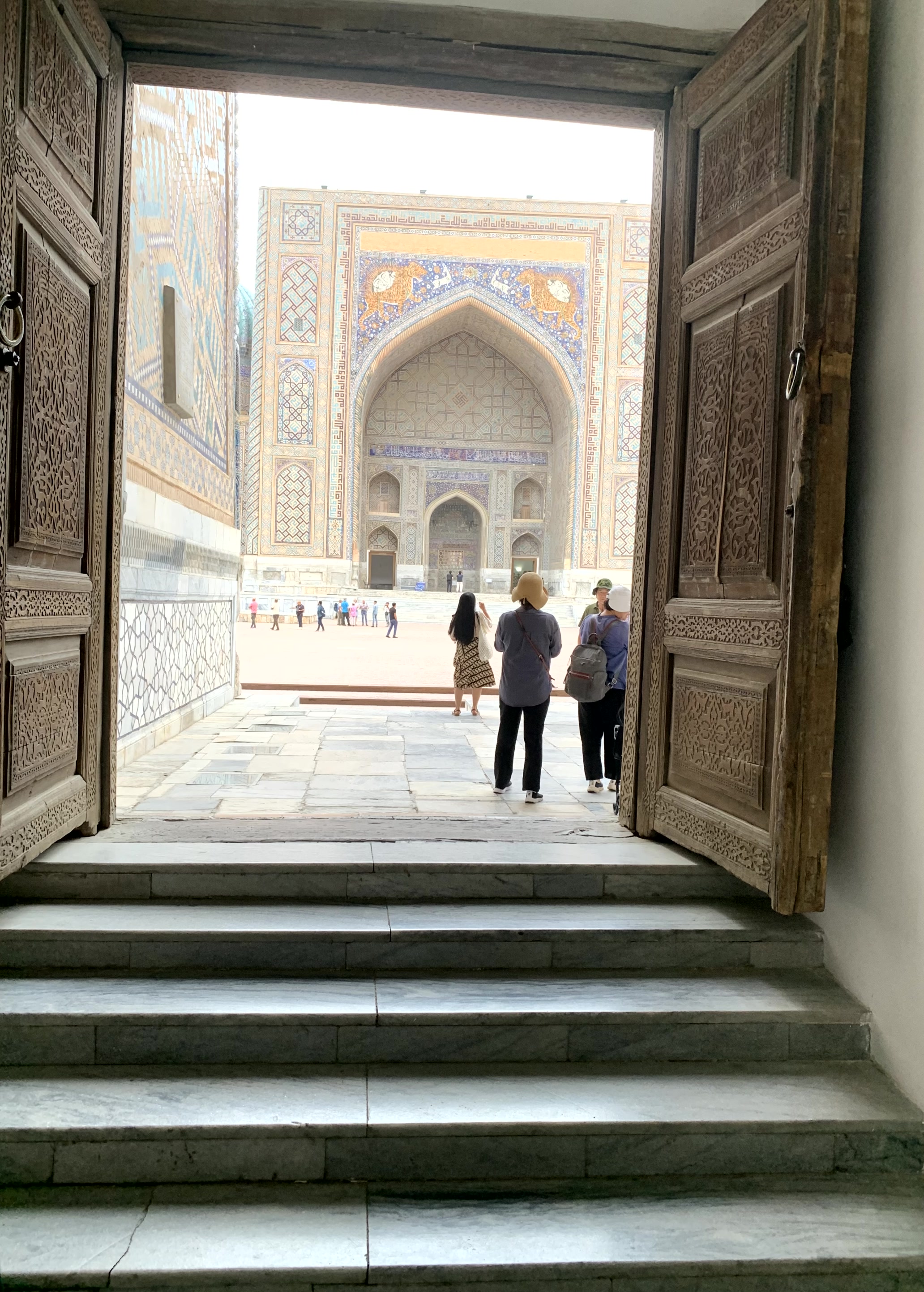
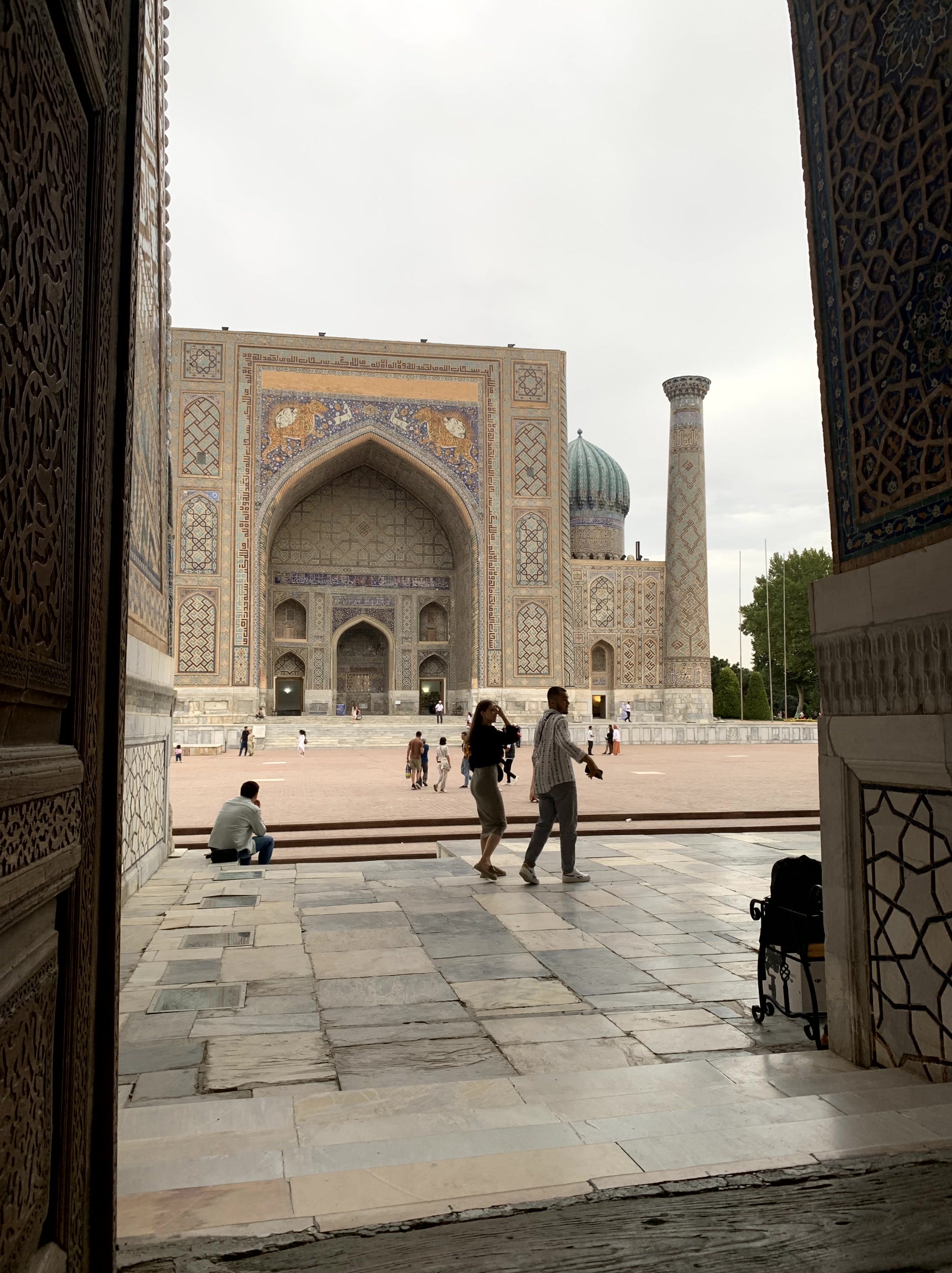
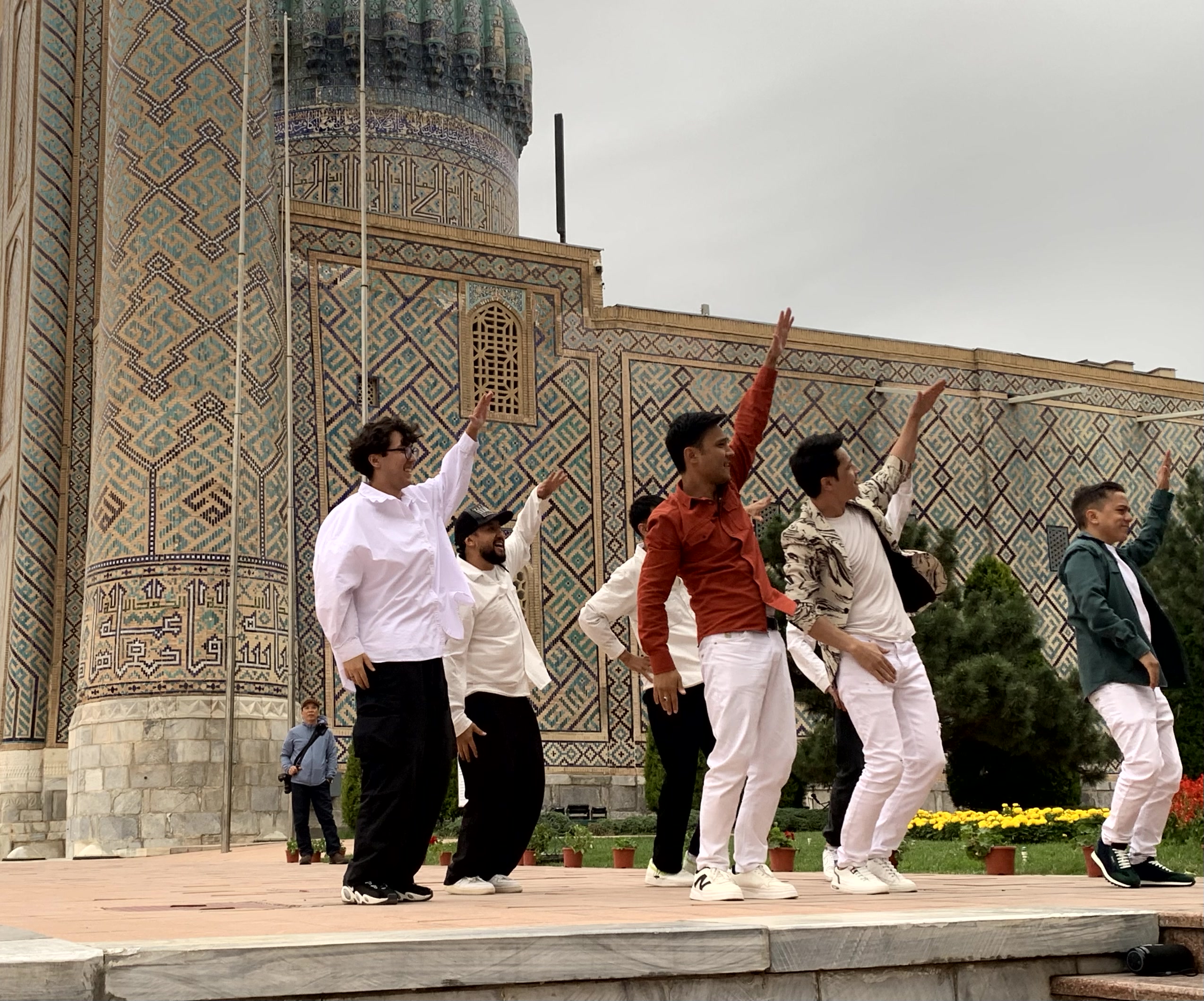
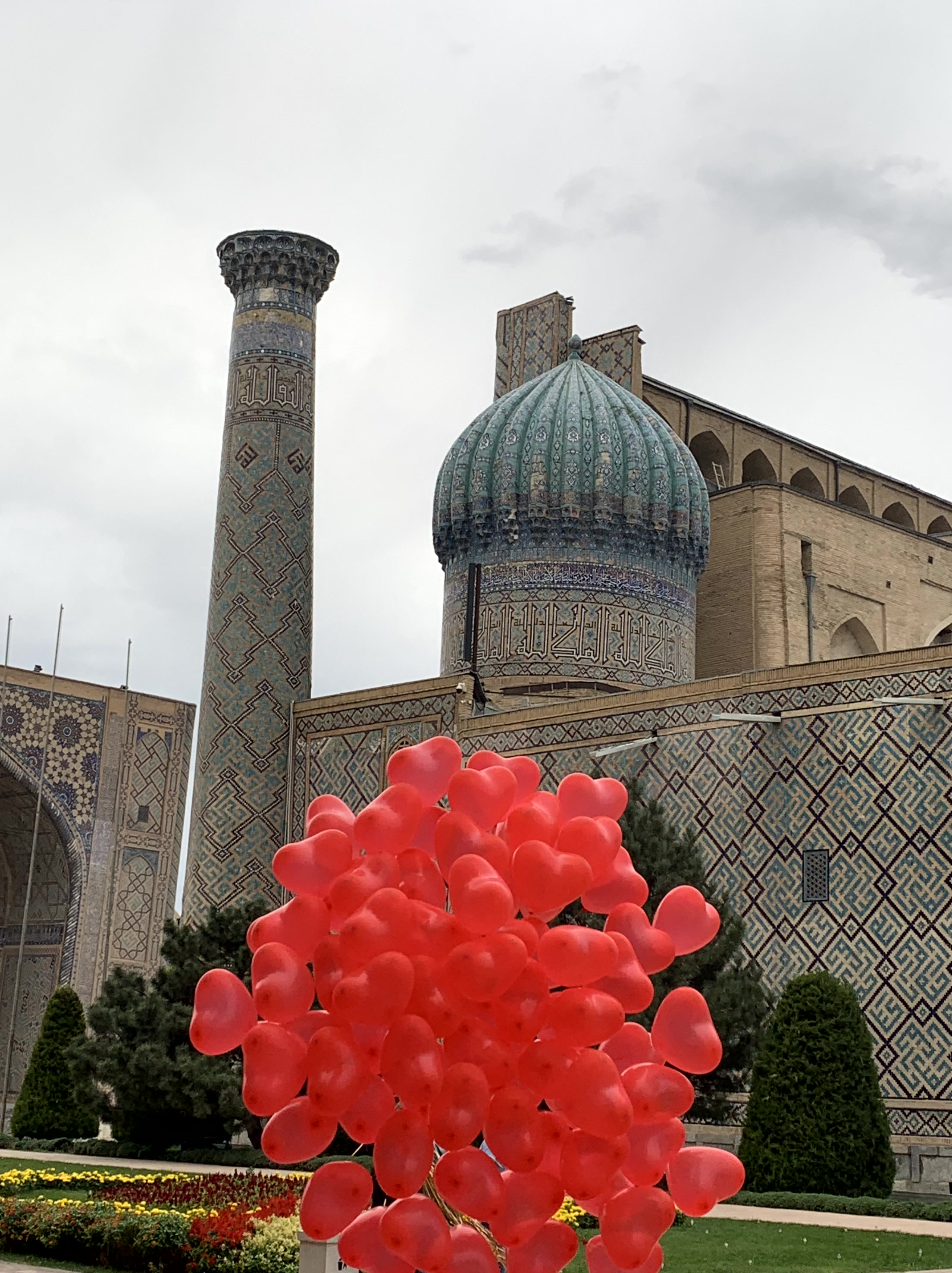
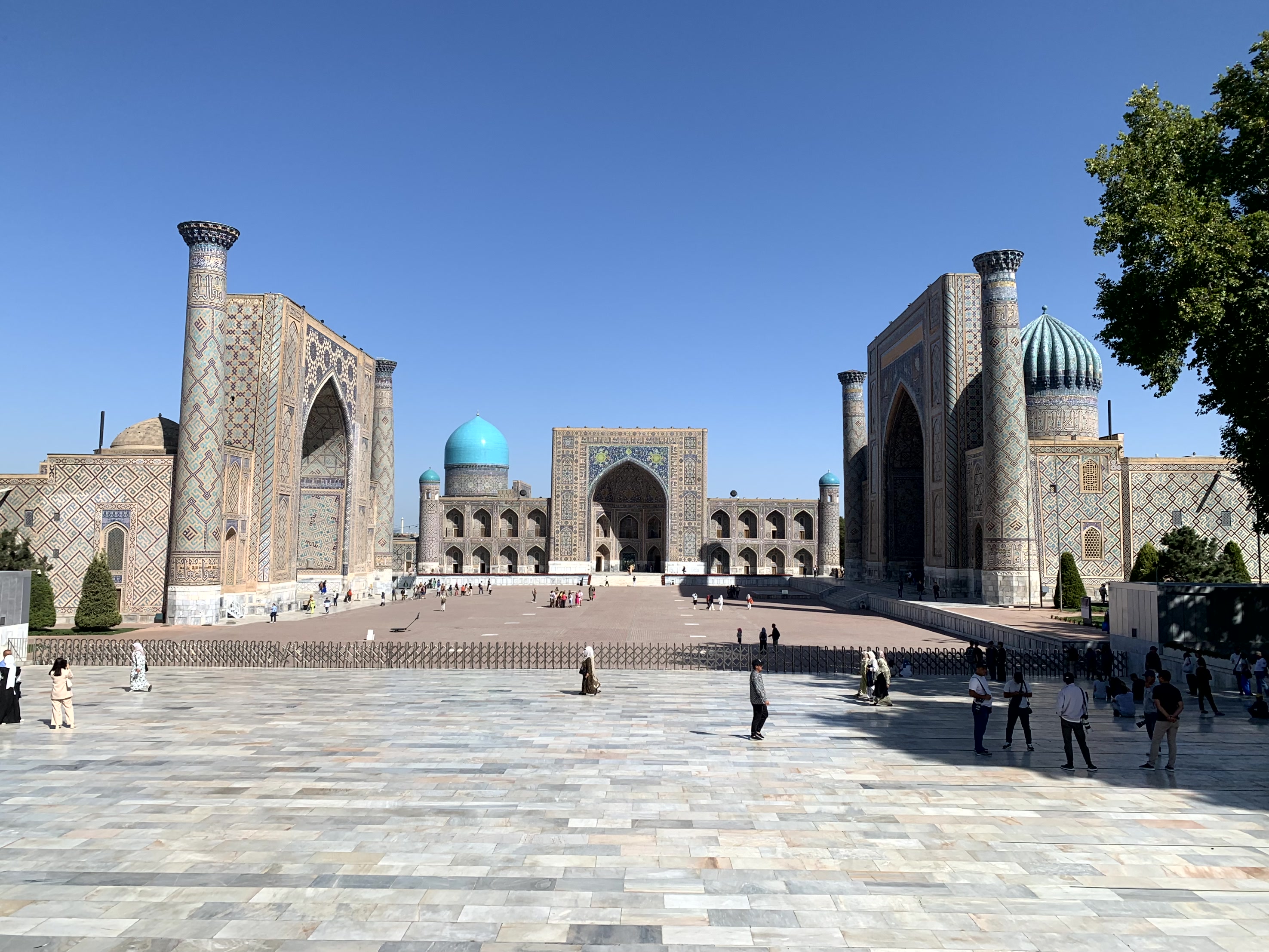
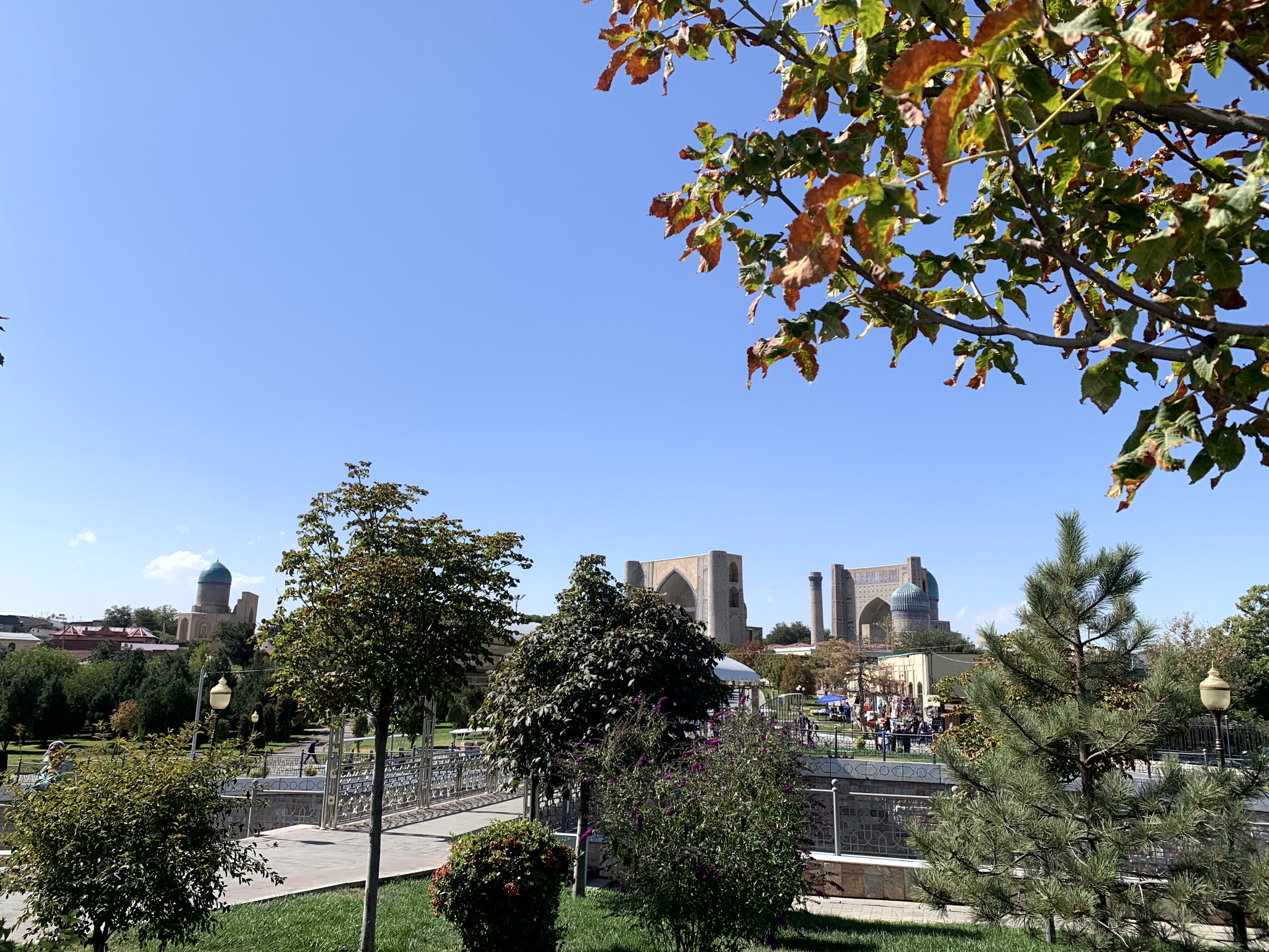
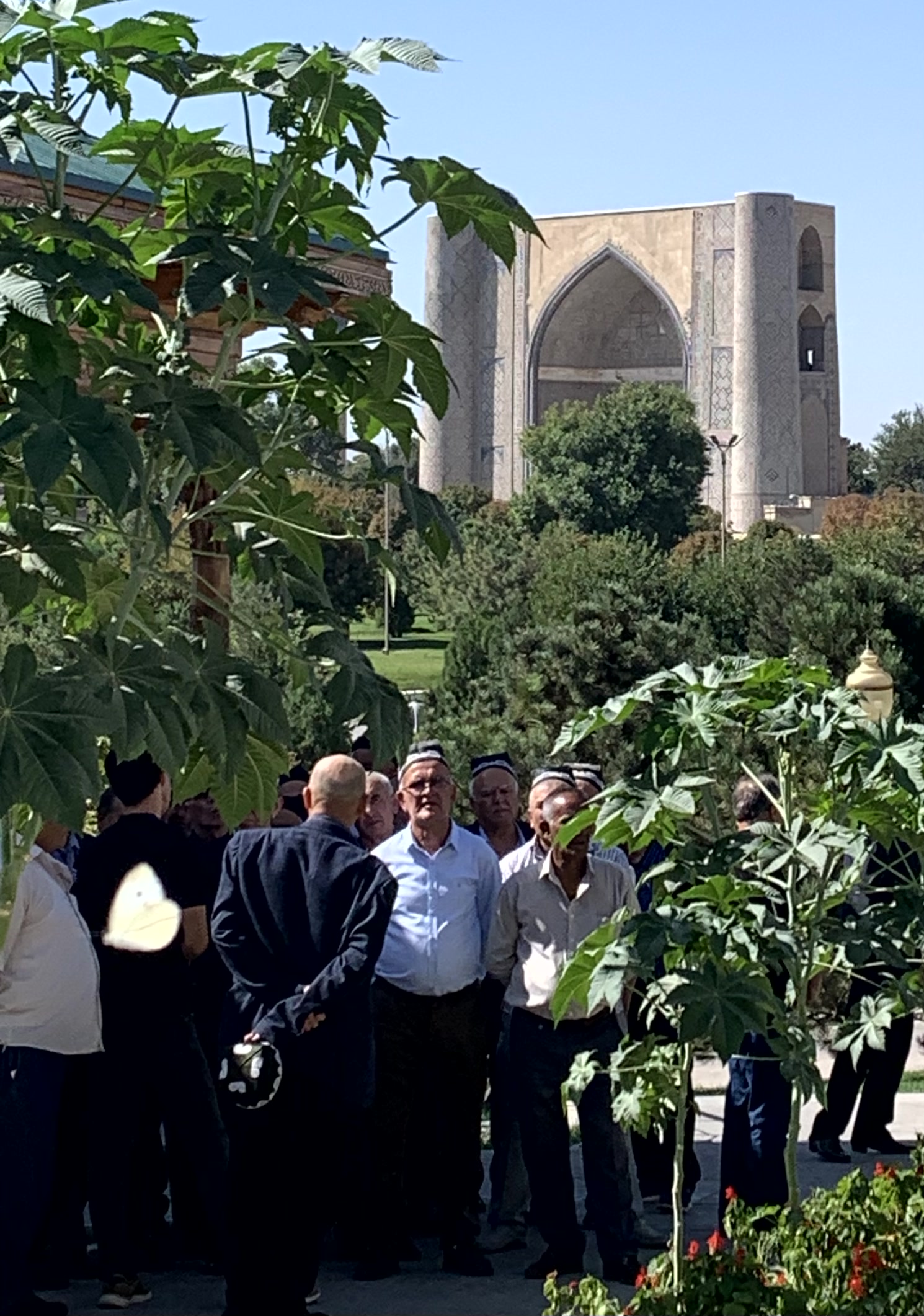
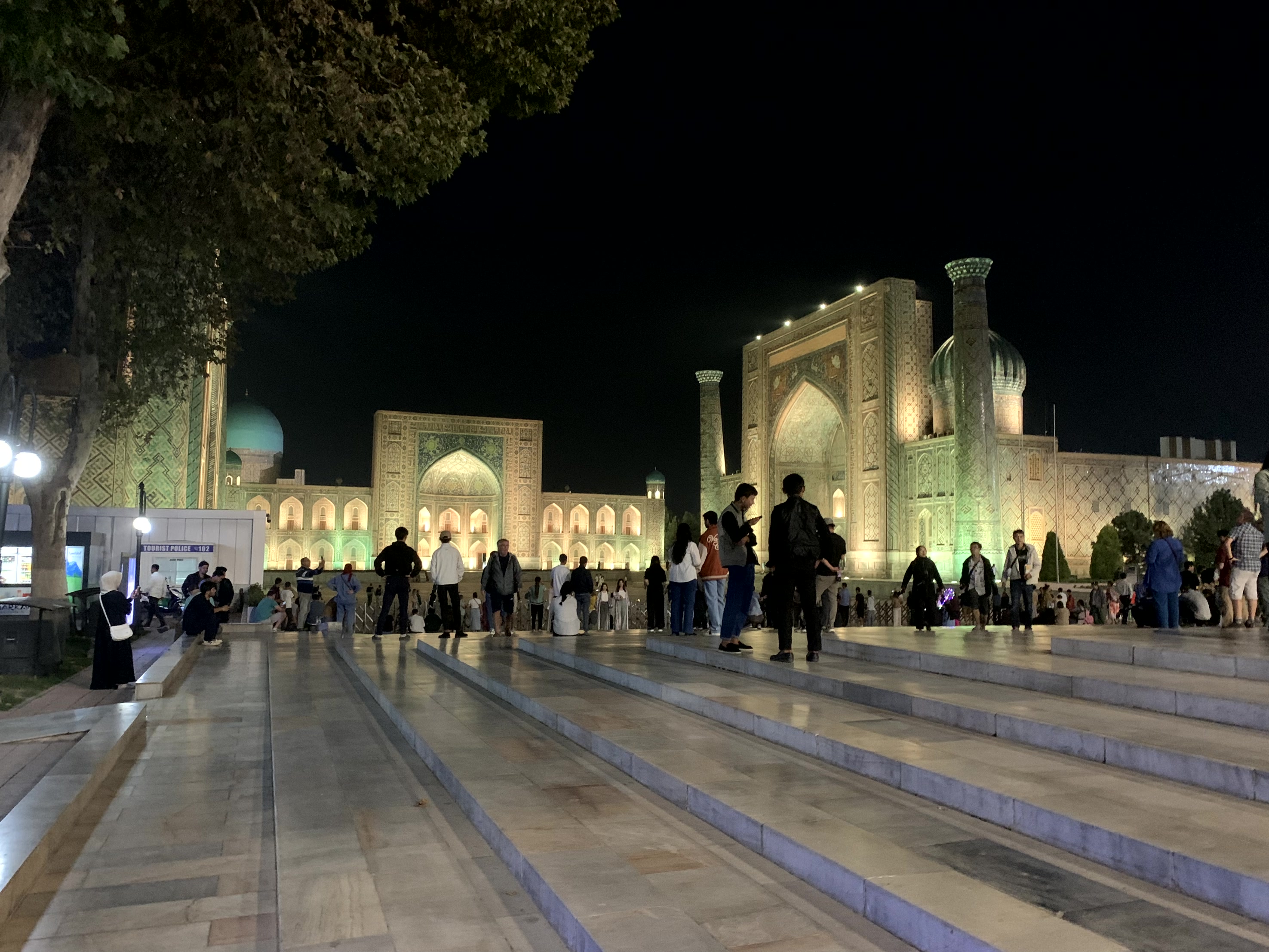
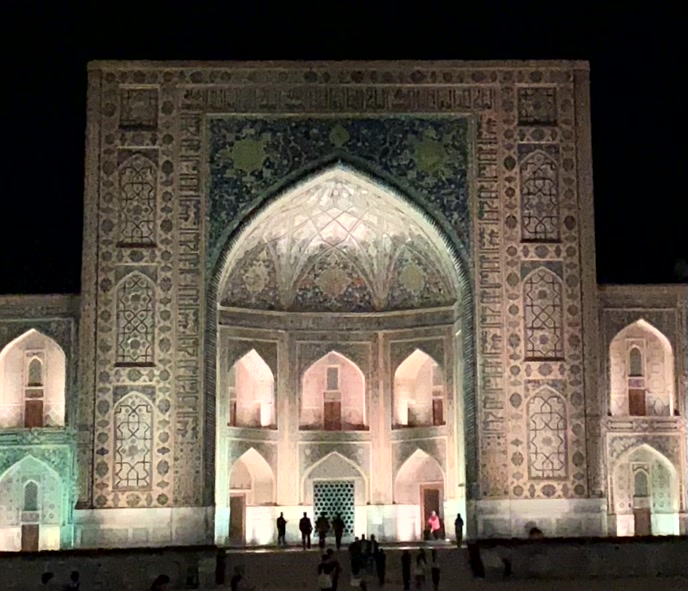
I visited the Registan, an eye-popping ensemble of madrasas and mosques dripping with majolica and entrances soaring high above the visitors. As I was leaving, I was greeted by the bizarre sight of what seemed to be a would-be boy band dancing in front of the complex to a loud Asian style of pop from a speaker and being filmed for a reason that I know not.

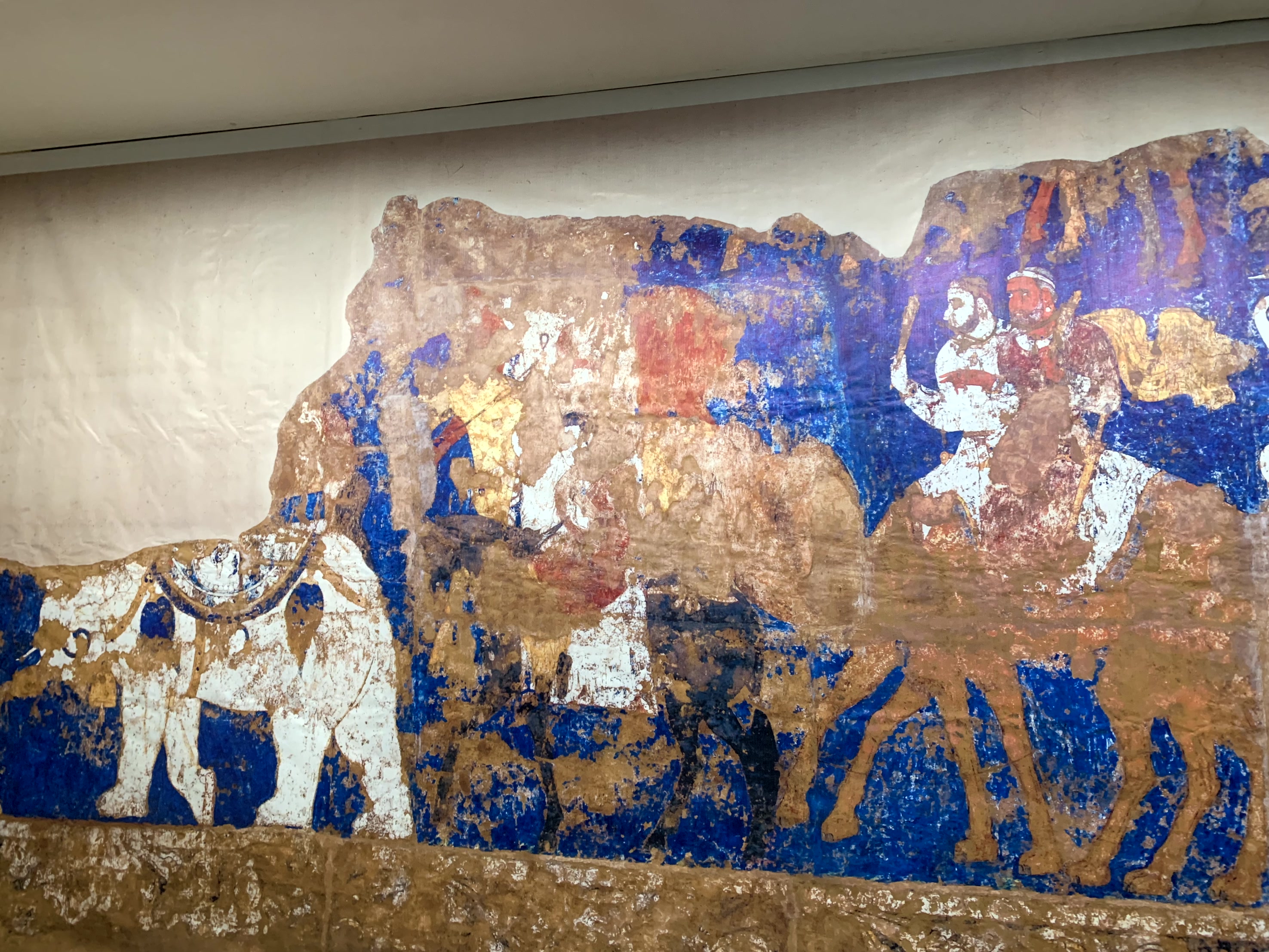
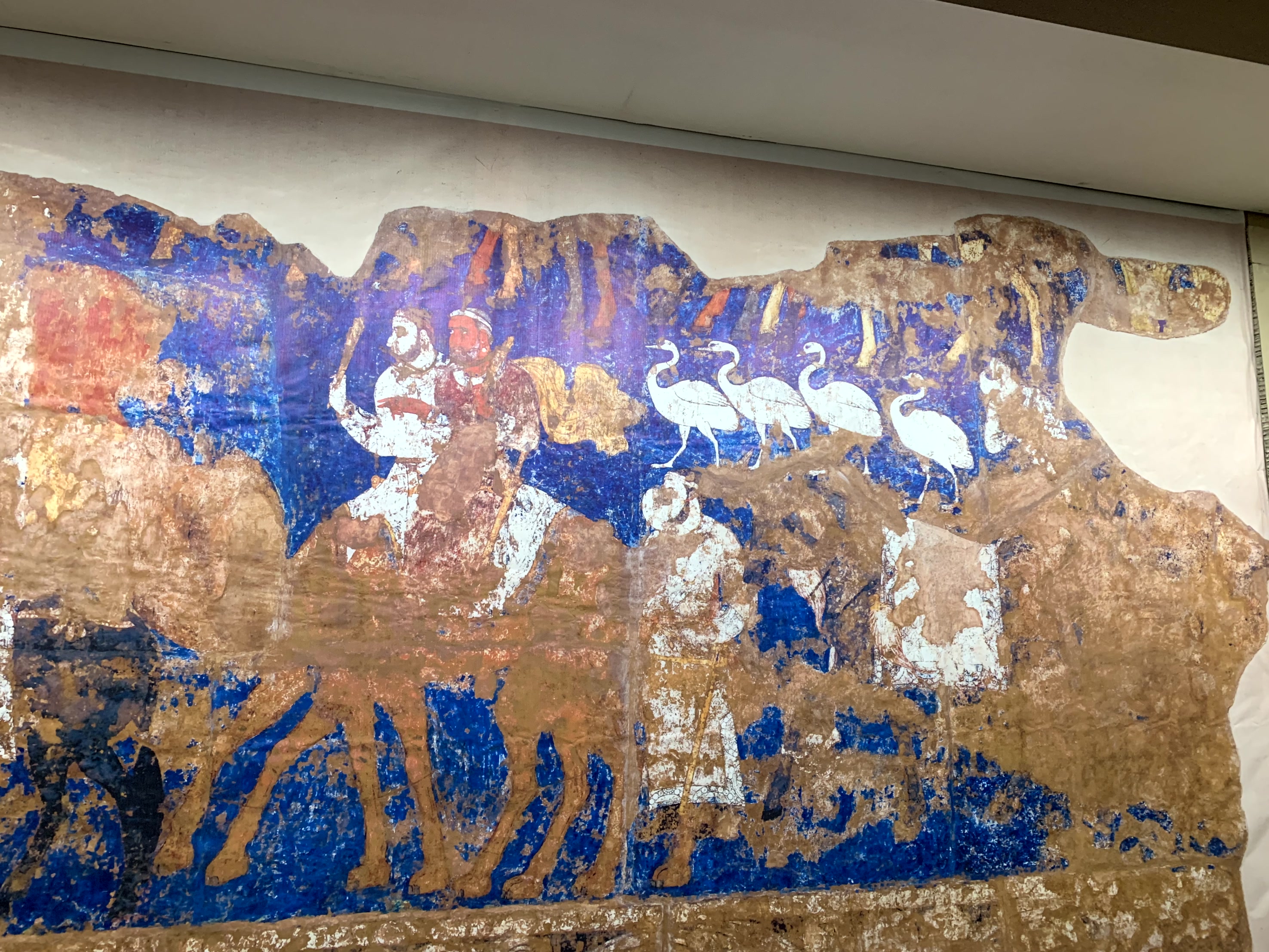
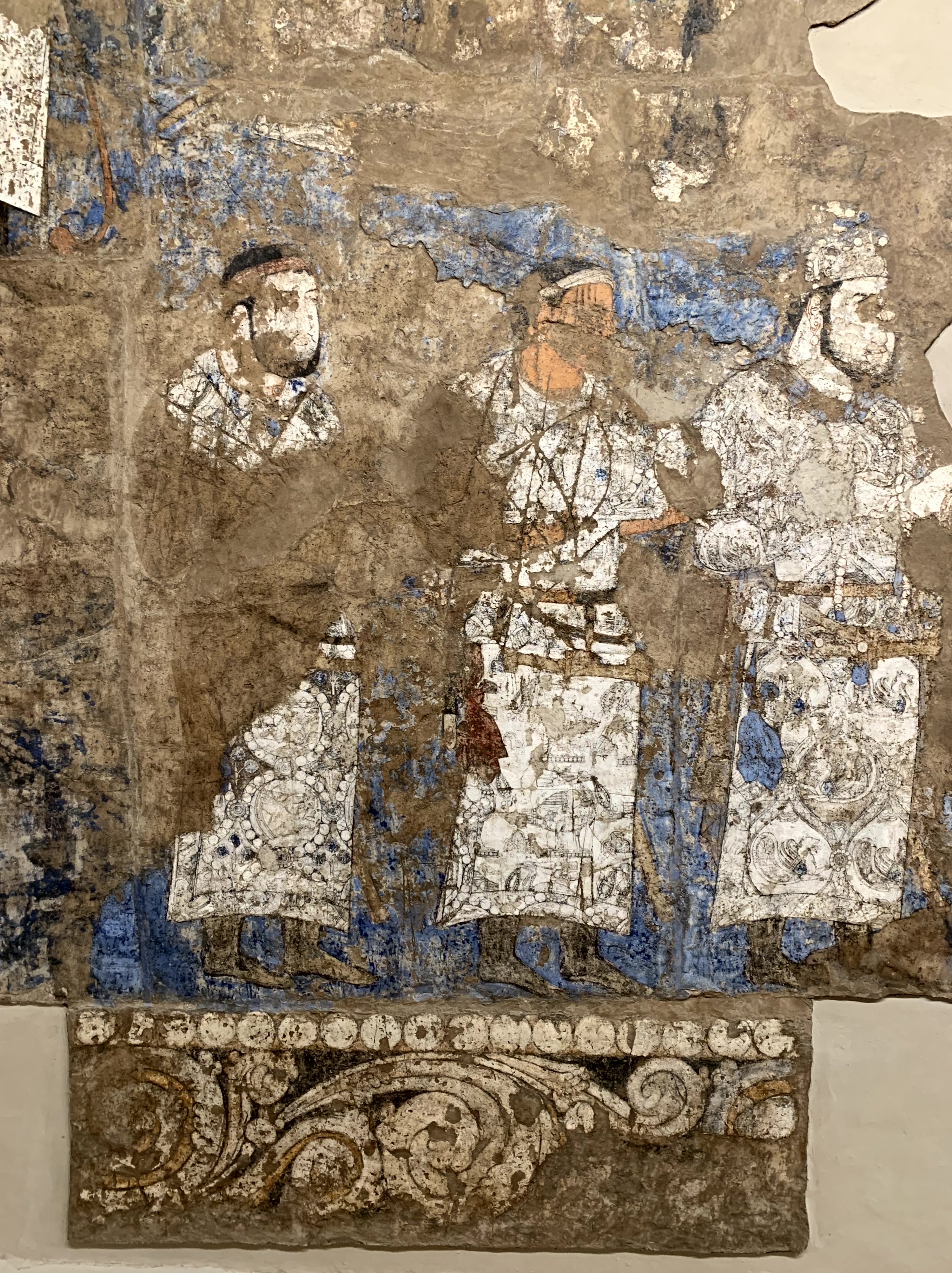
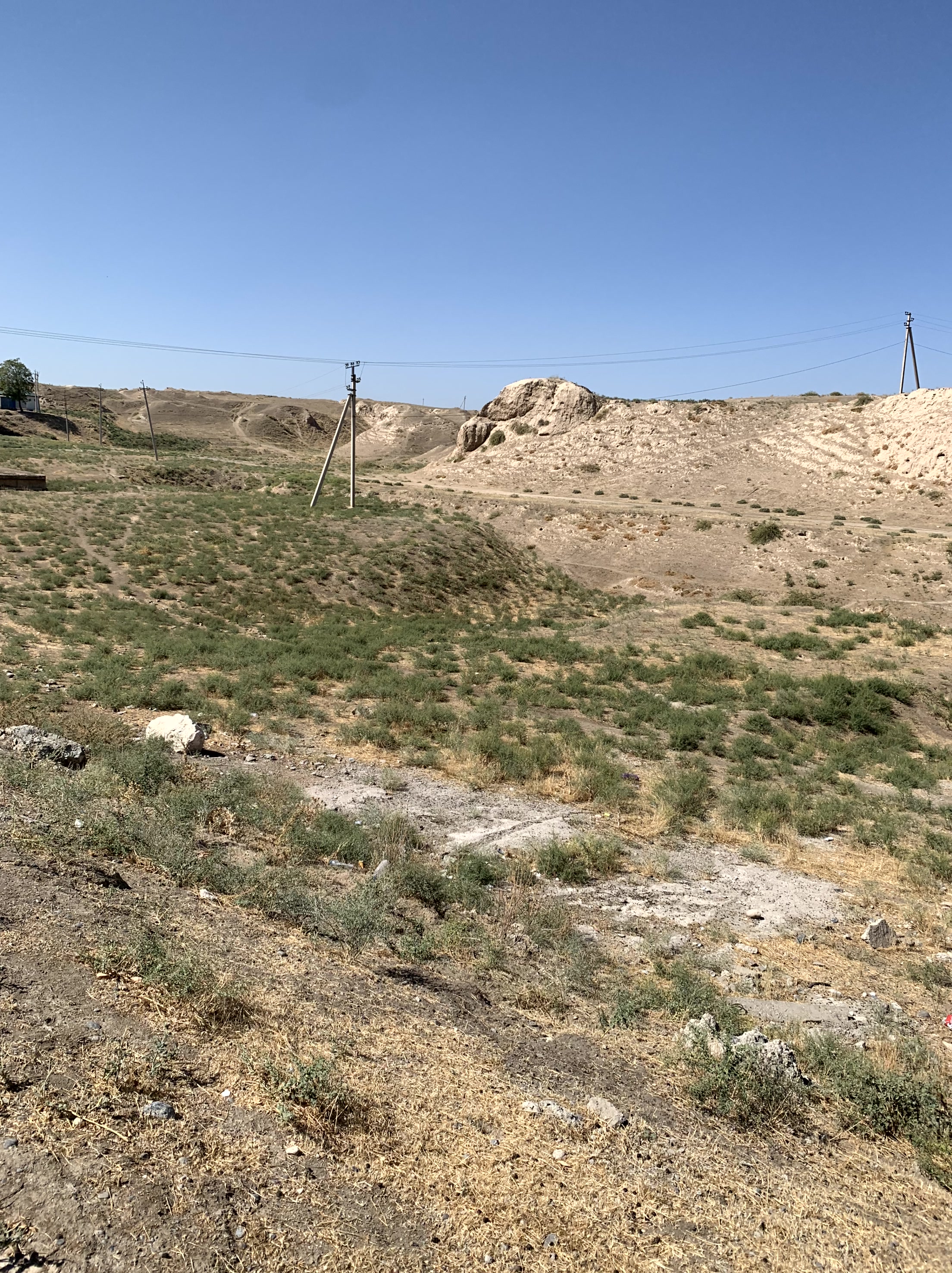
I walked out to the Afrosiyob museum, situated on the site of the oldest part of Samarkand, now little more than scrubland concealing mostly still-unexcavated wonders just outside the city. It was annihilated when Genghis Khan passed this way but had trading links throughout Asia and Europe from antiquity. Here they have found artifacts from ceramics from the fourth century BCE to ancient Greek coins, juniper wood beams, weapons and murals from a great palace dating back to the seventh century CE. The frescoes show the Sogdian king Varkhuman, the Chinese Tang Emporer Gaozona and Zoroastrians from Iran and Mongolia. The usual Silk Road suspects. A few km further is the remains of Ulugbek’s observatory. All that is left now is the track from the 40m radius sextant and there’s a museum with models to show what it would all have looked like back in the day.

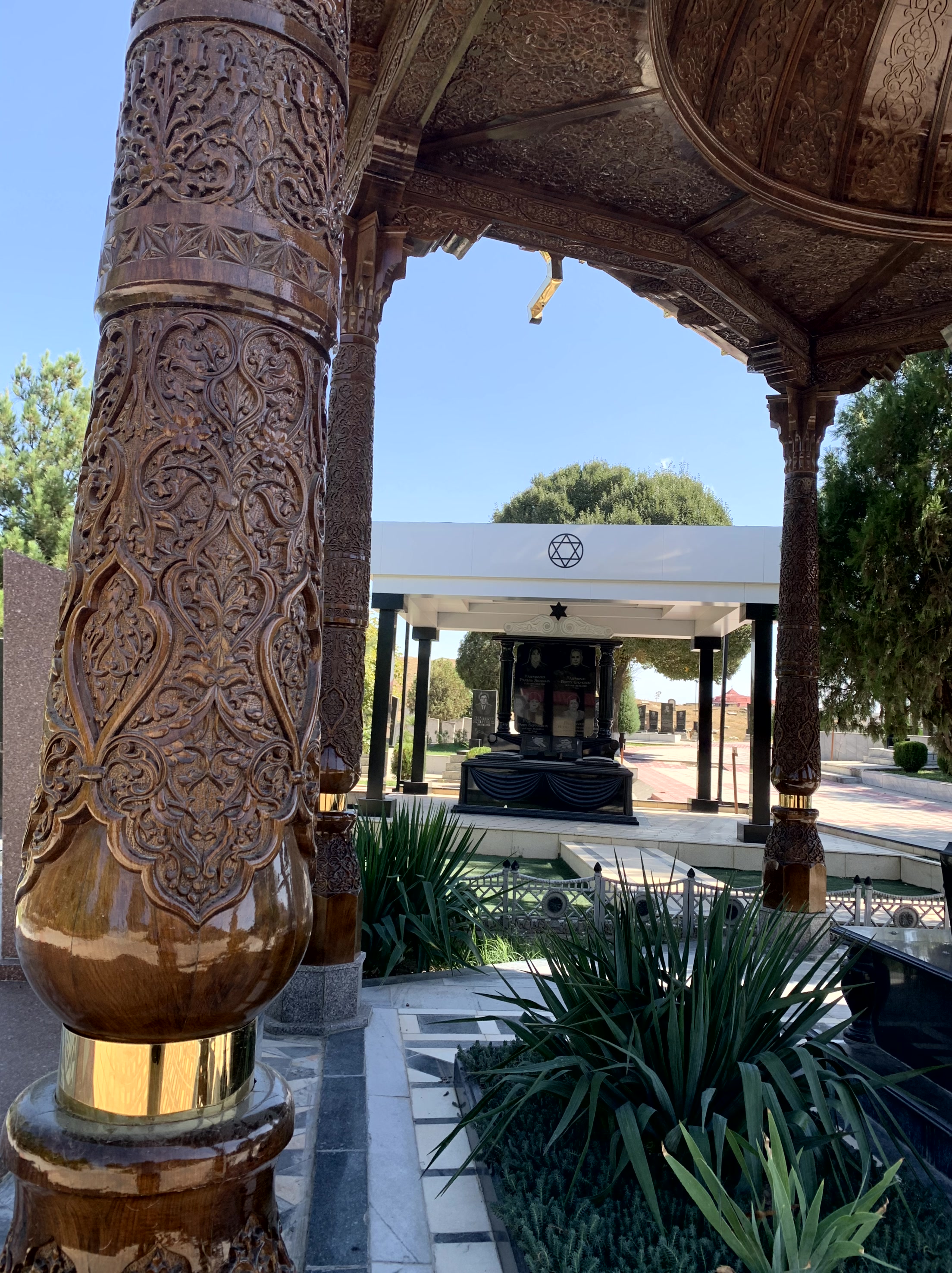
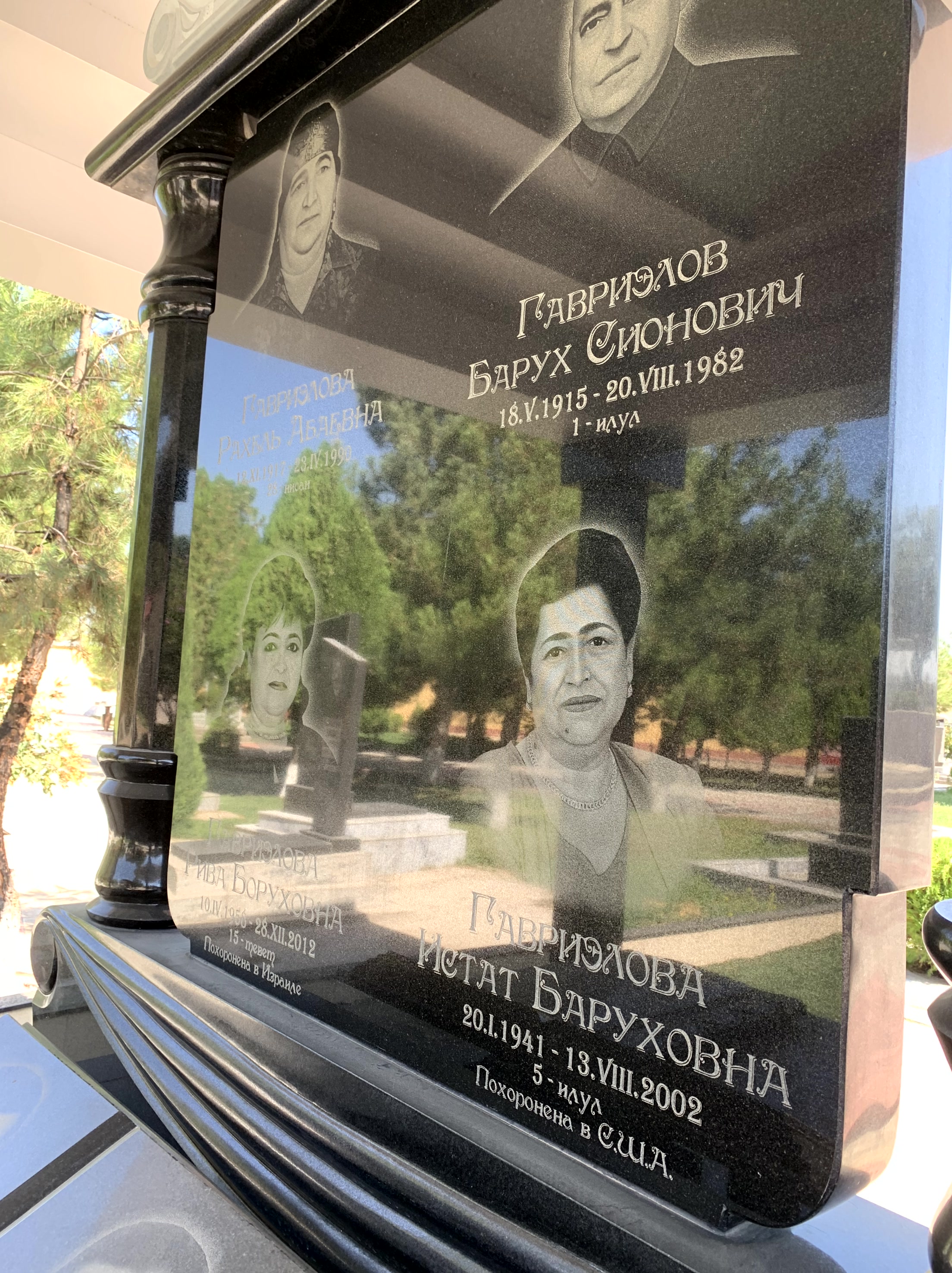
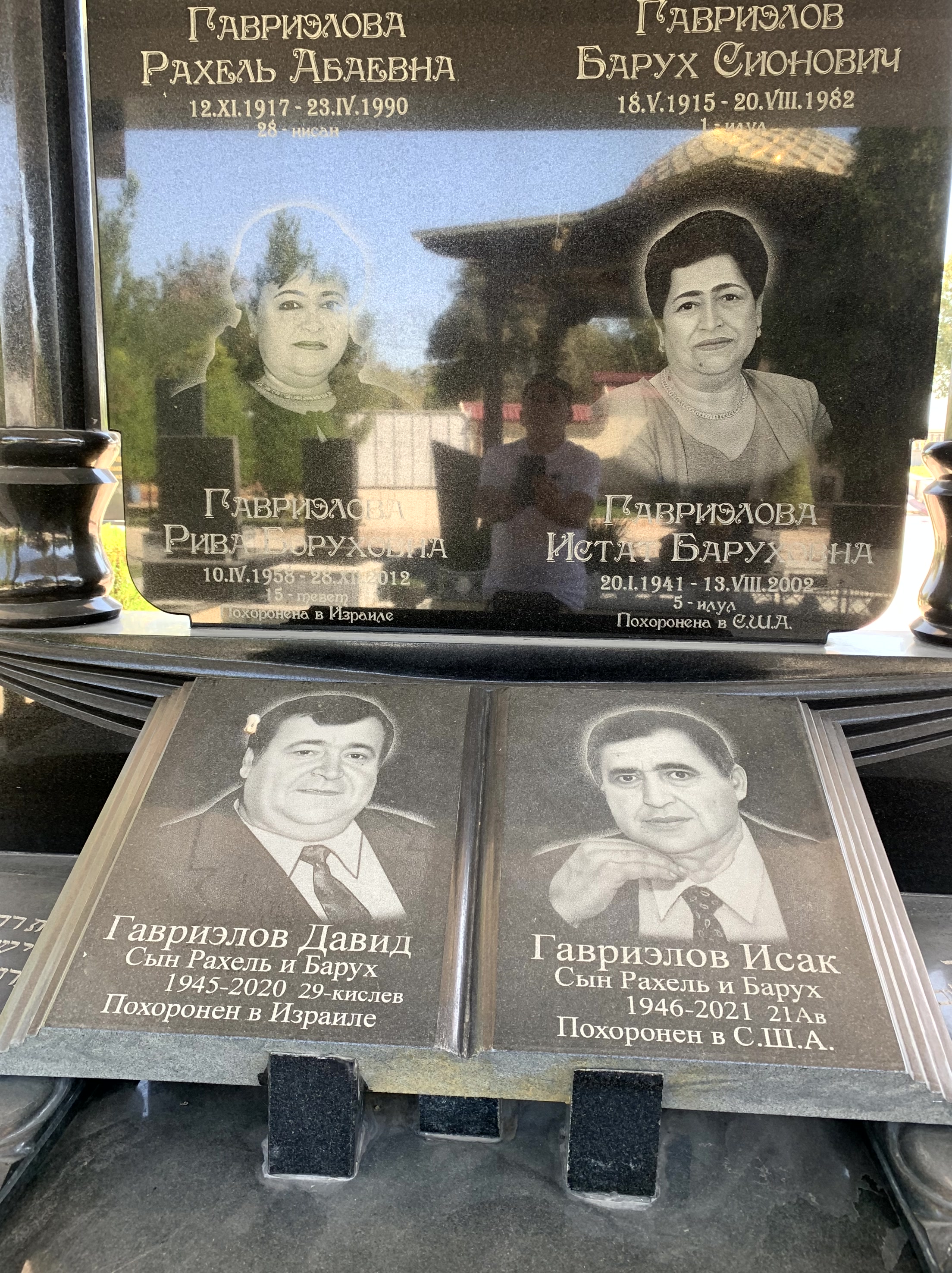
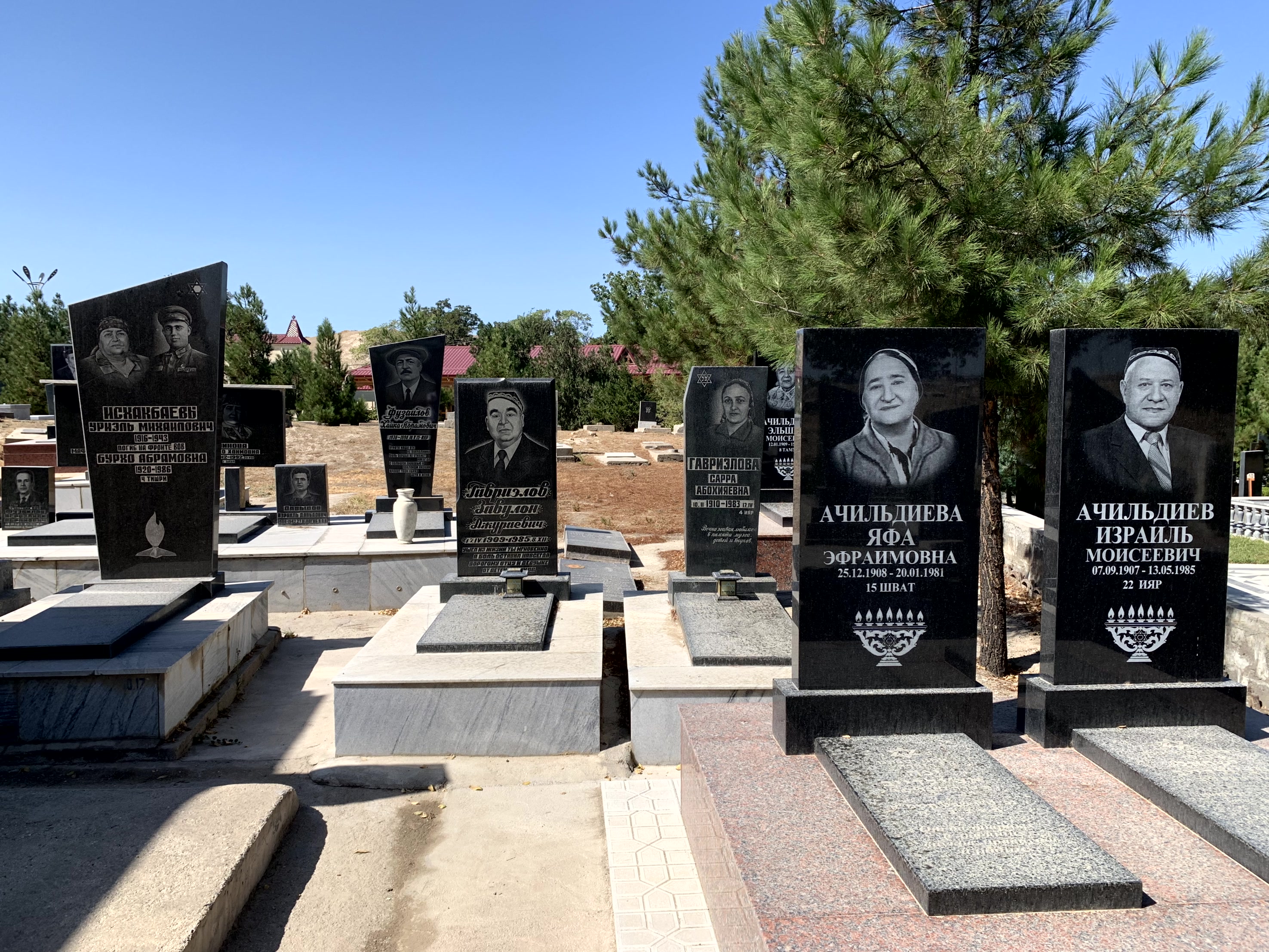
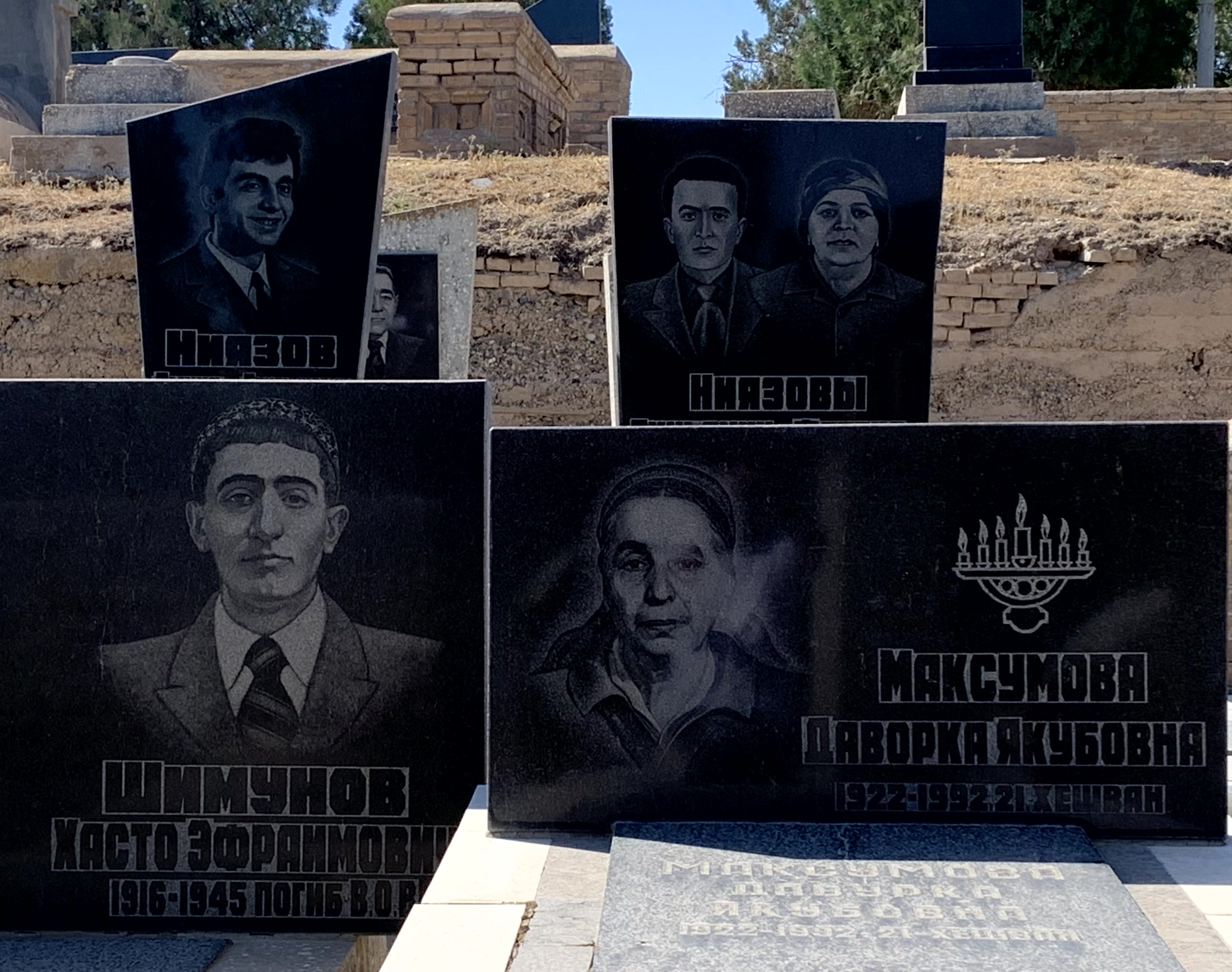
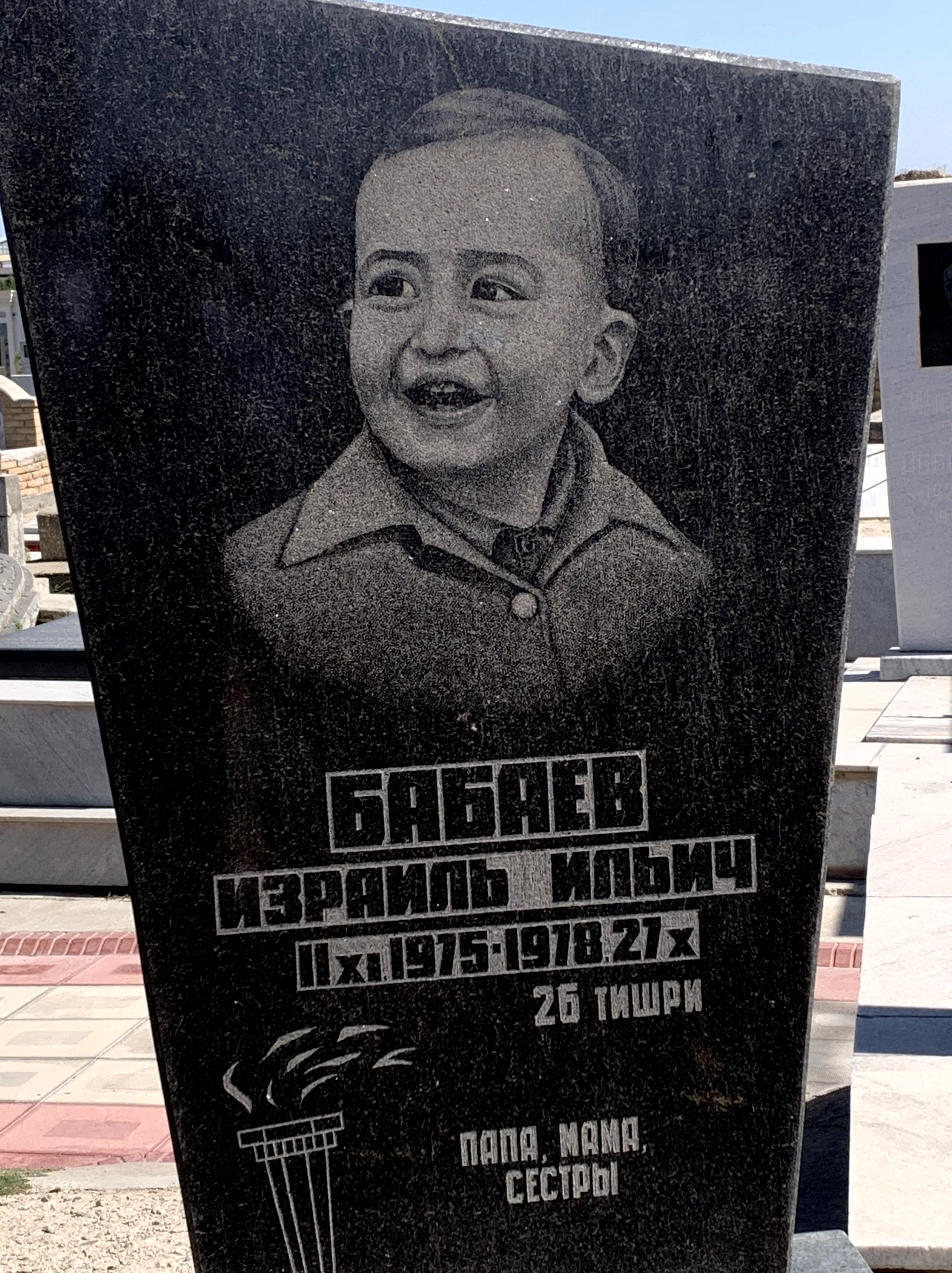
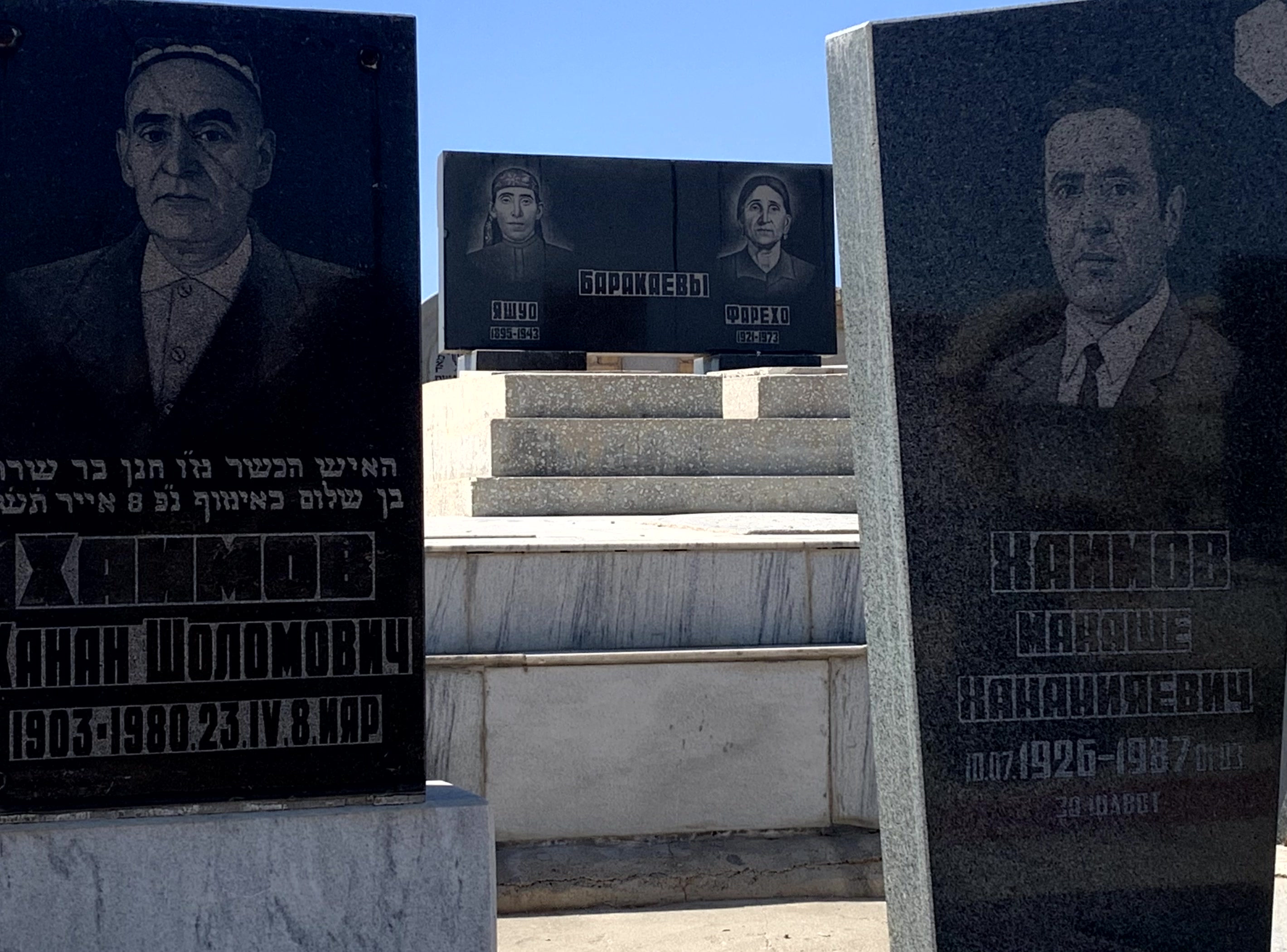
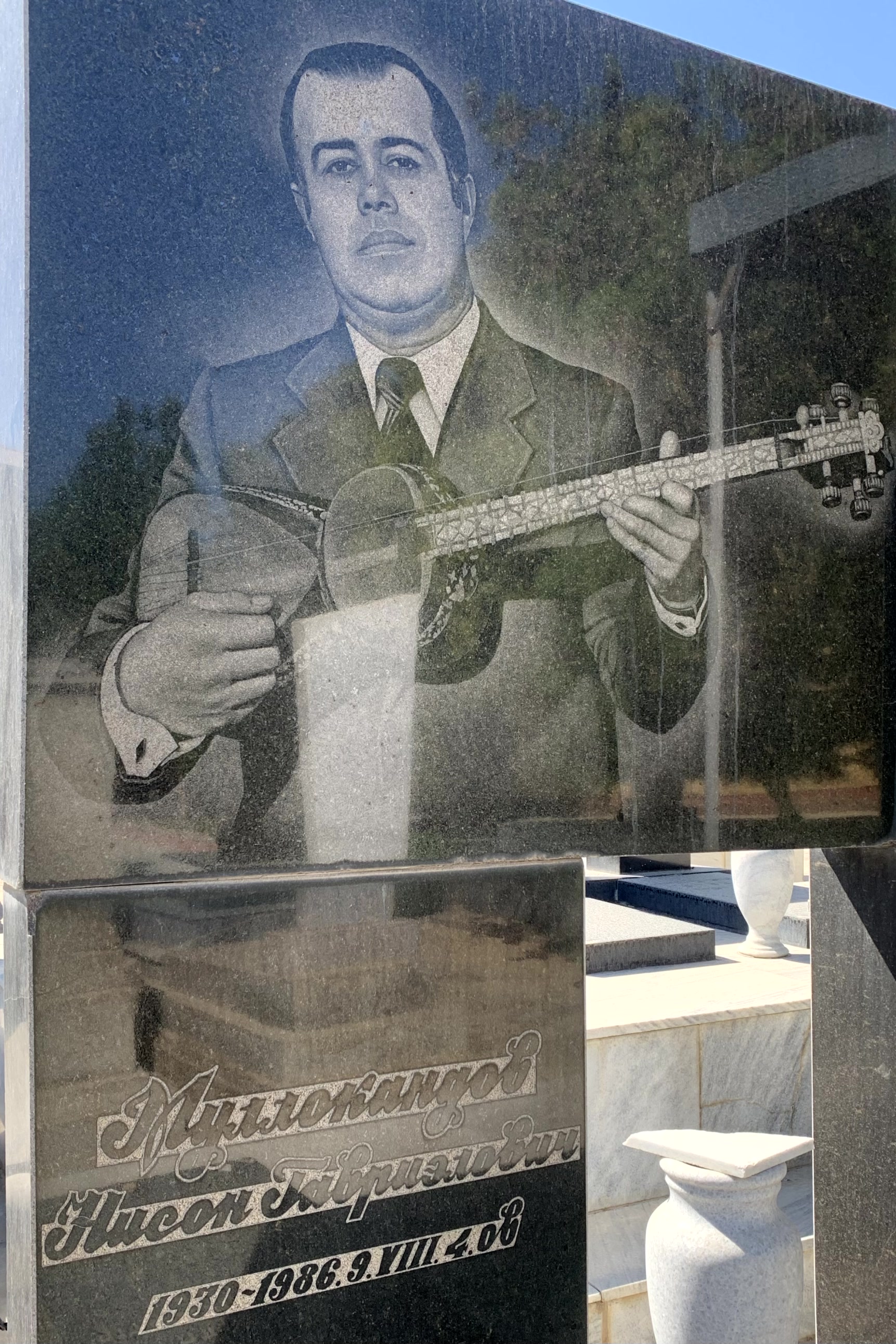
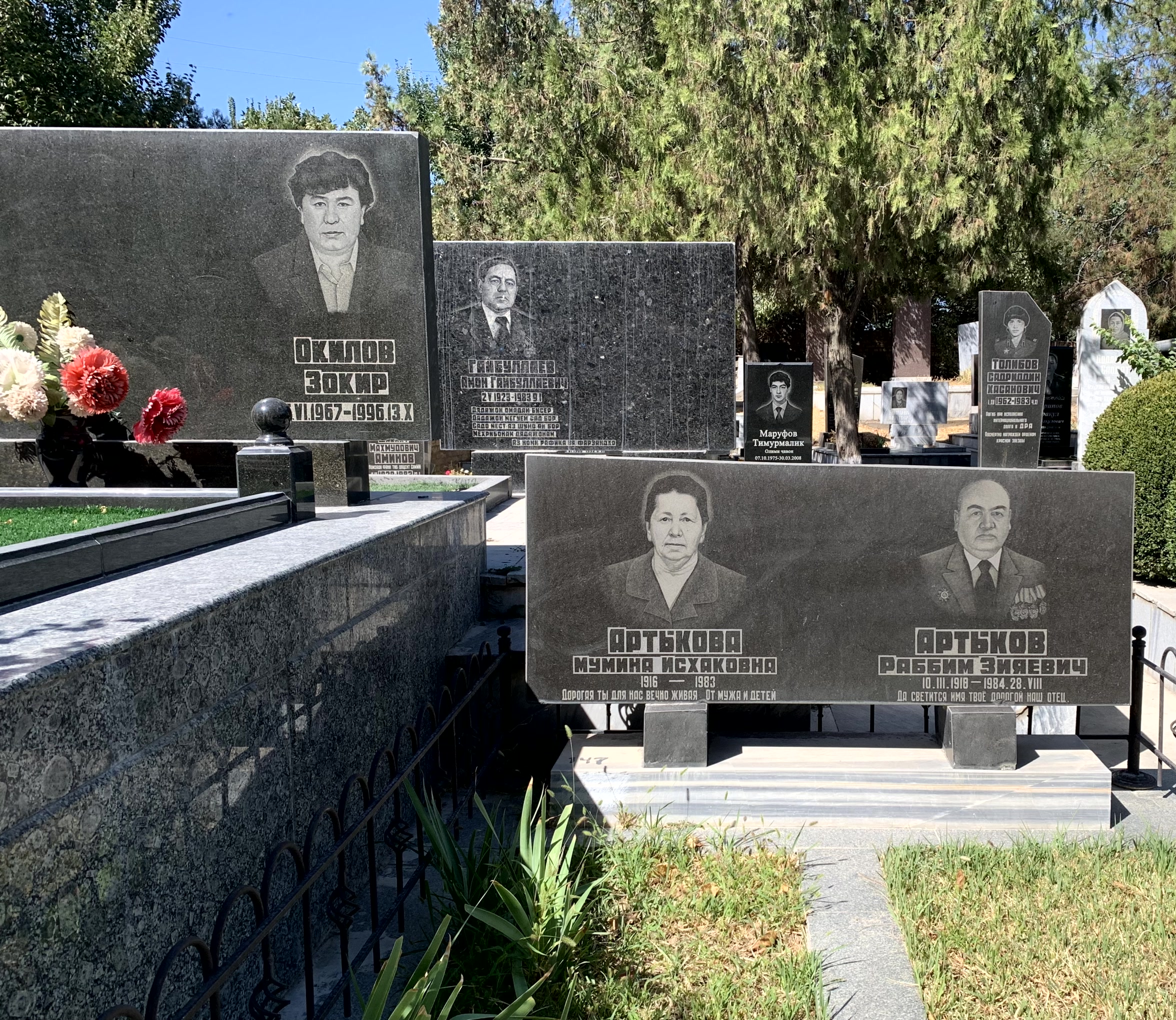
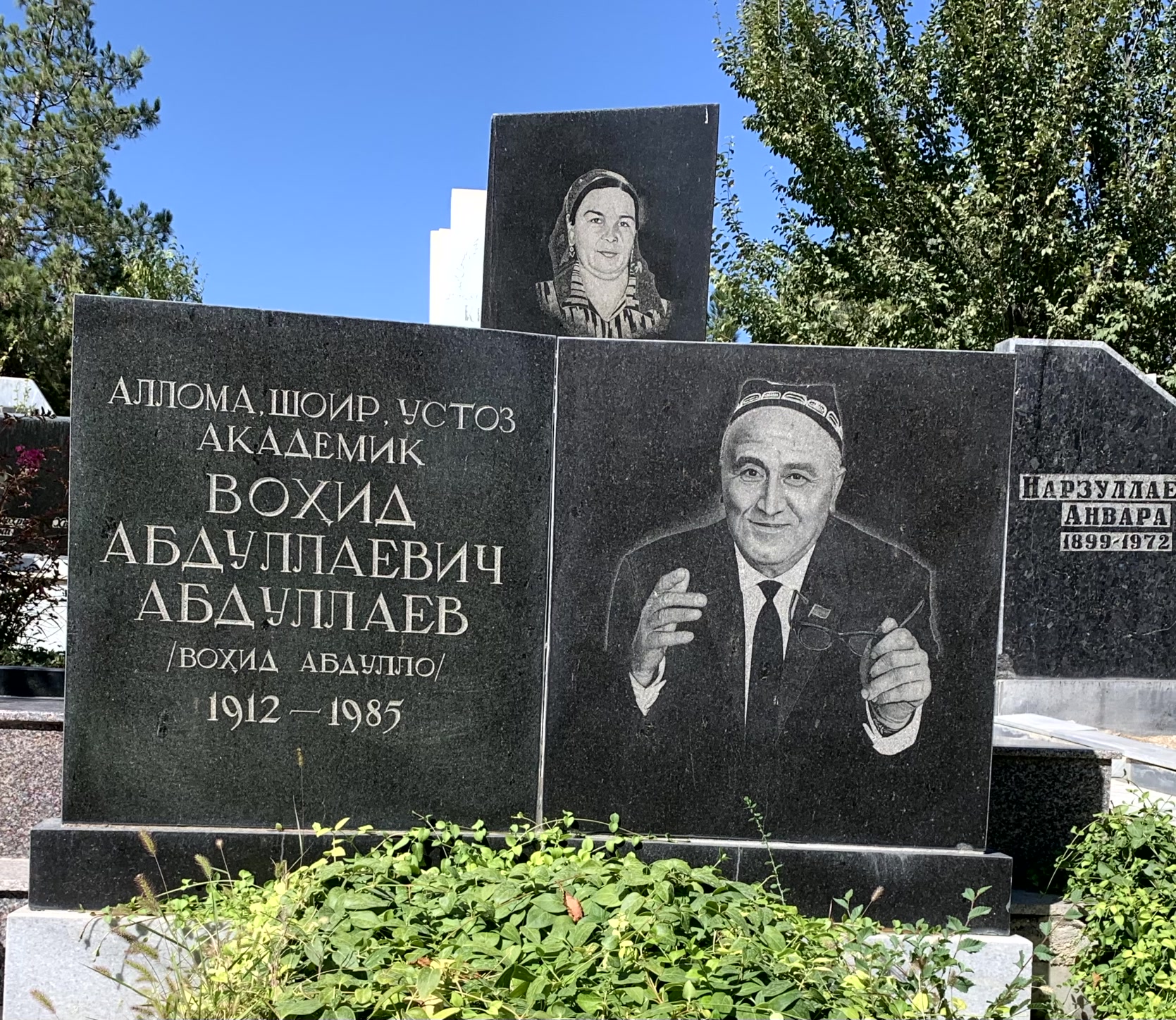
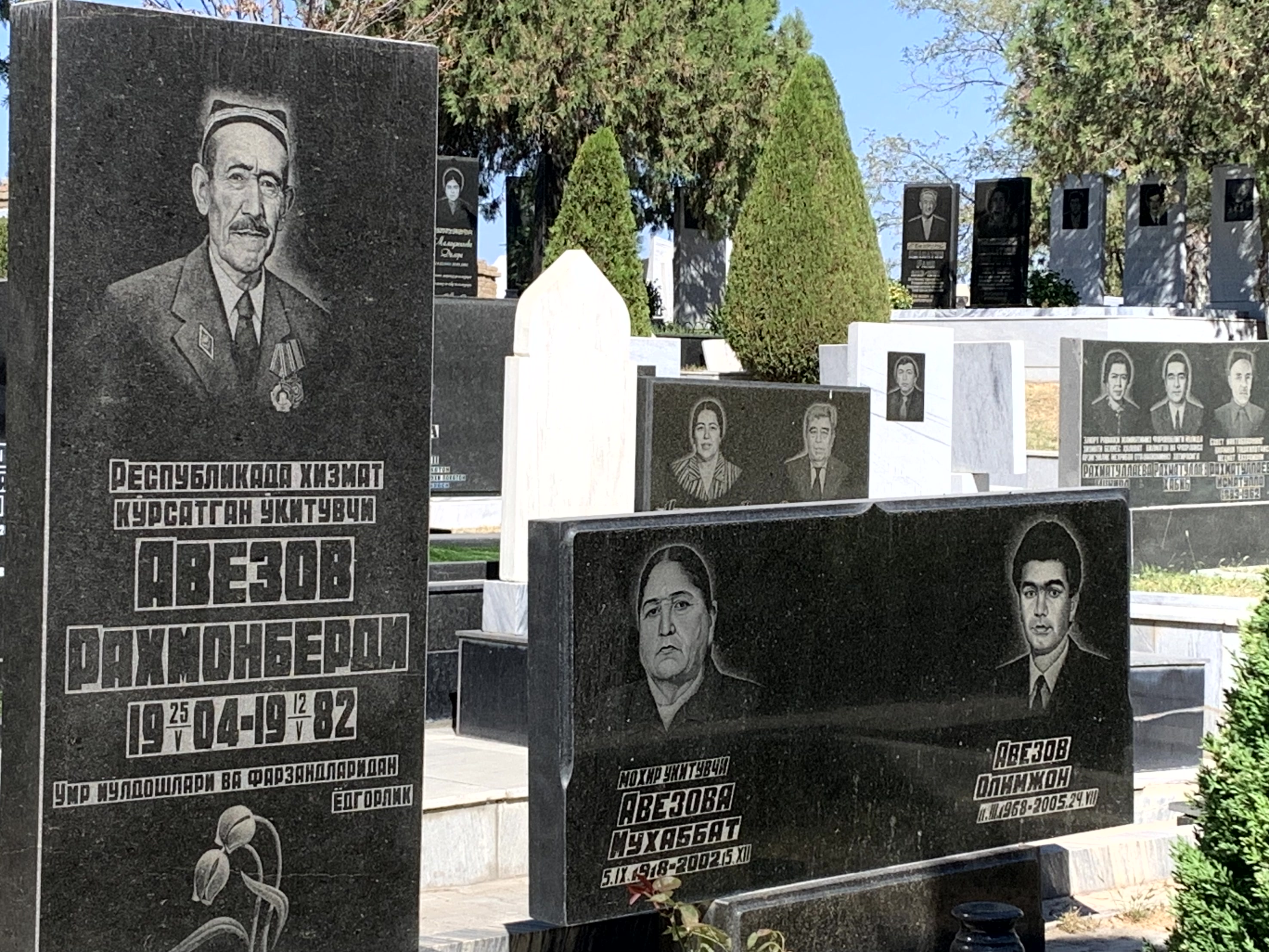
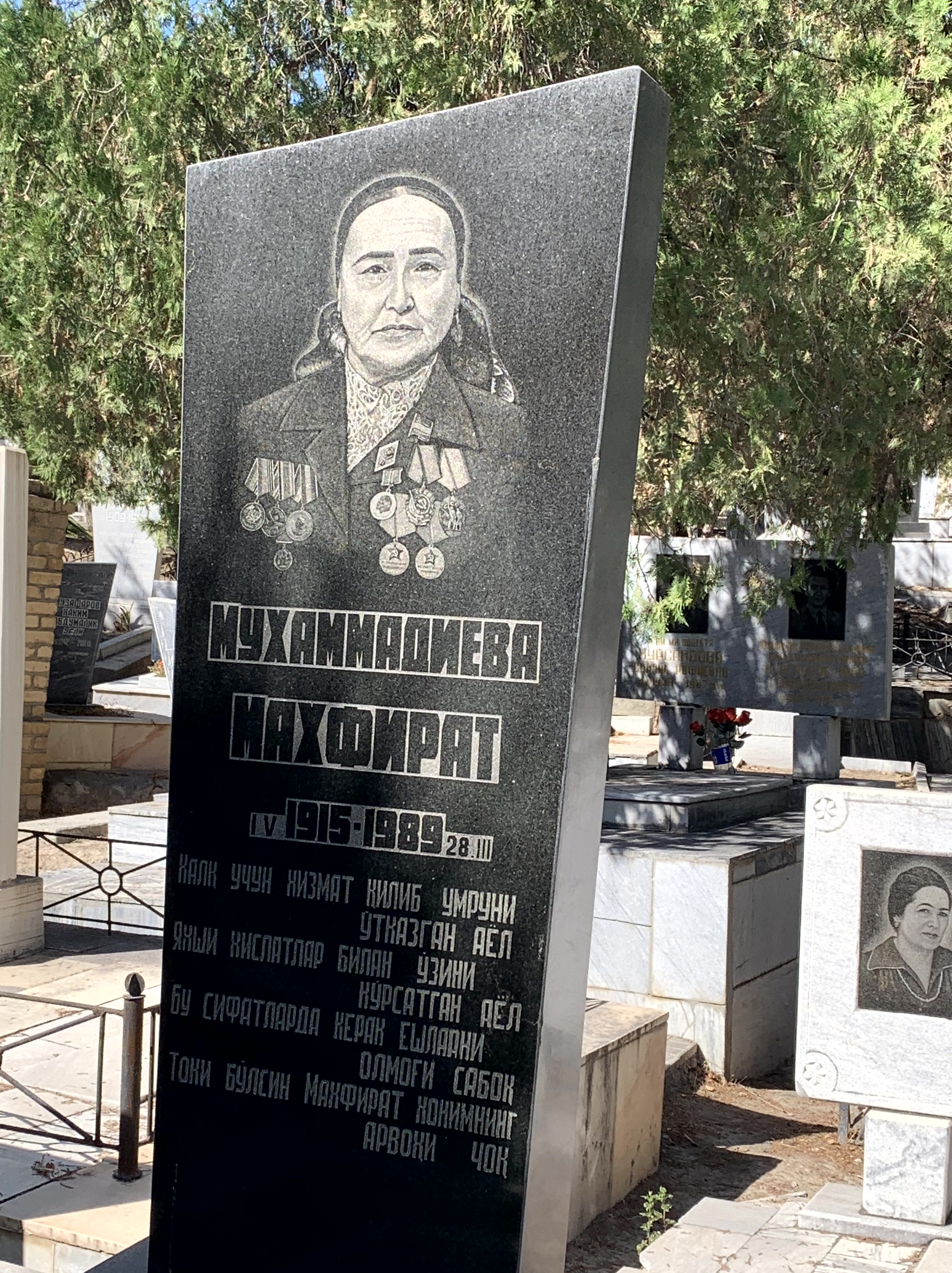
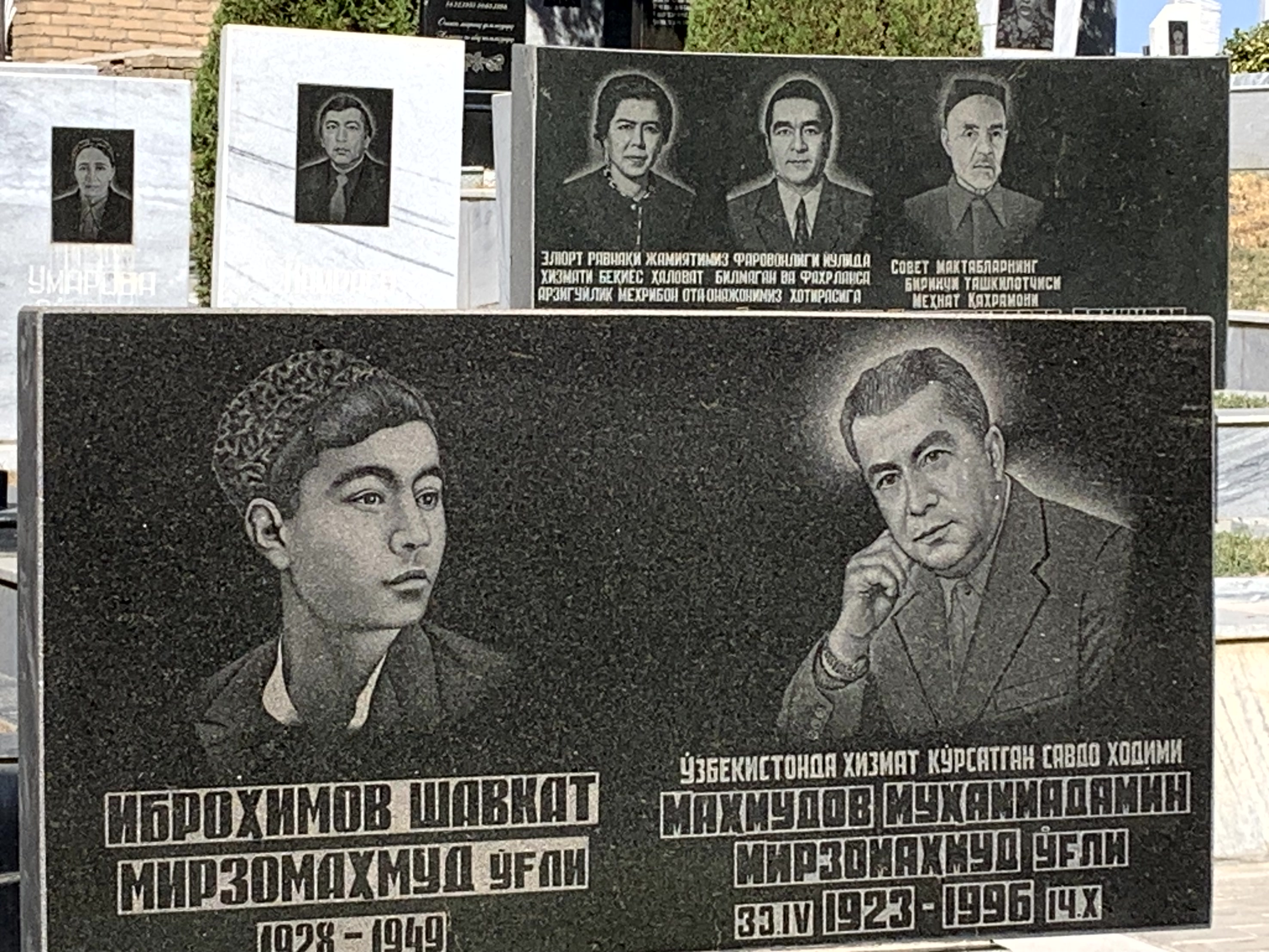
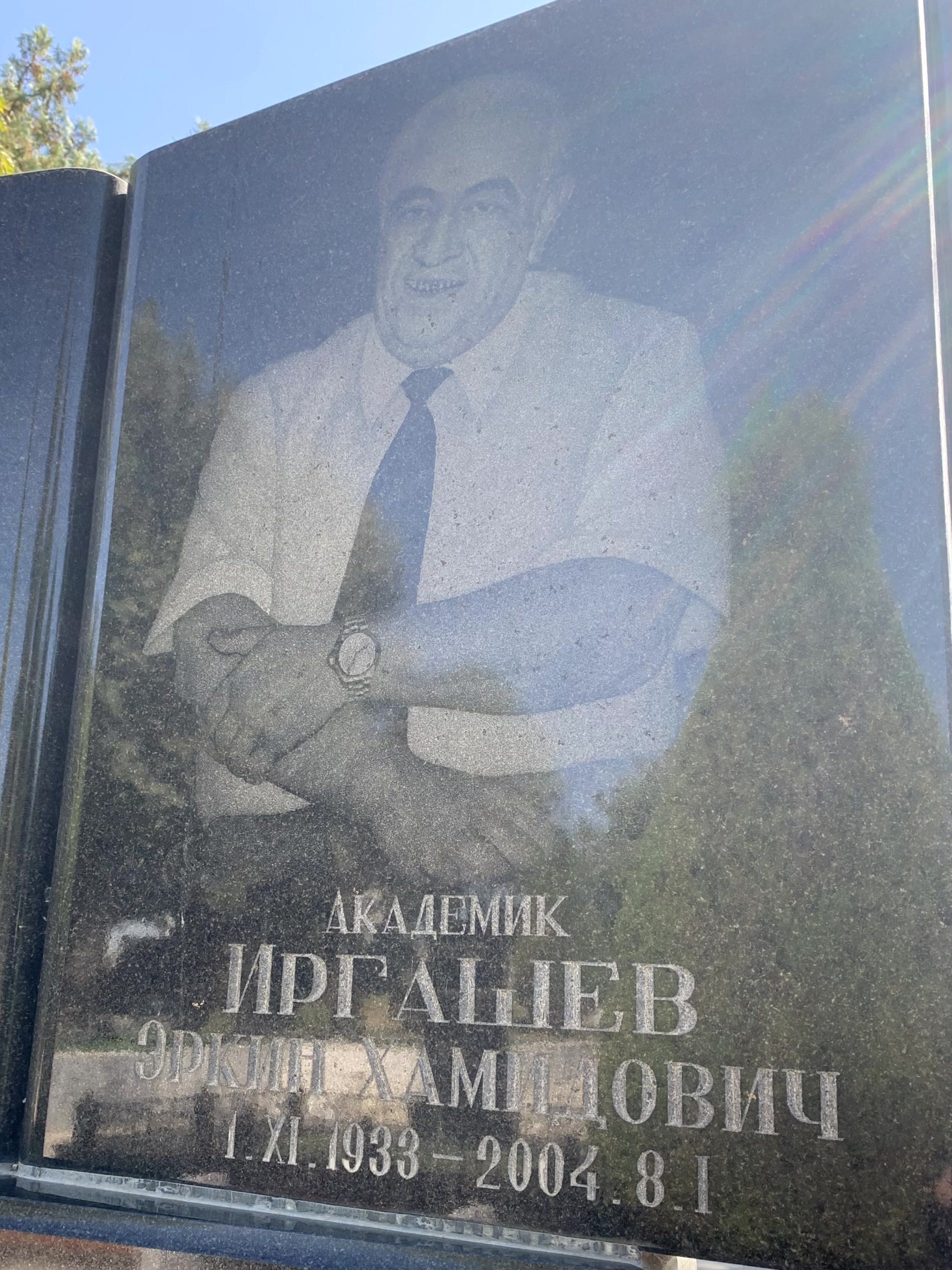
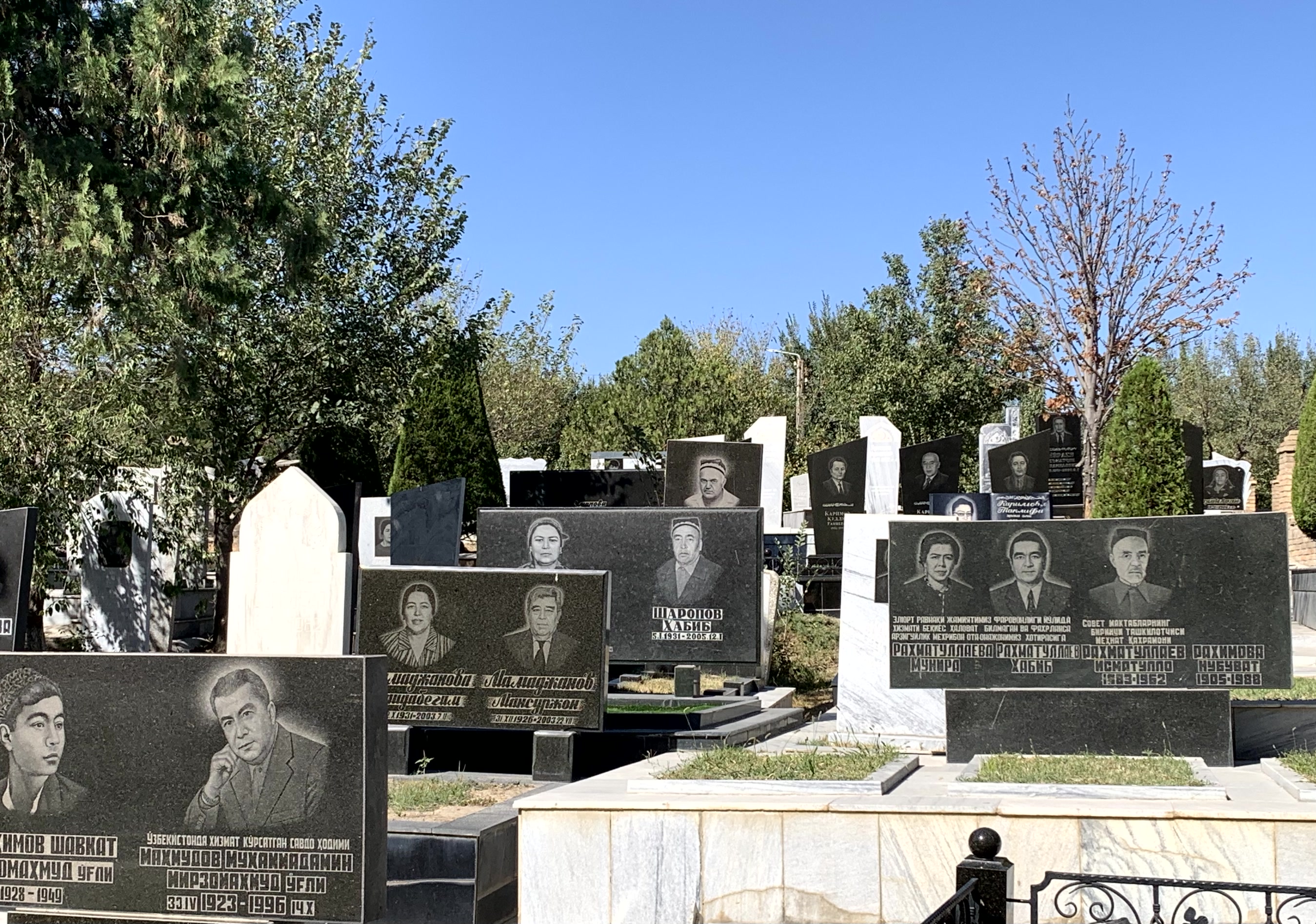
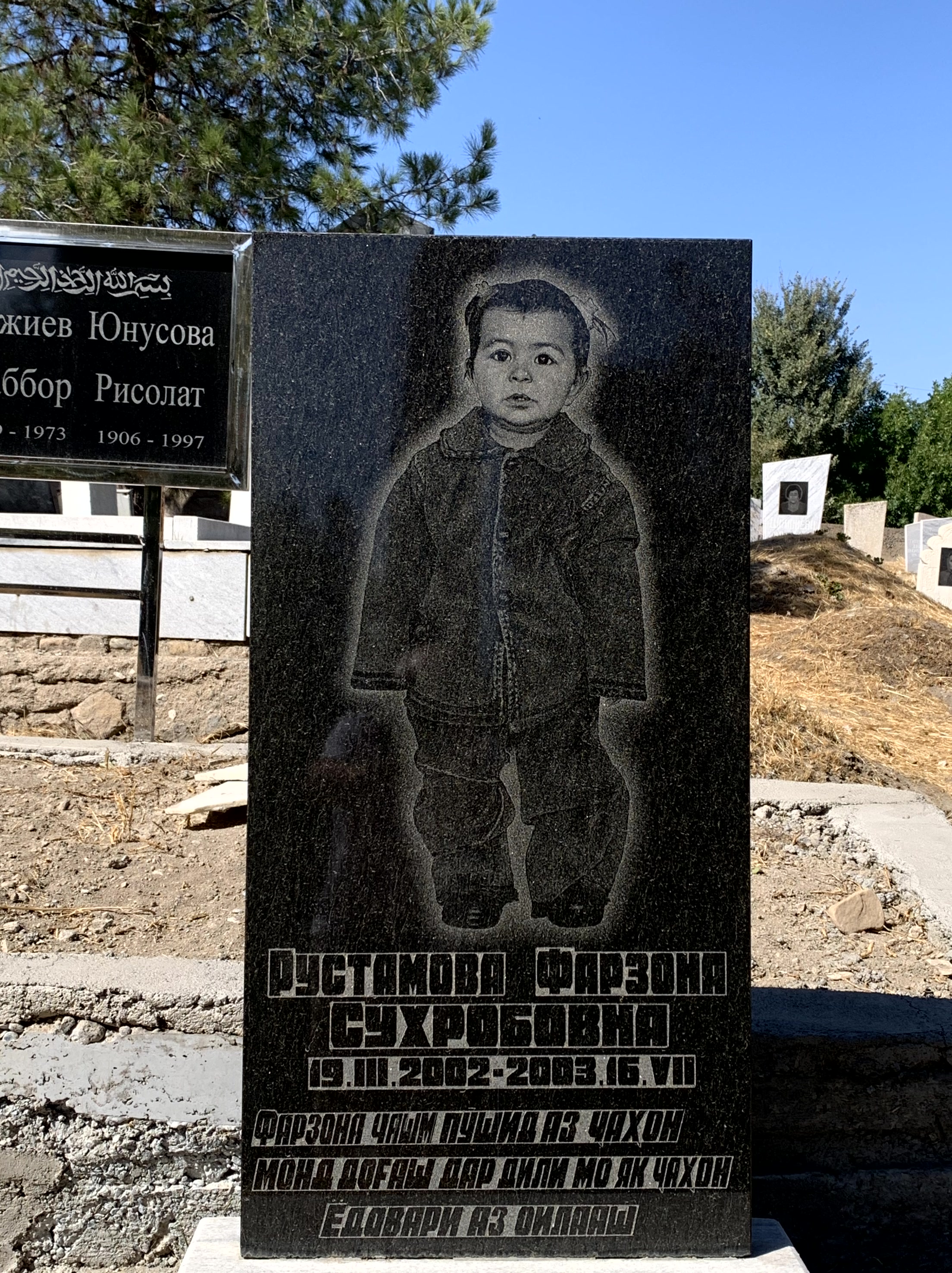
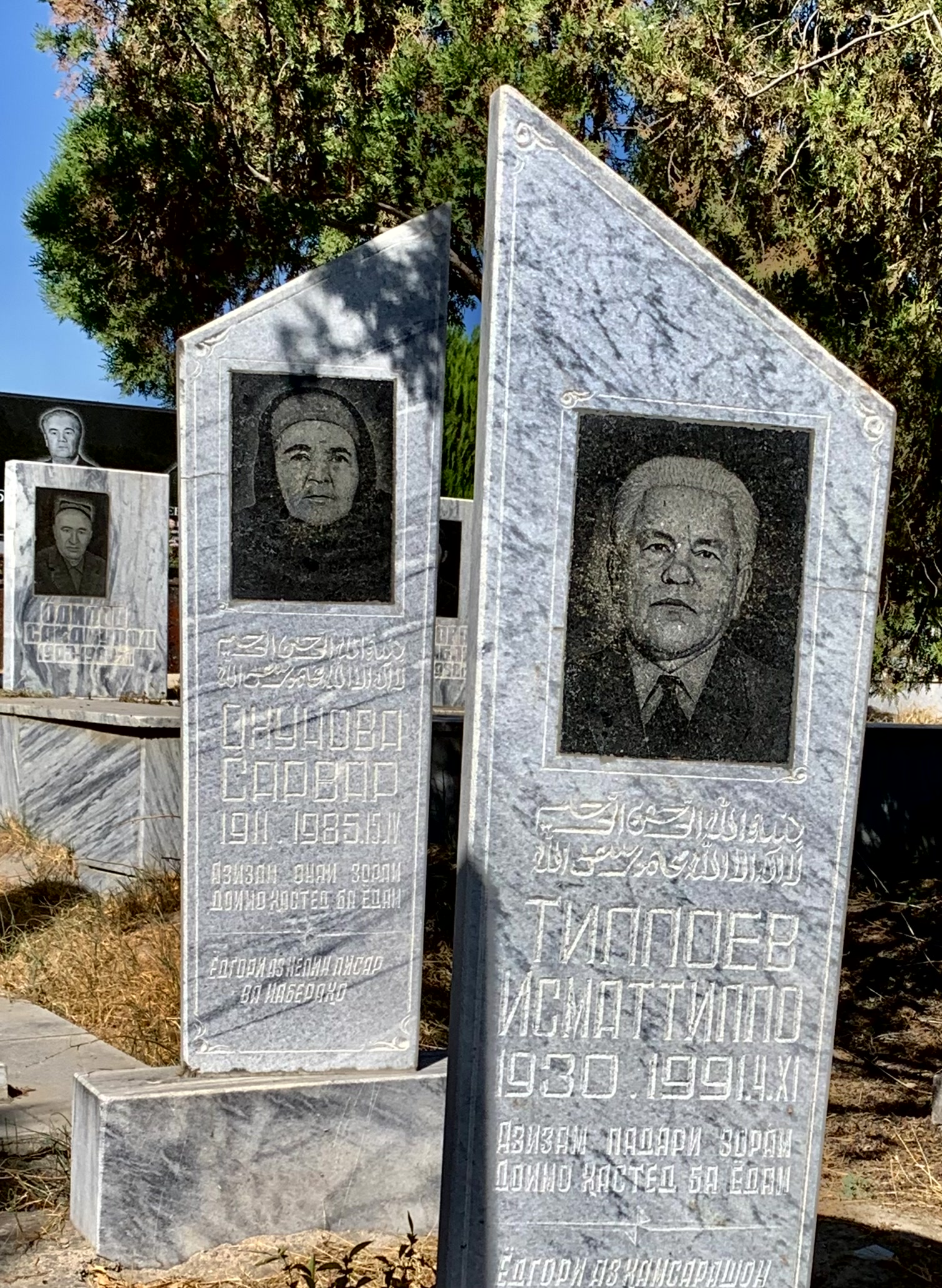
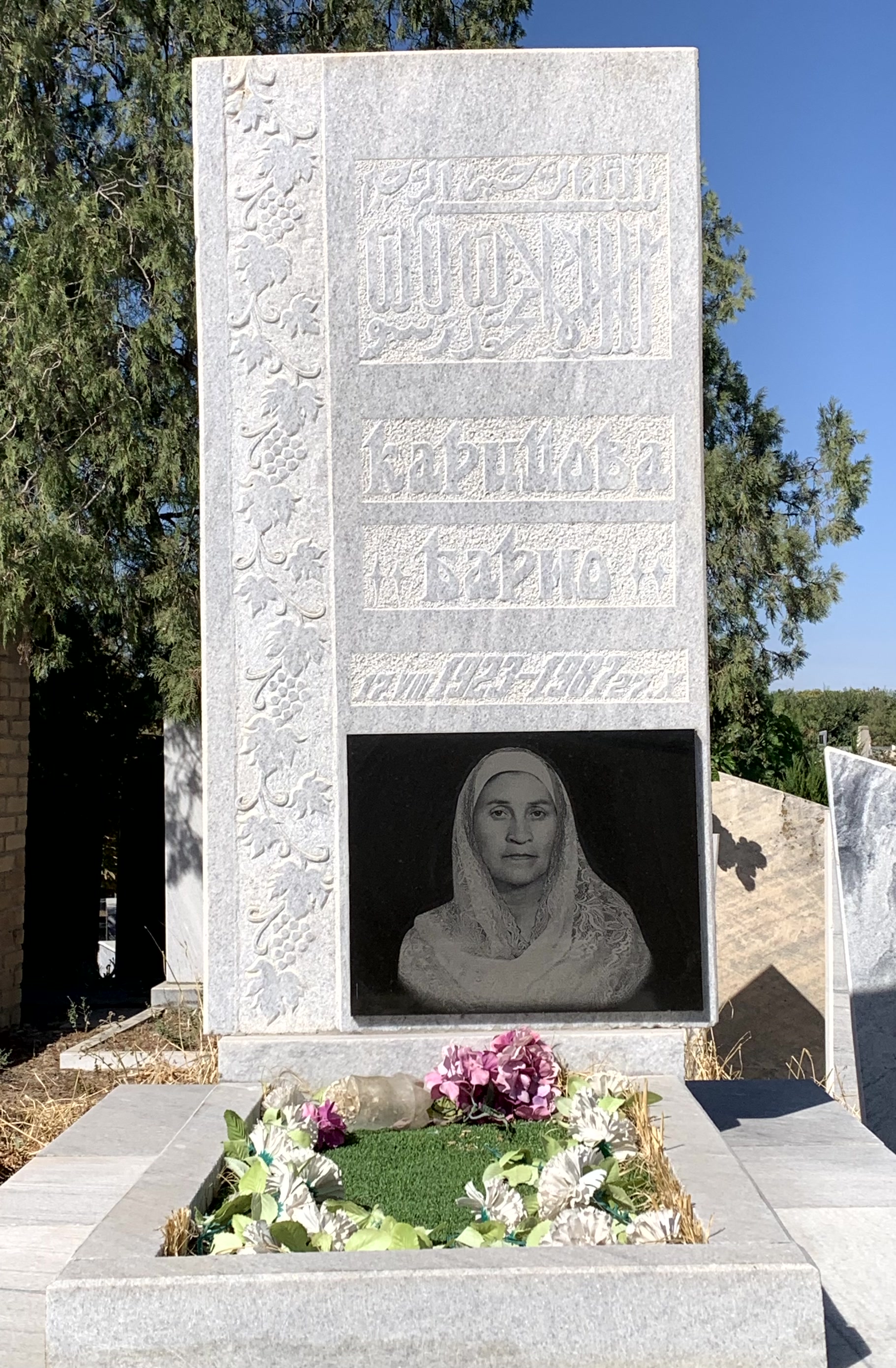
On the way back from this long hike out of town, I stop off to look around the Jewish and then the Muslim cemeteries. It was quite an amazing experience on that hot afternoon. The gravestones are of black marble and etched into each is a photograph of the deceased. Somehow these have been fused into the shiny stone, pictures of people wearing their best clothes, most men wearing ties and suits. The result is that you feel connected in some way to these images and to these people. It was like standing in a crowd, wandering around all alone in those cemeteries. A couple had been musicians and held their instruments. One was backed by stars and held astronomical instruments, people whose faces showed kindness or wisdom. It was hot and I stopped for a while to rest by one woman with a notably kind look in her face. I felt the pain of parents before the images of infants, admired rows of medals and wondered what they were for and about their bravery. Seeing their faces somehow enabled a connection to their past lives from a traveller from a different time and place. It wasn’t spooky, more of a reverential experience. I suppose the poignancy was enhanced by meeting these people alone.

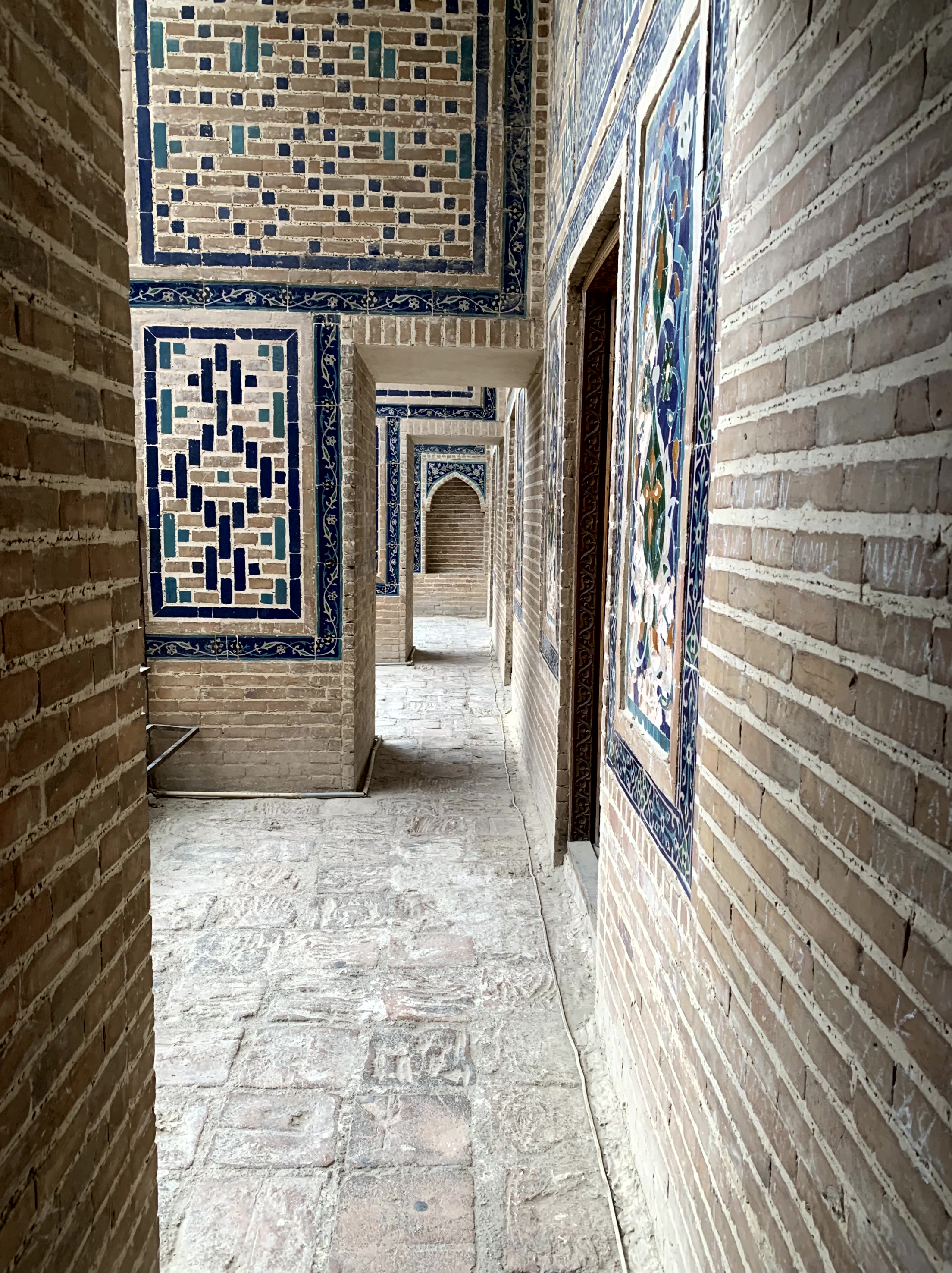
The old Jewish quarter has been cordoned off by an ugly fence and the only way in from the main drag is through a small gate beside the tourist office. But it’s a peaceful place to wander around for a break from the trinket stalls that line the streets and have taken over the madrasas.

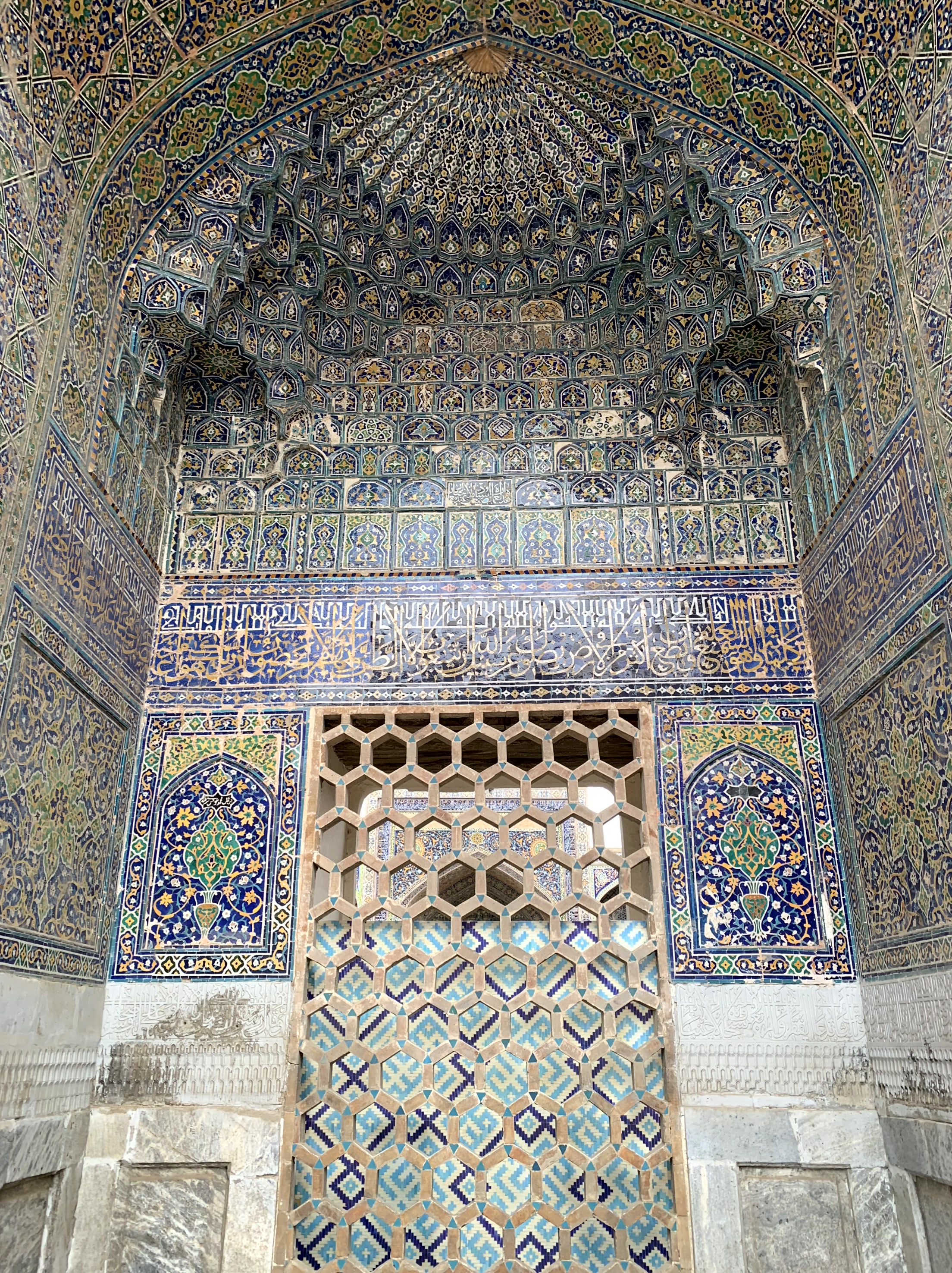
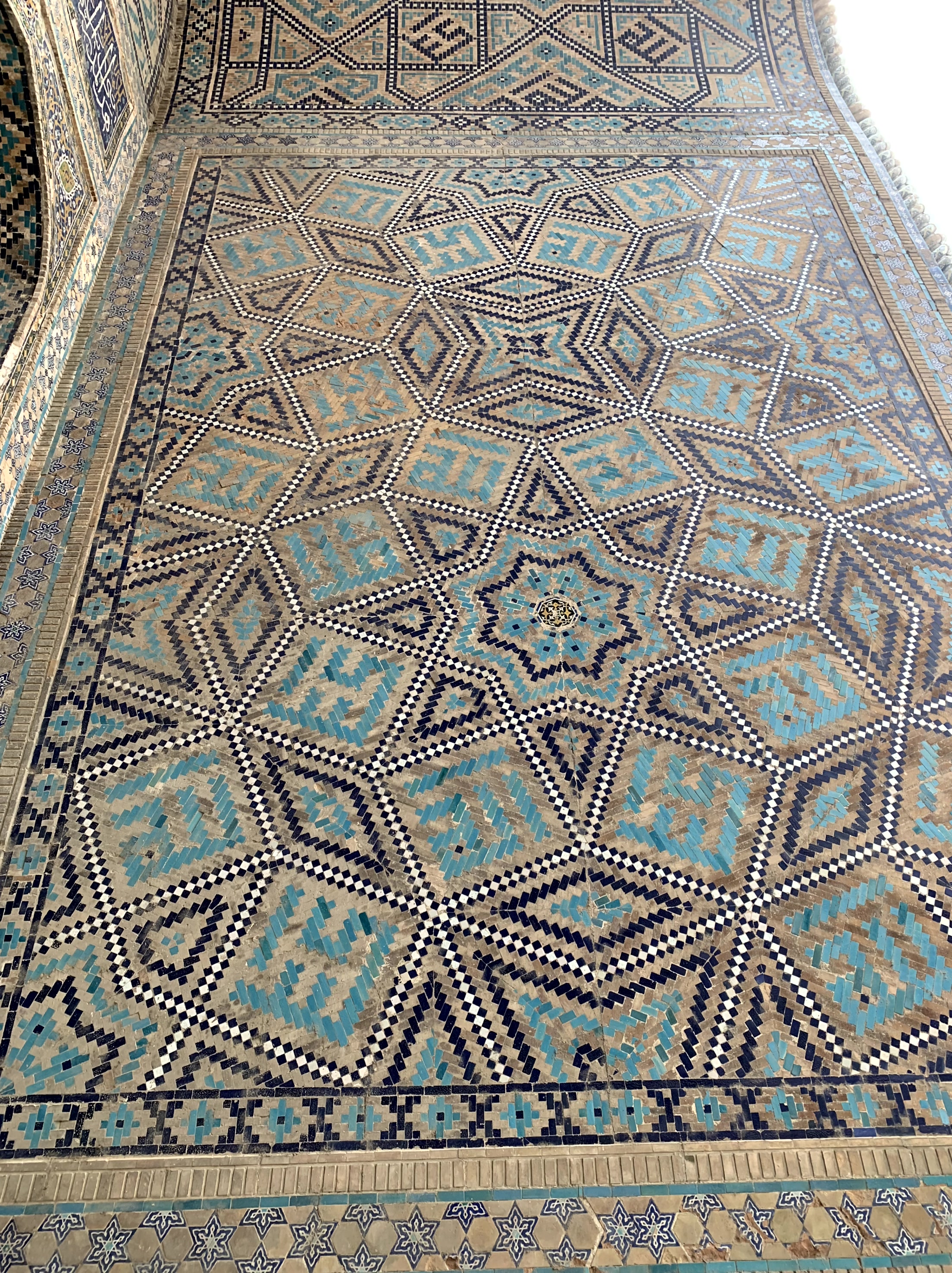
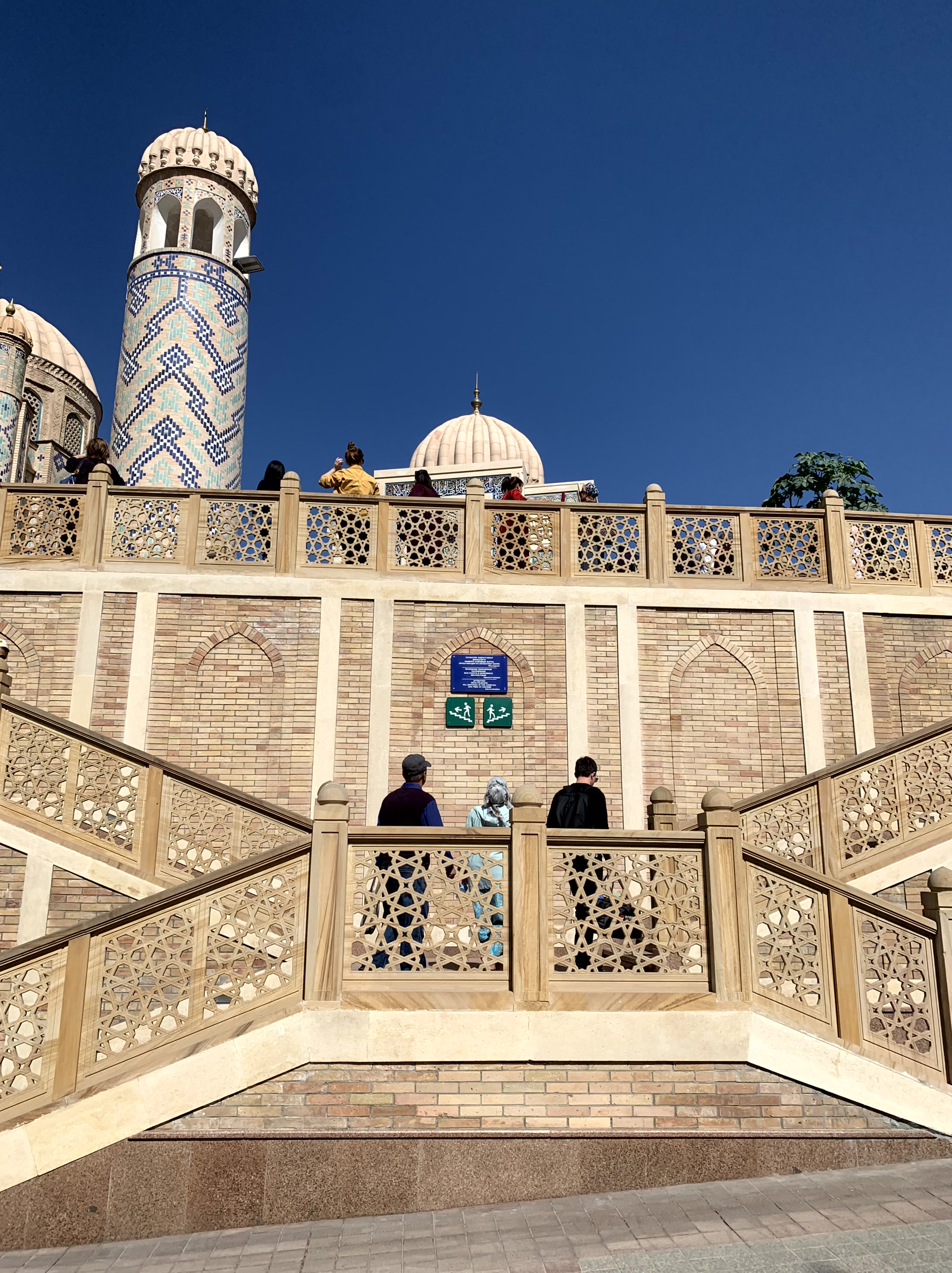
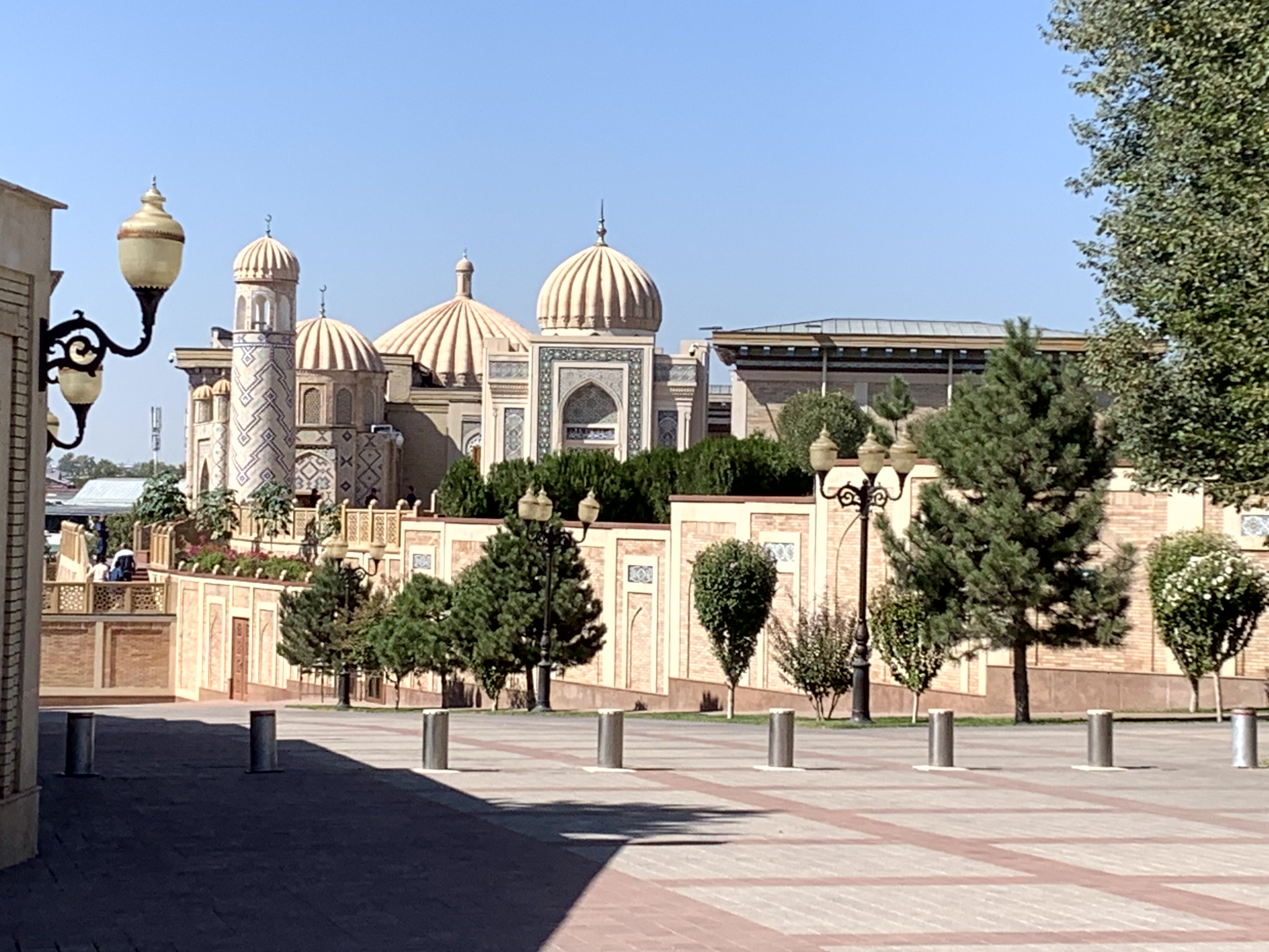
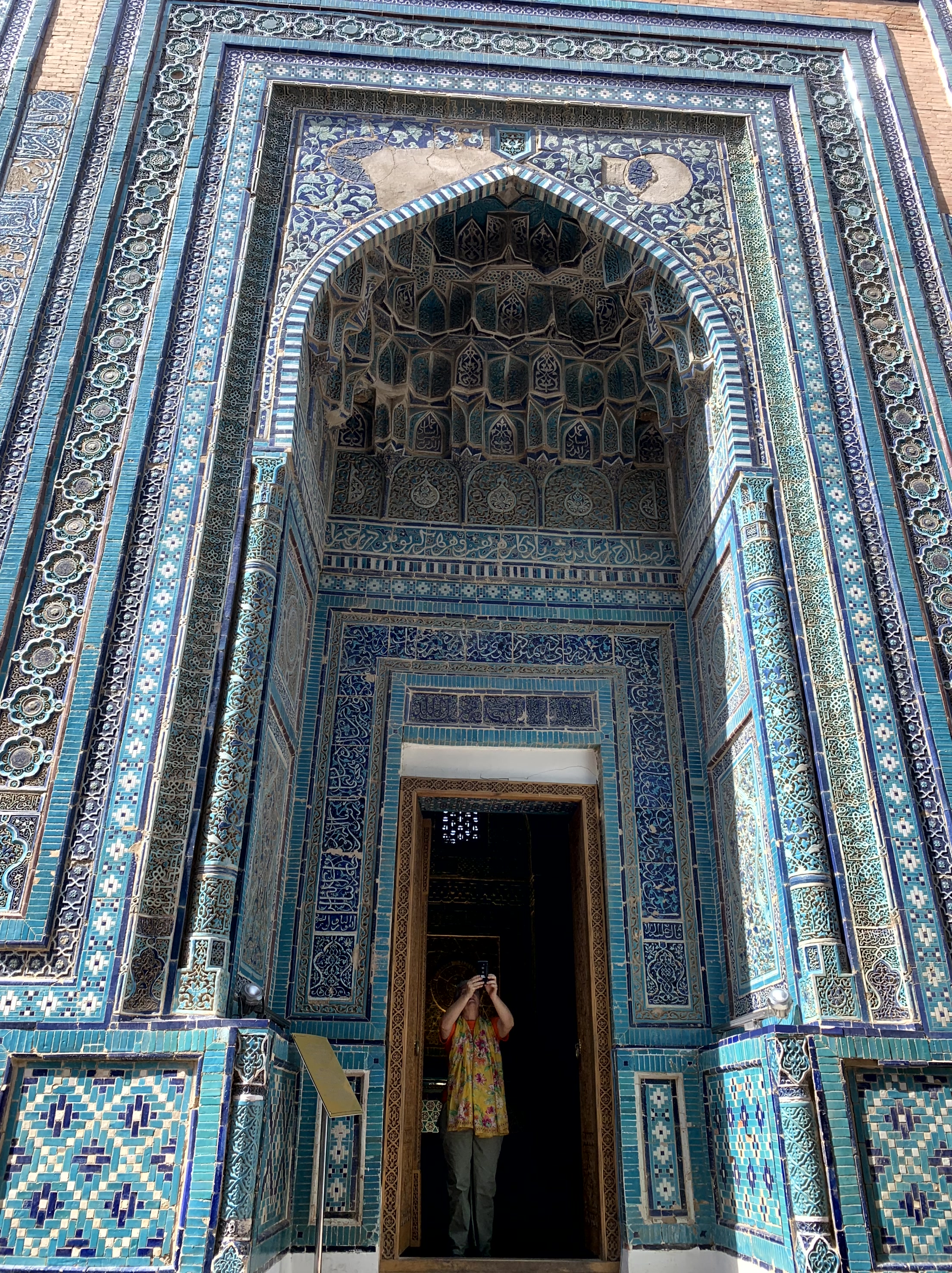
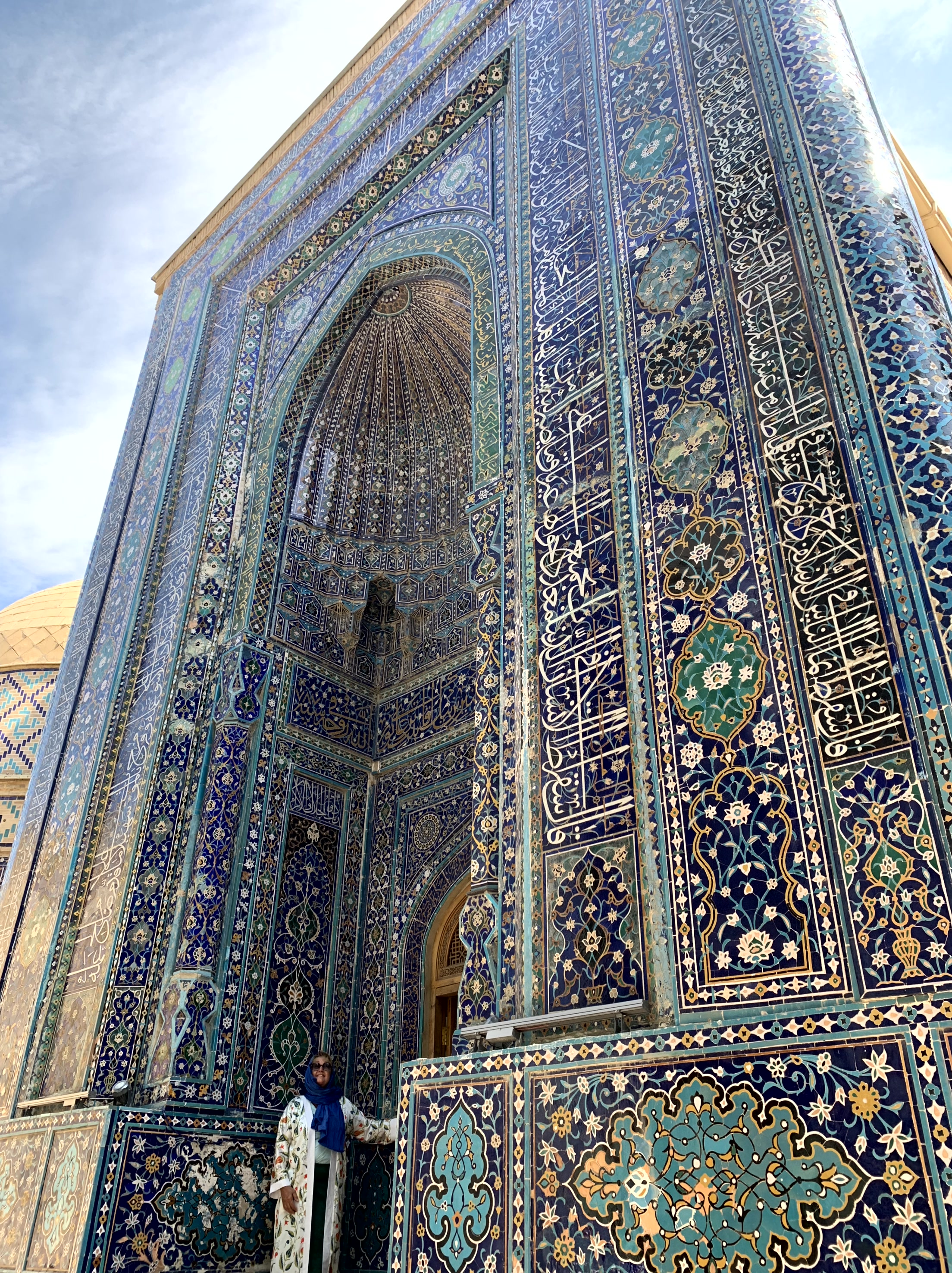
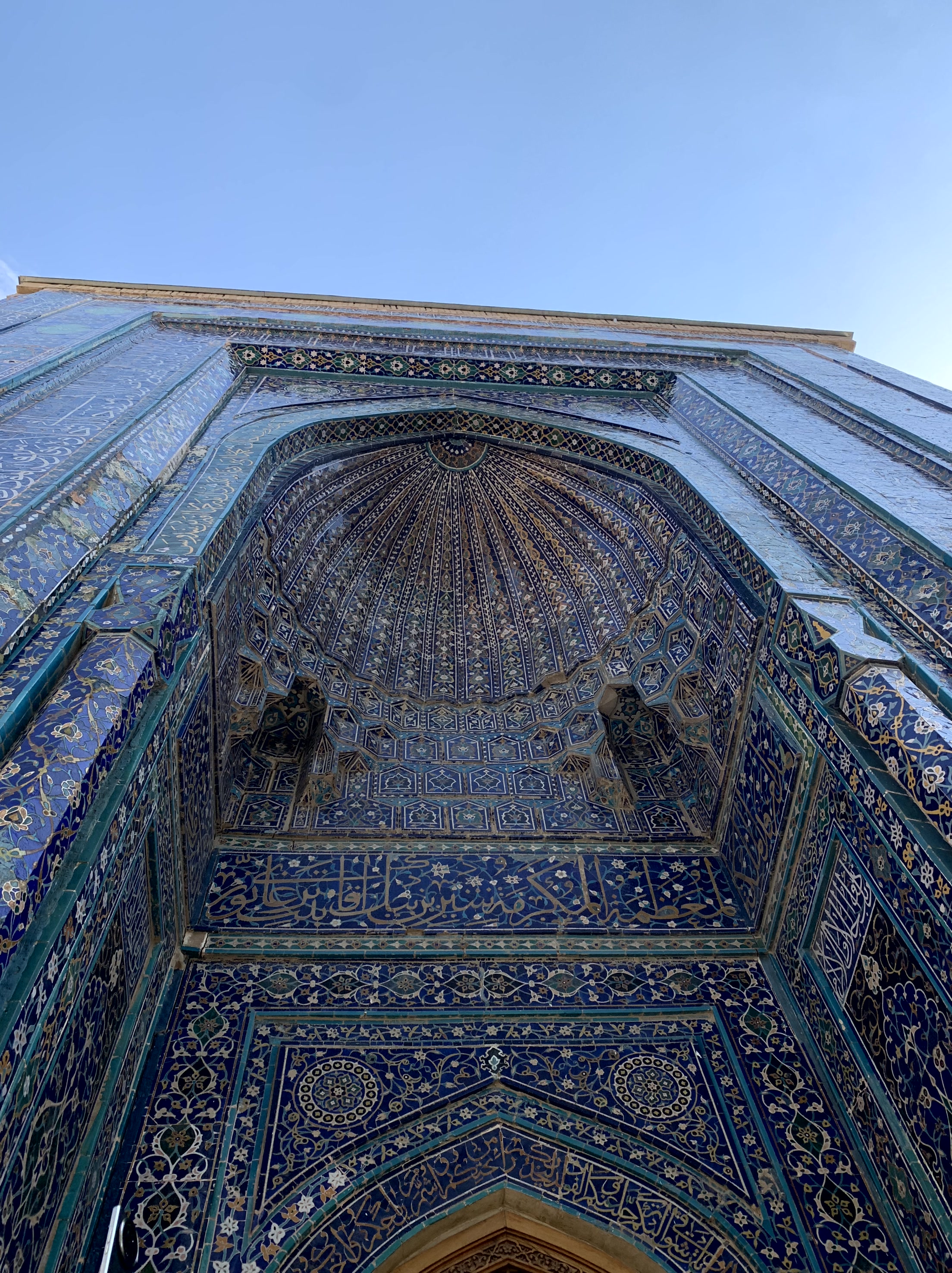
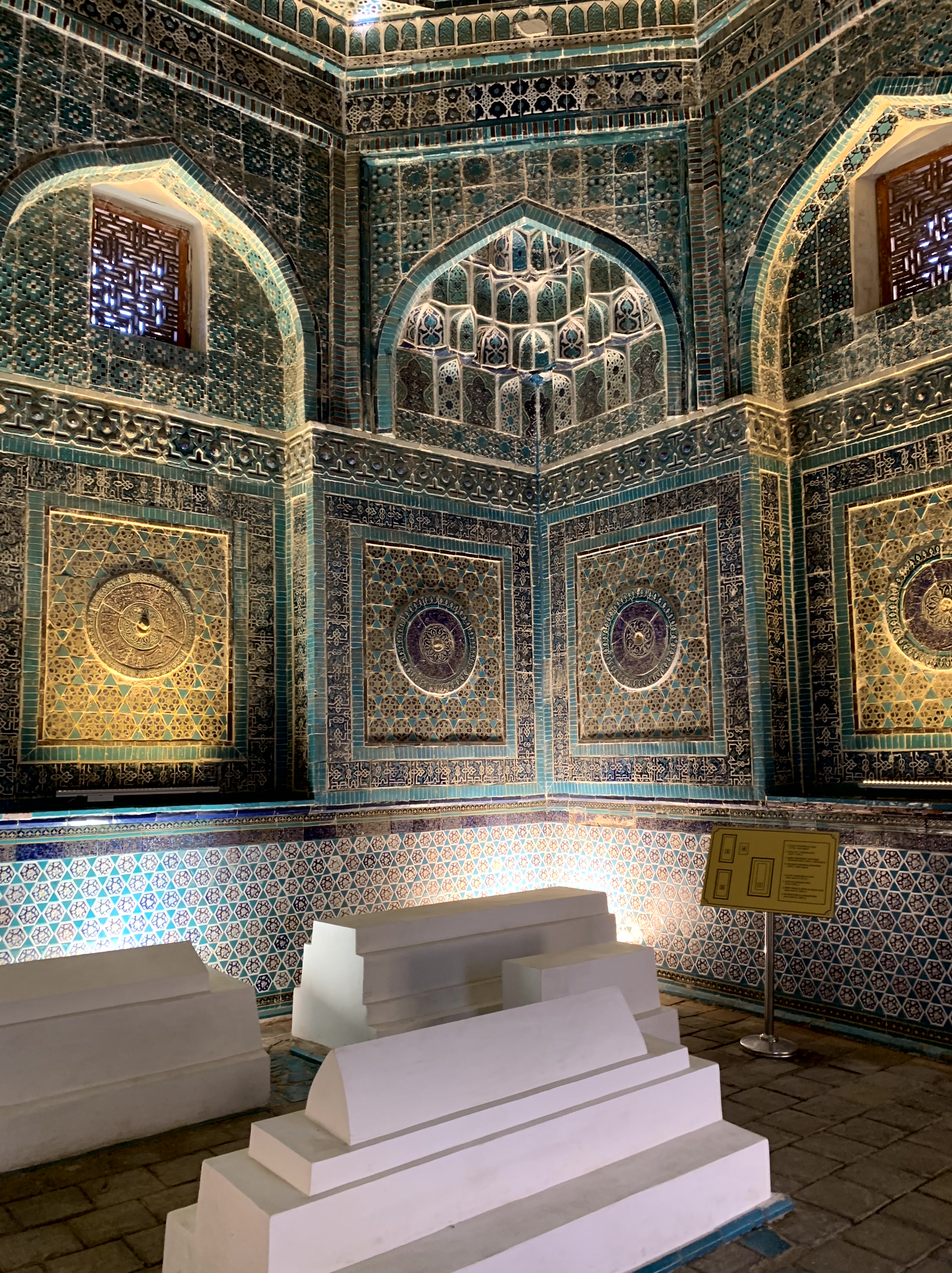
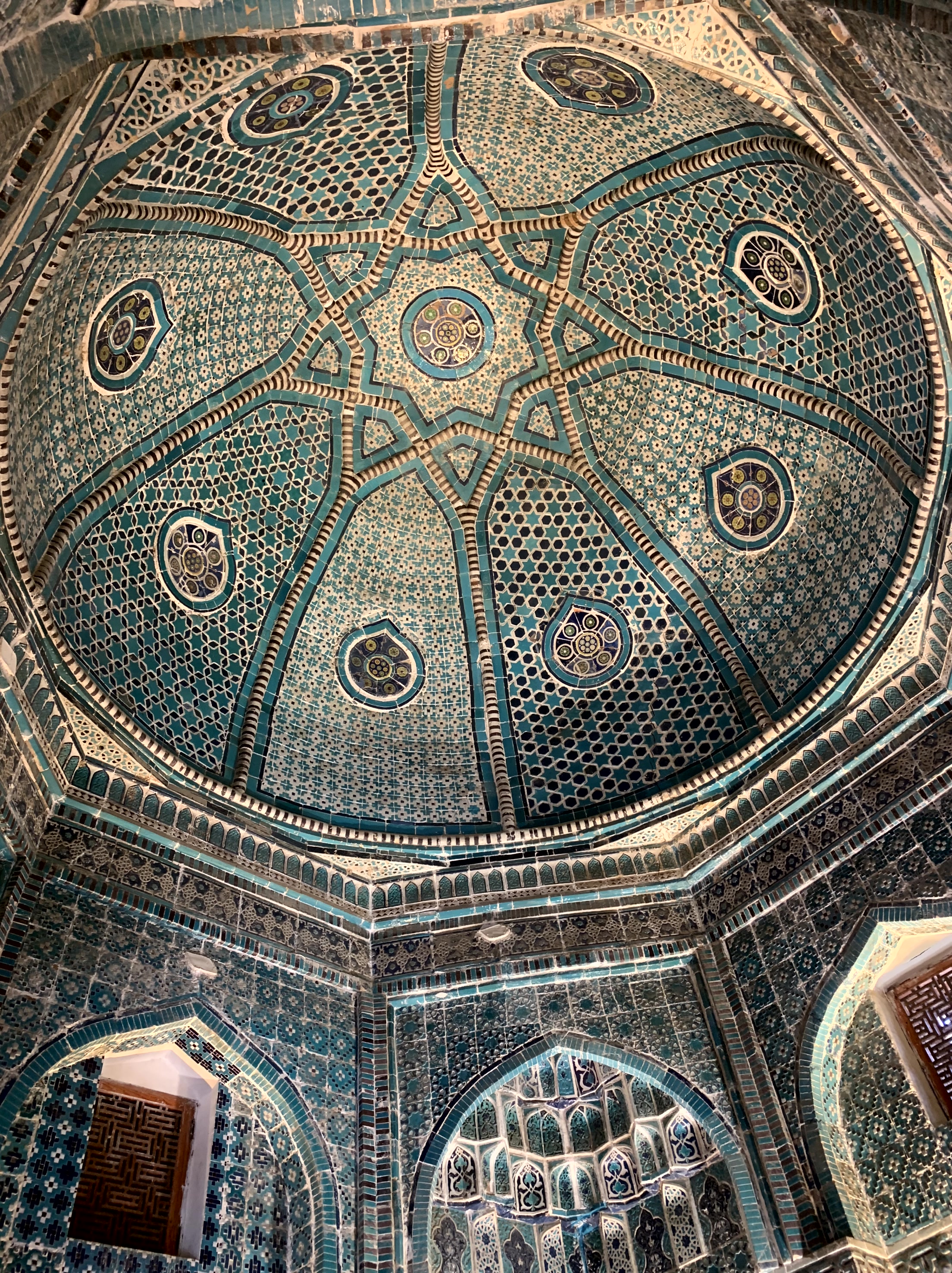
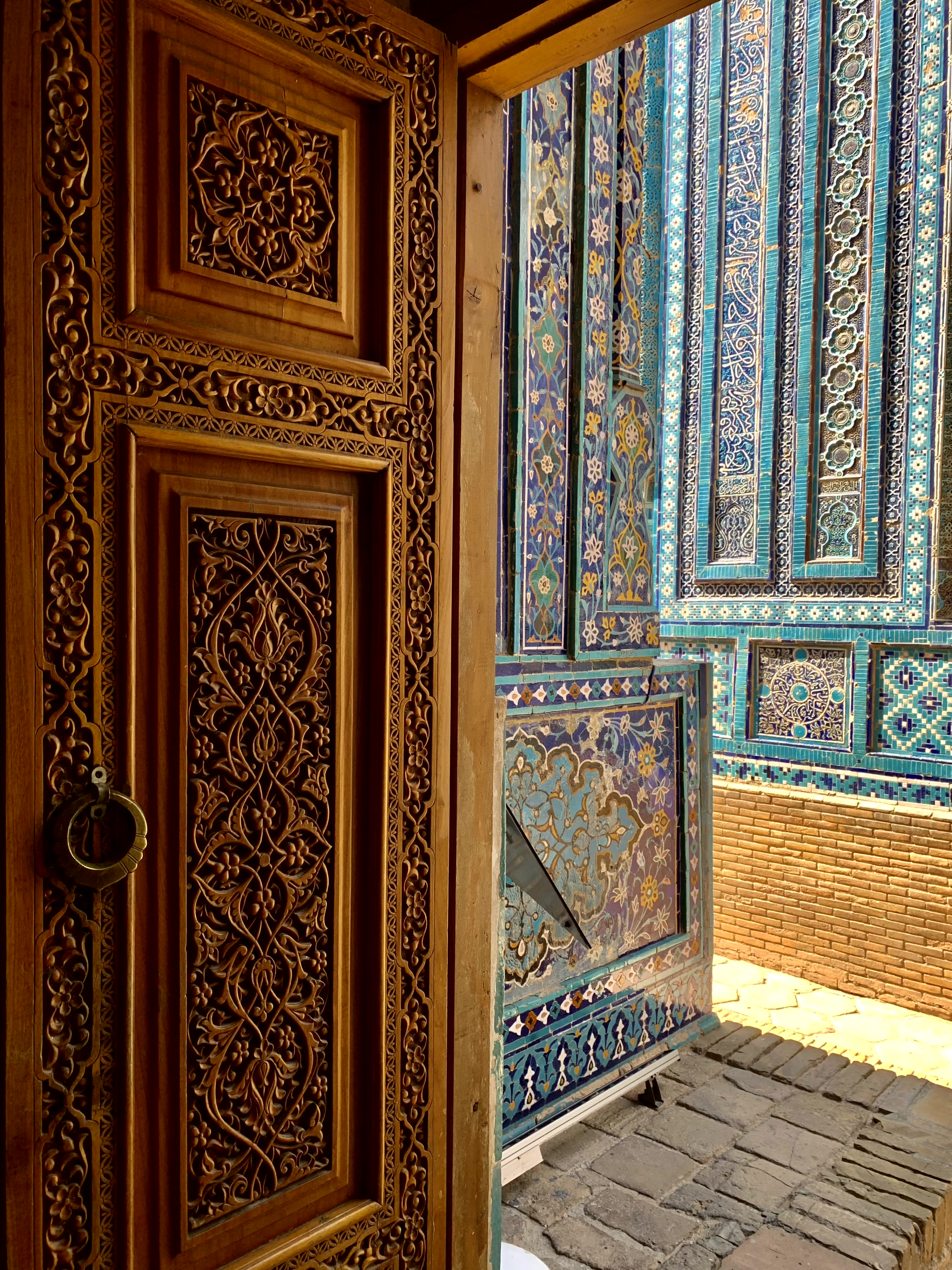
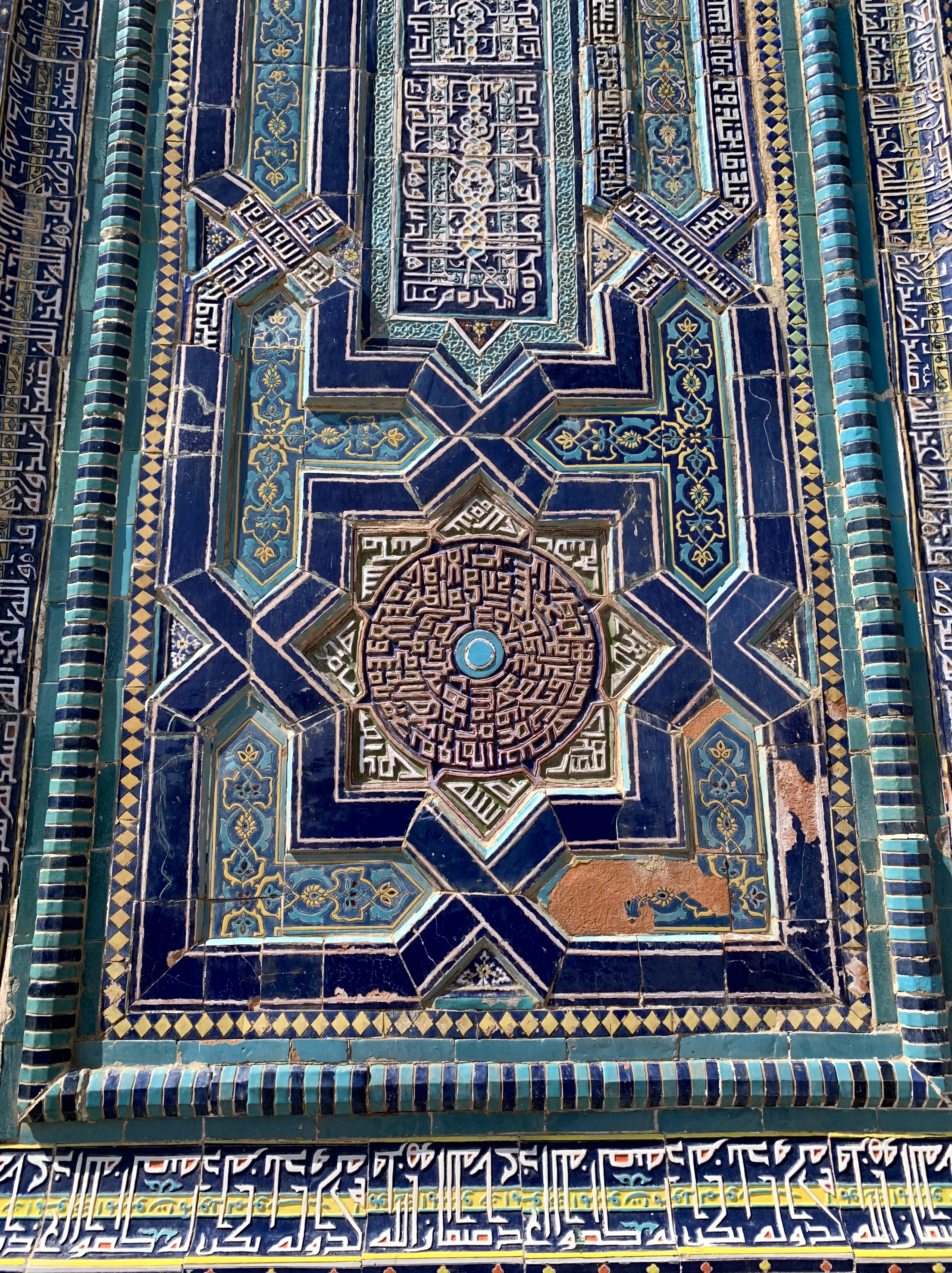
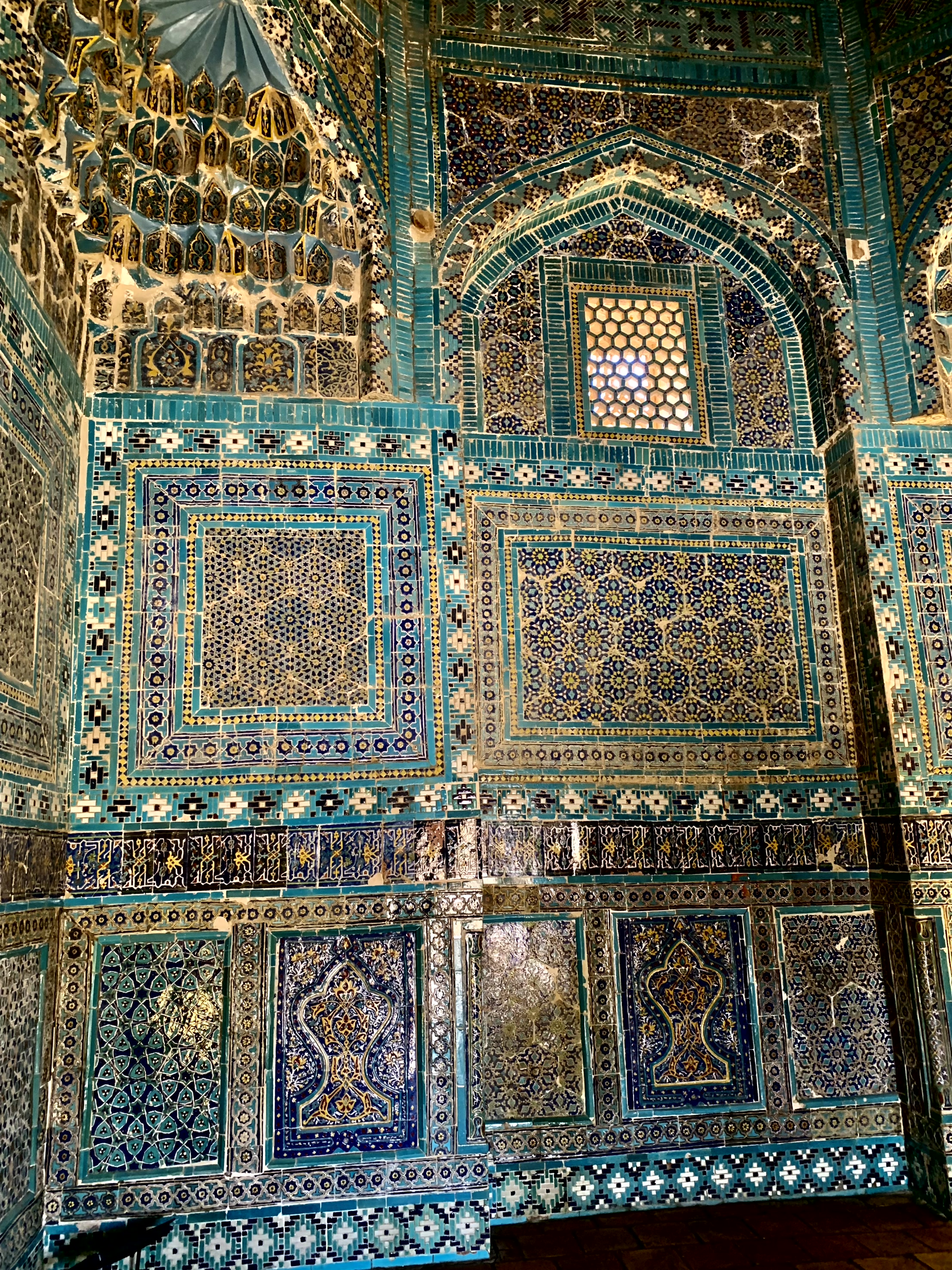
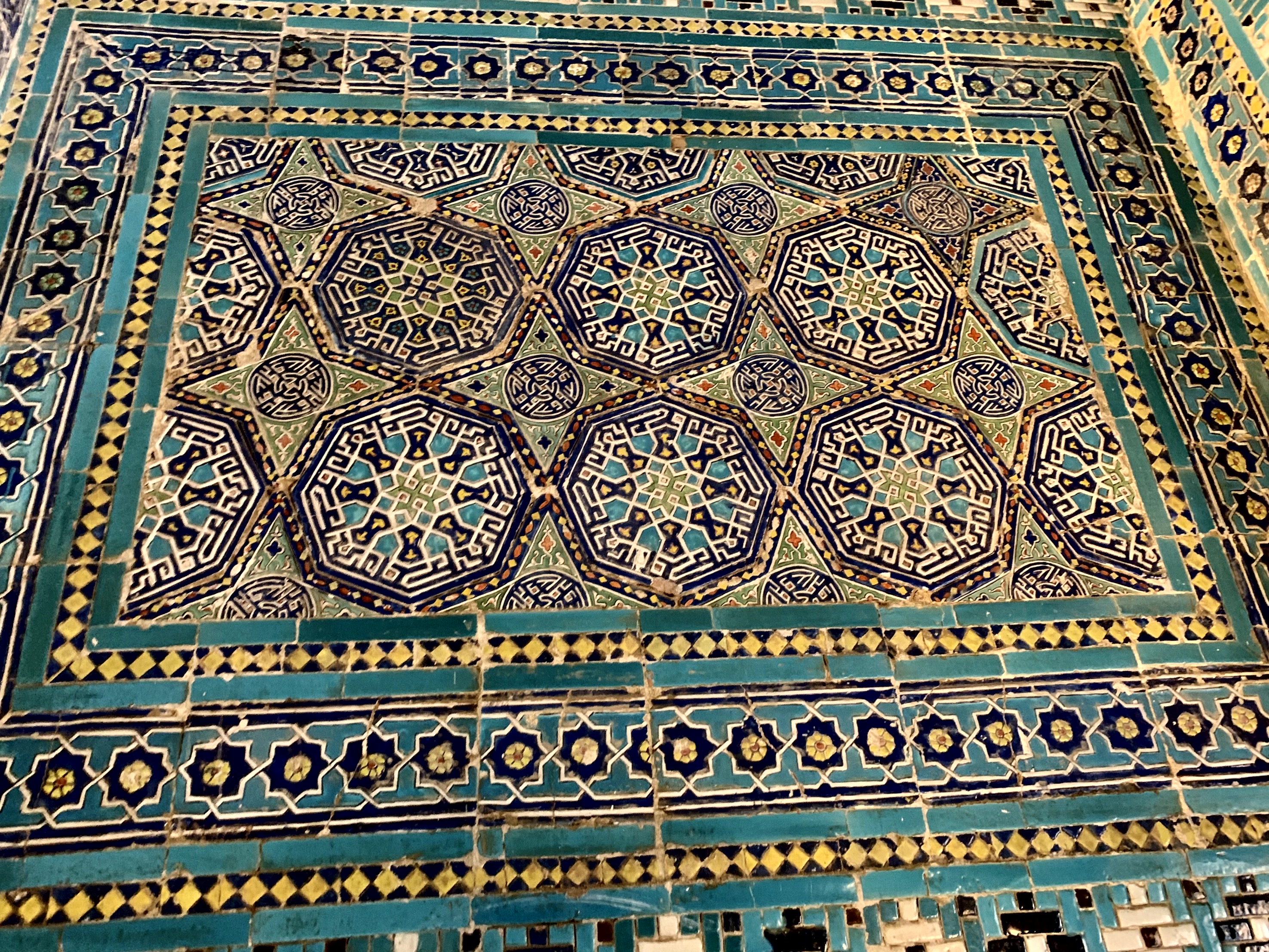
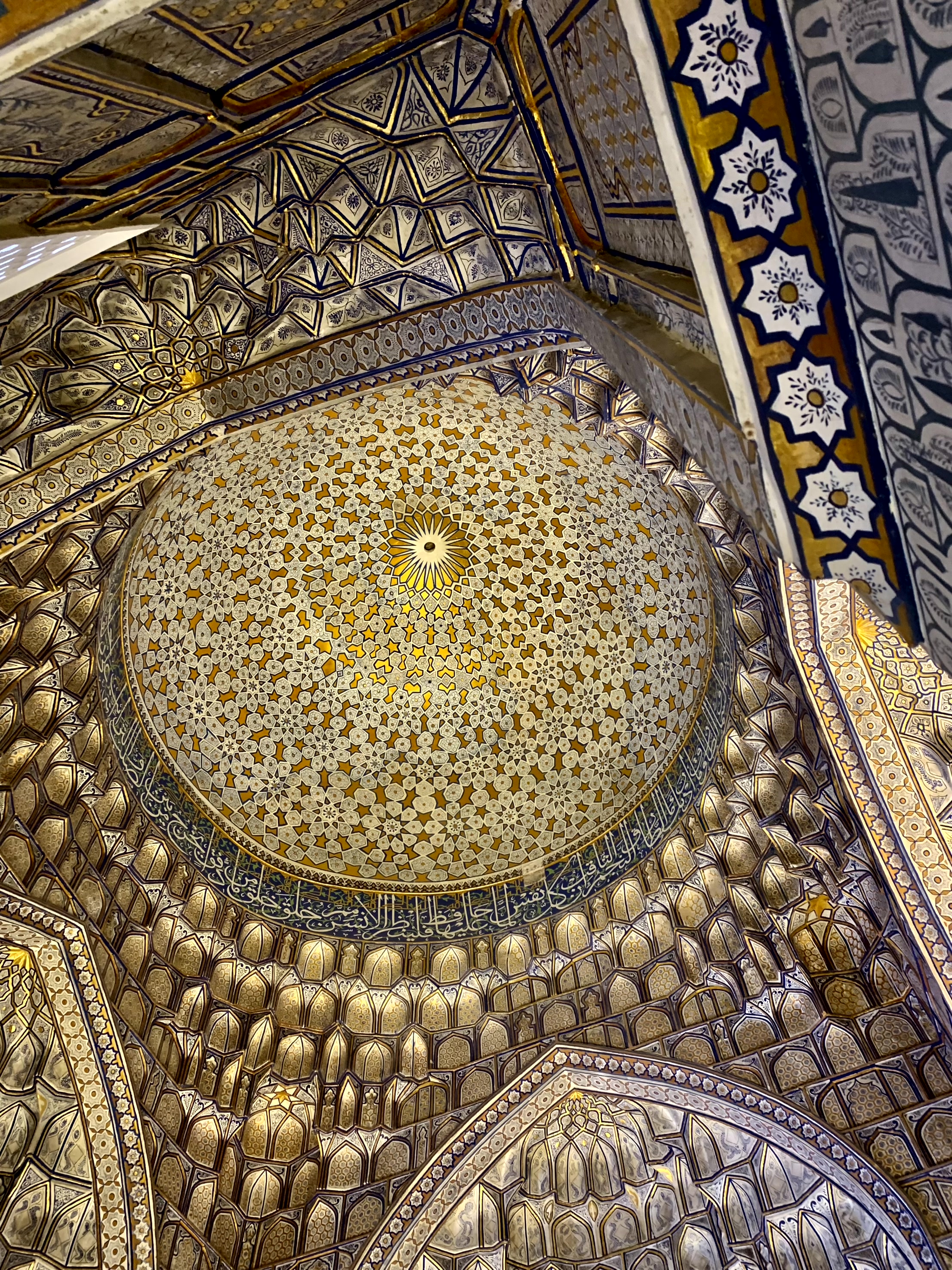
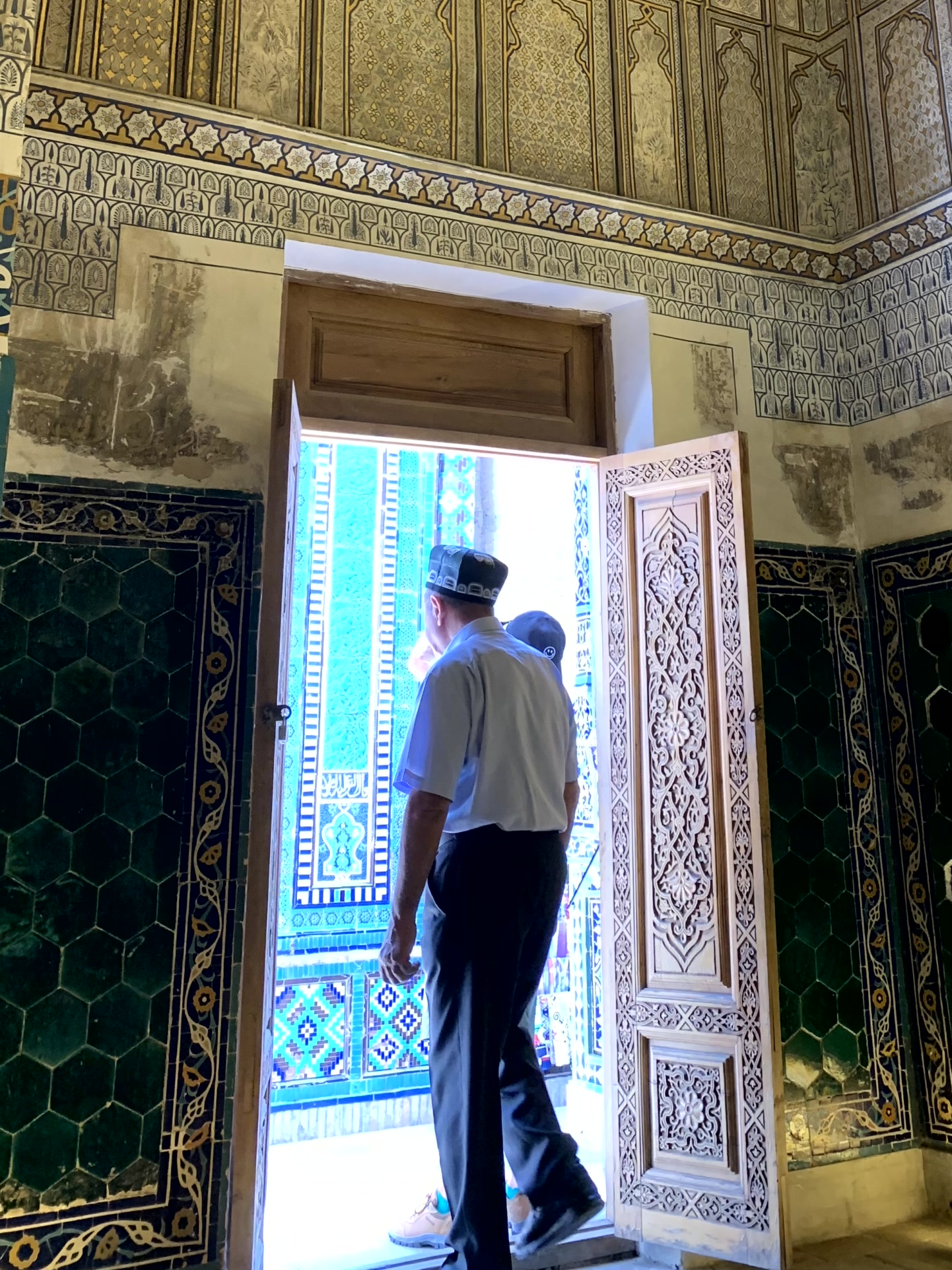
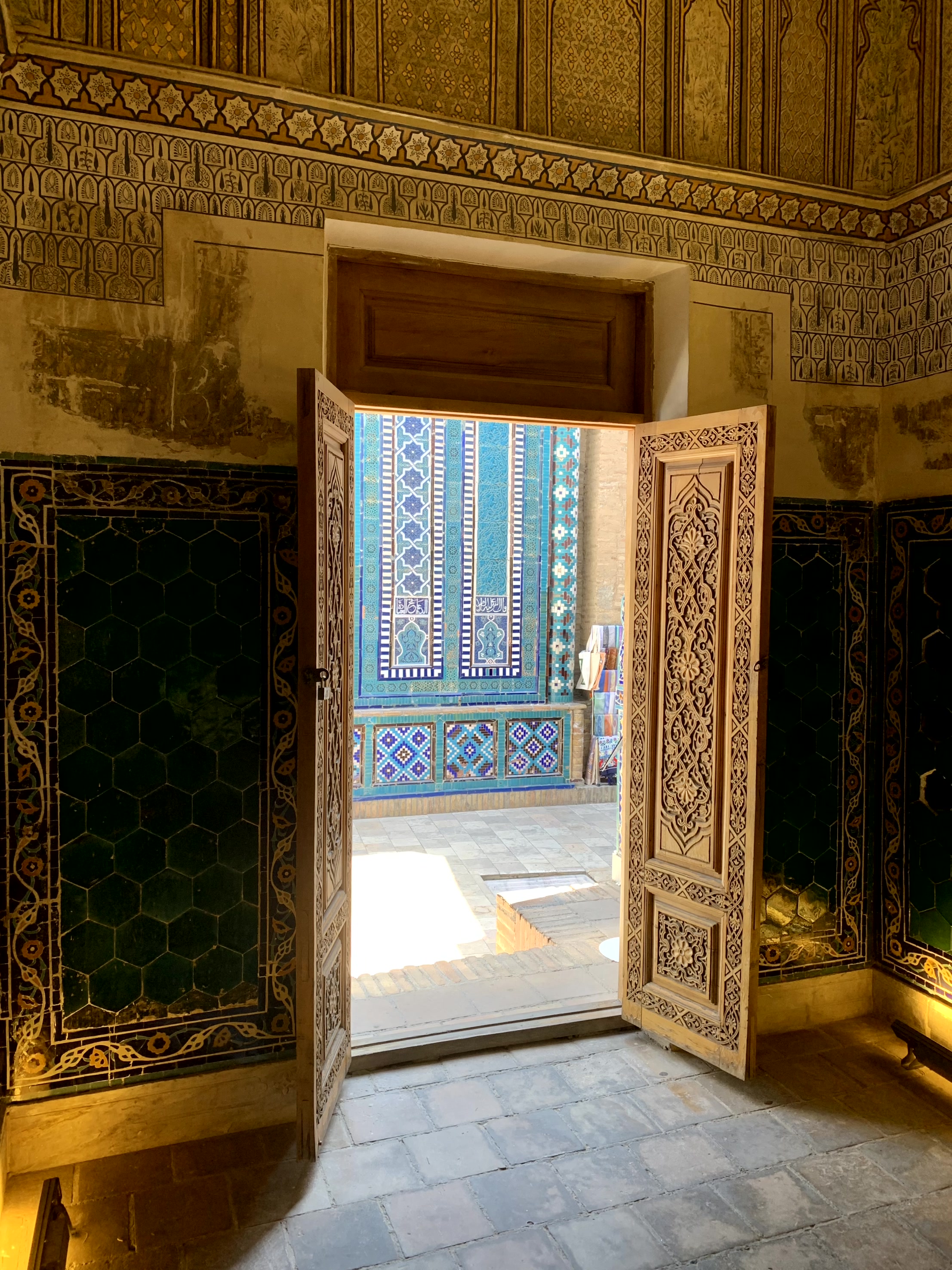
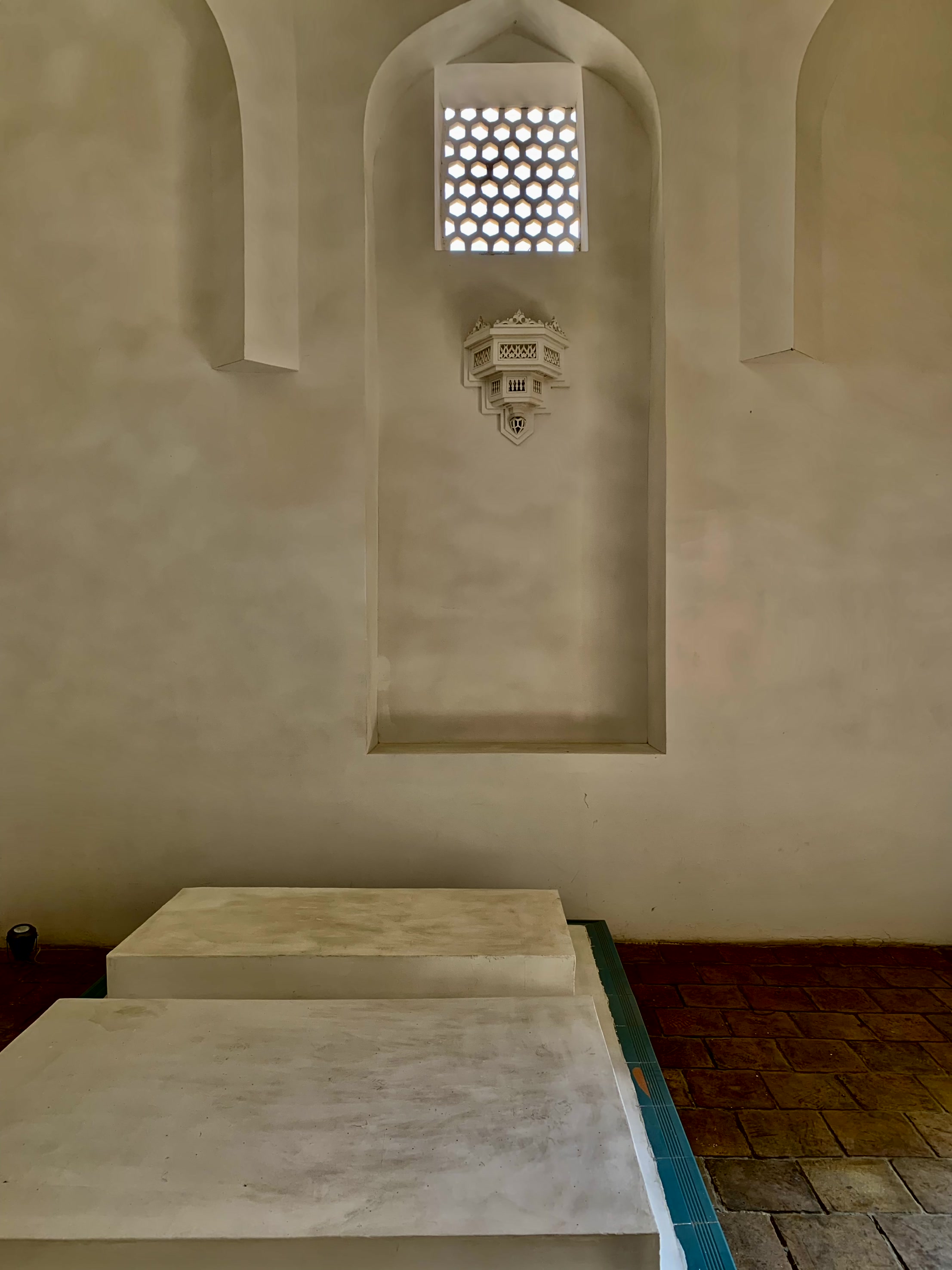
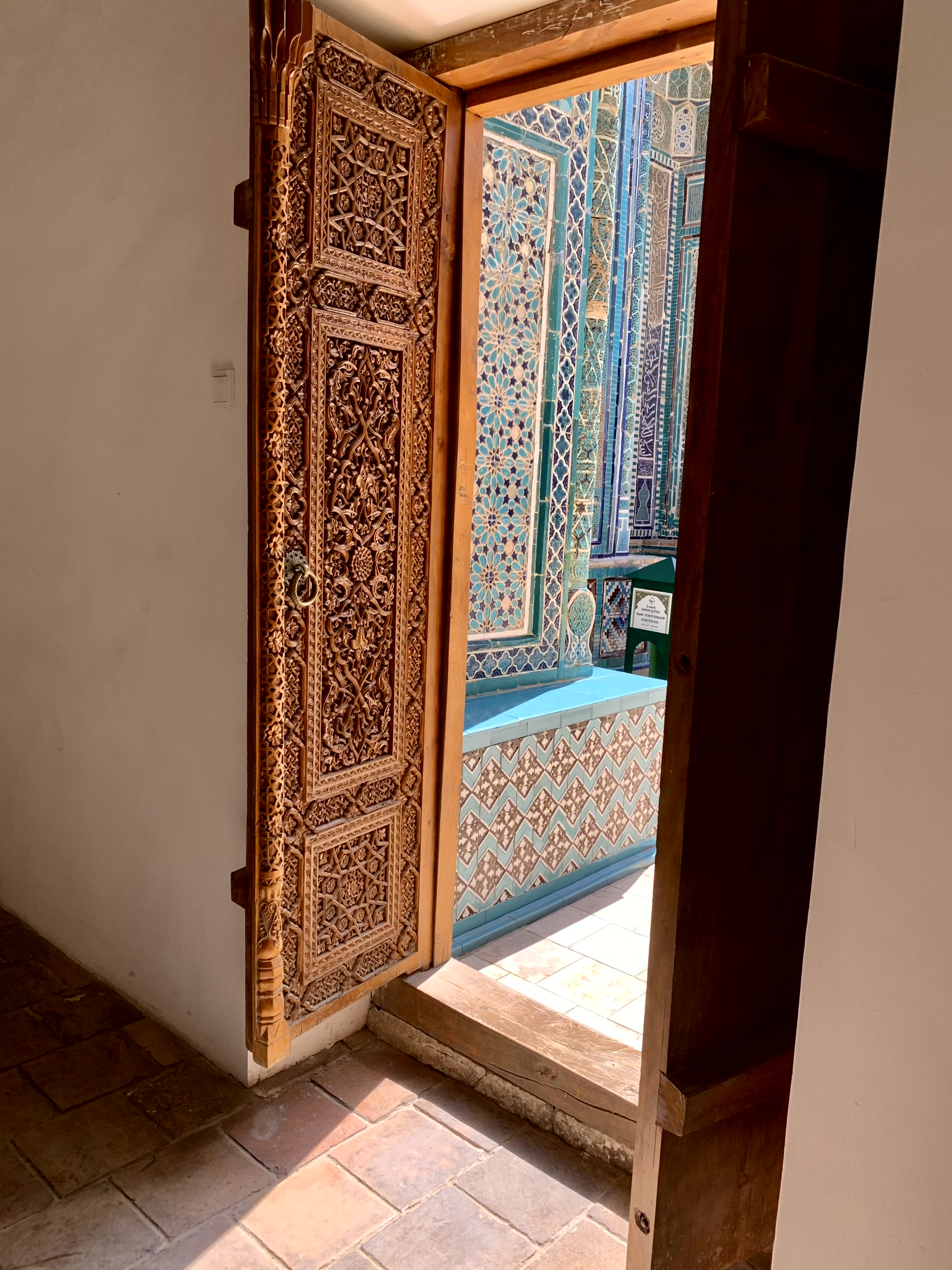
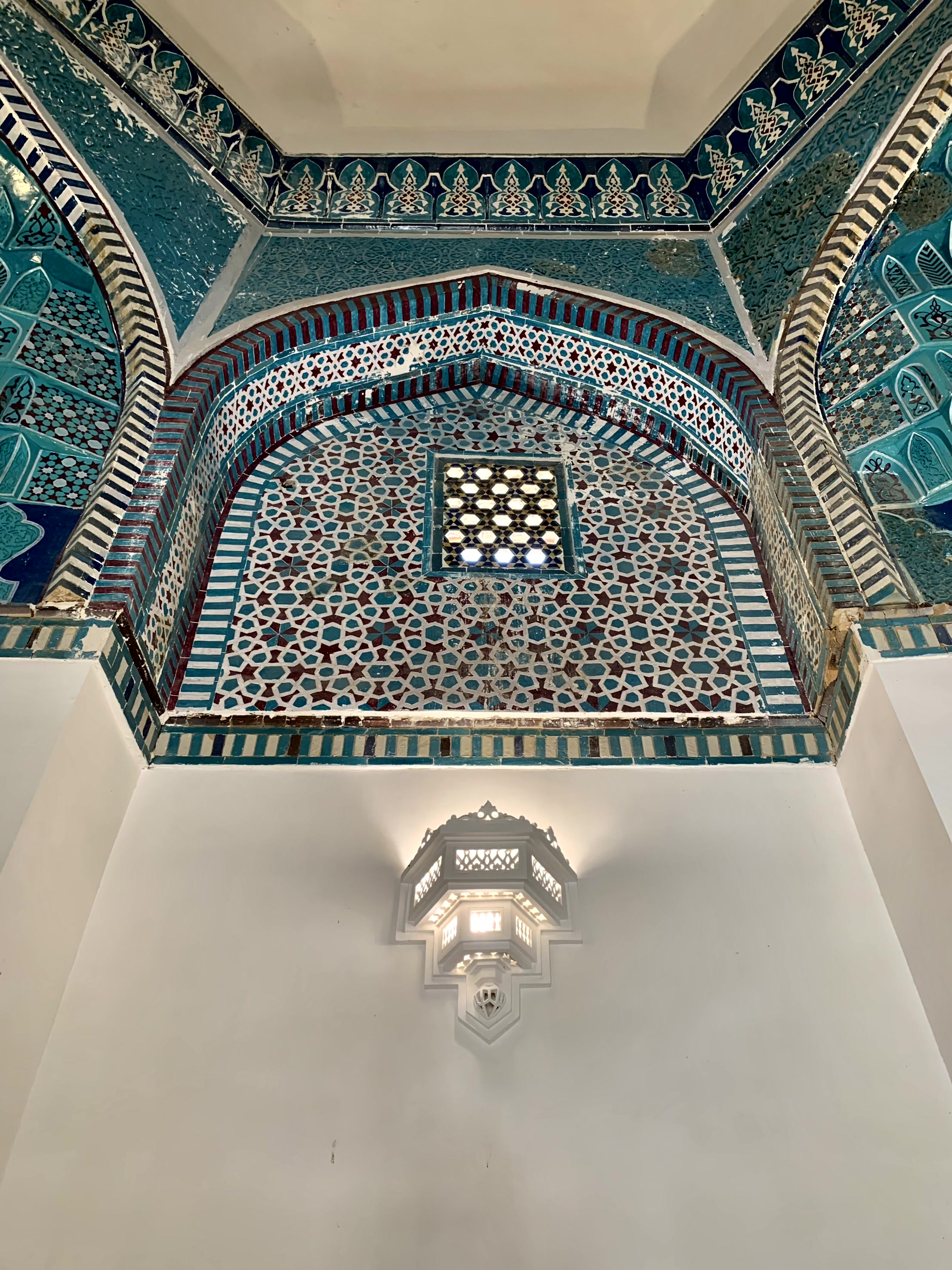
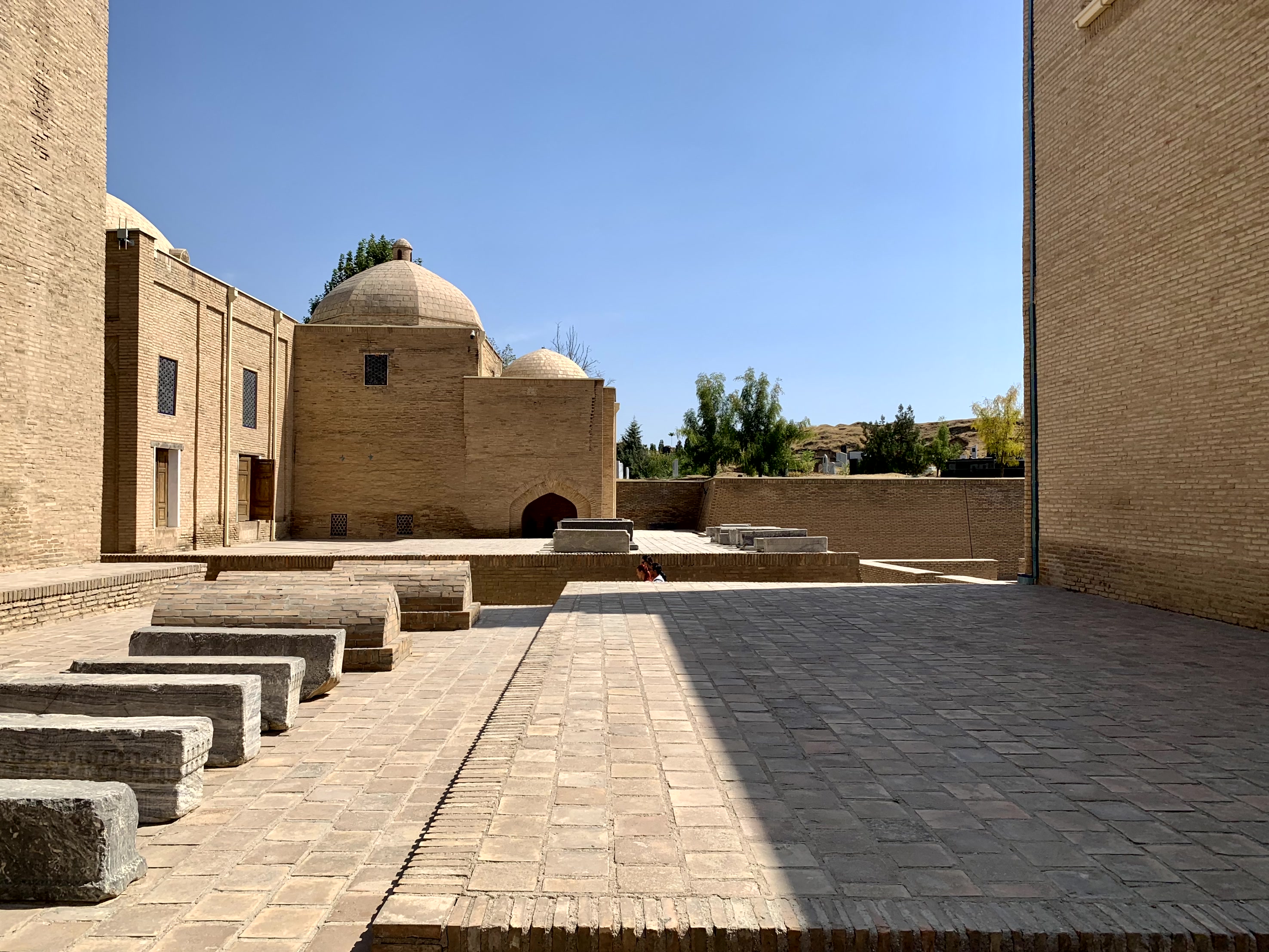
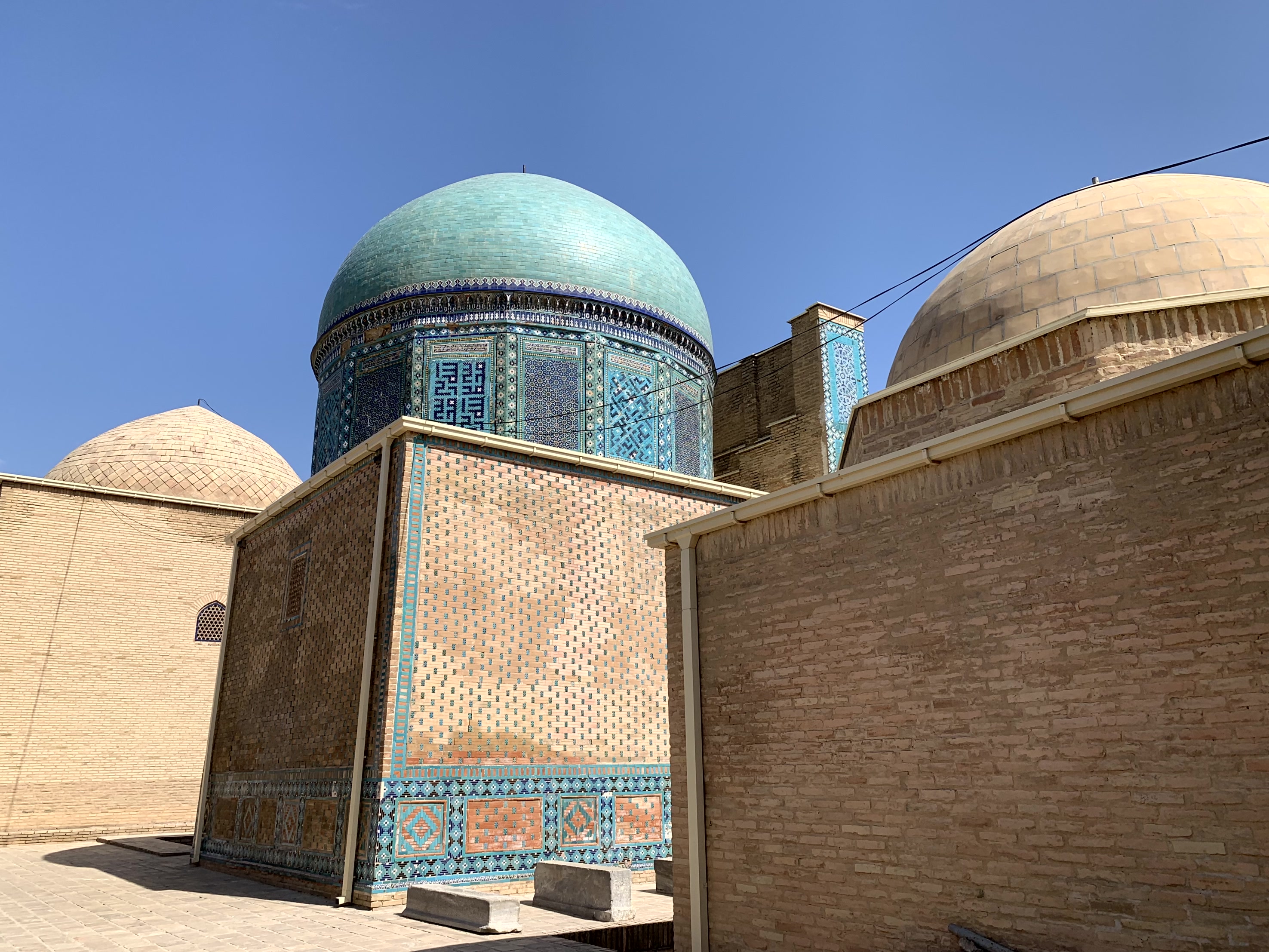
Shah-I-Zinda, lying between the cemeteries and the centre of town, is a whole avenue of mausoleums of the great and the good from the courts at around the time of Emir Timur (14th to 15th centuries CE). It is said to contain some of the richest tilework in the Muslim world. And I wouldn’t disagree. I also took a walk around the Russian town, with its well-kept parks, orthodox church and bustle of daily Samarkand doings.

Samarkand, and especially its ancient sites, has been described by the word ‘Disneyfied’. It is true that the main historical sites have been greatly restored and house tourist shops, but it’s not quite fully there yet. The Jewish quarter is an example. Some of the charming, crumbling buildings here already have government plaques on them marking them as points of historical interest but the tourists have not got there yet (apart from a couple of small family hotels) and Afrosiyob, the cemeteries and the observatory are far enough out of town to be quieter. Nevertheless, apart from being right up there with epic romance-of-travel place names like Timbuktu or Zanzibar, Samarkand is a belter of a place to visit.

Will you let me have a free pee if I sort out that upside down ‘m’? It’s not WC for women and MC for men…

Uzbekistan 1 – The Silk Road: Tashkent

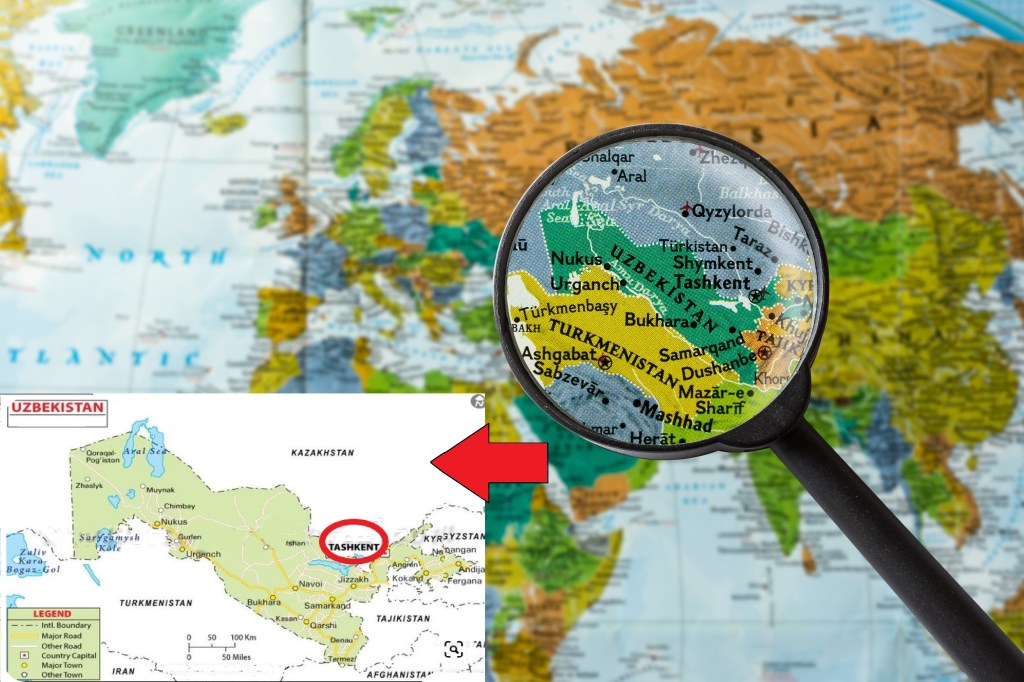
The Silk Road has been on my bucket list for a while now, so I jumped at the chance to travel to Uzbekistan. Tick! Uzbekistan is a rarity in that it is one of only two double-landlocked countries in the world. That means all (5) countries which border it are also landlocked. And in case you were wondering, the other country is Liechtenstein and Uzbekistan shares borders with Afghanistan, Tajikistan, Kazakstan, Kyrgyzstan and Turkmenistan.

The Silk Road is not a road as such but a network of routes between China and Turkey where silk and other goods were transported backwards and forwards. Along this route lay cities, with markets, mosques, hammams and caravanserai to stay and rest up in along the route. And their names have the sort of exotic sparkle that tweaks at your wanderlust like nothing else: Bukhara; Tashkent; Samarkand.

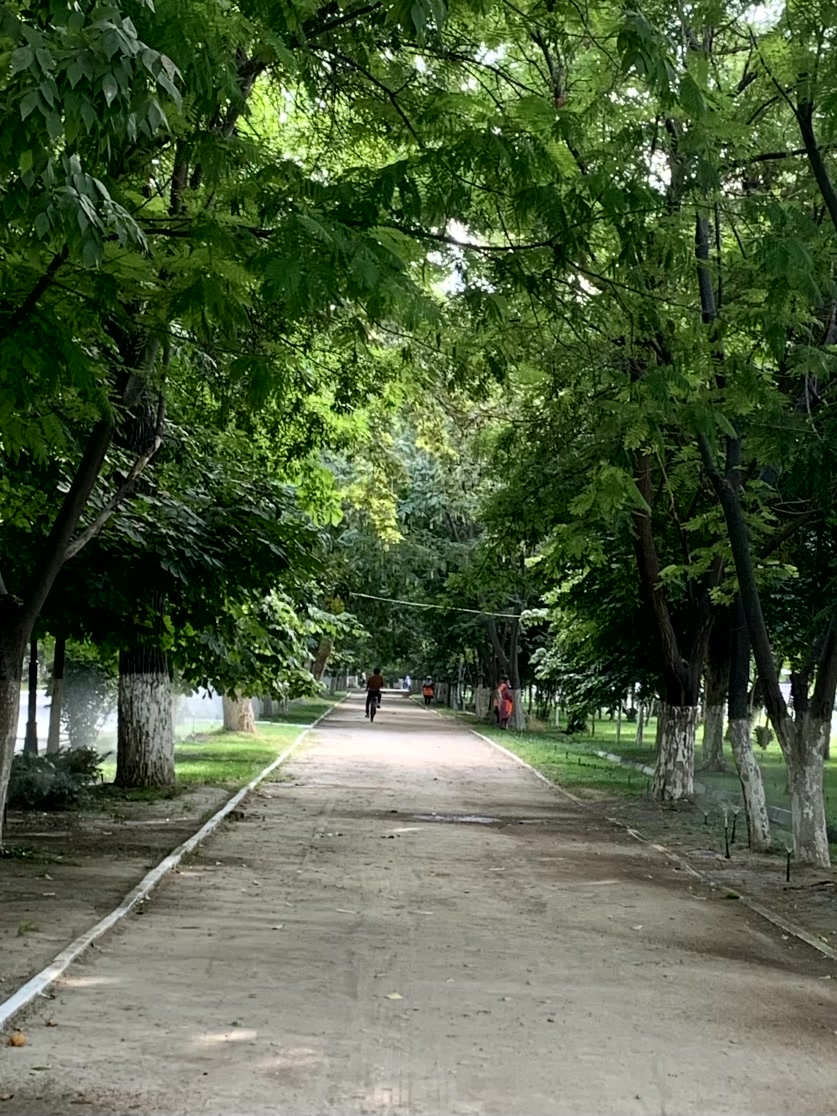
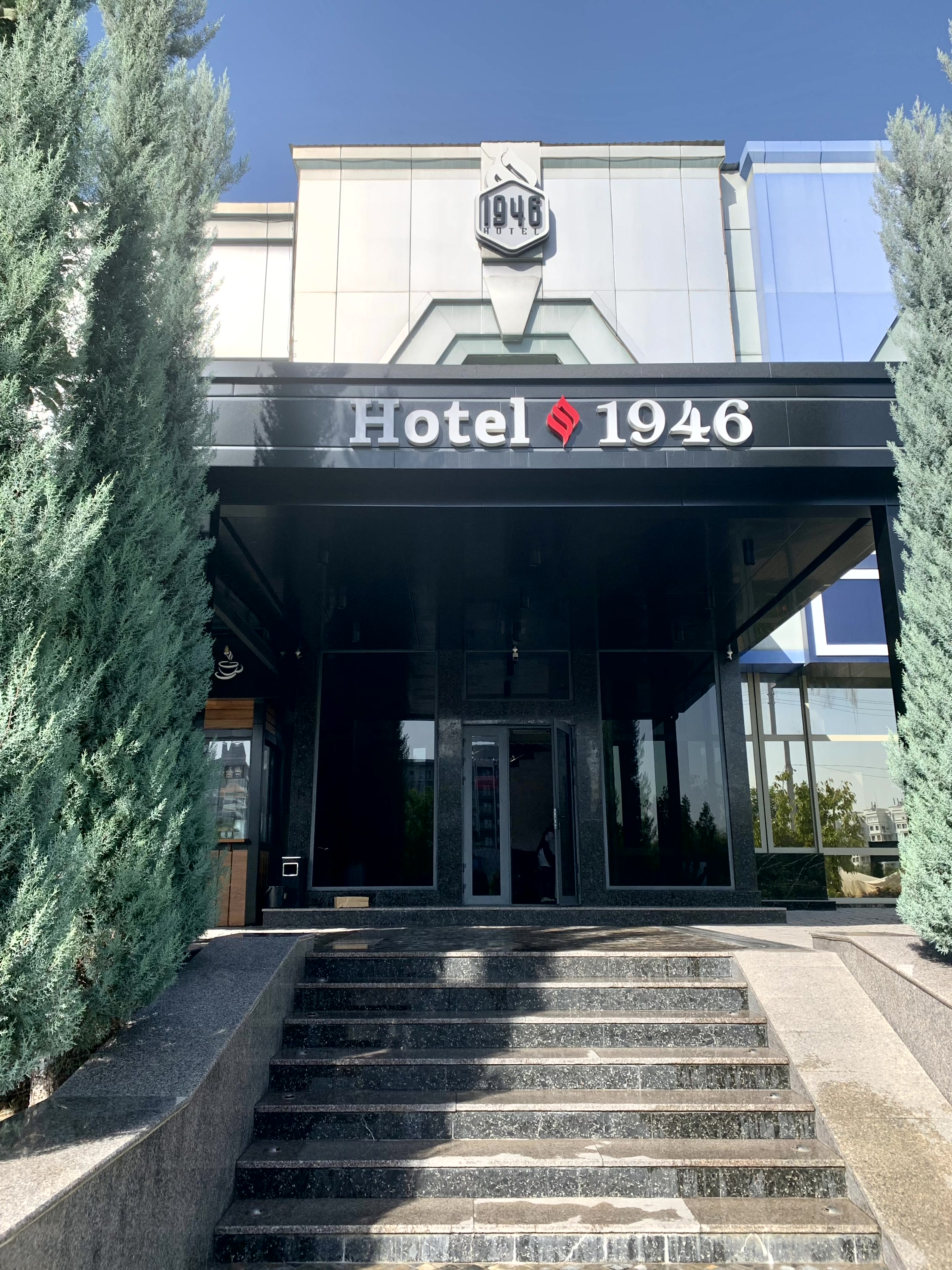
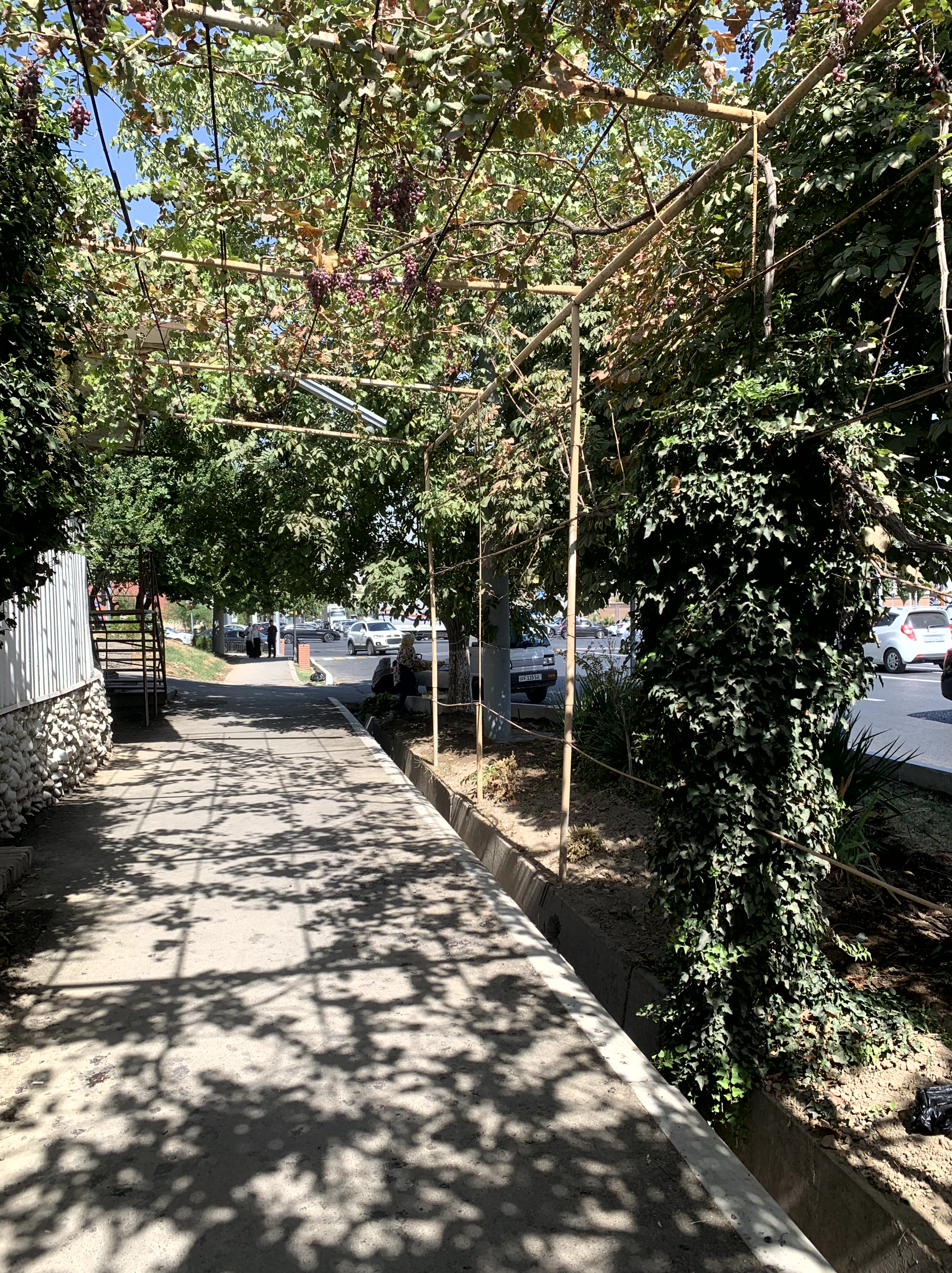
I started in Tashkent, the modern-day capital of Uzbekistan where the first thing that struck me was how nice the trees lining the roads looked with the bottom few feet of their trunks painted white. I had travelled for a day and a night to get there and got to the 1946 hotel at 5 am. I could see two smartly dressed receptionists asleep in armchairs in the lobby and there was a sign on the door saying to phone this number if the door was locked. I’d bought an Uzbek sim card at the airport but ummed and ah-ed about whether I was mean enough to wake them up and doubted they’d let me in this early anyway. Was I that mean? Well, yes, actually. The thought of maybe being able to get a coffee was all a bit too much for me and soon I could hear the phone ringing through the glass doors. I immediately liked this hotel because not only did they let me into a room at five o’clock in the morning, they also told me what time breakfast was. It was a good breakfast too with little filo pastries stuffed with cheese, squash or creamed spinach; fresh fruit and nuts; chips and fried cauliflower; stuffed eggs or pancakes; halva, mushrooms, olives and salads.

Abdulrahman, the abused receptionist I’d woken up, bore me no grudges and was now waiting at breakfast. I got chatting to him. He’s looking a bit bleary-eyed after his night concierge role but his shirt has not the slightest crease in it, even after sleeping in an armchair. They must make some wicked starch around here. He won’t finish until after ten. I never learned the name of his sidekick, the other night concierge, who had not even woken up when I’d arrived, because he was always dozing in the armchair whenever I passed the reception area. Although I did once see him tucking into a piece of cake so voraciously that I didn’t want to disturb him by starting a conversation. You see? I’m not all that mean.

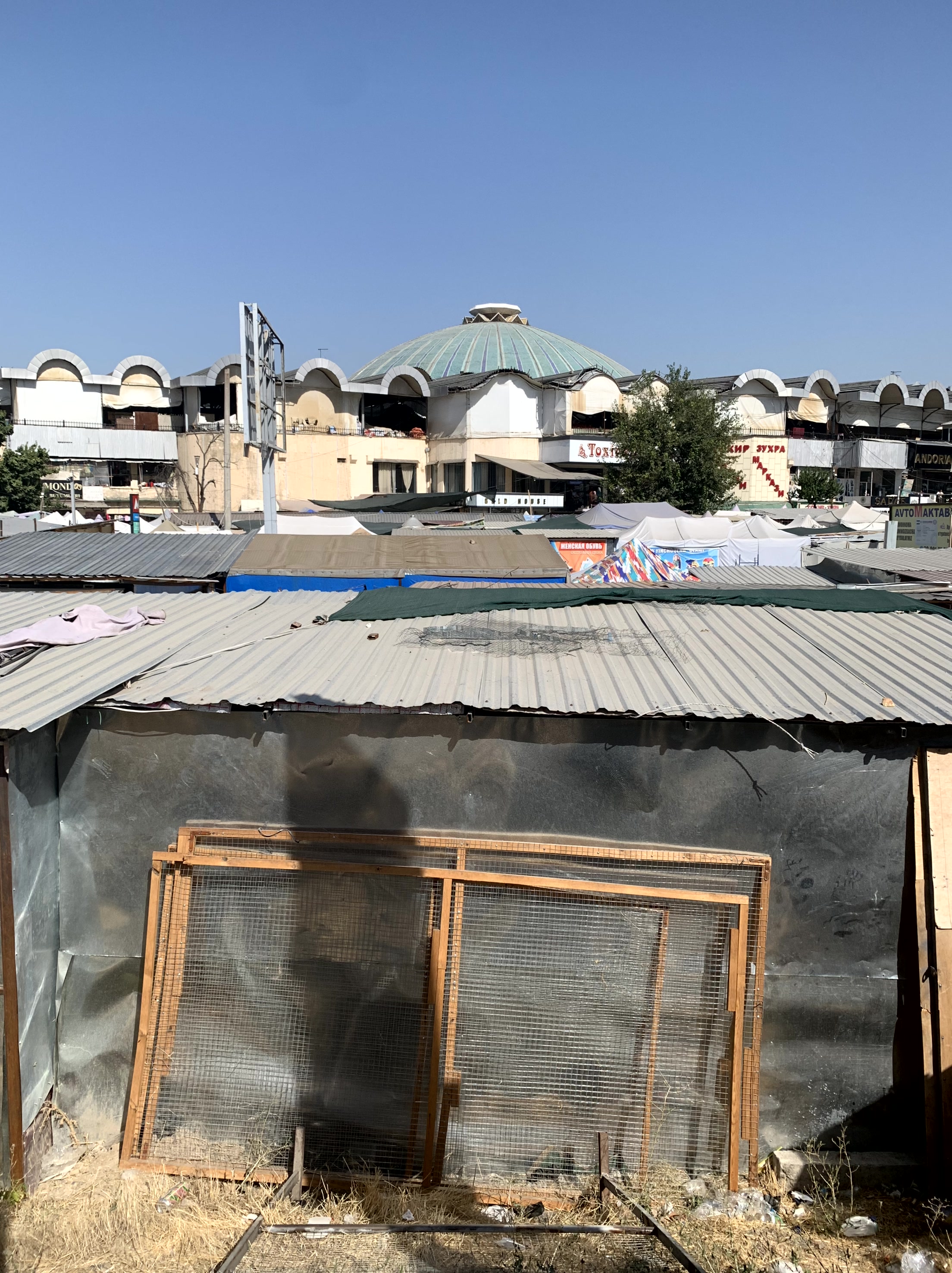
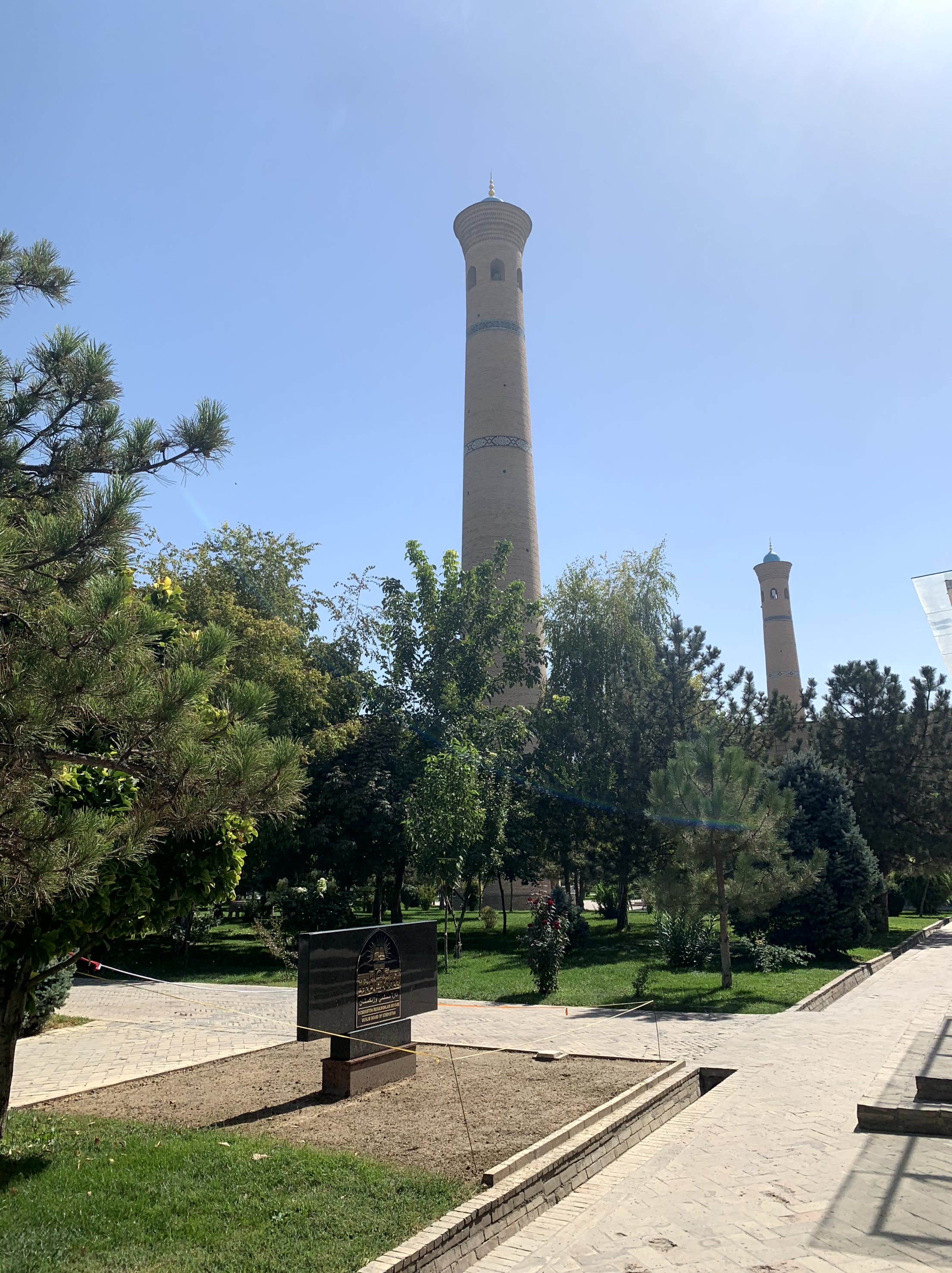
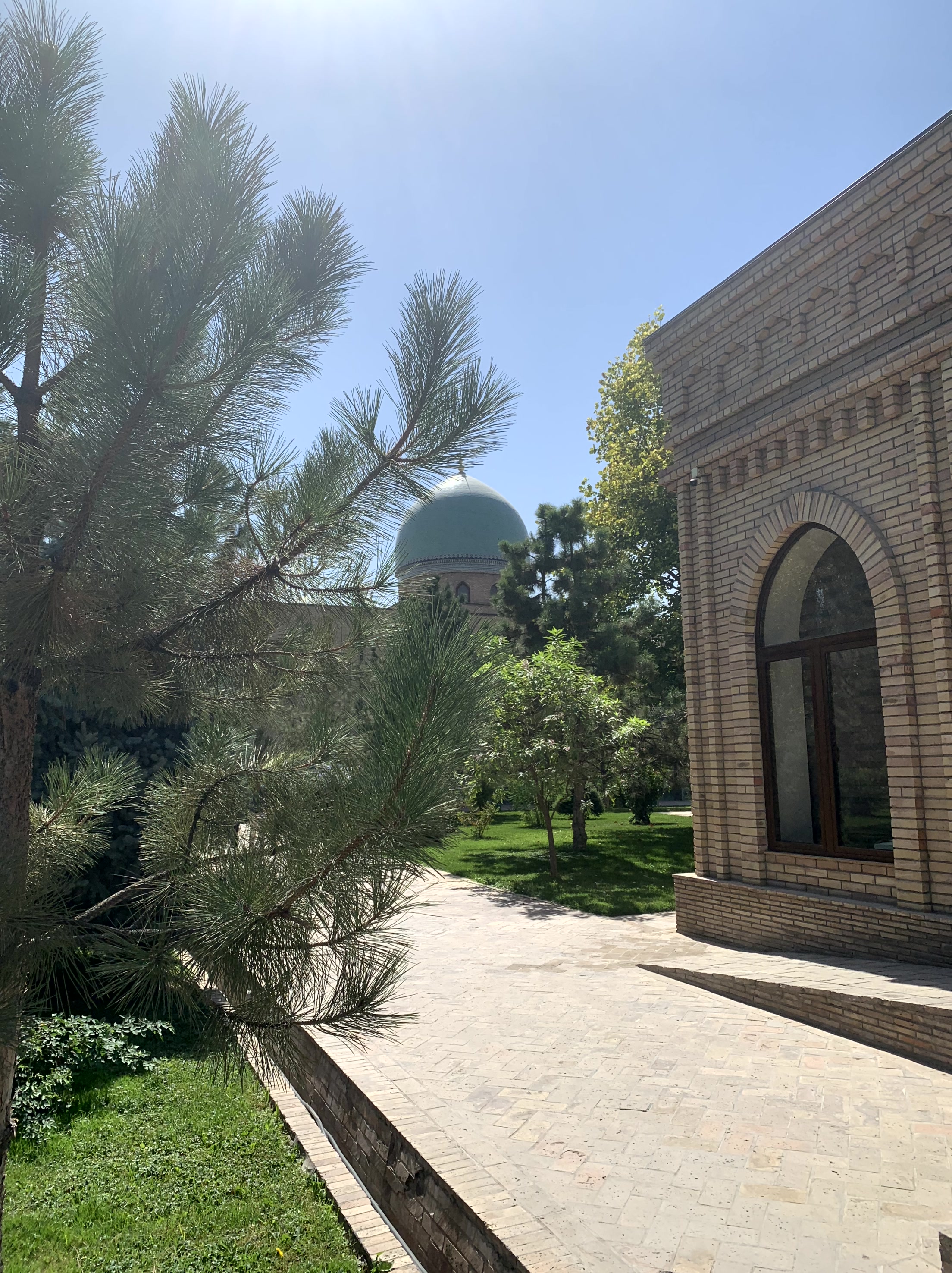
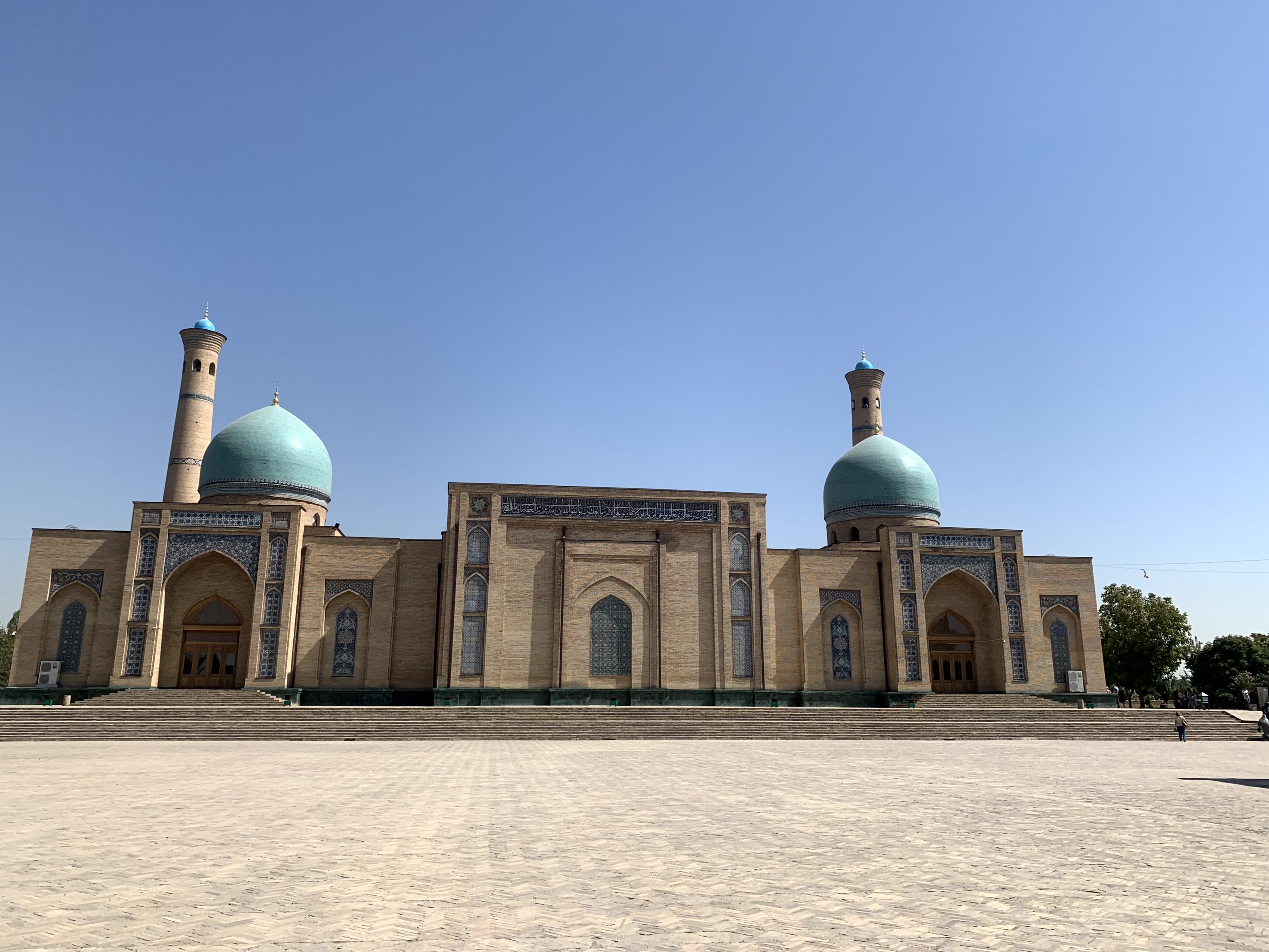
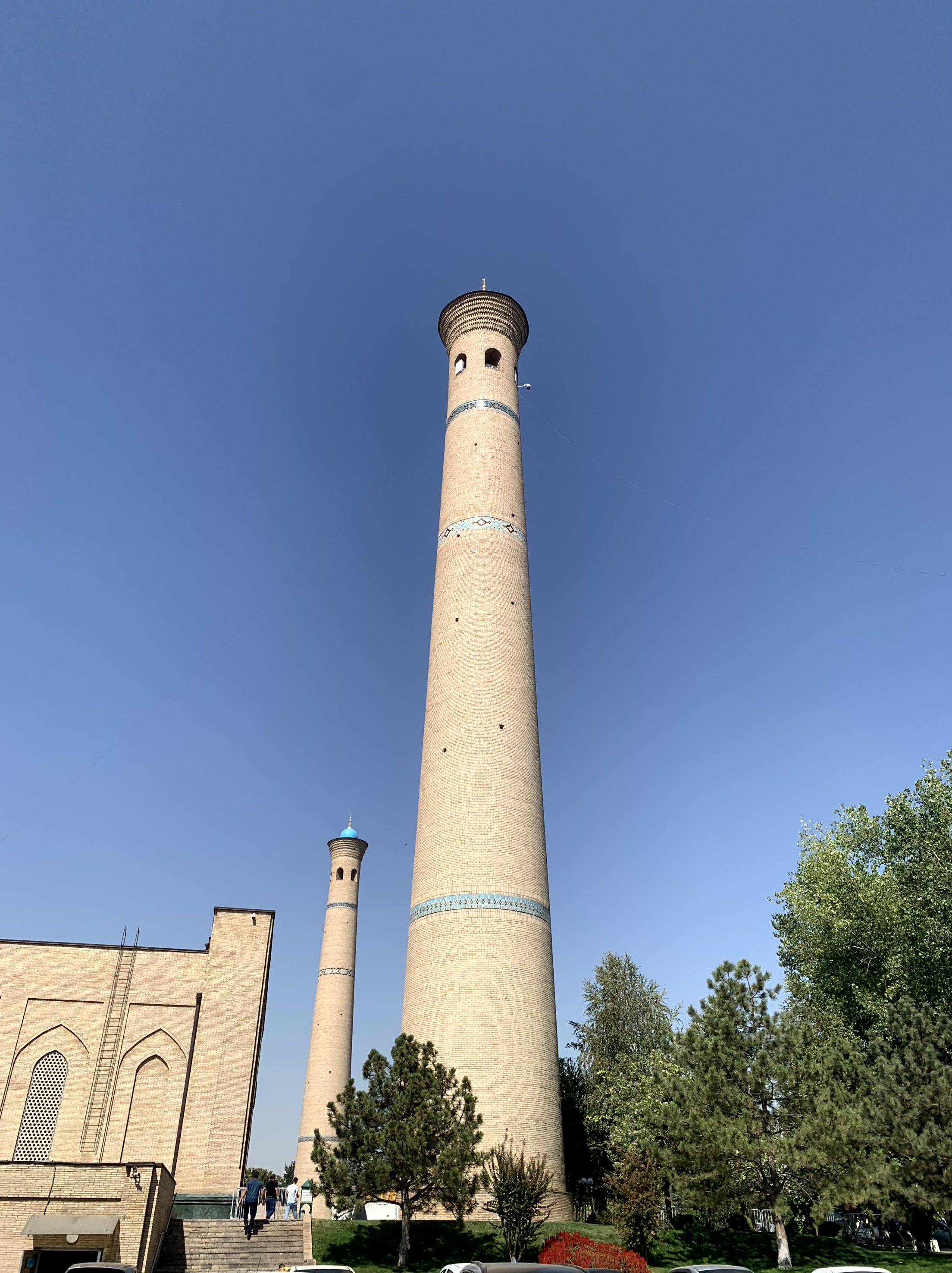
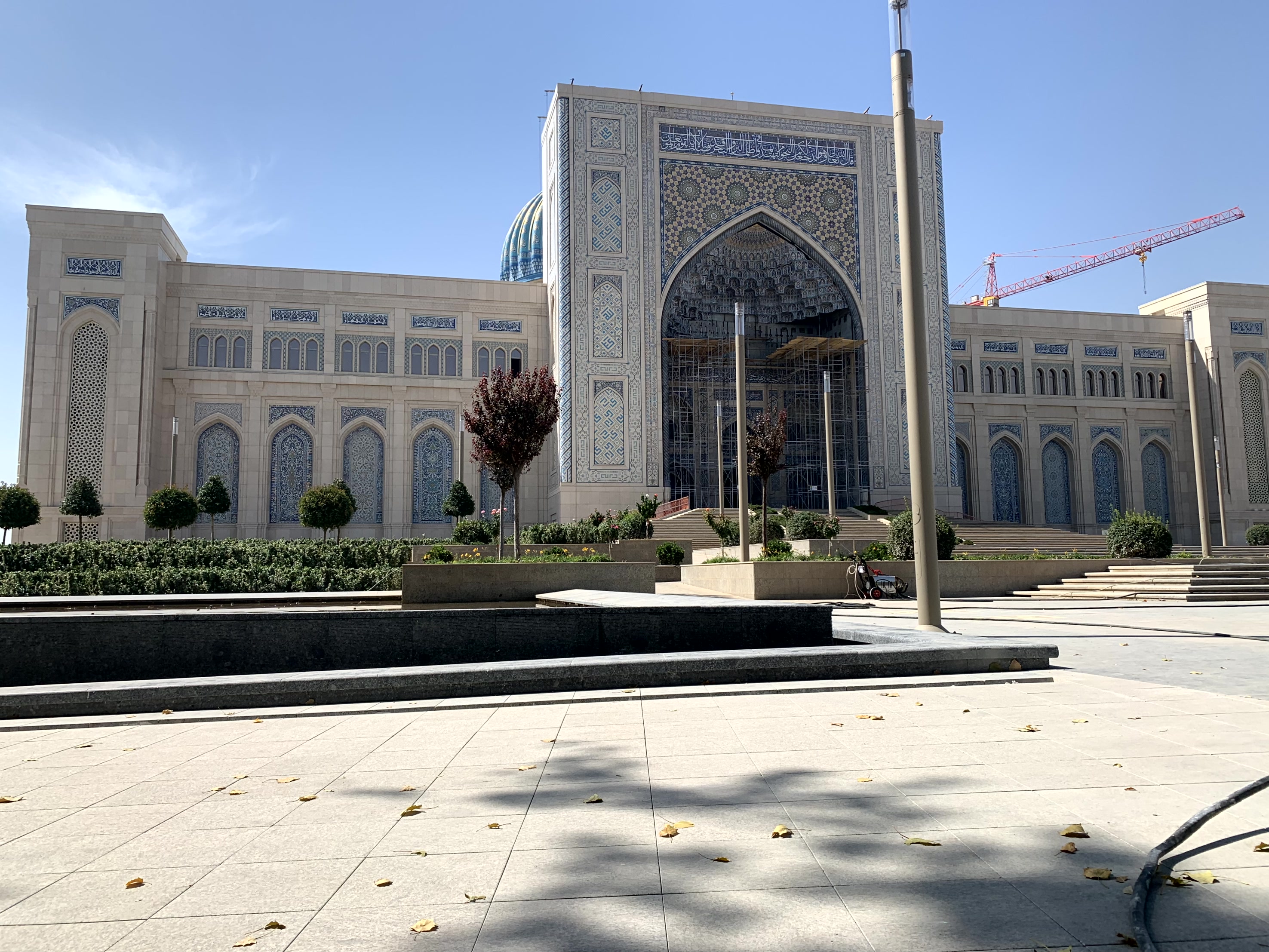
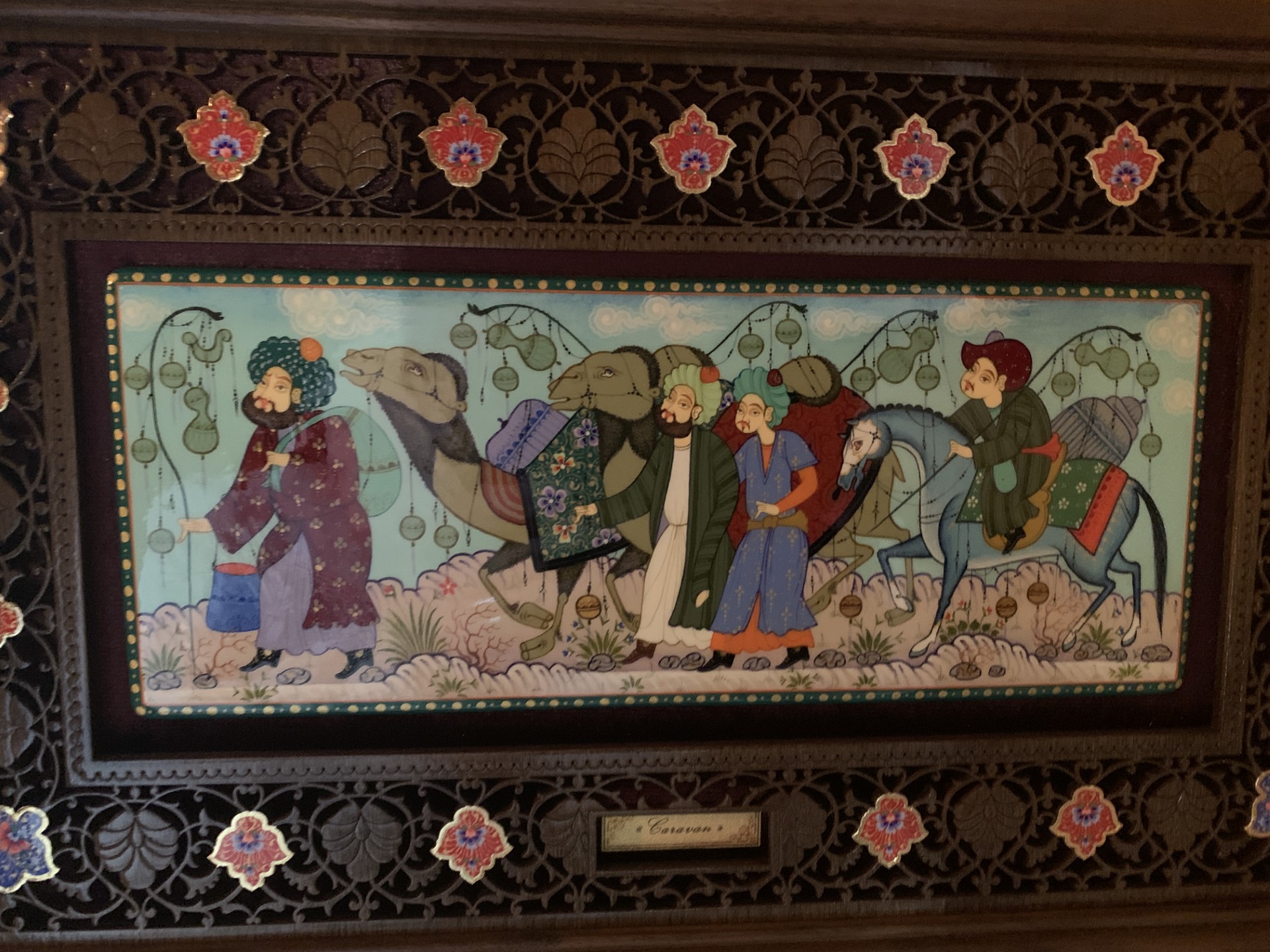
Tashkent is an intriguing mixture of brutalist Soviet architecture (Asia’d up with bright murals), wide tree-lined roads, ultra-modern highrises and ancient complexes of mosques, madrasas and mausoleums. I spent the day walking around the city, starting with a wander around Chorsu Bazaar with its distinctive blue dome and stalls piled high with foodstuff or cheap household wares. There was a ceramics workshop nearby too and then I headed for the Khast Imom, a complex of stately minarets (54 metres high), mosques and madrasas around a spacious square. In the Barak Khan Madrasa, the former cells where students lodged have now been taken over by tourist craft shops. The buildings are impressively decorated with intricate tilework and after having read Orhan Pamuk’s ‘My Name is Red’ I was taken by a painting in the Ottoman miniaturists’ style to add to our collection of original artworks from our travels. This book, although a novel set in sixteenth-century Turkey, is to be recommended for the interesting details of these miniaturists’ lives, culture and methods (although you have to get through the first 100 pages before it grabs you).

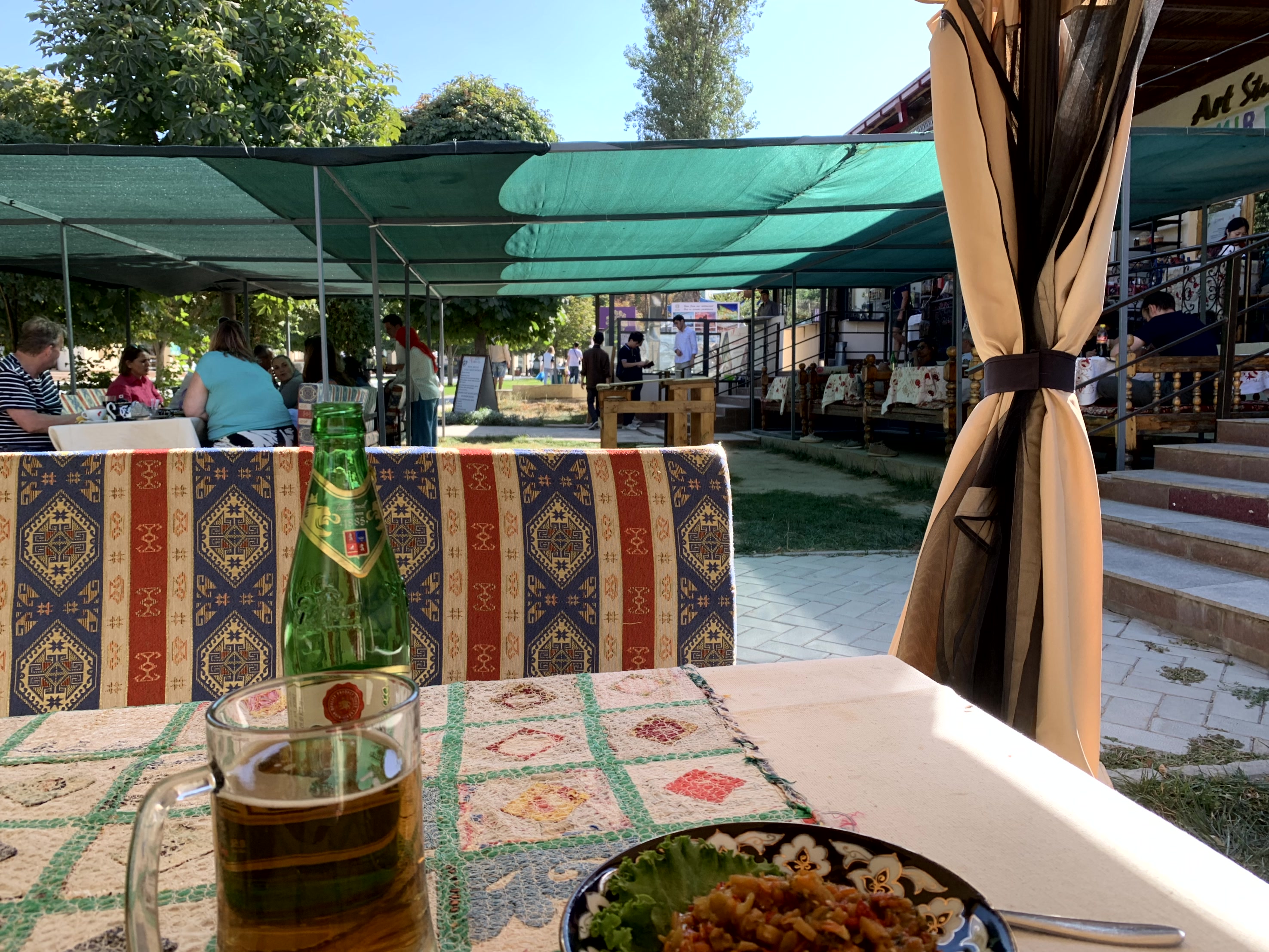
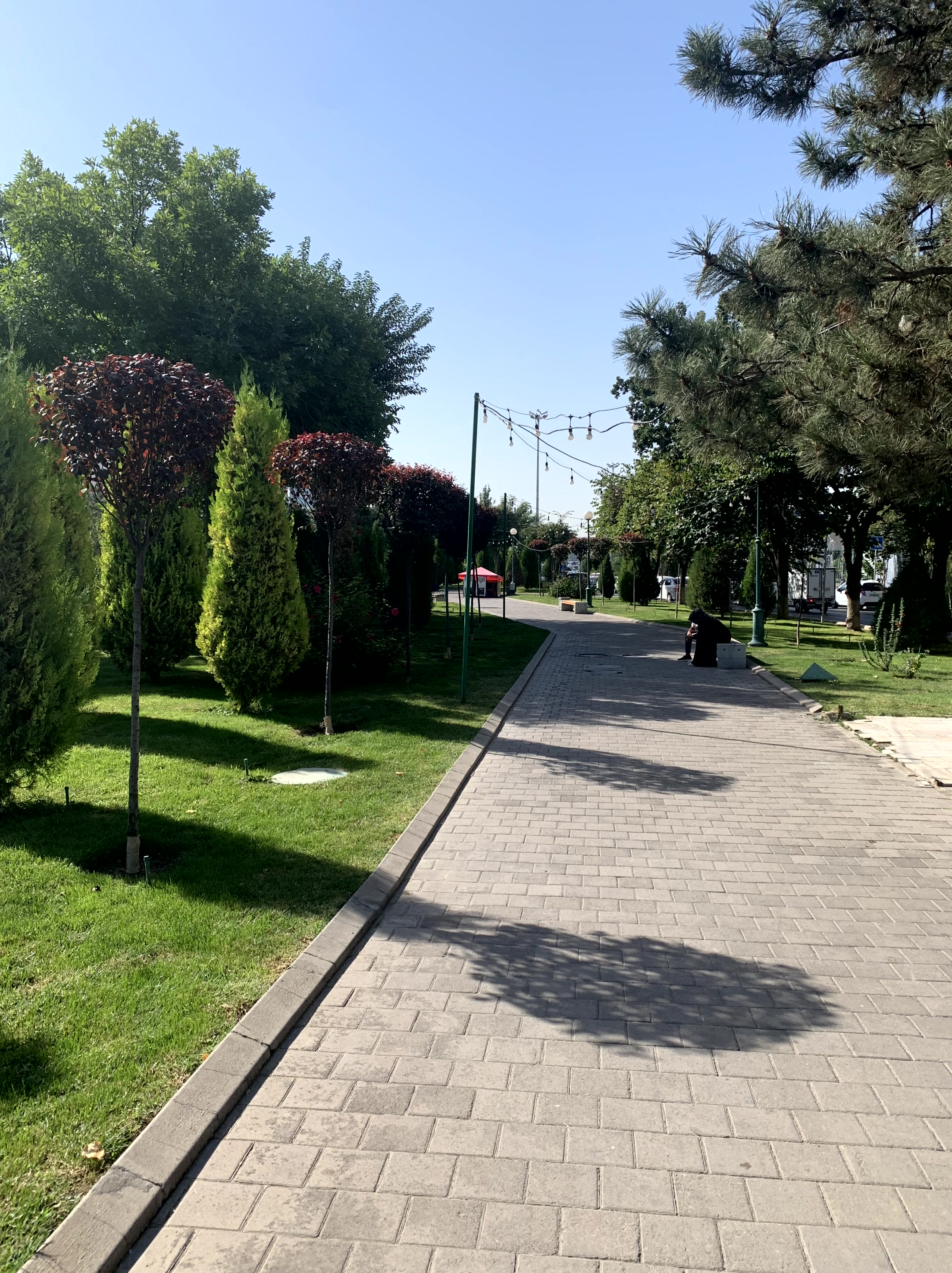
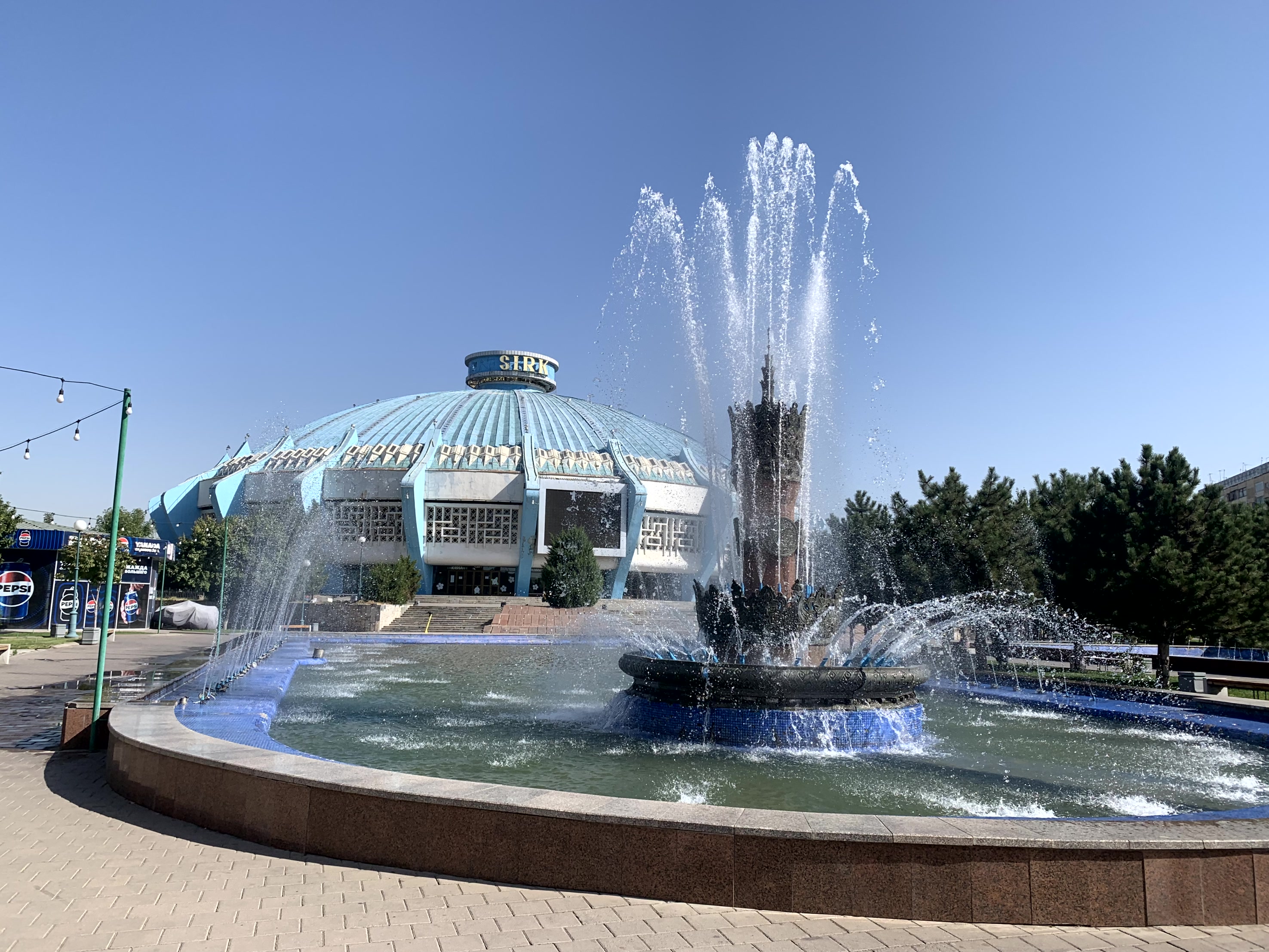
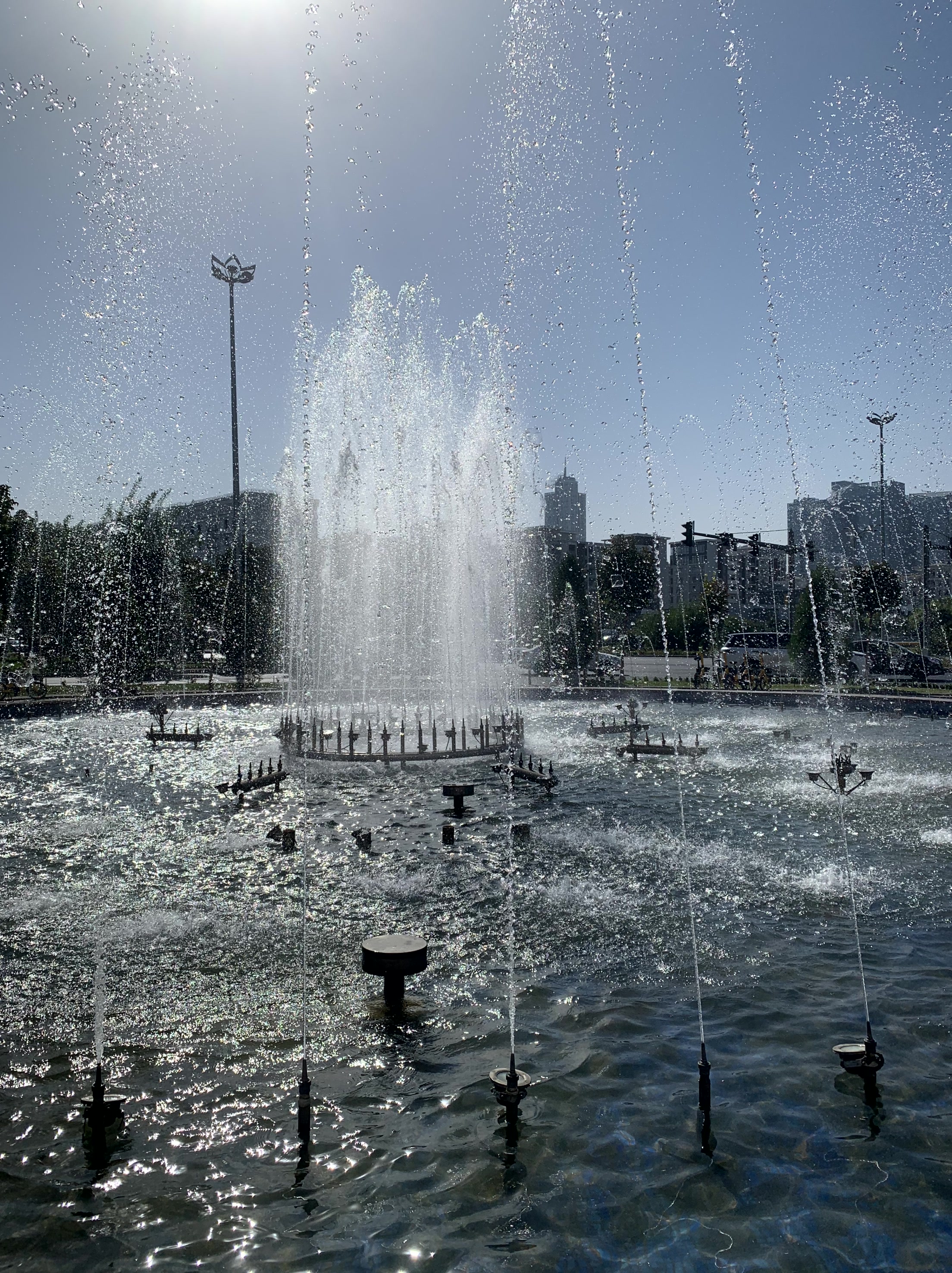
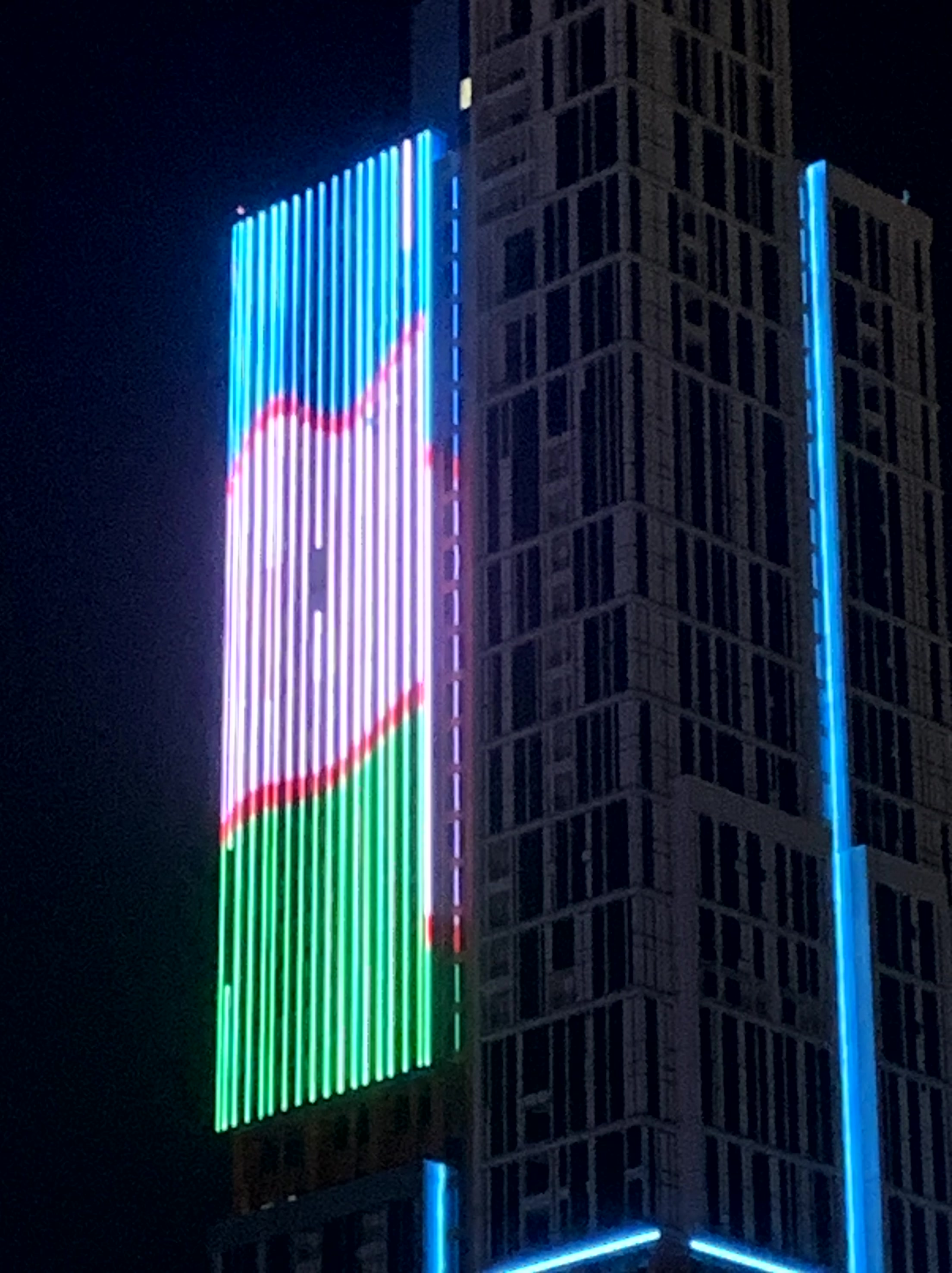
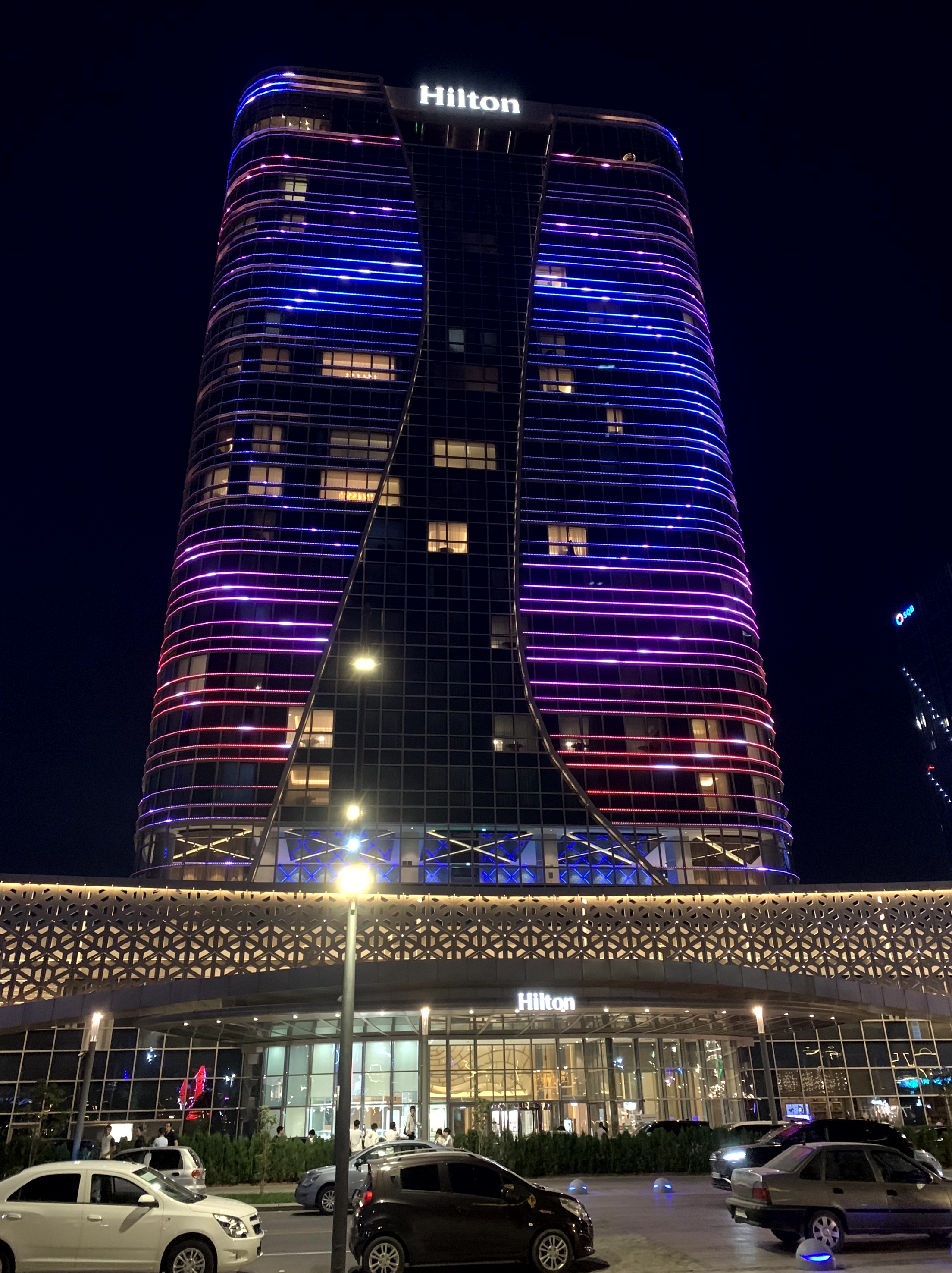
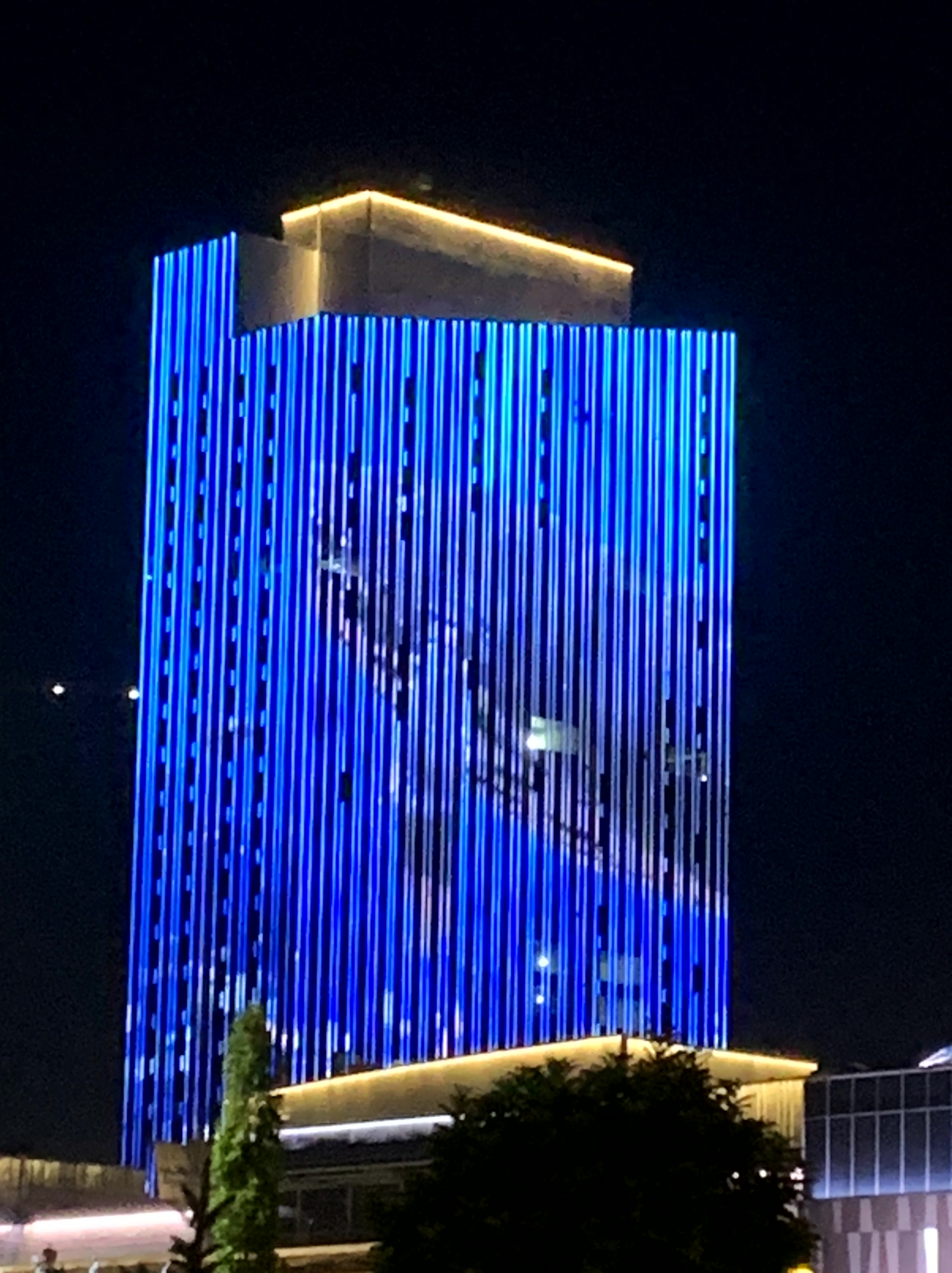
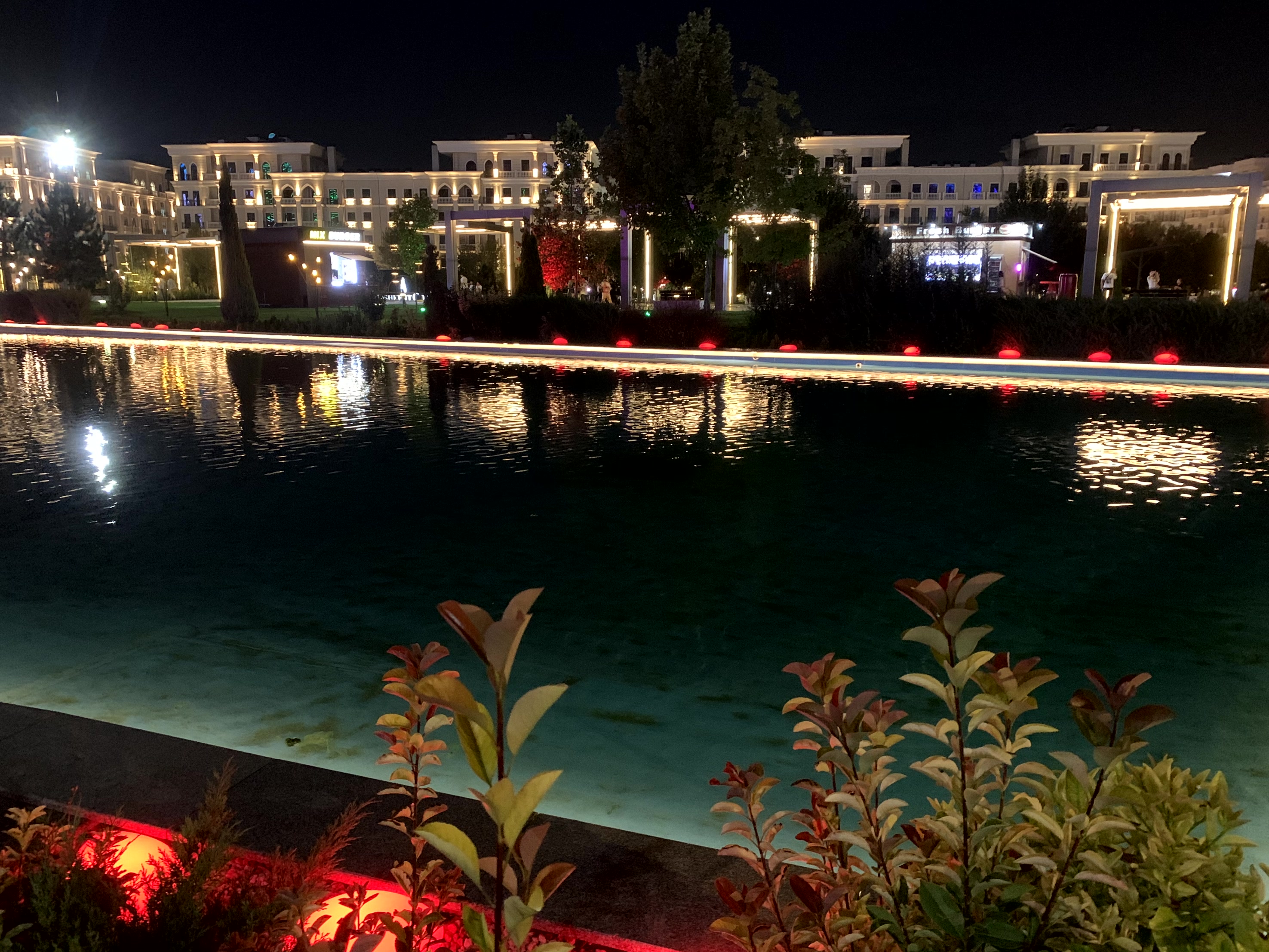
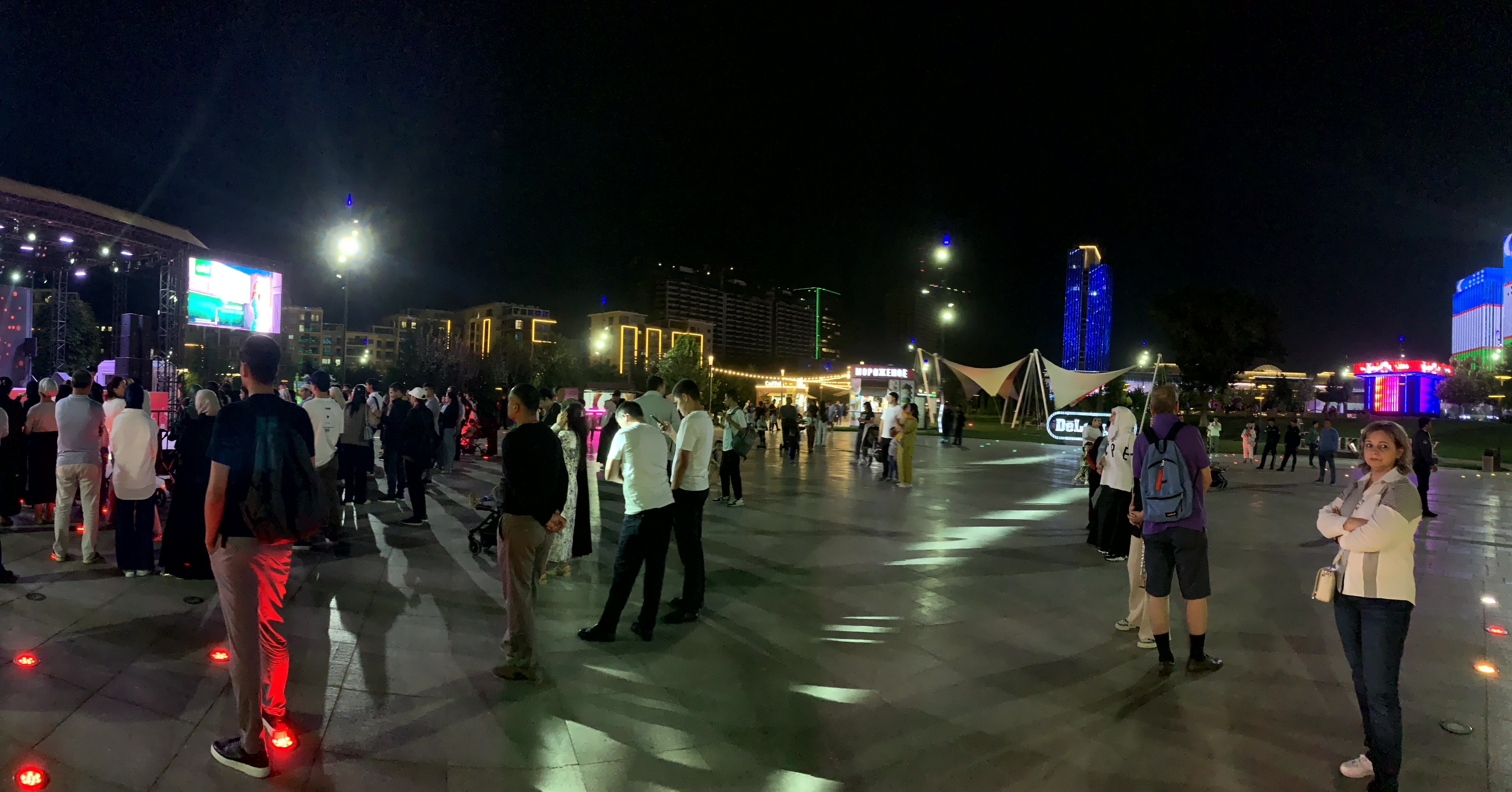
Uzbekistan only opened up to tourism in 2016 and since then the likes of Holiday Inns and Hiltons are starting to move in. There is a modern part of Tashkent basking in the glow of swanky new highrises that light up after dark in changing colours, behemoth scenes of swimming dolphins, shooting stars, or the fluttering Uzbek flag. I know this because after a hot day’s footslogging I went in search of the Hilton because that seemed the most likely place to get a cold beer. I found myself in a pleasant park where families were out on a trip to marvel at the spectacle of lights from the buildings and fountains to the accompaniment of music piped into the park: Joan Osborne’s ‘What if God Was One of Us’ and The Beatles’ ‘Can’t Buy Me Love’. It was all quite jolly and there was a distinct lack of edge compared to many places at home after dark. And the difference? No-one was drunk or high or aggressive. Just out with their children. I almost felt guilty that I’d come here looking for a cold beer.

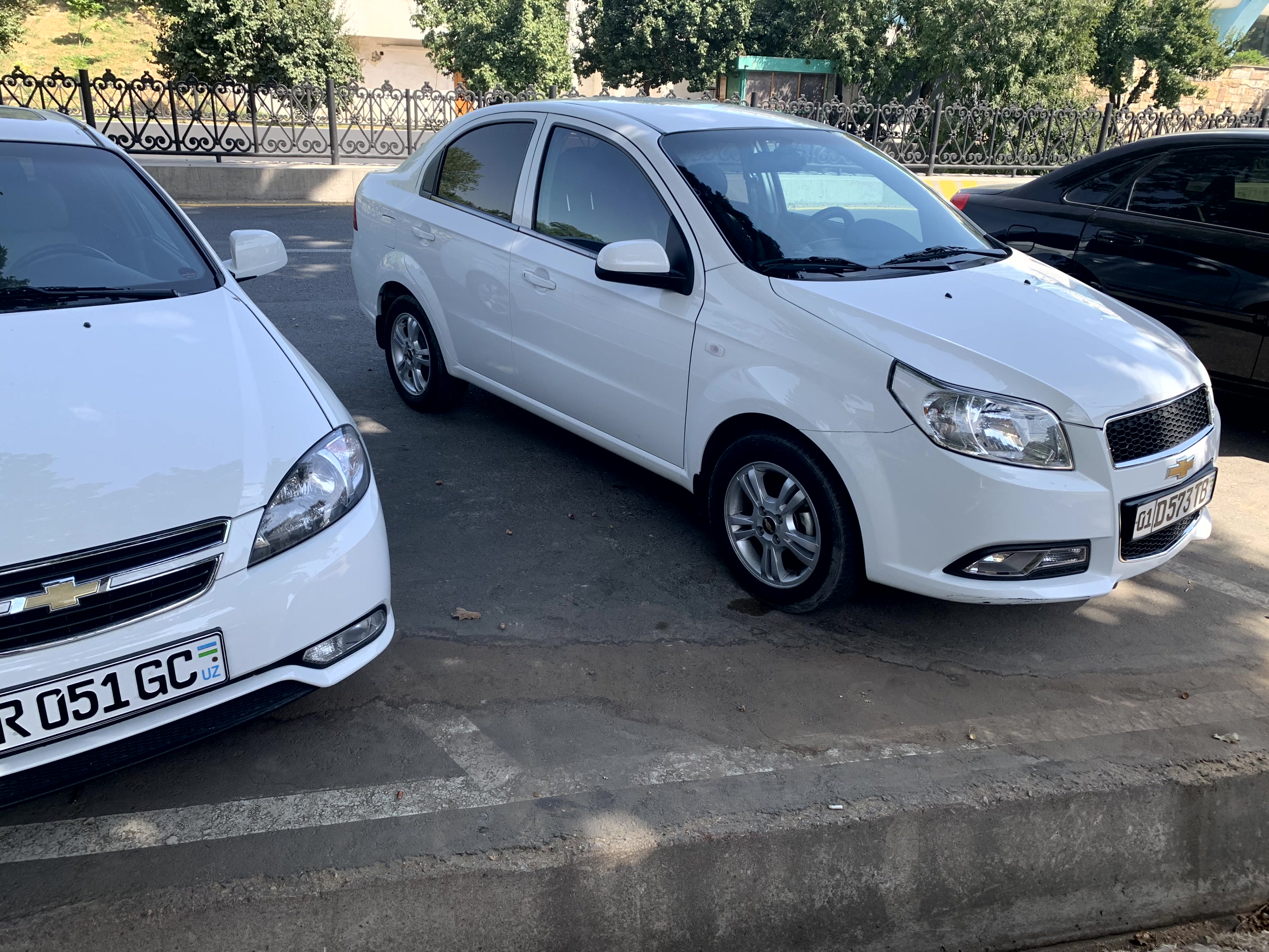
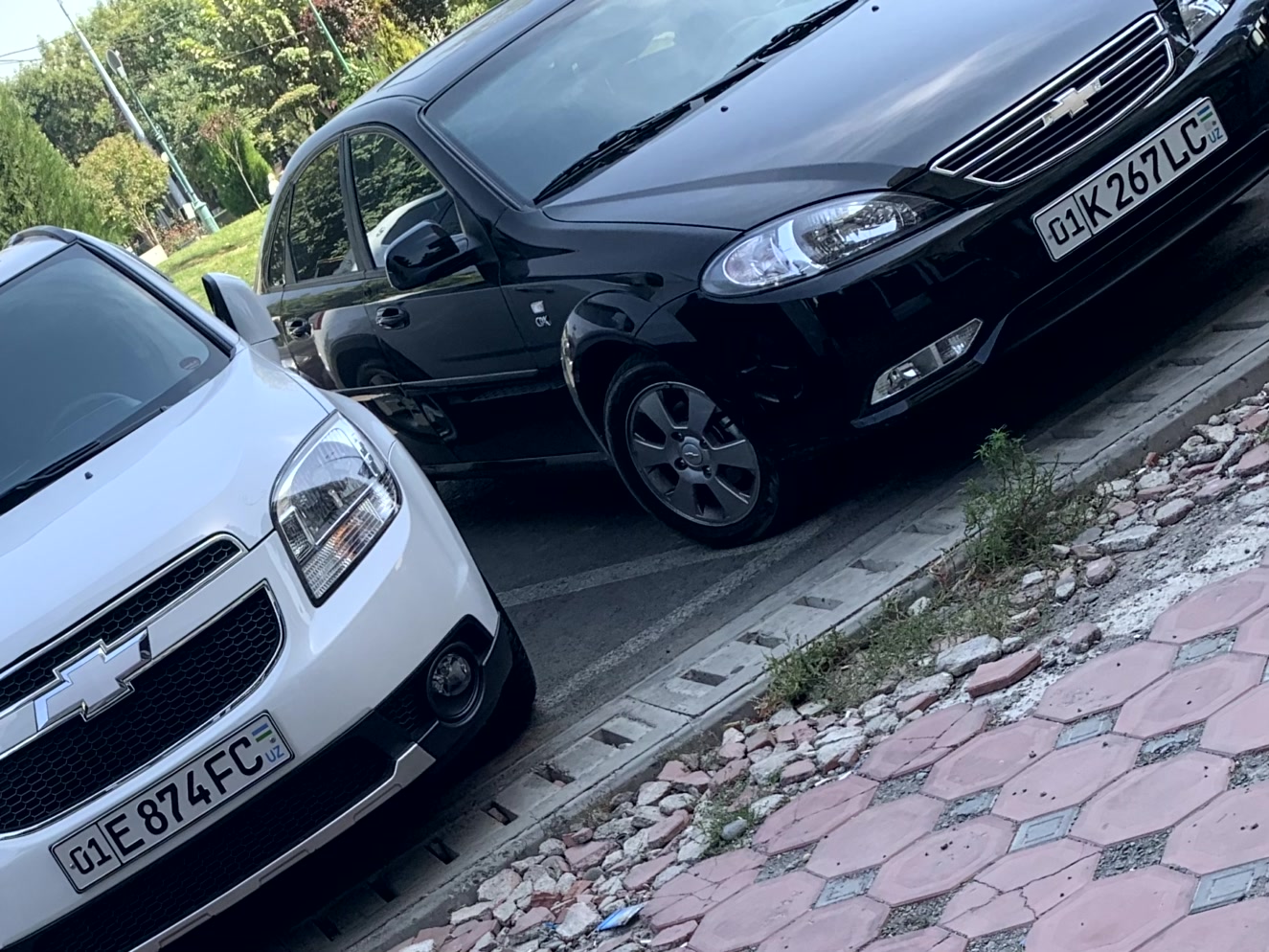
In the hotel, the waiting staff are immaculately dressed and magnificently professional. One of them, a young girl who looks about the age of my fifteen-year-old daughter, wears a smart suit, her jacket just a little bit too big for her. She over-laughs at the jibes her male colleagues are directing at her and smiles at them, a smile that I notice disappearing as soon as she turns away from them. The streets are still busy when I walk home and as I cross under the dual carriageway, I dodge unlit cyclists and a horserider chancing their luck amongst the speeding Chevrolets (the vast majority of cars here are Chevys – I wondered why).

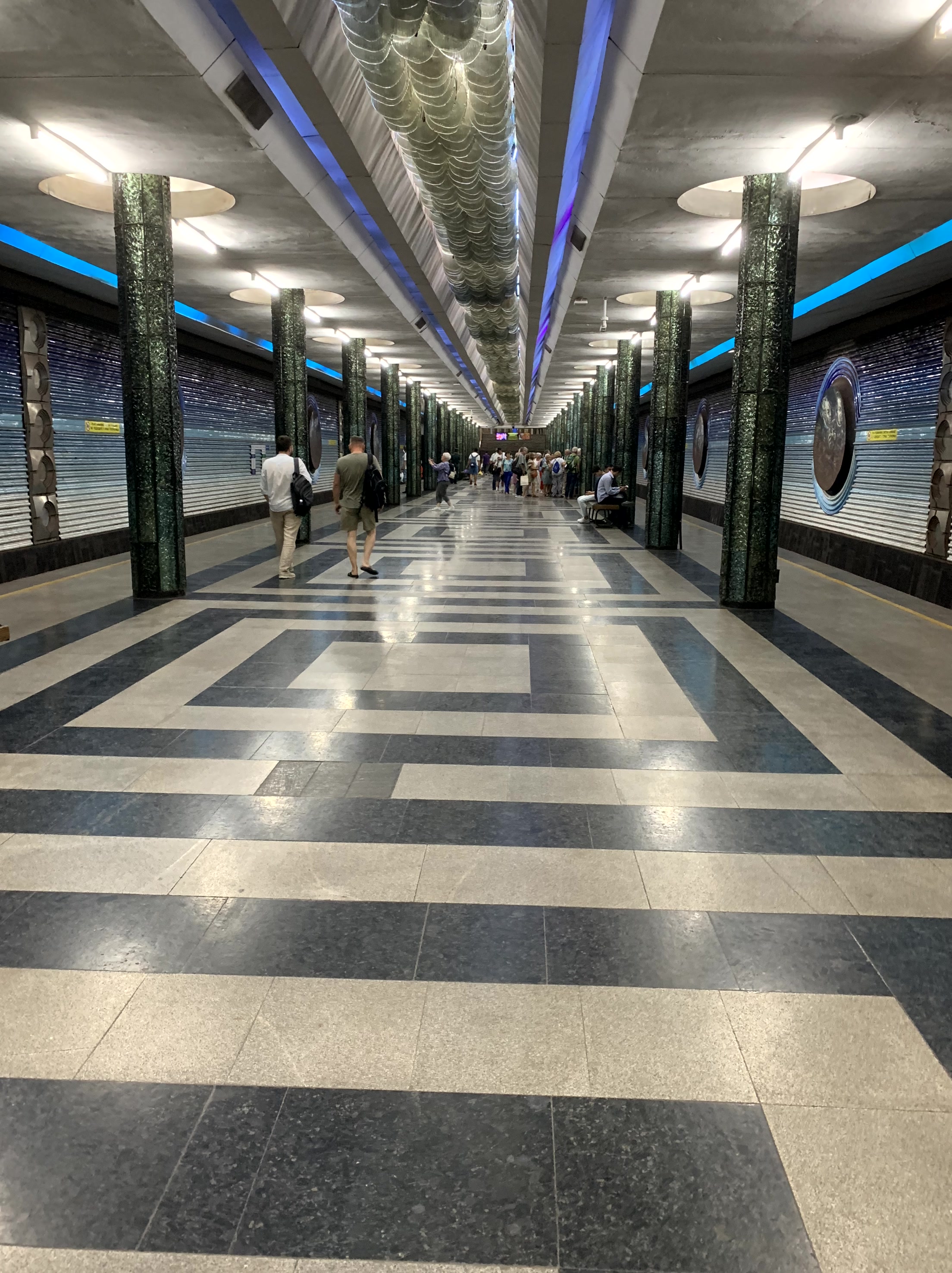
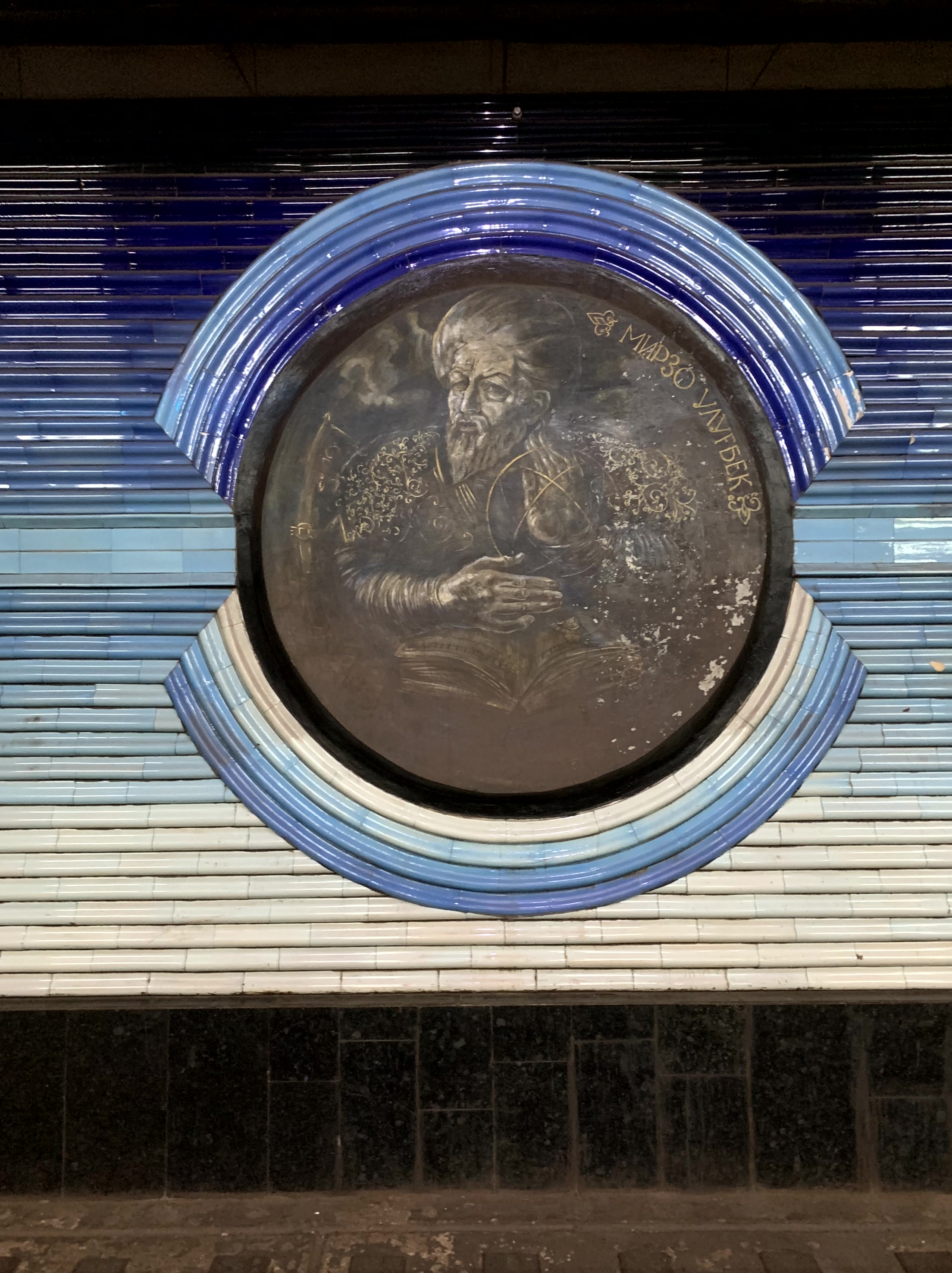
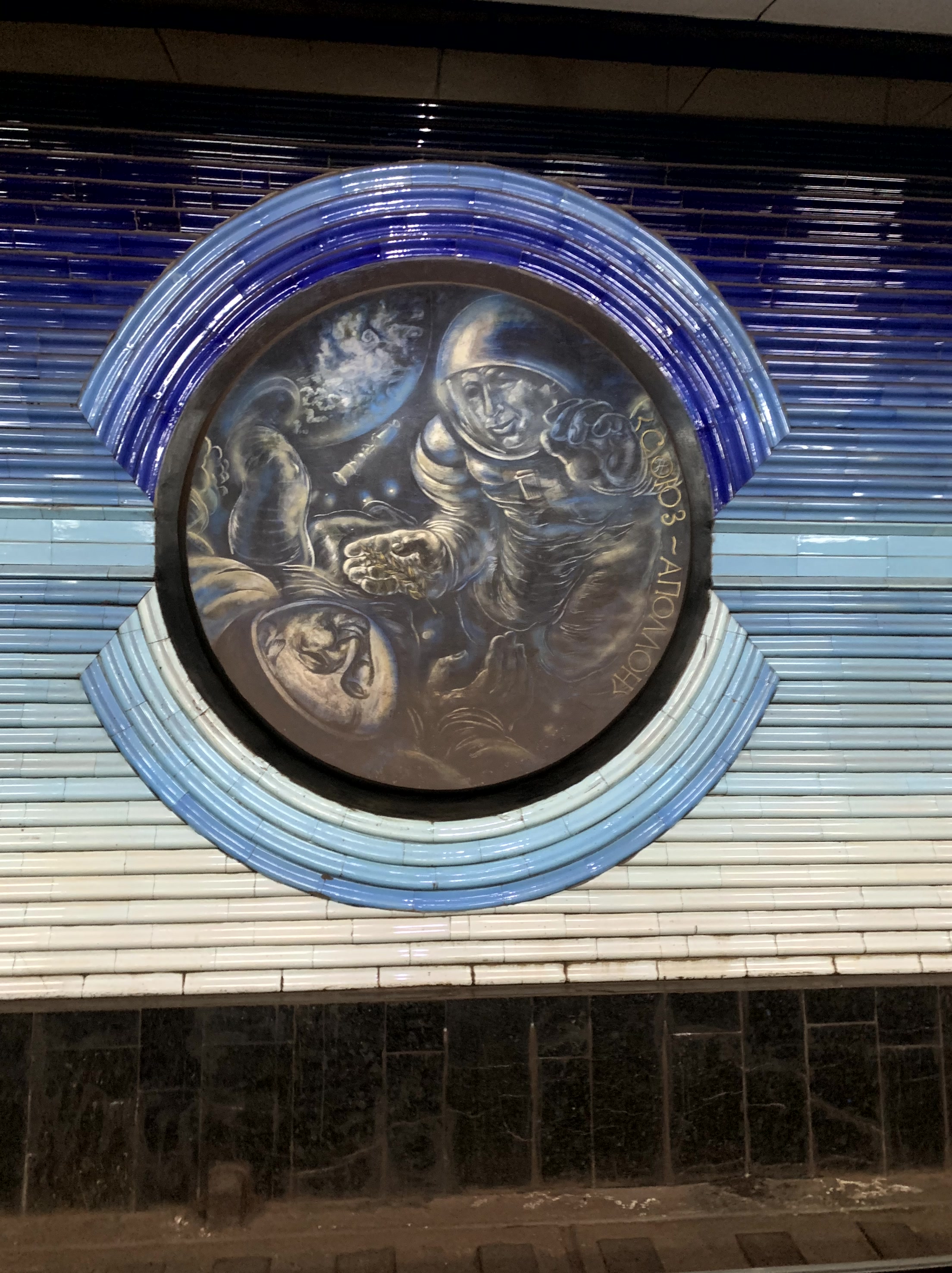
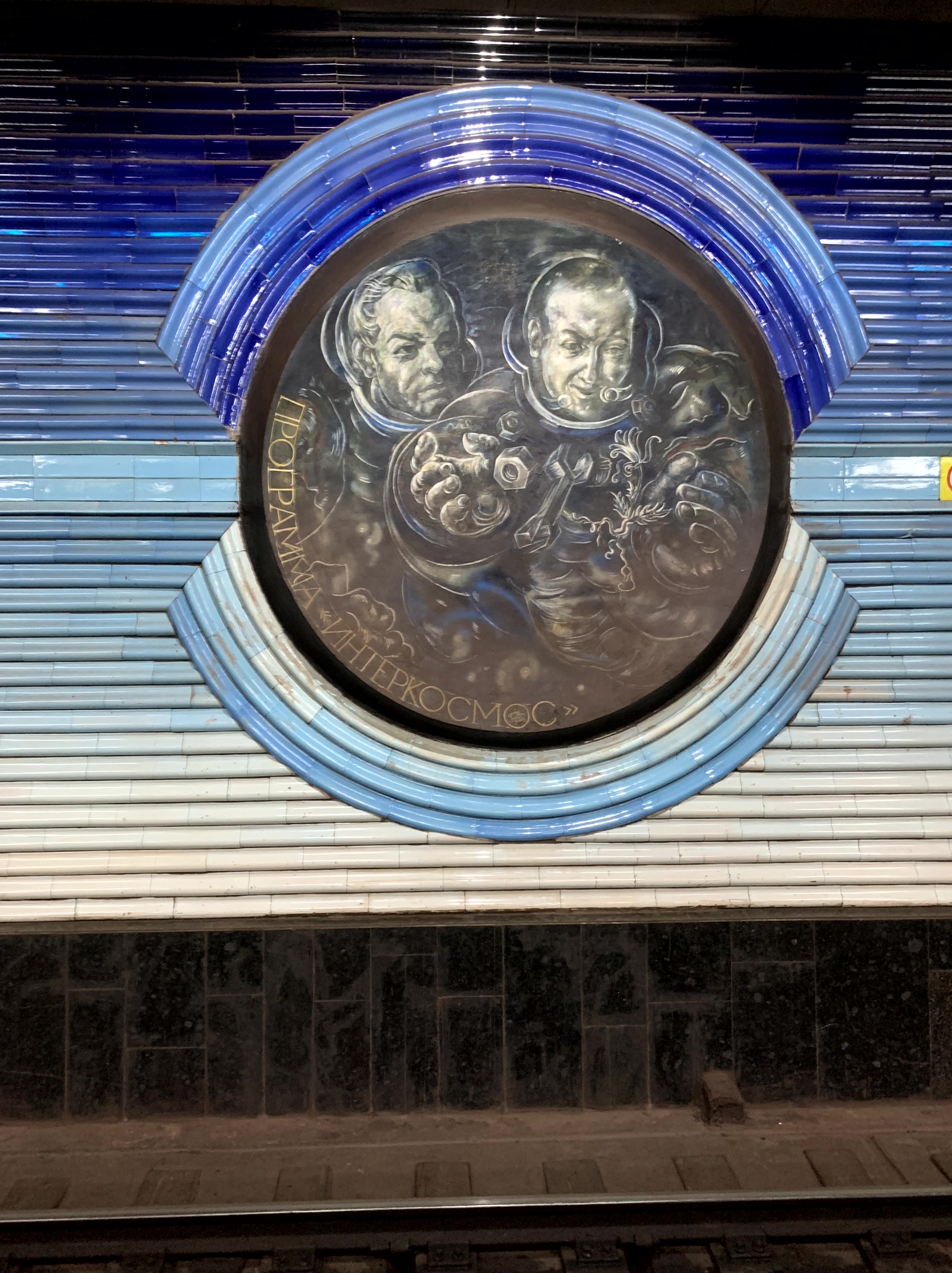
Guidebooks and websites about Tashkent often recommend riding on the metro here. It’s a tourist destination in itself and following Soviet decrees, the stations are all themed in their architecture and are strikingly beautiful places. Up until 2019, it was illegal to take photographs down there, which was a pity because the chandeliers, ornate pillars and artistic tile works are a sight to be seen. Kosmonavtar station was one of my favourites. Dedicated to space exploration, it features portraits of Amir Temur’s astrologer grandson, Ulugbek, Soviet cosmonaut Yuri Gagarin (the first man in space) and Valentine Tereshkova (the first female cosmonaut), amongst others. A ticket for half an hour’s travel on the metro (you could not spend any longer between any two points on the network) costs you 1700 Som, or about 10 pence sterling.

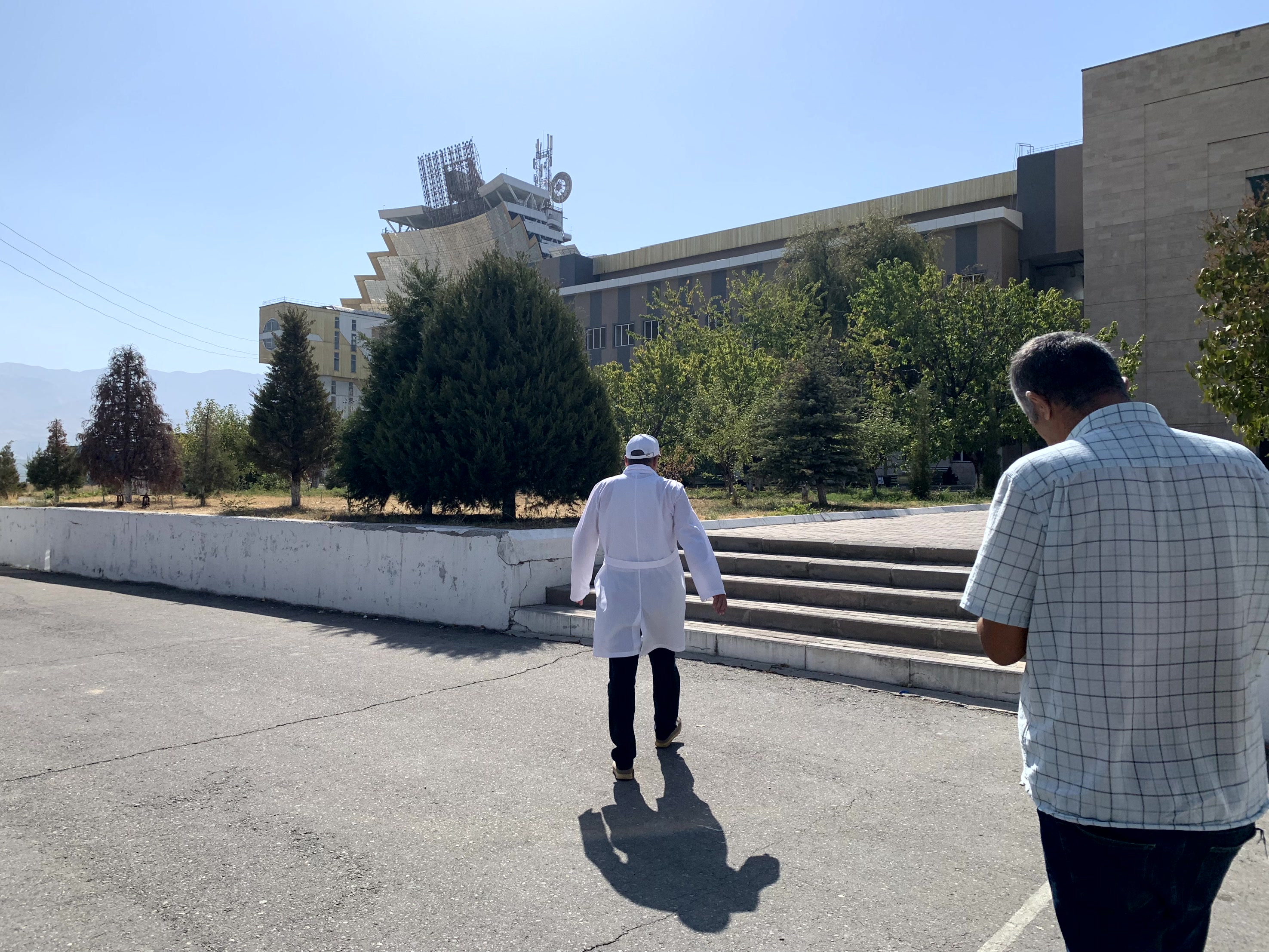
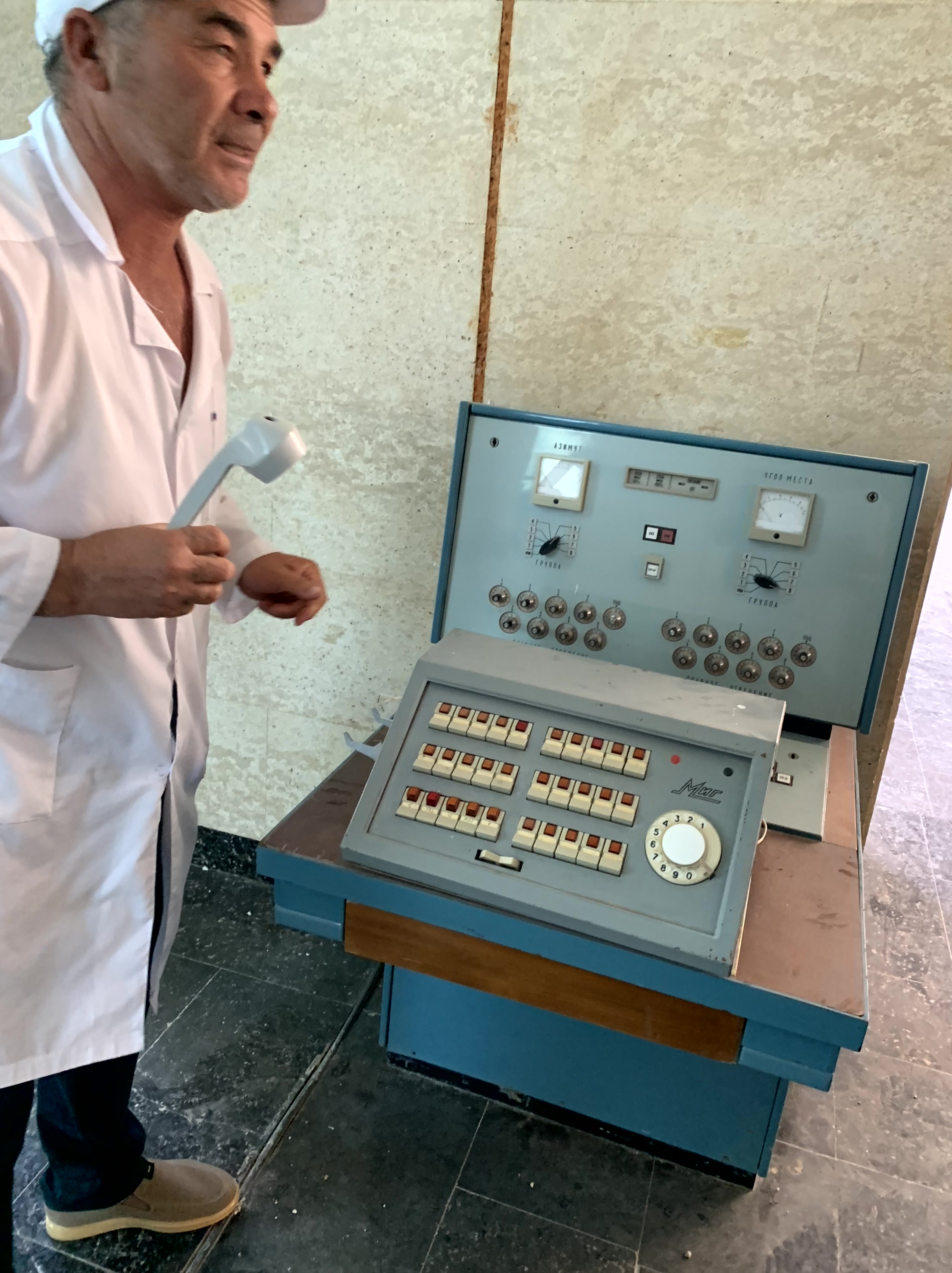
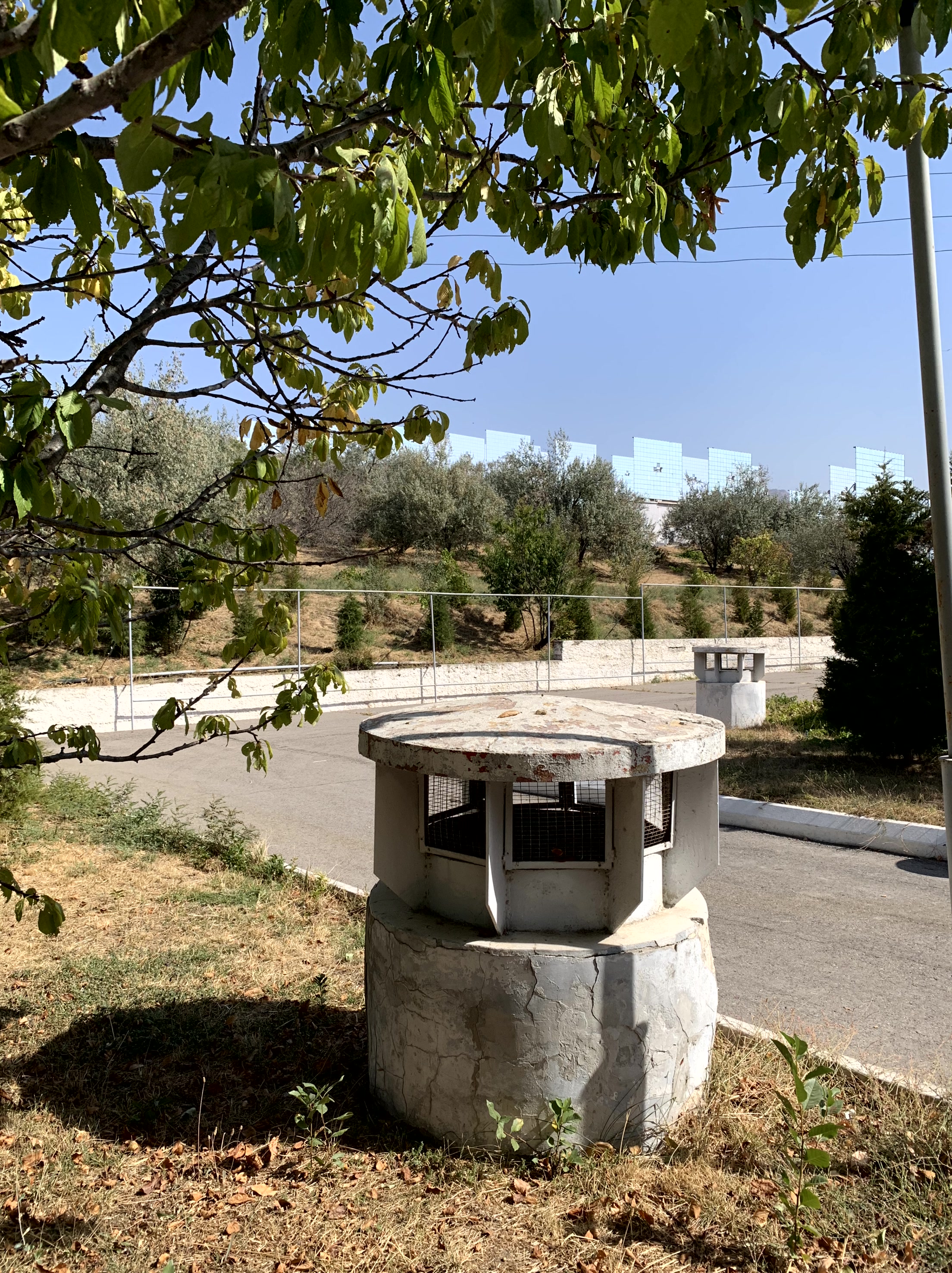
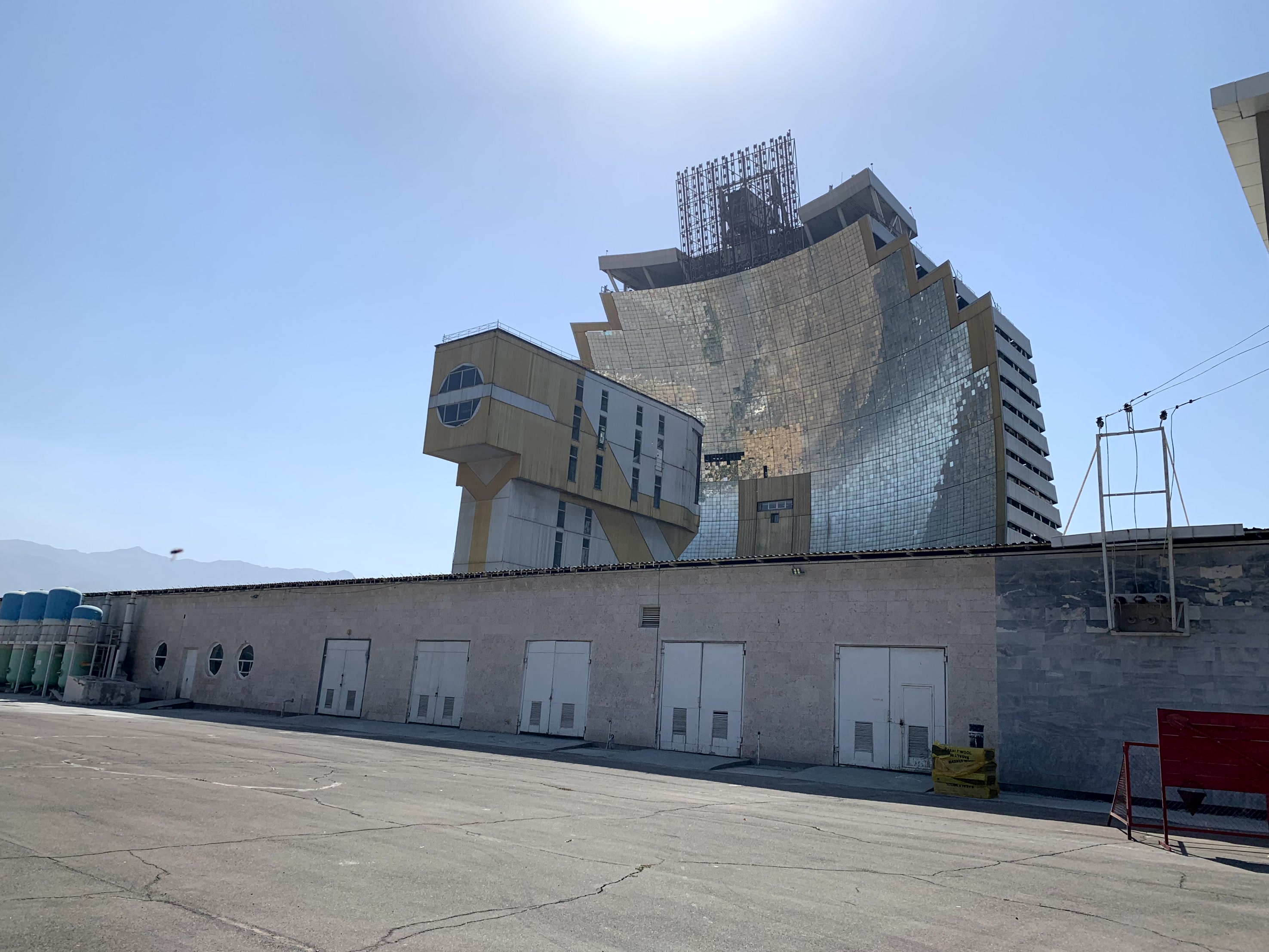
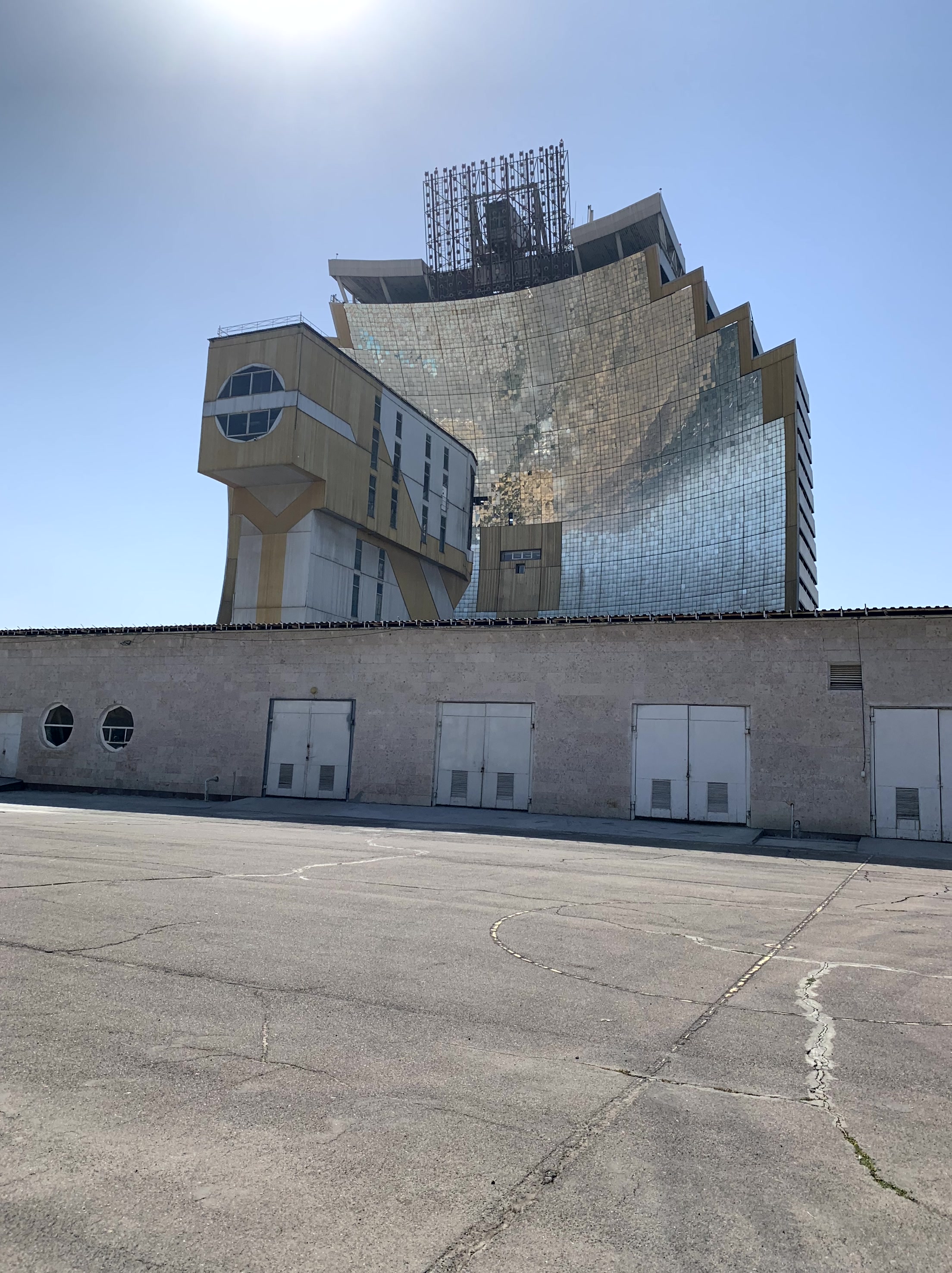
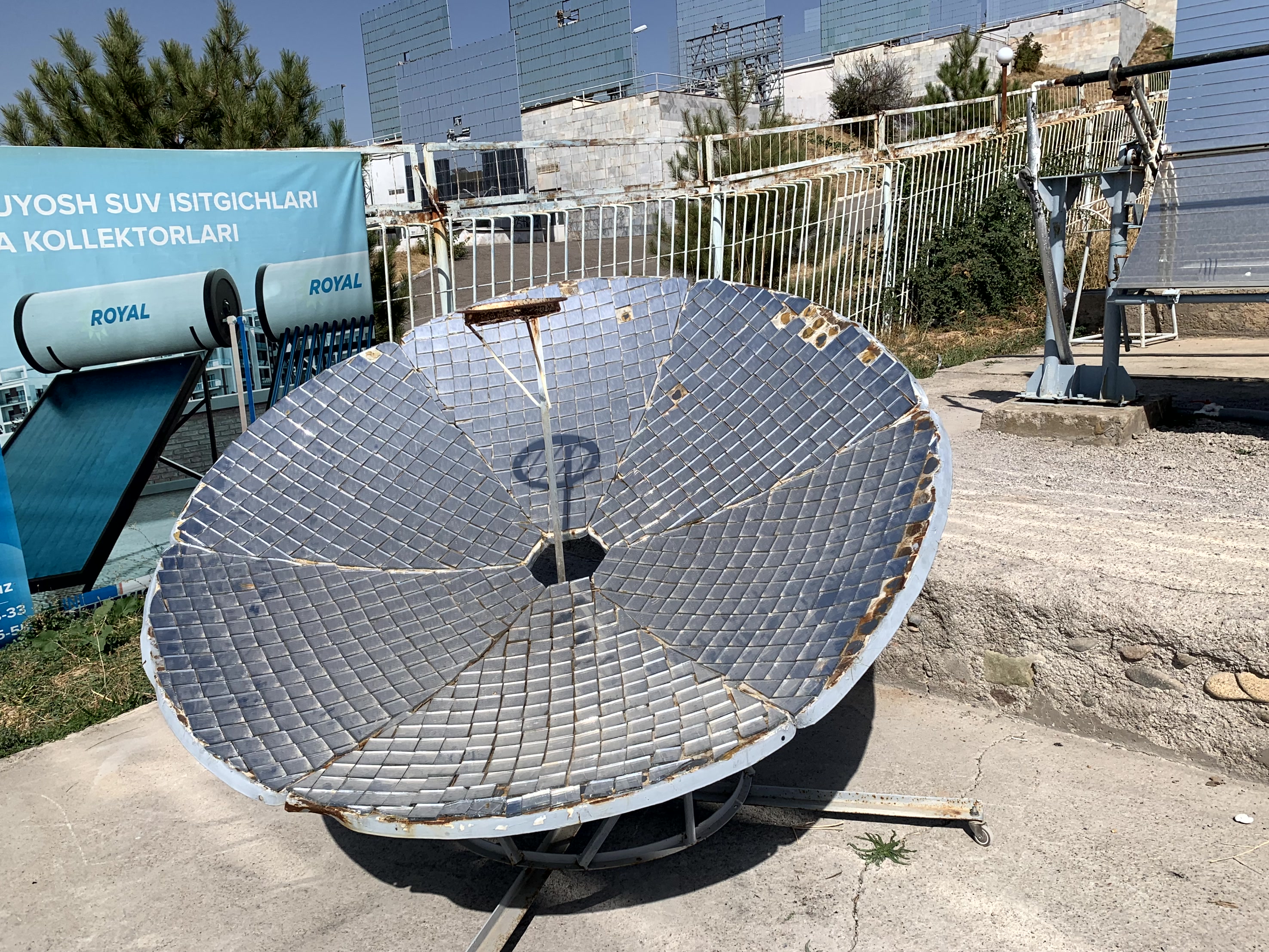
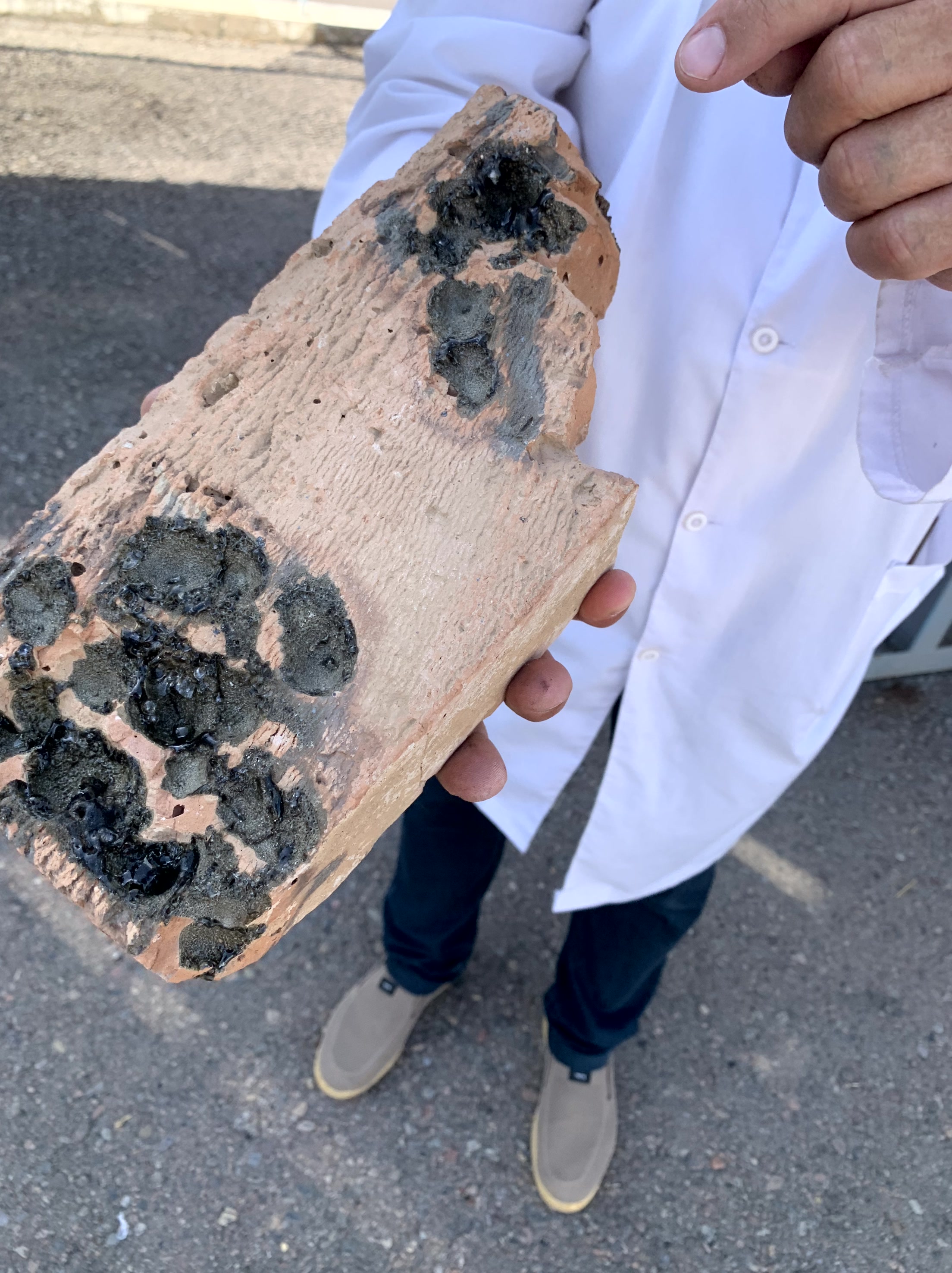
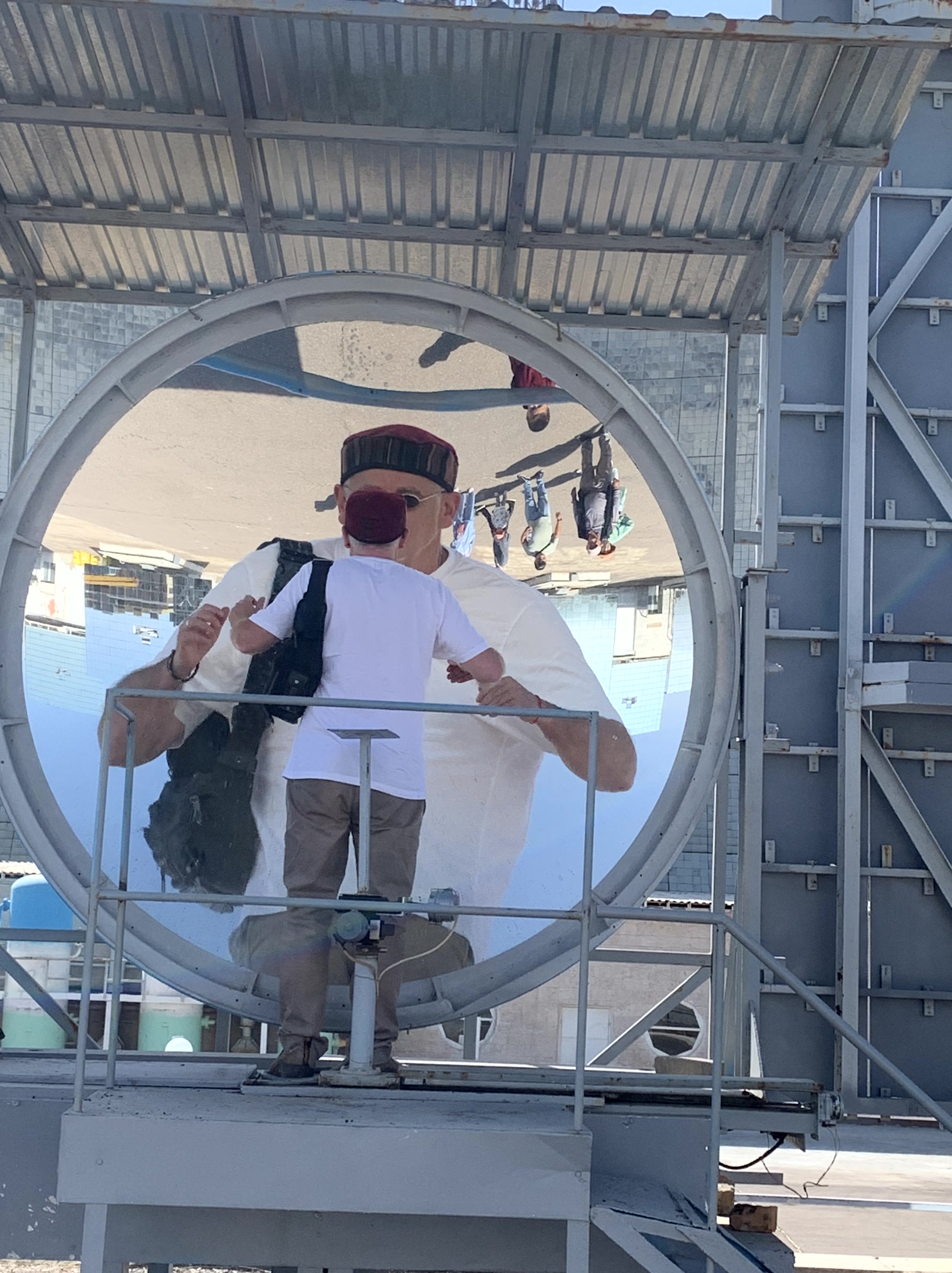
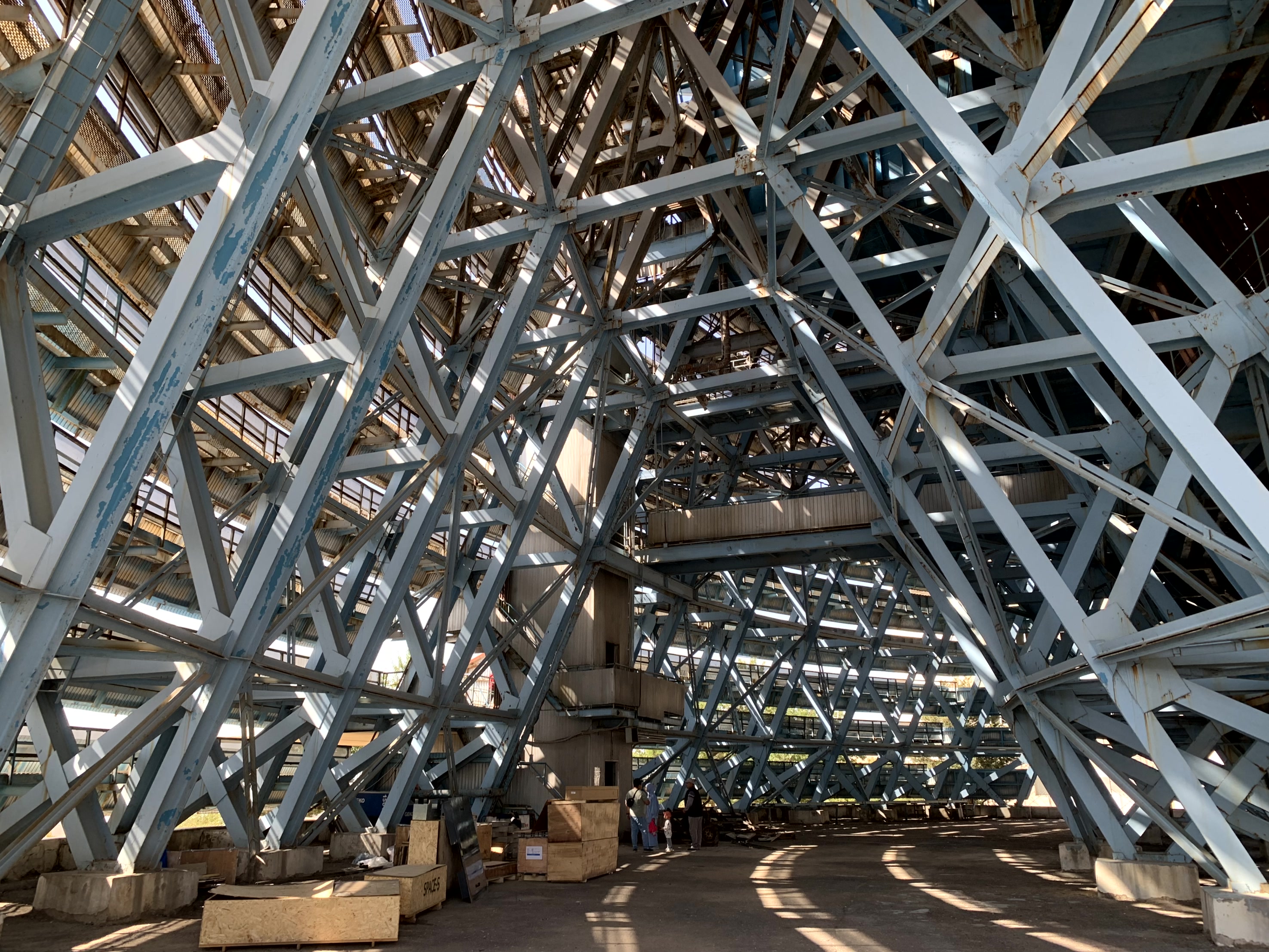
I wanted to visit the Parkent helio complex, about 45km east of Tashkent and the best way to do this was to hire a guide for half a day. We were shown around by a proper scientist-looking scientist in a white lab coat, with unnervingly twinkly eyes who told us all about it, and then gave us a large bunch of sweet grapes straight off the vine to munch on on the journey back to Tashkent. Up until 2009, this was a top-secret site run by Soviet overseers. Built in the 1980s, this is a solar furnace still in use today to test the effects of extreme heat on materials, such as the tiles used for re-entry into the atmosphere on the exterior of spacecraft. They can manufacture temperatures entirely powered by sunlight and which are rarely achievable on Earth. It was built up in the mountains where the location enjoys 9 months of sunshine each year in exceptionally clear air and on top of one massive, solid chunk of bedrock which protects it from earthquakes. It is basically hundreds of special ultra-reflective mirrors that can track, then focus the sun into a very small area via an enormous parabolic mirror to reach temperatures of 3000 degrees Celsius. If you ever used a magnifying glass to set fire to things on the school field, then you’ve got the principle, but not the scale of all this. There were a few small parabolic mirror devices, that could turn bricks into nanoglass, burn holes in iron rods and boil water or set fire to large bits of wood in seconds. So imagine a whole hillside of mirrors, focussing the sun’s rays onto a huge parabolic mirror which in turn concentrates the sun’s rays into a tiny point. When the Russians left, they took everything with them, from the highly-trained scientists housed in the now empty and grim apartment blocks at the bottom of the hill to the technical secrets of how to manufacture the specialised and exceptionally high-quality mirrors. Since then, replacements had to be ordered from Russia, but all they were prepared to send were inferior versions of the reflectors. We are shown the 70’s style phone consuls, formerly used to instruct employees on turning the mirrors to track the sun’s path across the sky and the ventilation shafts for the emergency bunkers built tens of metres down in the rock beneath us. When it was built, the local population demanded compensation from the government because they believed that the plant was stealing their sunlight which would therefor lead to a loss of their livelihood and the crops they depended on. The whole system is controlled digitally nowadays.

I lucked out with the guide, Shovkat, who had an encyclopedic knowledge of just about anything I asked him about, spoke excellent English and didn’t stop talking from the moment we met in Tashkent to the moment he dropped me back at the Hotel 1946.

Ten Things I Learnt From Shovkat

  1. The major crop in Uzbekistan is cotton which is mostly exported to Russia to be used in the manufacture of gunpowder.
  2. Water is power around here. The Kazaks want to build a dam upstream that will diminish the supply of water from the river flowing through Uzbekistan. There have been negotiations between the two countries about how high the proposed dam should be due to the danger posed by the earthquakes which are quite a regular occurrence in the region. The results of a dam collapse would be catastrophic for the nearby population.
  3. Under Soviet control, everybody worked and there was a lot of heavy industry which subsequently disappeared.
  4. The question of the predominance of Chevys was solved. They are heavily subsidised by the government (due some some deal or another) so most people can’t afford anything else.
  5. In the time of Russian control, there were ‘mono-cities’ that existed purely because of whatever industry was going on there.
  6. On the outskirts of Tashkent, there used to be an aircraft factory and if you worked there you had a job for life, like many other factories at the time. Your accommodation came with your job, whatever your rank.
  7. The origins of the city of Tashkent date back to a Zoroastrian fire temple in about 200 BCE. Its remains were discovered beneath an eighth-century palace when it was destroyed by Arabic invaders. This ancient settlement was known as Ming-Uryuk: the city of a thousand apricots.
  8. The climate and geology of Uzbekistan are responsible for the fact that fruits from here are so exceptionally and naturally sweet.
  9. The main difference between Sunni (who comprise about 80% of Muslims) and Shi’a Muslims is that the former believe that the Prophet (PBUH) did not appoint a successor and this person should be chosen from the Muslim community whereas the Shi’a belief is that it should be handed down the family line. Sunnis fall into four main madhhabs (sects): Hanafi, Maliki, Shafi’i, and Hanbali. The differences between these come down to traditions, for example whether the deceased are buried lying down with their heads facing towards Mecca, in a crouched position with their head turned towards Mecca, or whether women are allowed to pray in mosques, the shape of the beard, the way you stand when praying and so on.
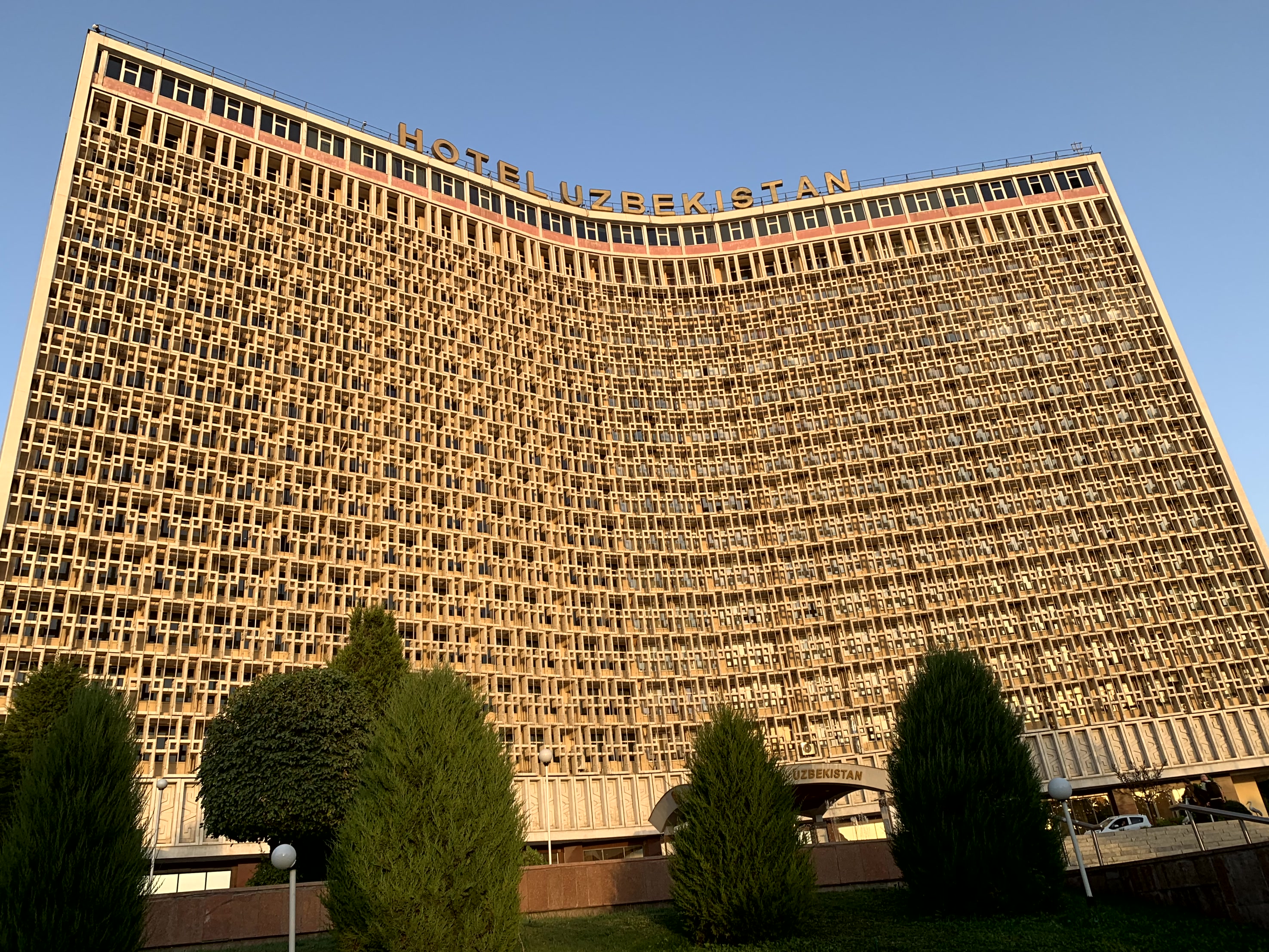
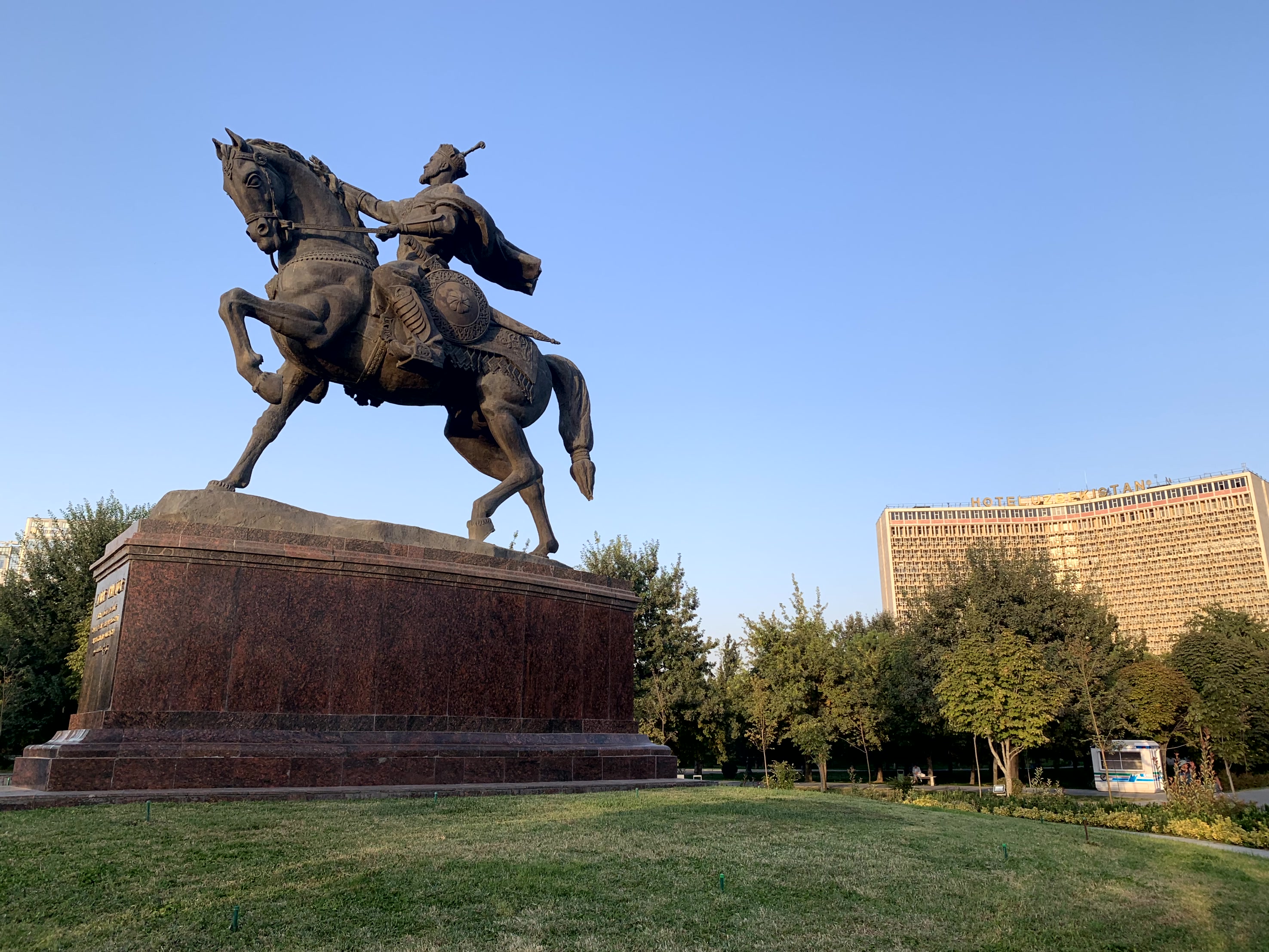
  10. Emir Timur (Tamerlane) was a Sunni Muslim who lived from 1336 to 1405 and was a leader in this region. His conquests brought about an empire that stretched from India and Russia to the Mediterranean. He is remembered for the cultural and scientific achievements of his dynasty as well as for the barbarity of his conquests. ‘Tamerlane’ (‘Timur the lame’) was a title used in contempt by his enemies. Once, while he was busy slaughtering up in Moscow, the Persians went into revolt, which he suppressed with his usual vigour massacring whole cities and building towers of their skulls. It is said that he was responsible for the deaths of over one million people. There’s a statue of him in Tashkent in a square named after him by the Uzbekistan Hotel (a great example of Brutalist architecture). There he proudly sits, arm aloft, on his mighty charger. This impressive beast, however, is not a happy horse. Someone once cut off his tonker. Nobody knows why, how or who, or where it currently is. It’s a good job that Emir Timur is not around today. He doesn’t strike me as the kind of guy who’d have approved of this sort of mindless act of vandalism. He’s buried in Samarkand, where I’m headed next.